A diploma can be ready for an overseas application while its apostille is still in progress, and the first delay often comes from sending it to the wrong authority. For Ukrainian education documents, the responsible ministry is the Ministry of Education and Science, not the Ministry of Justice or the Ministry of Foreign Affairs.
The timing needs a little more care than a simple promise of “a few days.” The Ministry of Education and Science (MES) describes urgent and regular processing, but its published service page does not give one universal guaranteed number of calendar days for every diploma. Your plan should account for document checks, submission arrangements, collection, any required translation, and the receiving institution’s deadline.
Which ministry apostilles a Ukrainian diploma?
Ukraine’s Ministry of Education and Science apostilles official documents related to education and science, including diplomas and diploma supplements. The correct route depends on the kind of document, not on the country where you plan to use it. MES lists education documents in its apostille service information.
The Ministry of Justice and the Ministry of Foreign Affairs do apostilles too, but for different categories of documents. The Ministry of Justice handles documents from courts, justice authorities, and notaries. The Ministry of Foreign Affairs handles other categories. Sending a diploma to either ministry instead of MES risks losing time before the document even reaches the authority responsible for it.
The division of responsibility comes from Ukraine’s rules for apostilles on official documents. The rules were approved by joint order No. 125/209/293/139/999/5 of 17 March 2023; the legislation register identifies the version with amendments dated 1 June 2025 as current when checked for this article (official rules). Since procedures can change, use MES’s current service page rather than an old checklist or an intermediary’s summary.
| Document category | Authority to check first |
|---|---|
| Diploma, diploma supplement, or other official education document | Ministry of Education and Science |
| Court or justice-authority document, or a notarial document | Ministry of Justice |
| Other document categories assigned to it | Ministry of Foreign Affairs |
The Embassy of Ukraine in Spain gives the same distinction: education documents go through the Information and Image Center under MES, civil-status records through the Ministry of Justice, and other documents, such as a criminal-record certificate, through the Ministry of Foreign Affairs. The embassy also says Ukrainian documents for use in Spain are apostilled in Ukraine (Embassy of Ukraine in Spain).
The Information and Image Center, also known as ENIC Ukraine, prepares materials for MES’s decision on apostilles for education documents. MES remains the authority that decides whether to place the apostille; ENIC Ukraine’s role in preparing the case does not change which ministry is responsible (MES service information).
That distinction helps when you see both MES and ENIC Ukraine named in the process. The ministry is not replaced by the center: the center supports the handling of education documents, while the apostille decision belongs to MES.
What does an apostille confirm, and what does it not confirm?
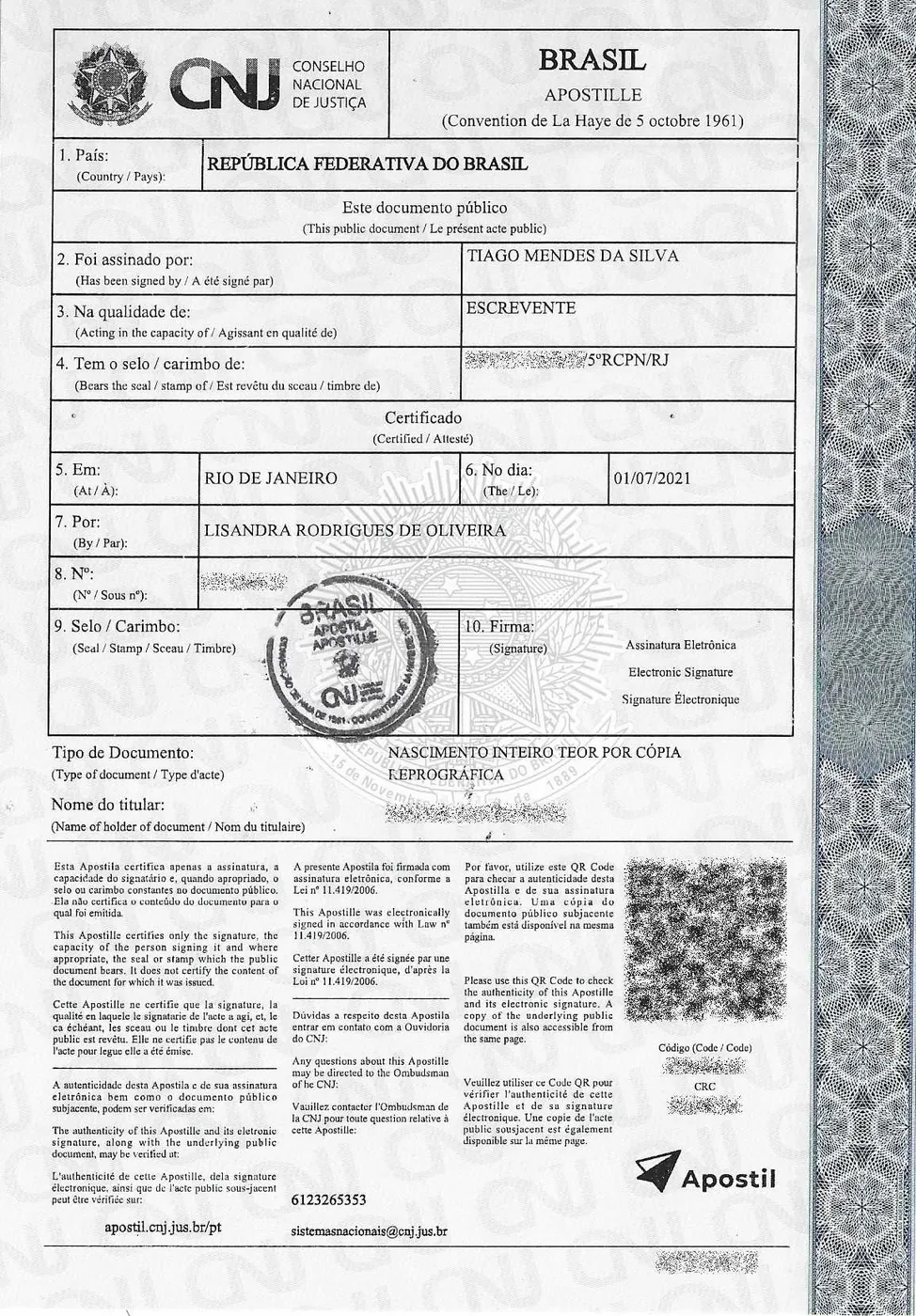
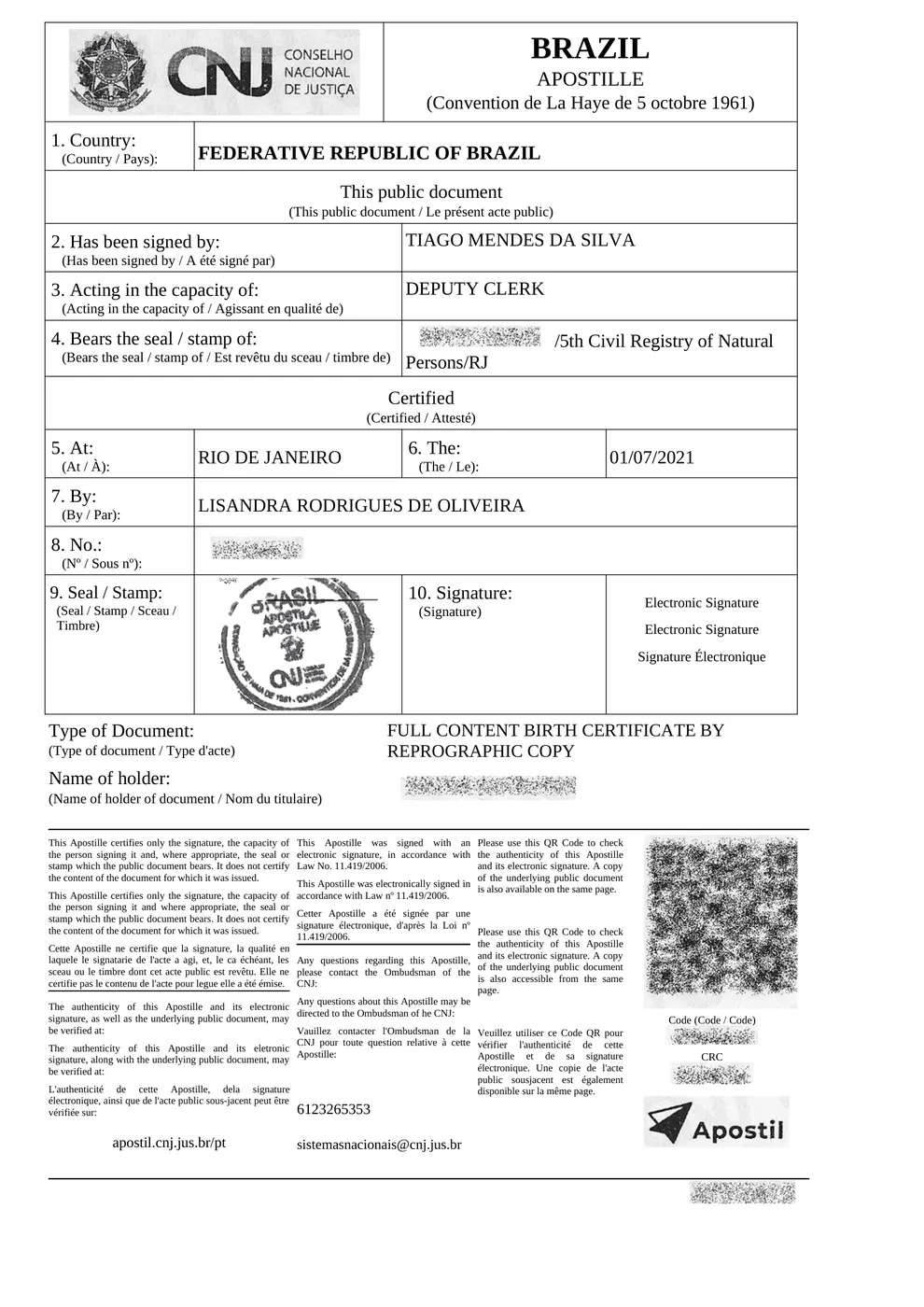
An apostille is a formal certificate used to authenticate certain public documents for use abroad. For a diploma, it confirms the authenticity of the signature, the official capacity of the person who signed the document, and, where relevant, the authenticity of a seal or stamp. MES explains the apostille’s function on its reference page.
The apostille does not verify that every statement in the diploma is accurate. It does not assess the program, grades, or academic level, and it does not automatically make a qualification equivalent to a qualification in another country. Those are separate questions for the institution or recognition authority that evaluates your education.
The legal framework is the Hague Convention of 5 October 1961, which removes the requirement for consular legalization between participating countries. Article 3 describes the apostille as the formal authentication step, while Article 5 sets out what the certificate confirms. Ukraine’s accession law is No. 2933-III of 10 January 2002, and the Convention’s provisions for Ukraine took effect on 22 December 2003, according to MES’s apostille information.
The distinction matters because applicants often treat “apostilled” as meaning “accepted.” A receiving university, employer, licensing body, or recognition authority may still ask for a translation, an academic assessment, or additional documents. The apostille answers a narrower question: whether the document’s signature and official status have been authenticated.
MES says the apostille can be placed on the official document itself or on a separate sheet attached to it (MES apostille information). The exact physical form does not change what the apostille confirms. Keep the apostilled document and anything attached to it together, and follow the receiving institution’s instructions about whether it needs the original, a copy, or a translation.
Apostille requirements also depend on the document’s destination and use. The fact that a country accepts apostilles does not tell you whether a particular university or employer requires one for your particular application. Ask the receiving organization what it needs before you submit your documents.
Does the diploma supplement need its own apostille?
A diploma and its supplement are separate documents. MES lists both diplomas and diploma supplements among the education documents that can receive an apostille (MES service information). That means the question is not simply whether a diploma “includes” an apostille; you need to check which documents the receiving organization expects to see authenticated.
A supplement may contain information the receiving organization needs to assess the qualification, such as the academic record associated with the diploma. If the application asks for both the diploma and supplement, ask whether it requires an apostille on both. Do not assume that an apostille on the diploma automatically authenticates a separate supplement.
The safest approach is to get the requirement in writing from the organization that will receive your application. Ask a direct question: “Do you require an apostille on the diploma, on the supplement, or on both?” If you have a checklist, match each listed document to the original document you will submit. A requirement for “proof of qualification” may not answer whether the supplement must also be apostilled.
Older information can create confusion about the number of apostilles and fees. An archived commercial tariff page published on 9 January 2012 treated each diploma and its supplement as separate documents, but that material is old and cannot establish current fees or a universal current requirement. Use MES’s current instructions and the receiving institution’s written requirements instead.
A translation is a separate step from an apostille. The apostille authenticates the official signature and status; a translation renders the document’s content in another language. If the receiving organization requires a translation, check whether it wants the translation of the apostille as well as the diploma and supplement. Don’t detach an attached apostille sheet or assume a translator or recipient will treat it as unrelated paperwork.
Apostilles can also be required for other education-related documents, including education documents and academic or archival documents connected with education and science. MES’s list is broader than diplomas alone (MES apostille information). If your application includes a transcript or archival certificate, ask the recipient and MES whether that specific document belongs in the same procedure.
How long does an apostille for a diploma take?
MES describes urgent and regular processing, but its published document submission page does not provide one universal guaranteed number of calendar days for every diploma. Ask MES or ENIC Ukraine for the current processing time and whether urgent handling is available for your particular document before paying or setting a deadline (MES document submission and collection information).
“Processing time” can refer to more than one stretch of time. The ministry’s handling is one part; arranging an appointment, preparing the correct packet, getting to the submission point, and collecting the document can also affect your calendar. A trip to submit papers is not the same thing as the official time for the apostille decision.
Use these questions when you contact the service:
- Does the current procedure classify my document as eligible for urgent processing?
- What processing period applies to this document under the current procedure?
- Does the estimate start when the application is submitted, when payment is confirmed, or after a document check?
- How will I find out whether MES can verify the signature or seal on my document?
- When and how can I collect the apostilled document?
- Does my diploma supplement count as a separate document in the application?
MES’s service page refers to an electronic application and advance booking through a personal account. The published page lists document acceptance in Kyiv at 25 Viacheslava Chornovola Street, Monday through Thursday from 09:30 to 13:00. Those are changeable service details: check the page again on the day you plan to visit, confirm the booking process, and don’t travel based only on a saved copy of an older schedule (MES service page).
Processing times found on old websites need particular caution. One commercial page published on 9 January 2012 listed several processing options, including 2 hours and periods of 2, 10, 20, and 30 working days, while its surrounding text gave a different regular-processing figure of 40 working days. That dated source contains an internal inconsistency and is not an authoritative current schedule. Don’t use those numbers to plan a current application.
Forum posts can describe what happened to one person on one visit, but they don’t establish the official processing period. A poster on the Chemodan forum wrote on 18 October 2024 about lengthy waiting during an in-person visit. The report concerns that person’s experience at the reception point, not a guaranteed MES processing time (forum thread).
As Vadim1967 wrote on the Chemodan forum on 18 October 2024:
“Even though they accept military personnel and serve them out of turn, you still have to wait quite a while.” The original Russian reads: “Военных хоть и принимают, обслуживают вне очереди - но все равно ждать долговато. Военных хоть и принимают, обслуживают вне очереди - но все равно ждать долговато.”
That comment describes the waiting experience reported at a particular reception, not how long MES takes to decide on an apostille. Treat the time needed to submit the paperwork and the processing period as separate parts of your plan.
A realistic deadline should also leave room for what happens after the apostille. If a university needs a translation or a separate qualification assessment, those steps can have their own requirements and schedule. Read the receiving institution’s instructions before choosing a submission date. For guidance on the broader planning question, see How Much Time to Allow for an Apostille in Ukraine.
What documents and arrangements should you prepare?
MES directs applicants to its current document list and electronic application. The ministry asks applicants to put the packet in a transparent file, and its service page includes the current instructions for applying and submitting documents (MES document submission and collection page). Use that list as your source of truth rather than a checklist copied from a commercial intermediary or a forum.
Before you travel, work through this practical sequence:
- Confirm that MES is the correct authority. A diploma and its supplement are education documents, so start with MES rather than the Ministry of Justice or the Ministry of Foreign Affairs.
- Check what the recipient requires. Find out whether it needs an apostille on the diploma, supplement, or both, and whether it needs the original documents or another form.
- Open the current MES service page. Follow the current document list and electronic application instructions. Don’t reuse an old form or assume that a previous appointment or payment rule still applies.
- Book the visit if the current service page requires it. The published MES instructions say an electronic application and advance booking through a personal account are needed before an in-person visit. Check the current page before relying on those arrangements.
- Prepare the packet in the format MES asks for. MES says to submit the documents in a transparent file. Use the current official list to confirm everything else that applies to your application.
- Check payment details before paying. Confirm the current amount, payment details, and payment timing with MES or ENIC Ukraine. A historical report about payment is not a current fee schedule.
- Keep the receipt and follow the collection instructions. Ask how the ministry will notify you and how the apostilled document can be collected. Keep attached pages together with the original document.
The published MES information says the diploma holder or another person can submit the education document without a notarized power of attorney. If someone else submits it, the owner must provide handwritten consent to personal-data processing. The person submitting needs to bring a passport and a copy of their tax identification code for payment. Check the current MES service page before the appointment, because those details are procedural requirements that may change.
A second participant on the Chemodan forum reported a change in payment practice on 18 October 2024, saying payment had been requested in full in advance from 15 October 2024. The statement describes a forum user’s report of a past change; it does not confirm the current payment method or establish the current fee (forum thread).
As one forum participant wrote in a reply dated 18 October 2024:
“Since 15 October, they take the full payment in advance, both the state fee and the center’s services. Before, you could pay the state fee when you collected the document.”
The report is a reason to verify the current payment instructions before submitting your application, not a basis for assuming that the same arrangement still applies.
If a representative submits your diploma, ask the owner to prepare the handwritten consent before the visit. A representative may not need a notarized power of attorney under the published MES instructions, but that does not remove the consent requirement. The person attending also needs the required identification and payment information. Read the current list carefully rather than treating “no power of attorney” as “no extra paperwork.”
A scanned copy can help you check what the document says, but it does not replace the original submission requirements. Follow MES’s current instructions for the document itself. If you also need a translation, How to Prepare Documents for Translation: 9 Tips to Save Time and Money covers preparation for the separate translation stage.
What can go wrong, and how do you avoid delays?
The avoidable problems usually begin before the document reaches MES: a wrong authority, missing consent, an incomplete application, an unconfirmed appointment, or an assumption about the current payment process. Each can mean another visit or a revised application. The official instructions are the best way to reduce that risk, but they don’t remove the need to check the receiving institution’s requirements.
Sending the diploma to the wrong ministry. The Ministry of Justice and Ministry of Foreign Affairs handle different categories; MES handles education documents. Check the category before travelling or paying. The Embassy of Ukraine in Spain independently describes the same split between education documents, civil-status records, and other documents (embassy guidance).
Assuming the diploma covers the supplement. A diploma supplement is a separate document listed by MES. Ask the receiving organization whether it needs the supplement apostilled too, then confirm how to submit each item. A 2012 tariff page cannot prove what the current procedure or fee is.
Planning from an unverified deadline. An old timetable or someone’s forum post is not a guaranteed current processing time. MES distinguishes urgent and regular processing but does not state a universal guaranteed number of calendar days on the published service page. Ask about the current timeline for your document and include submission and collection logistics in your plan.
Arriving without the current appointment arrangement. The published MES page says to complete an electronic application and book in advance through a personal account. The listed Kyiv address and reception hours are changeable. Check both before setting off, rather than relying on a search result, saved screenshot, or another applicant’s visit report.
Sending a representative without the owner’s consent. MES says a representative can submit without a notarized power of attorney, but the owner must provide handwritten consent to personal-data processing. The representative should also check the passport and tax-code-copy requirements in the current instructions.
Paying from an old post’s instructions. A forum report dated 18 October 2024 describes a payment change reported as effective from 15 October 2024. That is a historical account, not confirmation of how payment works now. Get the current details directly from MES or ENIC Ukraine before making a transfer.
Treating apostille as recognition. An apostille authenticates the document’s signature and official status. It does not confirm the academic content or guarantee that a foreign university or employer will accept the qualification. Ask the receiving organization about its separate recognition and translation requirements. If your next question is how a foreign institution assesses the degree, see Anabin: How to Check If Your Ukrainian Diploma Is Recognized in Germany.
Treating a translated diploma as an apostilled diploma. Translation and apostille solve different problems. A translation makes the document readable in another language; an apostille authenticates the official signature and status. Ask the recipient whether it needs an apostille before translation, a translated apostille, or a particular form of certified translation. Never assume that one step automatically includes the other.
A simple way to keep the process straight is to make three lists: documents the receiving organization wants, actions MES requires, and steps that remain after the apostille. That separation helps you spot an unaddressed supplement or translation before you travel. Keep the email or written instructions from the receiving organization with your application notes so you can check each item against the actual requirement.
If a document has an unusual signature, seal, or format, ask MES whether it can be processed before making a trip. The ministry’s decision depends on the official document and its authentication details; a general statement that “diplomas can be apostilled” does not prove that every specific document is ready for processing. Asking first is more useful than assuming a document is eligible and discovering a problem at the counter.
One further distinction matters when planning the work: translation software can help prepare or review the text, but it cannot issue an apostille. For example, ChatsControl can translate a document while keeping its layout, which can help when a scanned diploma or supplement needs a readable translation after the apostille requirement is clear. A translation tool does not replace MES’s official procedure, and scanned or degraded documents may need human checking.
Does the process differ by destination country?
The Ukrainian authority for apostilling an education document is determined by the document category, not by where you intend to use the diploma. MES handles the education-document apostille in Ukraine. Destination-country rules matter for what happens next: whether the receiving institution asks for a translation, requires both the diploma and supplement, or has a separate qualification-recognition process.
The Hague Convention provides the international framework for the apostille as an alternative to consular legalization between participating countries. MES explains that the apostille authenticates the signature and official capacity associated with a public document; it does not tell a foreign institution how to evaluate the qualification. Read MES’s apostille information, then confirm the destination institution’s own instructions.
The embassy guidance for Spain provides a useful example of the distinction. The embassy says Ukrainian documents for use in Spain are apostilled in Ukraine, and it directs education documents to the Information and Image Center under MES (Embassy of Ukraine in Spain). That guidance explains where the Ukrainian apostille is handled. It does not replace the receiving institution’s rules about translation or recognition.
Ask the university, employer, or authority receiving your file to confirm these points:
- Does it need an apostille on the diploma, the supplement, or both?
- Does it want the original document or a particular copy?
- Does it require the apostille itself to be translated?
- Does it specify a translator or a form of certification?
- Is apostille enough for the application, or does the qualification also need a separate assessment?
A receiving institution may ask for documents beyond the diploma, or may have its own way of assessing a qualification. Keep those requirements separate from the apostille process: MES authenticates the Ukrainian document; the destination organization decides what it needs to accept and evaluate the application.
Translation instructions can also differ. The organization may ask for a translation into a particular language or specify how it should be certified. Get that requirement before arranging the translation, and include any attached apostille sheet in the question. If the application is for a specific country or type of recognition, a destination-focused guide such as Ukrainian Diploma Recognition: Germany vs France vs UK vs USA can help you identify which requirements to check.
The practical order is straightforward: ask the recipient exactly what it needs, confirm which Ukrainian documents must be apostilled, submit them through MES, and then complete the translation or recognition steps the recipient specifies. The order can matter if a receiving organization expects a translation to include the apostille. Confirming the full set of requirements first helps avoid translating an incomplete packet or making an unnecessary trip.
FAQ
Which ministry apostilles a Ukrainian diploma?
Ukraine’s Ministry of Education and Science handles apostilles for diplomas, diploma supplements, and other official documents related to education and science. The Ministry of Justice and Ministry of Foreign Affairs handle different categories of documents (MES service information).
How long does an apostille for a diploma take in Ukraine?
MES describes urgent and regular processing but its published service page does not state one universal guaranteed number of calendar days. Ask MES or ENIC Ukraine for the current timeline for your document before paying or setting a deadline (MES document submission information).
Does a diploma supplement need a separate apostille?
A diploma and its supplement are separate documents. Ask the receiving institution whether it requires an apostille on both, then check the current MES procedure for each document (MES apostille information).
Can someone else submit my diploma for an apostille?
MES says another person can submit the education document without a notarized power of attorney. The owner must provide handwritten consent to personal-data processing, and the person submitting needs a passport and a copy of their tax identification code for payment. Check the current MES instructions before the visit (MES service page).
What documents do I need for an apostille on a diploma?
Follow the current document list and electronic application linked from MES’s service page. MES asks applicants to bring the packet in a transparent file; verify the current requirements in your personal account before visiting (MES document submission information).
Does an apostille prove that my diploma will be recognized abroad?
No. An apostille authenticates the signature, the signer’s official capacity, and, when relevant, the seal or stamp. It does not confirm the diploma’s contents or automatically recognize the qualification (MES apostille reference).
Need these documents translated?
Leave your number and we will message you, tell you which certification your institution needs, and name the price. Translation, translator review and notary certification.