A client asking for a contract translation may pay more than a client asking for a general email - but the subject label alone won’t tell you whether the work will pay well. Your language pair, experience, buyer, service, and ability to find repeat assignments all matter.
Choosing a translation specialization is a business decision as much as a language decision. A niche can help clients understand what you do, but it won’t automatically create a steady workload or justify a higher rate. The practical goal is to find work you can do well, a buyer who needs it, and a fee that makes sense for the time and responsibility involved.
What a paying translation specialization actually means
A translation specialization is a subject area or service in which a translator builds enough knowledge to handle recurring work with accuracy and confidence. A useful specialization isn’t just a label on a website. It helps you understand the source material, ask better questions, choose suitable terminology, and explain your value to the right buyer.
Specialization can mean several things. A translator might focus on a subject such as healthcare, law, finance, or technical documentation. Another might concentrate on a service such as editing machine-translated text, reviewing translations, or translating a particular type of document. A third might combine a subject with a buyer or use case, such as financial reports for investment firms.
That flexibility matters. A worldwide survey conducted in February-March 2023 received answers from 2,803 translators in 107 countries. Among respondents who answered the question about specialisms, 12% reported none, 14% reported five or more, 42% reported three or four, and 32% reported one or two (survey summary and results). The figures describe that survey sample, not every translator or market. They do show why “specialize” doesn’t have to mean “choose exactly one subject and reject everything else.”
A clear core niche can still sit alongside related work. A translator might lead with legal translation while also accepting selected business documents, or focus on healthcare while offering revision in the same subject area. The key is to make the connection understandable to buyers, not to list every topic you’ve ever touched.
The word “pays” needs care, too. A higher fee per word doesn’t necessarily mean better income. A complex text may take longer to research, require extra review, or involve more communication with a client. A smaller assignment may also fall below your minimum charge, making the effective hourly return poor.
Your actual business question is closer to this: Which combination of subject, service, buyer, and language pair can bring enough suitable work at a fee that pays for the full effort? That question is less catchy than “Which niche pays the most?” but far more useful when you’re setting rates or choosing what to learn next.
What the available rate evidence can and can’t tell you
The evidence can help you avoid unsupported assumptions, but it can’t hand you a universal ranking of the best-paid translation niches. The cited surveys use different samples, places, questions, and methods. Their figures are useful benchmarks only when you keep those limits in view.
In a worldwide survey conducted in February-March 2023, the most frequently named subject areas were law at 26.5%, advertising and marketing at 23.4%, medicine at 22.3%, and business at 20.7% (survey results). Those figures show how often respondents named each subject. They don’t show that those specializations paid more than other fields.
The same distinction applies to country-specific results. A Switzerland-focused survey collected 194 valid responses from freelance language professionals between October 2024 and January 2025. Law was named by 25% of respondents, healthcare by 14%, economics by 13%, finance and insurance by 12% each, marketing by 11%, and technical translation by 7% (Switzerland rates report, published November 2025). These are specialty-prevalence figures in one market, not a pay table.
| Evidence | What it can help you understand | What it doesn’t prove |
|---|---|---|
| Worldwide survey conducted in February-March 2023 | Which subjects respondents reported and broad rate observations across language combinations | A current rate for your language pair or the top-paying specialty |
| Switzerland survey conducted October 2024-January 2025 | Pricing practices and reported specialization patterns among respondents in Switzerland | Rates for every country or a global ranking |
| New Zealand data collected July-September 2024 | Reported pricing practices and working conditions in that market | What a translator elsewhere should charge |
| Institute of Translation and Interpreting rate analysis based on a 2023 survey | How experience relates to per-word rates, minimum charges, and hourly rates in its member sample | That specialty alone explains the rate a translator can charge |
The Institute of Translation and Interpreting analysis was based on 692 member responses, a 23.3% response rate from its membership. The underlying survey ran from February 14 to March 13, 2023, and the report was published in July 2024 (ITI report). The sample is specific to ITI members and its findings need that context.
A separate Switzerland survey measured rates and income satisfaction for translation, revision, and post-editing. Its sample gives a view into one national market, not a rate card for translators everywhere (Switzerland rates report, published November 2025). The European Language Industry Survey reported 1,322 participants from 50 countries in its 2025 edition, including 654 independent language professionals, but it isn’t a specialty-specific income study (ELIS 2025 report).
A worldwide freelance translator survey reported median per-word rates between £0.071 and £0.10 across language combinations in its 2023 results. That range is broad, not broken down into a dependable comparison of specialties, and should not be treated as a current quote for your market (survey results). The respondents were also geographically uneven: 34% of those reporting a country were based in the UK, and 78% of those providing location data were based in Europe (survey results).
So use survey figures to frame questions, not set your price. Ask what clients in your language pair and location pay for the specific service you provide. Compare like with like: a translation rate isn’t automatically comparable with a revision rate, a per-word fee doesn’t tell you the minimum charge, and an agency offer isn’t necessarily the same as a direct-client quote.
Compare specializations by fit, not by reputation
The best candidate niche is not necessarily the one that sounds most prestigious. A good fit brings together your subject knowledge, language strengths, access to buyers, and the amount of work you can deliver without taking on risks you can’t manage.
| Factor | Questions to ask | Evidence to collect |
|---|---|---|
| Subject knowledge | Can you understand the material and research unfamiliar points responsibly? | Relevant study, work, training, and sample texts |
| Buyer demand | Who buys this work, and can you reach those buyers? | Job requests, agency briefs, direct enquiries, and repeat needs |
| Language pair | Does your pair have clients seeking this specialty? | Current opportunities and local rate information |
| Assignment economics | How long does a typical task take, including research and checks? | Time logs, minimum fees, and revision effort |
| Risk and responsibility | What happens if a term, number, or instruction is wrong? | Client review process and subject requirements |
| Repeat potential | Does the buyer need the service regularly? | Repeat assignments and related work |
| Entry cost | What will you need to learn before accepting paid work? | Training, mentoring, reference material, and practice |
Start with competence, not just interest. Enjoying medical articles doesn’t automatically prepare you to translate patient information, clinical material, or healthcare documents. The National Council on Interpreting in Health Care guide says medical translators need in-depth knowledge of both source and target languages and healthcare fields, alongside strong writing and cultural knowledge (NCIHC guide). The guide supports a practical test: can you build the necessary subject knowledge, and can you show that knowledge in your work?
Then look at the buyer. A specialty can have active demand in one language pair and little visible work in another. A subject may also be bought by different clients: agencies, businesses, institutions, or individuals can ask for different file types, turnaround expectations, and review processes. Your market research needs to name the buyer, not just the subject.
Finally, measure the work you can actually sell. A specialist profile may help a client trust that you understand their content, but repeat work depends on more than your profile. You need a way to find buyers, a clear service description, and a fee that reflects the real work rather than just the number of words.
Compare the main translation specializations
Each field brings different work patterns and learning demands. The descriptions below can help you shortlist options, but they aren’t an earnings ranking. The available evidence doesn’t establish that one of these areas pays more everywhere.
| Specialization | Work you might see | What the translator needs to assess |
|---|---|---|
| Legal translation | Contracts, court-related materials, corporate documents, and other legal texts | Legal concepts, jurisdiction, defined terms, and the purpose of the translation |
| Medical and healthcare translation | Patient information and healthcare-related content | Healthcare concepts, precise writing, cultural context, and the intended audience |
| Technical translation | Manuals, product information, processes, or technical documents | How the subject works, consistent terminology, diagrams, and document structure |
| Financial translation | Reports and documents related to finance, insurance, or economics | Financial concepts, numeric detail, and the intended reader |
| Marketing translation | Advertising, campaigns, and customer-facing copy | Tone, audience, creative adaptation, and the client’s market |
| Business translation | General company communications and business documents | The subject and audience of each assignment, rather than assuming every business text is alike |
Legal translation can be a natural fit for someone who enjoys careful reading and can keep track of how defined terms work across a document. A contract doesn’t become a good fit just because its language looks formal. The translator still needs to understand what the text is doing and identify when jurisdiction or client instructions affect the wording.
Medical and healthcare work asks for a different combination of skills. Strong language ability remains essential, but subject knowledge and clear writing matter as much as a list of medical words. A translator who can’t confidently verify a concept shouldn’t treat the assignment as a chance to learn it at the client’s expense. The NCIHC guide describes the need for language knowledge, healthcare knowledge, writing skill, and cultural knowledge in medical translation (NCIHC guide).
Technical translation can suit people who like understanding how systems and products work. Some assignments need careful handling of repeated terms, labels, tables, or instructions. A translator should check whether the expected workflow preserves those relationships and whether the source is readable enough to work from.
Financial translation may combine subject-specific vocabulary with close attention to figures and document purpose. Business translation can be broader, but broad doesn’t mean effortless: company communications can involve legal, financial, technical, or marketing concepts. Naming a general business niche is more useful when you can also explain the kinds of documents and buyers you serve.
Marketing work often needs a strong sense of audience and tone. Translating a campaign may call for adaptation rather than close sentence-by-sentence rendering. A buyer may care about whether a phrase works in the target market as much as whether it follows the source wording.
A worldwide survey conducted in February-March 2023 found that law, advertising and marketing, medicine, and business were the most frequently named subject areas among respondents who answered the question. The figures describe how common those areas were in that survey, not the income they produced (survey results). Pick a field because you can build competence and reach buyers, not because it appears frequently in a list.
Work out what a niche needs to earn
A workable pricing decision starts with the whole assignment. A per-word fee may hide the time spent reading a difficult source, researching terms, asking questions, formatting the file, and checking the final version. Minimum charges and hourly fees can matter just as much as the subject rate.
The ITI report examines the relationship between professional experience and per-word rates, minimum charges, and hourly rates. Its design is a reminder to track more than your chosen specialty when reviewing your earnings (ITI report, published July 2024). Keep a record of the work and the time it takes, then compare the result with the fee you received.
A New Zealand survey collected voluntary, anonymous rate and working-condition data online from July to September 2024. Its overall 362 respondents included translators, interpreters, and people doing both kinds of work. The translation-rate analysis covered 171 translators’ submissions and 249 rates or practice responses across 47 languages (NZSTI Rates Report 2025 Summary). The sample reflects New Zealand, so use it as an example of local evidence rather than a price guide for another market.
The New Zealand report says the most common surcharges included urgent work and highly technical content. That finding describes reported pricing practices, not a guarantee that every client will accept a surcharge or that every technical specialty earns more (NZSTI Rates Report 2025 Summary). If you charge for urgency or complexity, explain what those conditions mean in your own offer and keep the fee consistent with the work involved.
The same report gives an average minimum fee per translation job of approximately NZ$55.07, with a standard deviation of NZ$41.53. Those figures are a New Zealand survey benchmark based on data collected from July to September 2024, not a minimum fee for another market (NZSTI Rates Report 2025 Summary). The useful lesson is not to copy the figure; it’s to check whether small assignments need a minimum charge to cover the actual work.
Use this simple worksheet when comparing niches:
- Name the buyer. Write down who would pay for the service: an agency, business, institution, or individual.
- Name the deliverable. Identify the type of material and whether the buyer needs translation, revision, post-editing, or another service.
- Record the pricing unit. Note whether a quote is per source word, per standard document, hourly, or based on a minimum fee.
- Track the work time. Include research, terminology checks, client communication, formatting, and final review.
- Compare like with like. Keep geography, language pair, service, and buyer type alongside each rate.
- Recheck the date. Record when you found the information so an old quote doesn’t masquerade as today’s market.
Rate research works best when you use more than one source. Professional association reports can show how their members price work; direct buyer enquiries can reveal what a specific client needs; your own time logs show whether an assignment works for your business. Don’t mix these into one unexplained “market rate.” Keep the source and market visible so you know what each figure can and can’t tell you.
Find your first niche and test it
Choosing a specialization doesn’t require a dramatic rebrand. Start with what you already understand, then test whether buyers need that service before spending heavily on new training or turning away other work.
A worldwide survey conducted in February-March 2023 found that 28% of the 905 respondents who answered a question about multiple services said they offered other services because they couldn’t secure enough translation work. Another 68% said they chose to offer multiple services (survey results). The results don’t say that every translator needs several services, but they do challenge the idea that specialization alone fills a calendar.
The Switzerland survey also shows that translators can have a clear core area while working across related specializations. Among respondents with at least one domain specialization, 16% reported one area, 47% reported two or three, 24% reported four or five, and 9% reported more than five (Switzerland rates report, published November 2025). Treat those as a description of survey respondents, not a target you have to match.
Try this sequence before you commit:
- Choose a short list. Pick a few fields that connect to your education, work history, interests, or existing clients. Don’t choose solely because a subject sounds lucrative.
- Write a buyer profile for each. List who buys the work, what they send, and what they need back. If you can’t name a plausible buyer, research that gap first.
- Check live opportunities. Review current requests from agencies and direct buyers in your language pair. Record the service, subject, and buyer type rather than relying on a generic claim about demand.
- Assess your knowledge honestly. Identify concepts you already understand and areas where you’d need training or expert review. For healthcare work, compare your preparation with the language and healthcare knowledge described in the NCIHC guide.
- Compare local pricing evidence. Look for relevant association reports and buyer quotes. Separate translation, editing, and post-editing, and note whether the fee is per word, hourly, per document, or subject to a minimum.
- Test a small offer. Describe one specific service to a small group of relevant buyers. Pay attention to the questions they ask, the assignments they request, and whether the work fits your skills.
- Review the result. Compare the fee and effort, then decide whether to deepen the niche, adjust the offer, or test a related area.
A useful test offer is specific enough that a buyer can recognize their problem. “I translate everything” makes that recognition harder. “I translate technical manuals from [source language] into [target language]” is easier to evaluate, provided you can deliver the work responsibly.
During the test, keep a simple record: who you approached, what you offered, what the buyer asked for, whether the assignment was a fit, and how the work compared with your fee. The aim isn’t to force a quick answer. The aim is to replace a guess with evidence from your own market.
Build the skills and workflow the niche demands
Subject expertise doesn’t replace translation skill. A specialist still needs strong source comprehension, precise writing in the target language, research habits, and a reliable way to check terms, names, numbers, and omissions.
For a healthcare specialization, the NCIHC guide describes the need for in-depth knowledge of both languages and healthcare fields, plus writing and cultural knowledge (NCIHC guide). That combination explains why learning terminology alone isn’t enough. You need to understand how the content works and how the intended audience will read it.
For legal work, identify the document’s purpose and jurisdiction before assuming that a familiar term maps neatly into another legal system. A defined term may carry a specific meaning throughout a contract. If the client hasn’t explained the intended use or the relevant context, ask before making assumptions.
For technical and financial material, build a repeatable checking process. Use reliable references, record preferred terms, and check every figure and proper name against the source. For long documents, keep the client brief and project instructions available during review, rather than trusting memory to catch inconsistent choices.
Document structure can also affect the work. A file with tables, headings, and repeated fields needs checks that look beyond sentences. DTP mistakes in translated documents explains why layout problems can damage an otherwise accurate translation. For editable source files and tags, CAT tool file filters covers another part of a translator’s workflow.
When a client provides a Word file or PDF and you need a formatted draft for review, ChatsControl is one option for a document-first workflow. Upload a DOCX or PDF, receive a translated Word document with its layout retained, then review the source and translation side by side. The tool includes a built-in check for issues such as numbers, names, terminology, and omissions, but it’s not a full CAT tool: it doesn’t provide translation memory or segment-level project management. It also isn’t suited to handwritten or very poor-quality scans.
For a specialization test, the important point isn’t whether a tool claims to understand the subject. You remain responsible for checking whether the translation fits the source, brief, and audience. A structured review can help you spot differences, but it can’t replace knowledge you haven’t built.
Avoid the traps that make a niche unprofitable
A specialty can sound promising on paper and still be a poor fit for your business. Common problems include relying on a broad market average, choosing a field for reputation alone, accepting work beyond your competence, and assuming that more complicated content automatically earns more.
Mistake: treating popularity as proof of pay. The worldwide survey conducted in February-March 2023 named law, advertising and marketing, medicine, and business frequently, but it didn’t establish that those fields paid the most (survey results). A common specialty can still be crowded or poorly matched to your language pair.
Mistake: copying another country’s rate. The New Zealand report and Switzerland survey describe their own markets and samples, not universal prices (NZSTI report; Switzerland report). Check your own market before adapting a figure.
Mistake: confusing a high fee with a good return. A longer research process can eat into the effective rate. Track all the time around a job, not just the time spent translating. Review your minimum fee as well as your per-word rate.
Mistake: using a niche label without showing evidence. A client needs to understand what you can do, not just what you call yourself. Describe relevant experience, subject knowledge, the material you handle, and the checks you apply. Don’t imply qualifications or expertise you don’t have.
Mistake: refusing every adjacent assignment. A narrow core offer can make sense, but the worldwide survey’s multiple-service responses show that translators have different reasons for offering related work, including choice and a need for more assignments (survey results). Add only services you can perform competently, and explain how they relate to your main offer.
Mistake: accepting high-risk work before you’re ready. Medical and legal assignments can affect decisions beyond the translation itself. If you can’t verify a concept or understand the document’s purpose, pause and ask questions, find an appropriate reviewer, or decline the work. A specialist’s reputation depends on knowing where their competence ends.
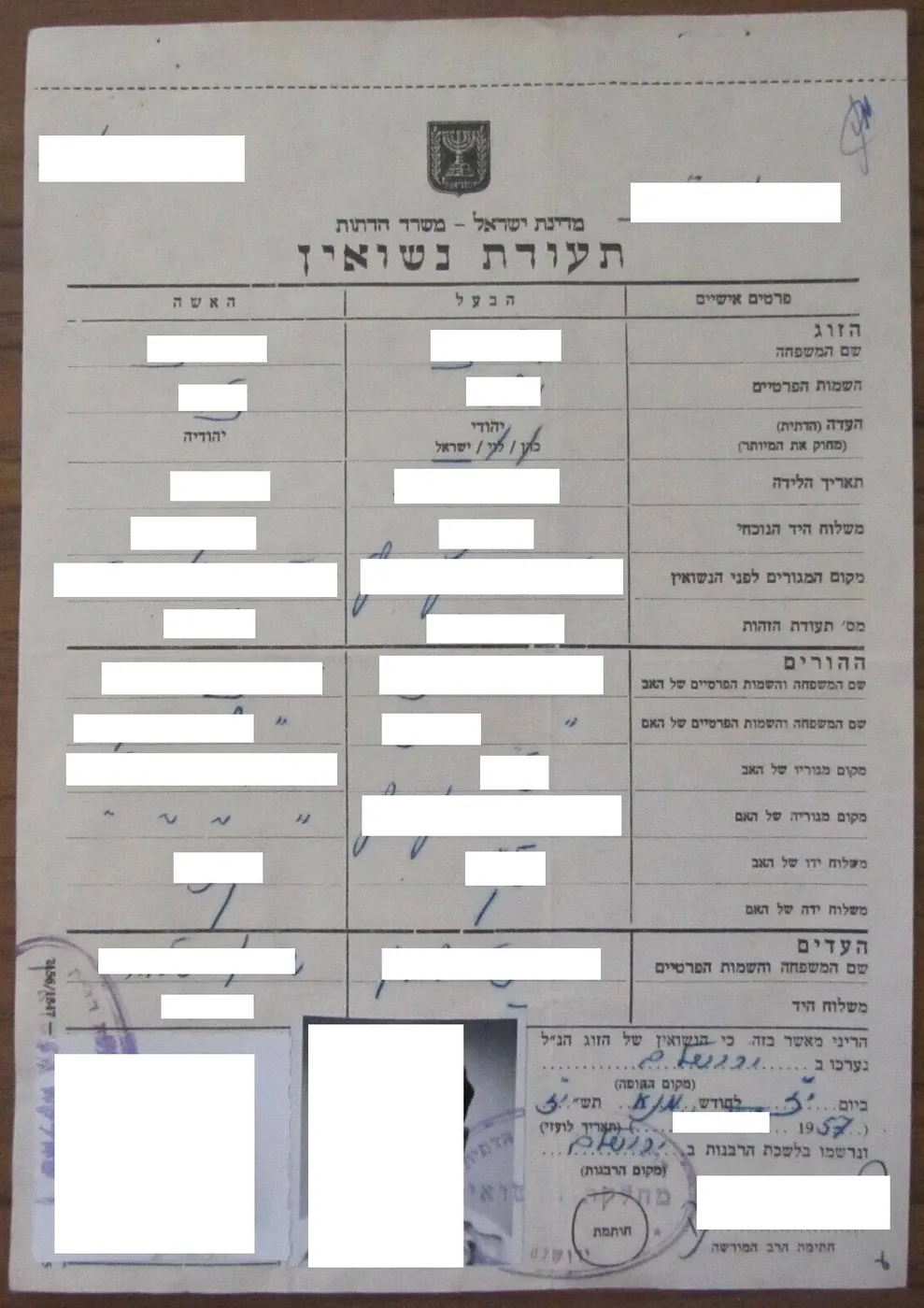
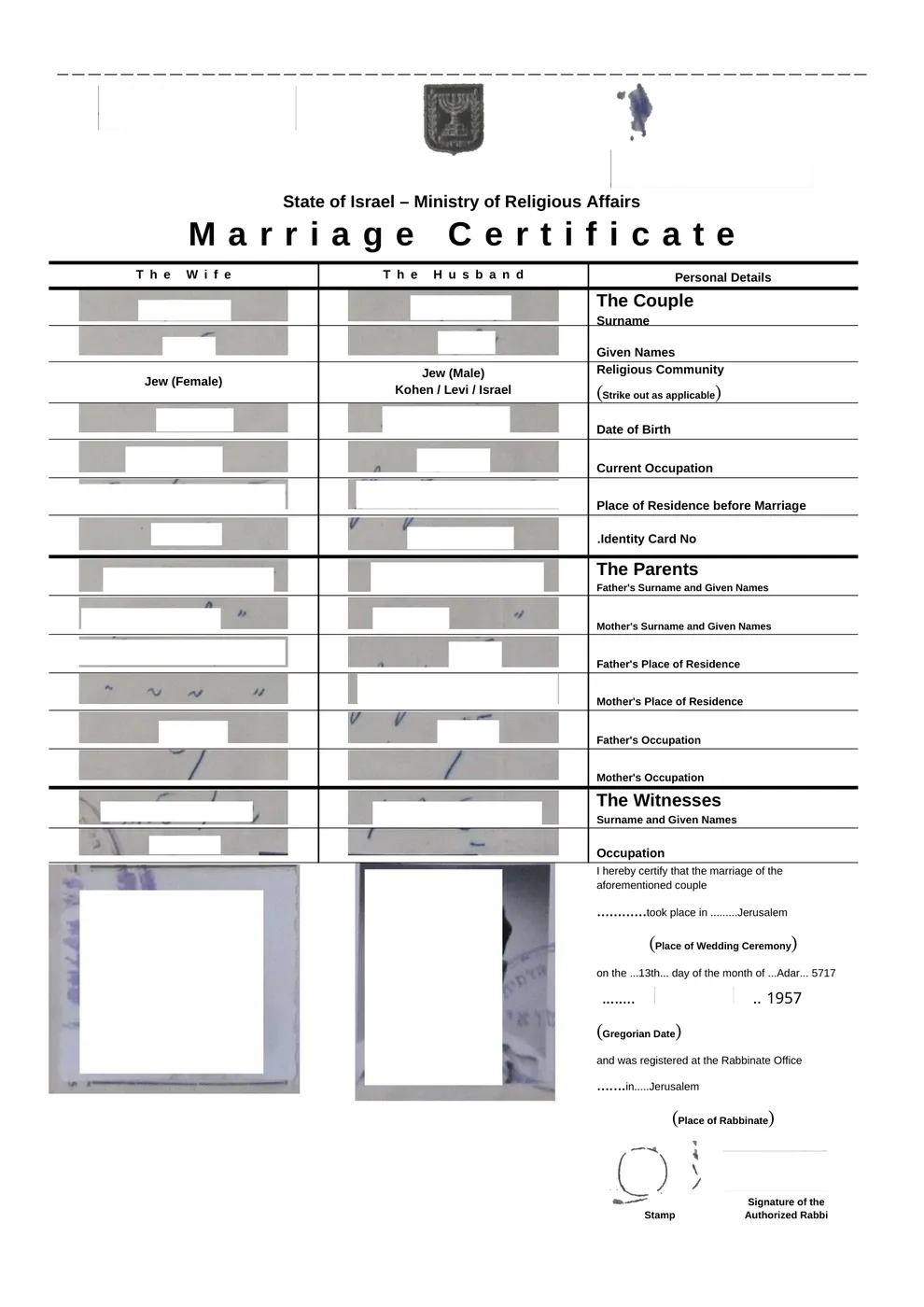
Scans create a separate practical risk: important text may be embedded in a stamp or image rather than the main body. I saw that issue in a scanned document on October 30, 2026. The stamp stays as a picture where it was printed, and a short bracketed note sits beneath it with the words read from the stamp, such as “[Stamp: …]”. A translator needs the stamp’s words as text because a certified translation has to translate the stamp too, and retyping a round stamp by hand is where words get lost.
When a scan is part of your work, inspect stamps and other image text rather than assuming the body text contains everything. A document tool can help extract and place content, but a human still needs to verify what the image says. For a file that’s unreadable or handwriting-heavy, ask for a clearer source or arrange a review against the original.
FAQ
Which translation specialization pays the most?
The available surveys don’t establish a reliable global ranking of translation specializations by earnings. Compare current rates for your own language pair, location, buyer type, and service, then test whether relevant clients actually need your offer.
How do I choose a translation specialization as a freelance translator?
Start with subjects you can understand or are prepared to study, then identify buyers who need that work. Compare local rates and assignment economics, test a specific service, and keep adjacent work open while you learn whether the niche has enough demand.
Do legal and medical translators earn more than general translators?
The cited evidence doesn’t prove that legal or medical translators earn more than general translators. A rate also depends on experience, minimum fees, client type, service, and geography, so compare like with like in your market.
What qualifications do I need to specialize in medical or legal translation?
Qualifications depend on the client, assignment, and market. Medical translators need strong source- and target-language skills and healthcare knowledge, alongside writing and cultural knowledge; legal translators need enough subject expertise to understand the text and its context.
How can translators research rates for a specific language pair and niche?
Compare local association reports, published surveys, and direct buyer quotes, and record the date, location, language pair, and service. Keep per-word rates separate from hourly fees and minimum charges so the comparison doesn’t mix different kinds of work.
Does choosing a specialization guarantee a full workload?
No. A specialization can make your offer easier to understand, but it doesn’t guarantee enough assignments. Test demand with relevant buyers and consider related services only when they fit your skills and the needs of your clients.