A criminal record certificate can be ready in Diia and still not meet a foreign authority’s requirements if you chose the wrong extract, language, or certification. Check those details with the organization that will receive the document before you order it or arrange a translation.
A Ukrainian criminal record certificate, also called an extract, may be requested for a visa, work, citizenship, or another procedure abroad. Diia lists foreign institutions among the reasons for requesting an extract, but an available extract isn’t automatically accepted without an apostille or translation. The receiving authority sets the requirements.
What you need to arrange
The right preparation depends on what the receiving authority asks for, not just on the destination country. A visa office, employer, court, or other organization may specify the language, whether an apostille is needed, and who must certify the translation.
An apostille is a certificate attached to an official document for use in another country covered by the Hague Apostille Convention. It confirms the origin of the official document through the relevant authority; it doesn’t confirm that a translation is accurate or approve the contents of the certificate. The Convention’s purpose is to replace diplomatic or consular legalization in cases where it applies (Hague Apostille Convention).
Before requesting the extract, get clear answers to these questions:
- Does the authority accept a Ukrainian document, or does it require an English or other-language translation?
- If it needs a translation, which language does it accept?
- Does it require an apostille on the Ukrainian original?
- Must the translation be notarized in Ukraine, or prepared by a sworn or court-certified translator in the destination country?
- Does the authority accept an electronic extract, or does it need a paper original?
- Does it request a short or full extract?
A Ukrainian notarial translation, a sworn translation prepared by a translator recognized in another country, and an uncertified translation are different formats. Don’t assume that one will substitute for another. Diia describes the extract as a document for foreign institutions, but doesn’t set universal translation rules; the organization receiving your paperwork does.
Ask for the complete document requirement in writing. A request such as “provide a criminal record certificate” may not tell you whether the office expects an apostille, which extract it wants, or how it defines an acceptable translation. Send the office the name of your Ukrainian document and ask it to confirm each requirement.
Choose the right extract and prepare the document
Diia offers a short and a full extract. The short extract contains information about whether a criminal record is present. The full extract also includes information about criminal prosecution and restrictions described by Ukrainian criminal procedure law (Diia’s extract service).
The distinction matters because a translation can’t add information that the original extract doesn’t contain. If the receiving authority asks for a full extract, translating a short one won’t meet that request. If the authority only wants information about a criminal record, don’t choose a longer document based on guesswork: ask which type it expects.
| What to confirm | Why it matters | What to ask |
|---|---|---|
| Short or full extract | The extracts contain different information | “Which type of Ukrainian extract do you require?” |
| Electronic or paper format | The MIA’s published apostille requirements apply to a paper original | “Will you accept an electronic extract, or do you need paper?” |
| Apostille | It authenticates the official document for use abroad where applicable | “Do you require an apostille for this document?” |
| Translation language | The destination’s official language may be required instead of English | “Which language do you accept?” |
| Translator or certification | Certification formats aren’t interchangeable by default | “Must the translation be notarized in Ukraine or sworn in your country?” |
Diia says its extract is free. Its service page gives a processing time of up to 10 working days, or up to 30 calendar days if additional checks are needed. Those figures are from the service information checked on March 9, 2026; check the current Diia page before you plan around a deadline.
A paper original may be necessary if you need an apostille from Ukraine’s Ministry of Internal Affairs (MIA). The MIA states that it apostilles paper originals bearing the issuing authority’s seal and an authorized official’s signature. Its published requirement doesn’t treat an electronic file as a paper original (MIA apostille requirements).
The MIA says: “Only original documents in paper form, bearing the seal of the issuing authority and the signature of its authorized official, are eligible for an apostille.”
That rule concerns apostilling the document, not whether a foreign authority accepts an electronic extract for another purpose. Ask the receiving organization directly if it says an electronic copy is acceptable.
Three ways to arrange the translation
The right translation option depends on the recipient’s rules. Compare the required format first, then choose who will prepare and certify the text.
A translation bureau
A bureau can coordinate translation and, where available, certification steps. That can be useful when you need help checking whether the apostille, original, and translation should be submitted together. Before you hand over the document, ask who translates it, what certification the bureau provides, and whether its format matches the receiving authority’s instructions.
A bureau’s label for a service isn’t proof that the recipient will accept it. “Certified,” “notarized,” and “sworn” can refer to different arrangements in different countries. Request a clear description of what you will receive: a translator’s signature, a notarial certification, or a translation by a sworn translator recognized in the destination country.
An individual translator
An individual translator may suit a straightforward document when you already know the required language and certification. The key question isn’t only whether the translator can translate Ukrainian. Ask whether the receiving authority accepts the translator’s qualifications and the form of certification they can provide.
A translator who can prepare the text may not be able to provide the type of sworn certification required in another country. A notary’s role also differs from a translator’s: notarization doesn’t automatically make a translation acceptable to every foreign authority. Confirm the exact requirement before paying for the work.
Online translation and human-certified service
An online document tool can help when you need to work from a digital file or scan and want the document layout preserved. In ChatsControl, you upload a DOCX or PDF and receive a translated Word file that keeps the document’s layout. For a scan or photo, the service reads the page and creates a formatted Word copy before translation. That can help with printed text and visible stamps, but handwriting and very degraded scans may be read unreliably.
An AI-generated translation isn’t the same thing as a legally certified translation. If the receiving authority requires a sworn or notarized result, the certification must come from the appropriate human translator or notary. ChatsControl’s certified translation option involves a human translator who reviews and stamps the result; it isn’t fully automated. You can also review the separate certified translation service.
Compare the formats before you commit
A format is useful only if the receiving authority accepts it. The table below helps you compare the questions to settle with each option.
| Option | What you get | Confirm before proceeding | Main limitation |
|---|---|---|---|
| Translation bureau | Translation, with certification options depending on the bureau | Whether the specific certification matches the recipient’s rules | The word “certified” alone doesn’t identify the legal format |
| Individual translator | Translation from a named professional, with any certification they can provide | Whether the recipient recognizes the translator and certification | A translator may not be authorized to provide a destination country’s sworn translation |
| Online document translation | A translated digital document; ChatsControl returns a formatted Word file | Whether an uncertified translation is acceptable, and whether a human certification is needed | A digital translation isn’t automatically sworn or notarized |
| Human sworn or certified translator | A human-reviewed translation with a certification form required by the recipient | Whether the translator is recognized by the receiving jurisdiction | Certification rules depend on the destination and recipient |
The comparison isn’t a ranking. A bureau may be practical when you need help coordinating physical documents. An individual translator can be appropriate when you already have precise instructions. An online document tool can help with a digital working translation, but it doesn’t replace a human certification when the receiving authority requires one.
A common point of confusion is treating translation and apostille as a single service. The apostille authenticates the origin of the official document; the translation communicates its contents in another language. Neither step automatically replaces the other. Ask whether the receiving authority wants the apostille translated as part of the document.
Step-by-step: get the language and certification right
Use this sequence when you have a deadline and need to avoid preparing the wrong format.
- Ask the recipient for its exact requirements. Get the accepted language, extract type, document format, apostille rule, and translator or certification requirement. Ask whether the original and translation must be submitted together.
- Choose the short or full extract. Match the extract to the wording in the authority’s request. Diia describes the short extract as covering the presence or absence of a criminal record, while the full extract includes additional information (Diia).
- Decide whether you need paper. If an apostille is required for an MIA extract, follow the MIA’s published paper-original requirements. Don’t assume a downloadable electronic file can receive the apostille.
- Request the apostille if needed. The MIA says an apostille application and payment receipt can be submitted at the same time as a request for an extract. Check the current process and conditions on the MIA service page.
- Translate the document in the required language. If the authority requires the apostille to be translated too, provide the full set rather than translating only the certificate text.
- Arrange the required certification. Give the translator the receiving authority’s written requirements. Confirm whether the result must be notarized in Ukraine or sworn or certified in the destination country.
- Check the finished package against the request. Match the name, extract type, apostille, translation language, and certification to the recipient’s instructions before submission.
The MIA’s page says applications for apostilles are accepted in Kyiv at 10 Bohomoltsia Street on weekdays during two listed windows: 10:00-11:00 and 15:00-16:00. Those opening hours were listed on the MIA page checked on March 9, 2026, and can change; verify the current schedule before travelling.
The same MIA page lists a fee of UAH 51 and cites MIA Order No. 860 of December 27, 2022. The page was checked on March 9, 2026, and that published amount isn’t a guarantee of the current payment amount for a future application. Check the payment details and amount on the MIA page before paying.
Diia announced online ordering of a paper extract with an apostille on September 11, 2025. Its announcement says applicants must be at least 14, log in to the app, have a confirmed tax number and have a passport or residence permit in the app; the stated delivery area is Ukraine. The announcement also says that people choosing a paper extract must pay within 24 hours. Because those details come from an announcement published on September 11, 2025, check the current Diia information before applying.
Pitfalls that can cost you time
The avoidable problem is often choosing a document format before checking what the recipient accepts. A mismatch may mean requesting a new extract, arranging another translation, or waiting through another processing cycle.
Treating English as a universal choice
English may be accepted by one authority and rejected by another that requires the country’s official language. No single language rule applies to every foreign institution. Ask the receiving authority directly and keep its answer with your application documents.
Ordering an electronic file when an apostilled paper original is required
The MIA’s published apostille rule requires a paper original with the issuing authority’s seal and an authorized official’s signature. An electronic file alone doesn’t meet that stated requirement (MIA apostille service).
A failed format choice can mean obtaining a paper extract and applying again for an apostille, with more time and a separate payment for the paper and apostille process. Diia’s electronic extract is free, but the MIA page lists an apostille fee; the published amount was UAH 51 when checked on March 9, 2026, and must be confirmed before payment. Choosing the format correctly at the start avoids that repeat work.
Translating before the apostille is attached
If the recipient asks for both an apostille and a translation, a practical sequence is to obtain the paper original and apostille first, then translate the complete set. The reason is straightforward: the apostille is attached to the official document, and the translation may need to include it. Confirm the final order with the recipient, because the receiving authority decides what it will accept.
Mixing up notarial and sworn translation
A notary in Ukraine and a sworn translator in the destination country don’t perform interchangeable roles by default. One recipient may ask for a notarial certification in Ukraine; another may require a translator officially recognized in its jurisdiction. Find out which one applies before selecting a provider.
Choosing the wrong extract
A short extract contains information about the presence or absence of a criminal record; a full extract contains additional information described by Diia. If the recipient’s request is unclear, ask it to specify which one it needs. The possible consequence of choosing incorrectly is a new application cycle, not a shortcut through translation.
Missing a stamp in a scan
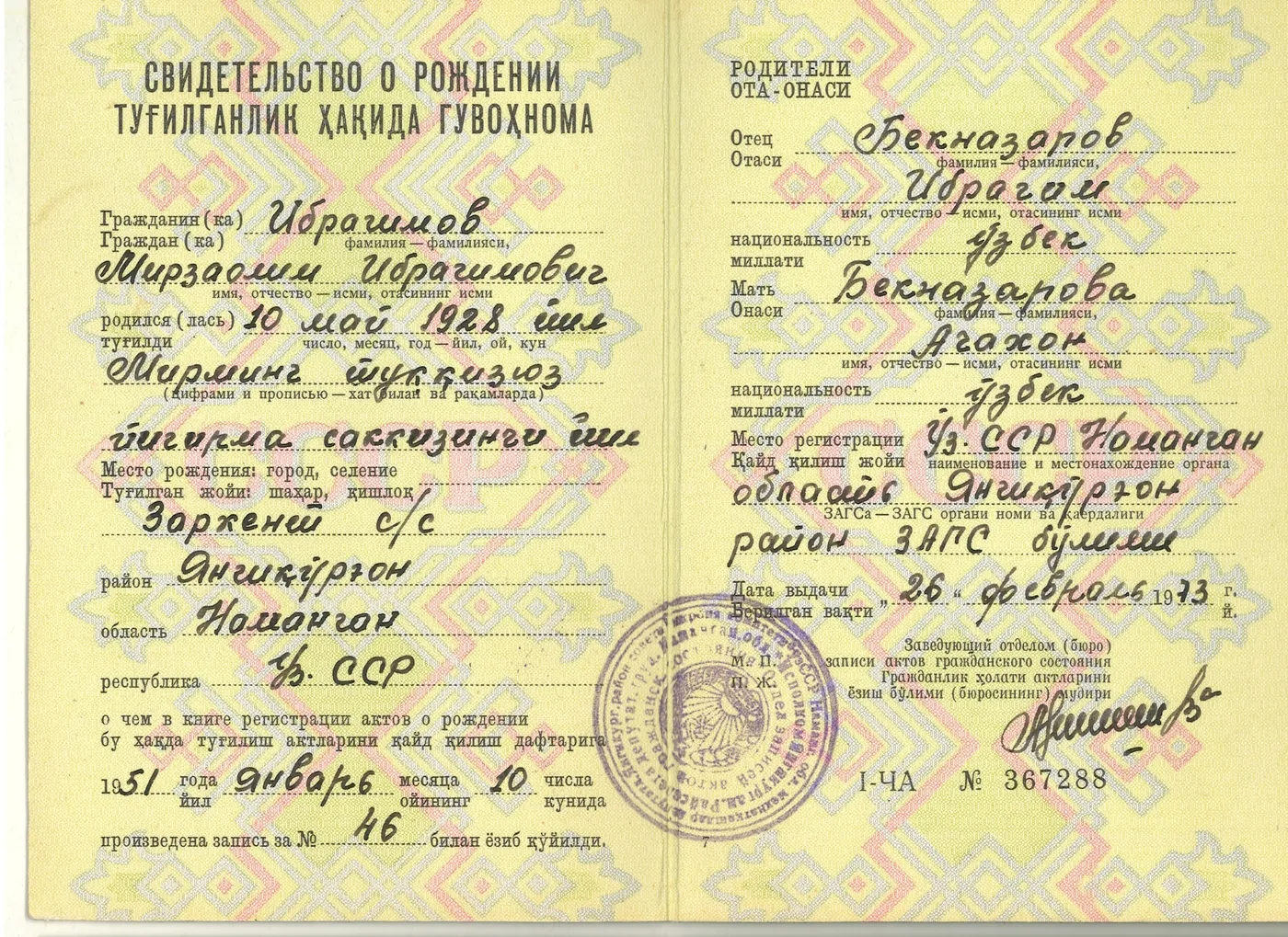
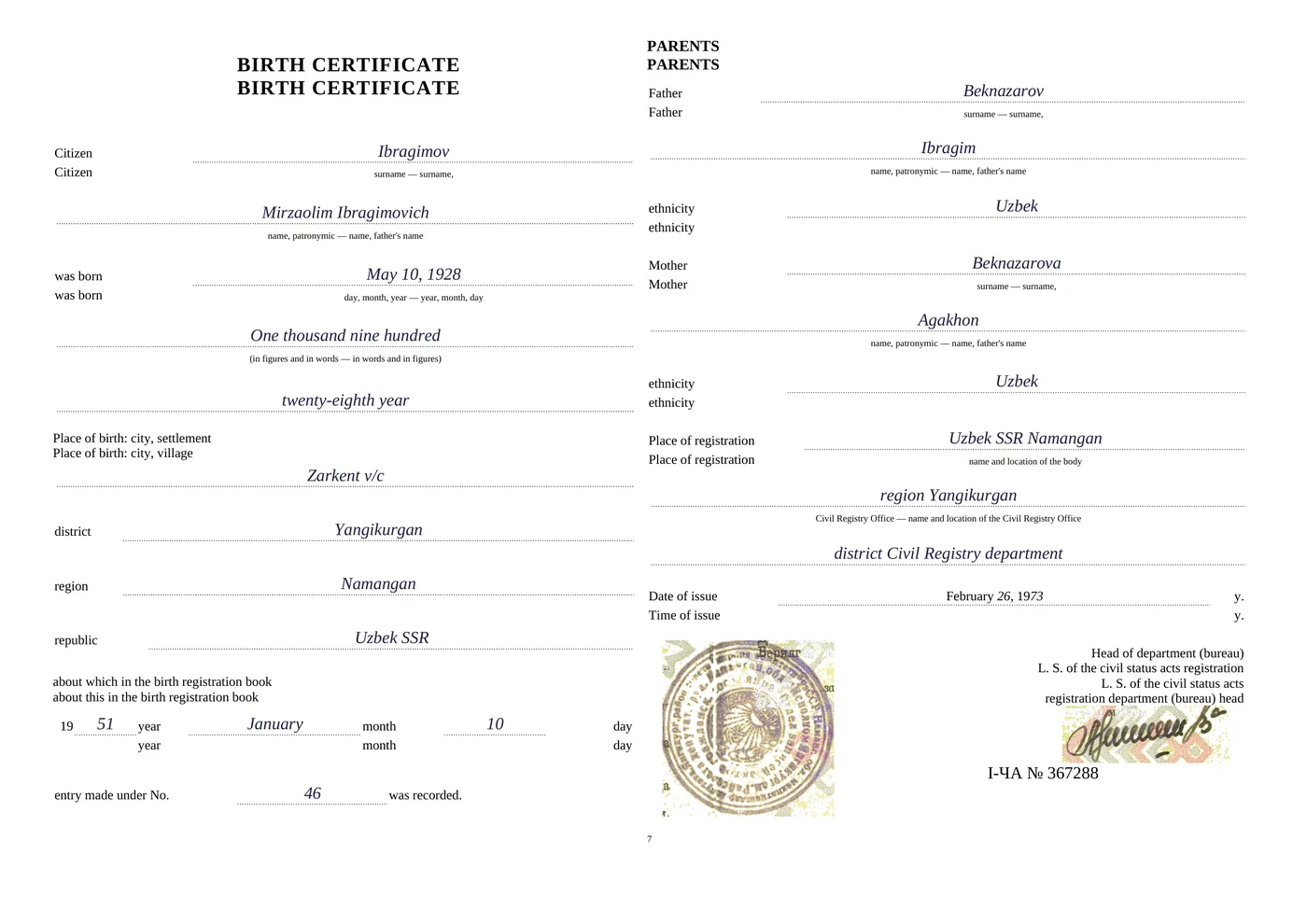
A stamp is part of the document, not decoration. If a certified translation has to cover the whole document, words in the stamp need to be represented too. On October 30, 2026, I worked with a scanned document where the stamp stays as a picture in its original position, with a short bracketed note beneath it recording the words read from the stamp. Retyping a round stamp by hand is where words can get lost.
A certified translation needs to translate the stamp as well as the typed text. When you send a scan, check that the stamp is legible and that the translator can account for it; a blurry seal or faint signature may need a clearer scan or a human check against the original.
Requirements vary by recipient and destination
Country names alone don’t tell you which translation format to order. The receiving authority’s rules decide whether it wants English or another language, an apostille, and a local sworn translation.
For a visa application
Diia lists visa applications among the reasons for requesting an extract. That doesn’t mean every visa office accepts the same format or treats an apostille the same way. Ask the specific visa authority or office handling your application whether it needs a short or full extract, paper or electronic form, and which language and certification it accepts.
A visa checklist may name the document without spelling out translation details. If the instruction only says “criminal record certificate,” ask for clarification before applying. A correct translation of the wrong extract or an electronic file where paper is required can still leave you with a package that doesn’t meet the request.
For work or citizenship
Diia also lists work and citizenship among possible reasons for requesting an extract. Employers and government bodies may have different submission rules, even within the same destination country. Ask the organization that will receive the certificate rather than relying on an employer’s general checklist or another applicant’s experience.
When the Hague Apostille Convention applies
The Hague Apostille Convention provides a way to replace diplomatic or consular legalization for covered official documents presented in another contracting state. Whether that process applies to your destination and document depends on the applicable international arrangements and rules. Check the recipient’s instructions and the Convention text.
For Ukrainian MIA documents, the Hague Conference lists Ukraine’s MIA among the competent authorities under Article 6 for official documents issued by the MIA and designated bodies (HCCH competent authority listing). That identifies the competent authority; it doesn’t mean every foreign recipient requires an apostille.
Diia says: “If you choose a paper extract, pay for the service within 24 hours. After that, Diia will send the application for processing.”
Diia published that instruction in its announcement on September 11, 2025 (Diia announcement). Treat it as a detail to verify in the current application flow, not as a universal deadline for every type of extract.
FAQ
What language should I use to translate a Ukrainian criminal record certificate?
Use the language specified by the authority receiving the certificate. Ask whether it requires the country’s official language or accepts English, and confirm which certification it wants.
Does a Ukrainian criminal record certificate need an apostille?
The receiving authority and the rules between the countries determine whether an apostille is needed. If an apostille is required for an MIA certificate, Ukraine’s MIA is the competent authority for that document.
Should I get an apostille or translation first?
If the authority requires both, the practical sequence is to apostille the paper original first, then translate the certificate and apostille together. Confirm the final format and order with the receiving authority.
Can I use an electronic Diia extract abroad?
An electronic extract alone doesn’t meet the MIA’s published requirement for apostilling a paper original. Ask the receiving organization whether it accepts an electronic extract without an apostille.
Do I need a notarized or sworn translation?
The receiving authority decides. A Ukrainian notarial translation and a sworn translation by a translator recognized in the destination country are different formats, so don’t assume one replaces the other.
Can I order a paper extract with an apostille through Diia?
Diia announced online ordering of a paper extract with an apostille on September 11, 2025. Check its current service details, eligibility requirements, payment instructions, and delivery conditions before applying.
What if I choose the wrong type of extract?
The short extract covers the presence or absence of a criminal record; the full extract also includes additional information described by Diia. Ask the authority which type it wants before applying, because a mismatch may mean starting the process again.
Sources
- Diia: criminal record certificate extract
- Diia: order an extract with an apostille online
- Ministry of Internal Affairs of Ukraine: apostille service
- Hague Conference on Private International Law: Ukraine competent authority
- Hague Apostille Convention
Need these documents translated?
Leave your number and we will message you, tell you which certification your institution needs, and name the price. Translation, translator review and notary certification.