A graduation date is fixed, a job offer has an onboarding deadline, and the receiving authority has asked for an authenticated diploma, not just a translation. The route depends on the destination: Saudi Arabia accepts apostilles under the applicable convention framework, while the UAE and Qatar require a different attestation process.
The main mistake is treating the Gulf countries as one paperwork destination. An apostille, consular legalization and ministry attestation aren’t interchangeable labels. Each confirms a document through a different chain, and a receiving authority can still set requirements for the document type, language, format or issuing institution.
This guide compares the routes for documents issued in Ukraine, explains what to prepare, and gives you a checklist to use before submitting originals. Check the receiving institution’s current instructions before you start: a ministry, employer, university or immigration office may ask for a specific sequence or translation format.
What needs to happen before a document is accepted abroad?
Legalization is a process for confirming the authenticity of signatures and seals on a document so an authority in another country can rely on it. Legalization doesn’t confirm that the claims inside the document are true, nor does it replace a translation when the receiving authority needs one.
An apostille is a certificate used between countries that are parties to the 1961 Hague Apostille Convention. The convention replaces the traditional legalization route with an apostille for public documents within its scope. The relevant authorities still need to issue the apostille, and the organization receiving your document decides whether the document meets its own requirements.
Attestation is a term used by Gulf ministries for confirming signatures and seals. UAE MOFA describes its service as authenticating signatures and seals on documents issued inside or outside the UAE. That confirmation isn’t a review of the document’s content, as UAE MOFA explains in its service description.
“Attestation certifies the authenticity of the signatures and seals on documents issued within or outside the United Arab Emirates.”
The practical point is simple: an attestation stamp doesn’t prove that a diploma, marriage certificate or court decision is accurate in every respect. It confirms the relevant signature and seal so the document can move through the required administrative chain.
The names for the process can overlap in everyday conversation. Someone may say “legalize my diploma” when they mean “get the required apostille or attestations, then prepare the translation.” Ask the receiving authority which steps it expects, and write down whether it asks for the original, a certified copy, an apostille, consular stamps, a translation or some combination.
Which route applies to each destination?
The destination country changes the first decision: should you use an apostille route, or should you confirm the required chain of attestations with the destination’s mission and foreign ministry?
| Destination | Convention position | What to check before you act |
|---|---|---|
| Saudi Arabia | Saudi Arabia and Ukraine are listed as parties to the Apostille Convention in the HCCH status table updated June 30, 2026. | Check the competent apostille authority for your document and the receiving organization’s requirements. |
| UAE | The HCCH status table updated June 30, 2026 doesn’t list the UAE as a party. | Confirm the UAE mission or MOFA route for your document and whether prior Ukrainian attestations and a certified translation are needed. |
| Qatar | The HCCH status table updated June 30, 2026 doesn’t list Qatar as a party. | Follow Qatar MOFA’s attestation process for foreign documents and confirm the steps with the relevant Qatari mission. |
The HCCH status table was last updated June 30, 2026, according to the page’s status information. Its listing of Ukraine and Saudi Arabia provides the treaty basis for apostilles between the two countries, but it doesn’t mean every document will be accepted without checking the receiving institution’s rules (HCCH status table).
Saudi Arabia joined the convention on April 8, 2022, and the convention entered into force for the country on December 7, 2022, according to the HCCH announcement dated December 7, 2022. Those dates matter because older advice may describe a Saudi route that predates the convention’s entry into force.
Apostille doesn’t mean “no other preparation.” A university or employer may still want a translation, a particular version of the document or evidence that the issuing authority is competent. The apostille confirms the relevant signature or seal; it doesn’t translate your diploma or decide whether your qualifications match a job.
UAE and Qatar routes need particular care because the apostille convention can’t be automatically applied to them. The HCCH table updated June 30, 2026 lists neither country as a contracting party, so ask the receiving authority or mission for the applicable attestation sequence rather than relying on an apostille checklist for Saudi Arabia.
For a broader explanation of how the two processes differ, see document legalization vs. apostille. For Saudi Arabia-specific details, the Saudi attestation and legalization guide can help you frame questions for the receiving institution.
Which documents should you prepare?
Your document type determines which authority can authenticate it, whether it needs earlier certification, and what translation format the receiving office expects. Make a document-by-document list rather than assuming that one route will work for every item in a family, study or employment file.
| Document or purpose | Examples | Check before starting |
|---|---|---|
| Education | Diploma, degree certificate, transcript or academic certificate | Confirm that the destination accepts the document type and that the institution meets any recognition requirements. |
| Personal status | Birth certificate, marriage certificate, divorce certificate | Ask whether the receiving authority needs the original, a newly issued copy or a certified translation. |
| Judicial | Court decision or other court document | Confirm the applicable authentication chain and whether the document is final or needs additional confirmation. |
| Employment | Diploma, professional qualification or personal-status records requested by an employer | Get the employer’s exact list and confirm whether a translation must accompany the authenticated original. |
| Health | Medical certificate or medical report | Check the destination’s rules for the issuing provider, date and format, as well as the attestation route. |
Qatar MOFA’s “Complete Attestation Outside Qatar” service covers foreign educational, personal-status and judicial documents. That service describes a route for documents issued abroad, not a blanket approval of every document in those categories (Qatar MOFA service).
Education documents for Qatar have a specific extra check. Qatar MOFA says the university degree must come from an accredited and recognized university included on the Ministry of Education and Higher Education’s list. A diploma from a university that doesn’t meet this condition can stop the process, so verify the institution before paying for translation or dispatching an original.
A basic pre-submission checklist helps you catch mismatches while you still have the document in hand:
- Identify the destination and receiving authority. Write down the exact ministry, employer, university or other organization that will receive the document.
- Ask for the required document version. Confirm whether it needs the original, a new certificate, a certified copy or another format.
- Confirm the authentication route. Ask whether an apostille applies or whether the document needs a chain of attestations.
- Check the language rule. Find out whether the receiving authority expects Arabic, English or a particular certified translation.
- Check the issuing institution or authority. For a Qatar university degree, verify that the institution appears on the ministry’s relevant list.
- Inspect the physical original. For a UAE submission through an approved courier provider, the document can’t be laminated.
- Record each required step and fee. Separate ministry fees from translation, prior certification, courier and other charges.
If you’re preparing several records for one application, group them by issuing authority and document type. A diploma and a marriage certificate may need different preliminary steps even when the same office will eventually receive both. Keep a copy of each document and a written record of which original went to which authority.
What does UAE attestation involve?
UAE attestation confirms the authenticity of signatures and seals on a document. For a foreign-issued document, UAE MOFA provides a route through a UAE mission abroad, and the service page says online availability depends on the mission. Check the mission’s website or contact it directly if the online service isn’t available (UAE MOFA attestation service).
The broad route is to prepare the original and any legally certified translation, complete the applicable attestations in the issuing country, and then use the UAE mission or the approved courier route that applies to your case. The exact steps before the UAE stage depend on the document and the competent authorities involved, so confirm them rather than copying the sequence for a different document type.
UAE MOFA’s courier-provider requirements say the submission must be an original in Arabic or English, or an original accompanied by a legally certified translation. The document must be attested by the competent authorities where applicable, and it can’t be laminated. A translation alone doesn’t replace a required authentication stamp.
The UAE MOFA service page lists a processing period of 3-7 working days for a submission outside the country through its courier provider, as stated on the page checked for this guide. That period covers the MOFA service, not earlier Ukrainian attestations, translation, shipping to the provider or time spent correcting a rejected application (UAE MOFA attestation service).
Digital attestation is a separate case. The described UAE MOFA digital service requires an original digital document issued in the UAE with a verification mechanism such as a QR code, reference number or barcode, and the document must belong to a supported type. That isn’t a general substitute for attesting a Ukrainian paper original.
An application error can stop the process before the document reaches the right officer. UAE MOFA says incorrectly completed applications are rejected automatically; the page also warns that incorrect information may carry legal responsibility. Its published warning makes careful checking of names, document details and service selection part of the actual process, not just a proofreading preference (UAE MOFA conditions of use).
“Applications that are not completed correctly will be rejected automatically.”
A rejection means you need to correct the application and follow the applicable submission route again. The fee and time consequences depend on what went wrong and which service was used, so don’t assume that a courier submission or a translation can fix an incorrect application after it has been filed.
How do you keep the UAE document and translation aligned? Compare the spelling of names, dates, document numbers and issuing authority across the original and translation. If a translation is legally certified, ask the provider to confirm how stamps and handwritten notes will be represented, because those details can be part of the document the receiving office reviews.
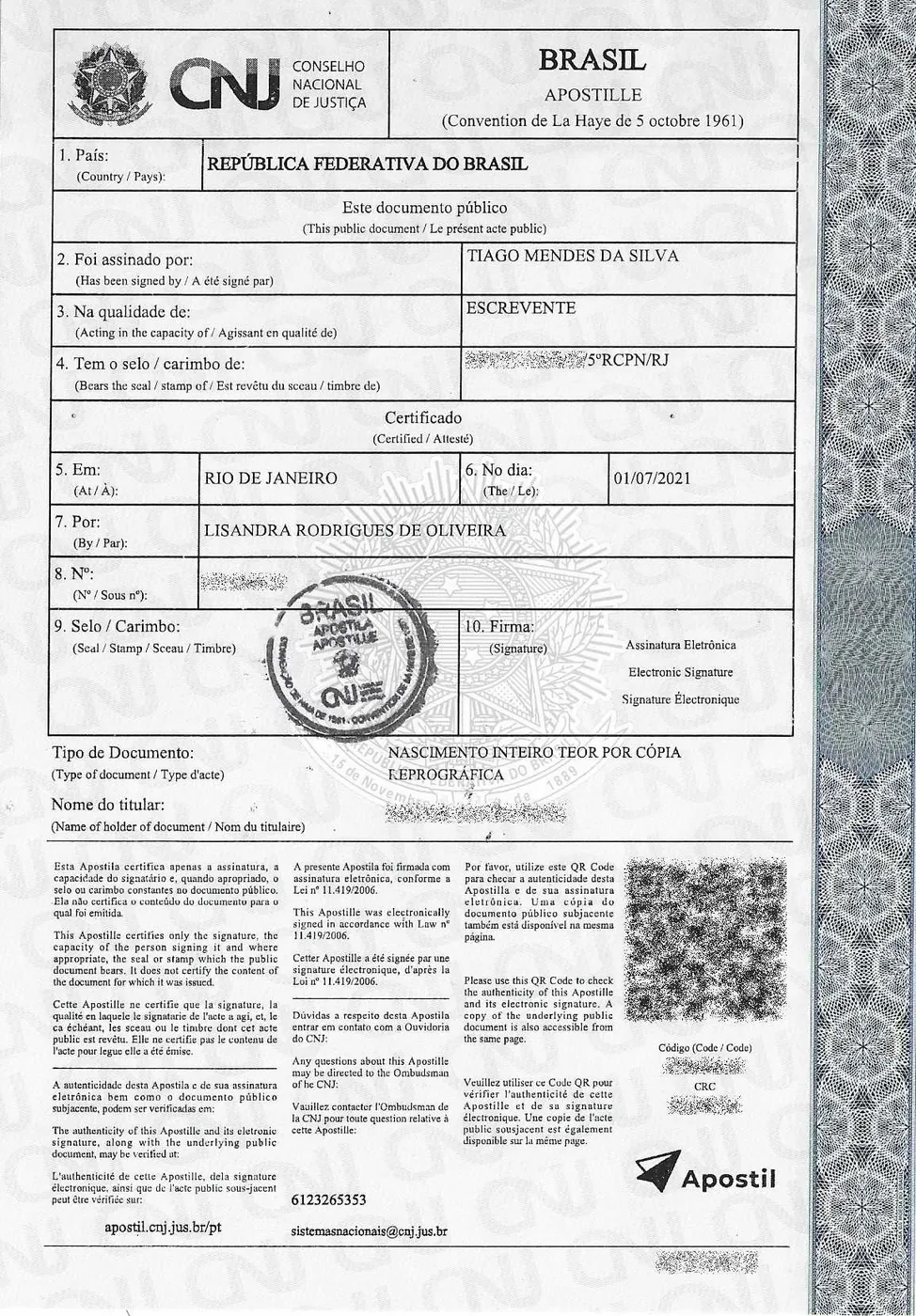
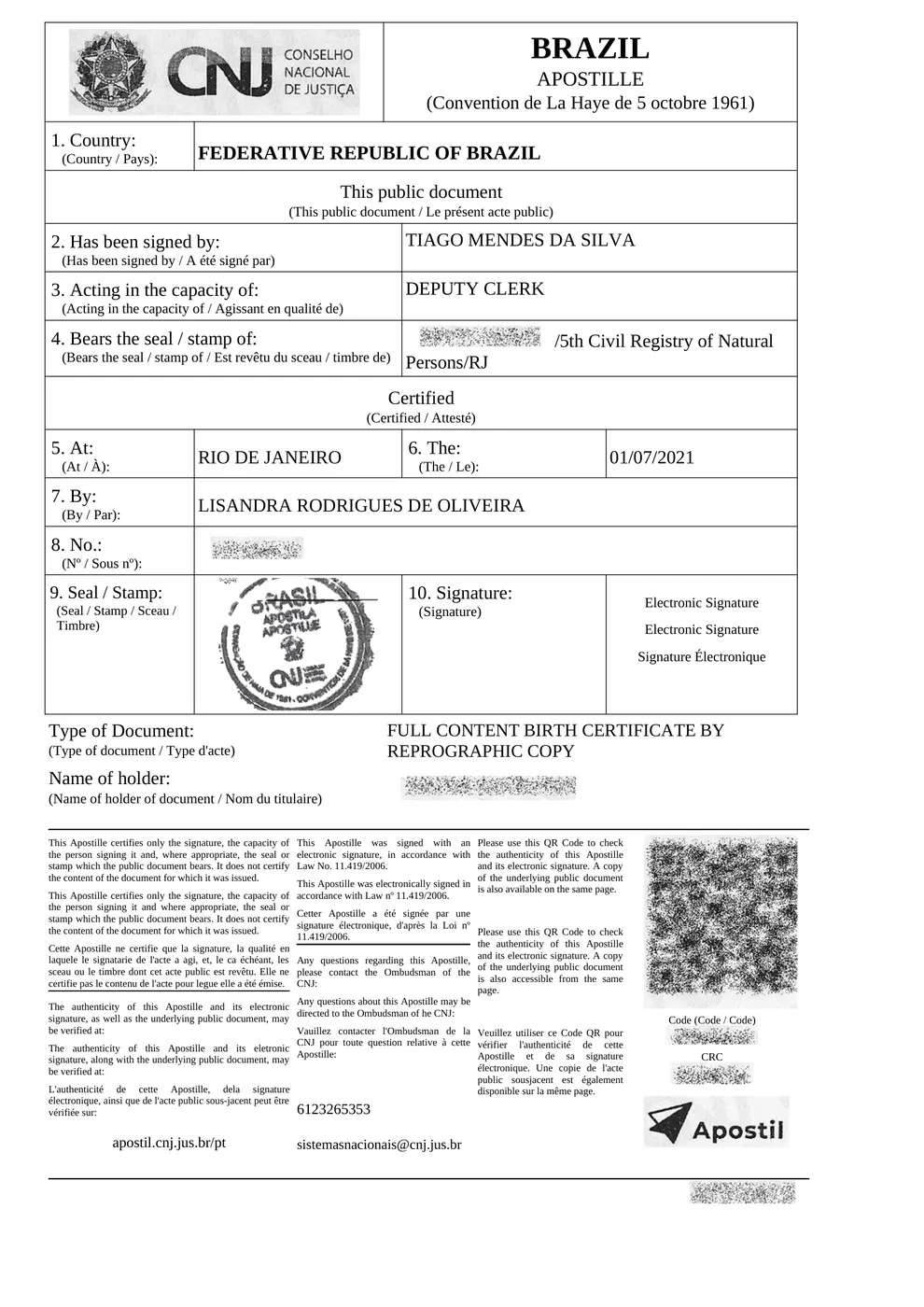
For a scanned document, the stamp often appears as an image rather than selectable text. ChatsControl can read a scan and rebuild a formatted Word copy, including placing a picture of the stamp where it appears and adding a bracketed note with the words read from it. A translator can then see the stamp text that needs translating; handwriting and heavily degraded scans remain difficult to read reliably. Use ChatsControl for a working translation or review step, not as a replacement for the legally certified translation or UAE attestation required by the receiving authority.
How does Qatar attestation work outside the country?
Qatar’s “Complete Attestation Outside Qatar” service describes a process for documents issued abroad. The document goes to the Qatari mission for attestation; if it hasn’t yet been attested, the foreign ministry in the country where the applicant is processing it may also take part. After the mission attests it, the document is returned for official approval in Qatar (Qatar MOFA service).
The service covers educational, personal-status and judicial documents issued outside Qatar. The wording matters: it describes a route for completing the attestation procedure abroad, but the order of earlier steps and the document-specific conditions still need to be confirmed for the original in your hands.
For a university degree, start by checking recognition. Qatar MOFA requires the university to be accredited and recognized and included in the Ministry of Education and Higher Education list for the service. A translation won’t solve an institution-recognition issue, and a ministry stamp can’t turn a degree from an ineligible institution into an eligible one.
The fee figures need to be read as separate parts of the process. Qatar MOFA’s service page lists 150 QAR for completion of attestation, an equivalent 120 QAR as the Qatari mission fee in the country where the document is being processed, and additional fees from that country’s foreign ministry. Those are service components, not a guaranteed all-in price for translation, prior authentication and delivery; check the page before submitting because tariffs can change (Qatar MOFA service fees).
A separate Qatar MOFA tariff page lists 100 QAR for academic certificates and 100 QAR for other certificates. The same published schedule lists 100 QAR for birth certificates, marriage contracts and divorce certificates, and 100 QAR for medical certificates and reports. These category fees shouldn’t be confused with the separate completion-service charges listed for a document processed outside Qatar (Qatar MOFA legalization tariff).
Commercial documents use other categories. Qatar MOFA’s published tariff lists 150 QAR for a certificate of origin and 150 QAR for a business contract. A company document may therefore have a different fee category from a personal-status certificate, even when both are going through an attestation process (Qatar MOFA legalization tariff).
“This service aims to grant legal validity to documents issued by foreign countries (educational, personal status, judicial, etc.) that require the completion of attestation procedures abroad.”
The service’s purpose is to finish an attestation chain for foreign documents. It doesn’t remove the need to check whether the document is eligible, whether the university is recognized or whether the receiving organization asks for a translation in a particular language.
For more on the distinction between an apostille and a multi-step consular route, read countries without apostille: when full consular legalization is needed. The UAE route has its own details, including the mission and courier options, in the UAE attestation step-by-step guide.
Which option fits your case: bureau, freelancer or online tool?
The right option depends on what part of the job is difficult. Authentication is an official process; translation is a language service; a document tool can help prepare or review a translation. Treating those as one service can lead to a polished translation attached to a document that still lacks the required attestations.
A translation bureau can coordinate human translation and, where offered, certified translation or notarization through a partner. That option suits a file where a receiving authority requires a legally certified translation or where you want a provider to check how stamps, seals and formatting should appear. Ask what the quoted service includes: translation, certification, notarization, authentication and delivery are separate items unless the provider says otherwise.
A freelance translator may be a good fit when you need translation and can manage the attestation chain yourself. Before agreeing, confirm the translator’s qualification, whether the receiving authority accepts the proposed certification, how names and stamps will be handled, and what file format you’ll receive. A freelancer’s translation doesn’t itself certify the original’s signature or seal.
An online document tool can help with a working translation or with preparing a readable review copy, particularly when the source is a PDF or scan. ChatsControl accepts DOCX and PDF and can return a translated Word file while preserving layout; scanned PDFs and photos go through text recognition first. Its bilingual review view puts source and translation side by side, which helps you check names, dates and document numbers. The tool doesn’t issue an apostille, attest an original or turn an AI translation into a legally certified translation.
| Option | Useful when | What it doesn’t replace |
|---|---|---|
| Translation bureau | You need human translation and may need a certified or notarized version. | The official authentication steps required by the destination. |
| Freelance translator | You need language work and can coordinate certification and document handling separately. | An apostille, ministry attestation or consular step. |
| Online document tool | You need a formatted working translation, scan transcription or side-by-side review. | A human-certified translation when required, or any official stamp on the original. |
For legally certified translation, a human translator and certification step matter. The certified translation service offers translation from 300 to 750 UAH per 1,800 characters depending on language, notarial certification for 400 UAH per document, and apostille for 2,100 UAH per document, according to the current ChatsControl prices block. These are service prices, not the total cost of UAE or Qatar legalization, and they don’t include government fees or delivery unless stated separately.
A text document and a scan behave differently during translation. A DOCX contains paragraphs and table cells that can be read with their formatting; a text PDF has positioned text rather than true paragraphs and tables, so it first needs to be reconstructed as an editable document. A scanned page is an image, so text recognition must come before translation. That distinction is useful when a stamp sits inside a scan: the translator needs the stamp’s words as well as the typed body.
Use an online tool for a draft or review copy when the receiving authority doesn’t require a certified human translation. Choose a human certified service when the receiving office requires certification, and ask the office what it accepts before paying for a translation.
What steps should you follow before sending an original?
A complete route starts with the receiving authority’s instructions, not with a courier booking. The checklist below helps you plan the work in the right order and catch requirements that differ between Saudi Arabia, the UAE and Qatar.
- Get the receiving authority’s document list. Ask for the required document type and version, destination language, translation certification and authentication format.
- Choose the destination route. For Saudi Arabia, check the apostille route under the convention and the receiver’s rules. For the UAE and Qatar, confirm the relevant attestation process with the receiving authority or mission.
- Check the document’s eligibility. Verify the issuing authority and any special condition. For a Qatar university degree, confirm that the university is on the relevant ministry list.
- Inspect the original. Check that names and dates are legible and that there are no physical issues that prevent submission. UAE MOFA’s courier requirements say documents can’t be laminated.
- Complete the required prior authentication. Use the competent authorities for the document type and follow the order confirmed for the destination.
- Prepare the translation. Follow the receiving authority’s language and certification requirements. Make sure the translator accounts for stamps, seals and handwritten notes as well as the main text.
- Submit through the confirmed channel. Use the mission, service or approved courier provider that applies to your document and country.
- Keep records until the original is returned. Save the application details, payment confirmations, tracking information and copies of the submitted document.
Check names character by character. A transliteration can vary between a Ukrainian document, a passport and a translation, especially if a person uses a different spelling in English or Arabic. Ask the receiving organization which spelling it wants and keep that spelling consistent across the translation and application.
The translation should describe the document as issued, not silently repair it. If a date is hard to read, a name is inconsistent or a stamp is unclear, resolve the issue with the issuing authority or translator before submission. An unofficial correction can create a mismatch between the authenticated original and its translation.
Submitting by courier doesn’t mean the entire chain is complete. The UAE MOFA estimate of 3-7 working days applies to the MOFA processing service for submissions outside the UAE through its courier provider, according to its service page checked for this guide. Prior attestations, translation and shipping add separate stages, so don’t use that service estimate as the end-to-end timeline (UAE MOFA service).
The same distinction applies to Qatar fees. A listed ministry fee or mission fee covers a part of the process, not necessarily earlier certification, translation or delivery. Check the current official fee page and get a breakdown for every service before sending an original.
What commonly causes delays or rejection?
Most avoidable problems come from starting with a familiar process rather than the receiving authority’s actual instructions. A stamp can be genuine and a translation can be accurate, yet the file can still be rejected if the document used the wrong route or missed a required stage.
Using an apostille route for the wrong destination. The HCCH status table updated June 30, 2026 lists Ukraine and Saudi Arabia, but not the UAE or Qatar. An apostille route that applies to a Saudi document shouldn’t be copied automatically for the UAE or Qatar; ask the receiving authority which attestation chain it accepts (HCCH status table).
Assuming attestation validates the content. UAE MOFA describes attestation as confirming signatures and seals, not examining what the document says. A ministry stamp doesn’t prove that a university degree meets Qatar’s recognition rule or that an employer accepts a qualification. Check both the document’s authenticity route and its substantive eligibility.
Submitting a laminated original for UAE attestation. UAE MOFA’s courier-provider requirements say the original can’t be laminated. A laminated document may not meet the submission requirements, so inspect it before booking the service and ask the mission how to proceed if the original is already laminated (UAE MOFA attestation service).
Making an application error. UAE MOFA says incorrectly completed applications are rejected automatically, and warns that incorrect information can lead to legal responsibility. Review every field against the document and passport before submitting; don’t guess at a name, date or document reference (UAE MOFA conditions of use).
Assuming any university degree qualifies for Qatar attestation. Qatar’s service requires the university to be accredited and recognized and included on the ministry’s list. Check that condition before paying for translation or arranging international delivery; if the degree doesn’t meet it, the process can stop regardless of translation quality (Qatar MOFA service).
Leaving stamp text out of a translation. The main body can be perfectly readable while a round seal contains a name, title or issuing office that the certified translation must also capture. A scan keeps the stamp as an image, so the translator needs a transcription of its words rather than a clean-looking page that silently omits them.
On a scanned document, the stamp stays a picture where it was printed, and right under it goes a small note in brackets with the words read off it, like “[Stamp: …]”. I use that approach because a certified translation has to translate the stamp too, and retyping a round stamp by hand is where words get lost.
For a scan with a hard-to-read seal, ask the issuing authority for a clearer copy or have the translator check the original image before certification. OCR can help extract printed text, but handwriting and poor-quality scans can still be read unreliably; don’t treat a machine-generated transcription as proof that every stamp word is correct.
If a mission or ministry rejects the file, ask for the exact reason and whether it concerns the document, the authentication chain, the translation or the application. A clear reason tells you which stage to correct. Sending the same package again without identifying the issue can repeat the original problem.
How do requirements differ by document and country?
A family file, a study application and an employment package can contain different document types, and each one may follow a different route. Use the destination’s requirements for each document rather than applying the same assumptions to the whole folder.
For Saudi Arabia, ask whether the document falls within the apostille process. The Apostille Convention replaced traditional legalization between contracting parties for public documents within its scope. Ukraine and Saudi Arabia are listed as parties in the HCCH table updated June 30, 2026, and the convention entered into force for Saudi Arabia on December 7, 2022 (HCCH status table; HCCH announcement). Confirm the competent authority for your Ukrainian document and whether the employer, university or government office wants a translation as well.
For UAE documents, check the mission and route before sending the original. UAE MOFA says foreign documents can be submitted through a UAE mission abroad, while online-service availability depends on the mission. The courier route requires an original in Arabic or English, or an original with a legally certified translation, and says applicable competent-authority attestations must already be in place. Ask which channel applies to the specific document and whether the mission offers online processing (UAE MOFA attestation service).
For Qatar, separate eligibility from the attestation chain. The foreign-document service covers educational, personal-status and judicial documents, but educational degrees have the university-recognition condition. A marriage certificate and a diploma therefore shouldn’t be treated as equivalent simply because both need attestation; the diploma has an additional institution check (Qatar MOFA service).
For fees, separate official charges from translation and logistics. Qatar MOFA’s tariff schedule lists different fee categories for academic certificates, personal-status documents, medical records and commercial documents. The separate complete-attestation service also lists its own charge and a Qatari mission fee, with country-of-processing ministry fees added. Confirm which categories apply to each document and check the official pages for current charges before you pay (Qatar MOFA service fees; Qatar MOFA tariff).
A practical way to manage a mixed file is to make one row per original, with columns for destination, receiving authority, document type, authentication route, translation language, certification requirement and submission channel. Keep one row for each document rather than writing “family documents” or “employment papers” as a single item. That makes it easier to spot a diploma-specific rule or a translation requirement that applies only to one certificate.
FAQ
Does the UAE accept an apostille on a Ukrainian document?
Don’t assume that an apostille is the required UAE route. The HCCH status table updated June 30, 2026 lists Ukraine and Saudi Arabia as parties but doesn’t list the UAE, so confirm the applicable attestation chain with the receiving authority or UAE mission (HCCH status table).
Does Saudi Arabia accept apostilles on Ukrainian documents?
Ukraine and Saudi Arabia are listed as parties to the Apostille Convention in the HCCH status table updated June 30, 2026. The convention entered into force for Saudi Arabia on December 7, 2022; check the competent authority for your document and the receiving institution’s requirements before submission (HCCH announcement).
How much does it cost to legalize a Ukrainian document for Qatar?
Qatar MOFA lists 150 QAR for completion of an attestation outside Qatar and an equivalent 120 QAR fee for the Qatari mission in the country of processing, plus fees from that country’s foreign ministry. The published figures are components of the process, not a guaranteed total for translation, earlier attestations or delivery (Qatar MOFA service fees).
What documents do I need for UAE attestation?
The UAE courier route requires an original in Arabic or English, or an original with a legally certified translation. Applicable competent-authority attestations must be in place, and the document can’t be laminated; check the UAE mission’s current submission instructions for your document (UAE MOFA attestation service).
Will Qatar attest a Ukrainian university diploma?
Qatar’s foreign-document service covers educational documents, but the university must be accredited and recognized and included on the Ministry of Education and Higher Education list. Check the institution’s status before starting the process (Qatar MOFA service).
Can I submit a UAE attestation application myself?
You can handle the application yourself if you can meet the document and service requirements, but verify the applicable route with the UAE mission or approved courier provider. UAE MOFA says incorrectly completed applications are rejected automatically, so check all application details against the original before submitting (UAE MOFA conditions of use).
Need these documents translated?
Leave your number and we will message you, tell you which certification your institution needs, and name the price. Translation, translator review and notary certification.