A document can be translated into German correctly and still be rejected if the translator’s status, the certification, or the apostille doesn’t match the receiving authority’s rules. Germany and Austria share a language, but they don’t use identical rules for certified translations.
Start with the institution that will receive the document, not with the translation itself. A registry office, court, university, immigration authority, and citizenship office may each ask for a particular form of translation or proof that the original document is genuine. The right sequence depends on the document and the country where you’ll submit it.
What you need to arrange before translating¶
A German translation is the translated text. A certified translation is a translation whose accuracy and completeness are formally confirmed by a qualified translator under the rules that apply where you’re submitting it. An apostille is different: it confirms the authenticity of a signature and, where applicable, a seal and the authority of the person who signed the public document.
Those three things answer different questions:
| Item | What it does | What it doesn’t do |
|---|---|---|
| German translation | Makes the document understandable to a German-speaking recipient | Doesn’t prove that the original document is genuine |
| Translator’s certification | Confirms the translation according to the rules of the relevant jurisdiction | Doesn’t automatically replace an apostille on the original |
| Apostille | Confirms aspects of the authenticity of a public document | Doesn’t certify the accuracy of a translation |
The distinction matters because a certified translation can’t repair a problem with the original, and an apostille can’t fix an incorrect translation. The German Federal Foreign Office explains that a German authority receiving a foreign public document may require confirmation of its authenticity. The applicable procedure depends on international agreements and the country that issued the document (Federal Foreign Office guidance).
For a Ukrainian document, the apostille is issued by the competent Ukrainian authority, not by a German authority. Germany’s embassy in Ukraine says it can’t issue an apostille on a Ukrainian document or arrange one for you (Embassy of Germany in Ukraine).
The receiving office is the best place to start because it can tell you whether it needs the original, a certified copy, an apostille, a particular kind of translation, or some combination. Ask for the requirements in writing if the instructions aren’t clear. A short message naming the document and your application can save you from paying for the wrong certification.
When checking requirements, separate the questions:
- Does the authority require the original or a certified copy?
- Does it require an apostille or another authenticity procedure?
- Must the translation be certified, and if so, in which country?
- Does it require a paper original, or will it accept a digital document?
- Does the instruction apply to your specific document and application?
The answers may differ even for documents that look similar. A diploma and a birth certificate, for example, come from different issuing bodies and may follow different apostille routes in Ukraine. The German embassy’s guidance assigns apostilles for Ukrainian civil registry, court, and notarial documents to Ukraine’s Ministry of Justice; education documents to the Ministry of Education and Science; and other categories to the relevant authorities (Embassy of Germany in Ukraine). Check the competent authority for your document before making an appointment or sending the original.
Which translator Germany or Austria may require¶
Germany and Austria both have official systems for translators who can certify translations, but the systems aren’t interchangeable simply because both countries use German. A translator’s relevant qualification or authorisation depends on the jurisdiction where the translation will be submitted.
For Germany, the Federal Foreign Office says:
“If German authorities and courts require translations of foreign documents, these translations should be done by a sworn or certified translator in Germany.”
That guidance points to a translator with a recognised status in Germany, rather than a translator who simply advertises that they are “certified.” The official German translator database includes translators and interpreters who have a general oath, public appointment, or general authorisation for court, authority, and notarial work (German translator database). The database also explains that admission follows state-level law and usually involves checking professional suitability.
Germany is made up of federal states, and translator authorisation is governed by state law. That means you should check the person in the official database and confirm that the relevant language combination and status fit your purpose. The database is dynamic, so verify the entry when you need a translator rather than relying on a saved listing.
Austria’s guidance is more explicit about where the translator must be certified in certain procedures. For Austrian citizenship applications, the government portal says that foreign-language documents must be submitted in the original with a German translation certified in Austria. The portal also says that, where a certified translation is required, it can be carried out only by a translator sworn and certified in Austria (Migration.gv.at citizenship guidance).
Austrian law describes how a court-certified translator certifies the match between the translation and the original: the translator states the date, signs the translation, and adds a seal. The rule appears in § 190(1) of Austria’s Außerstreitgesetz (RIS legal text). The European e-Justice portal also points users to Austria’s official register of publicly sworn and court-certified translators (e-Justice Austria).
For documents going to Austria, the Austrian Foreign Ministry’s guidance says foreign documents submitted to Austrian authorities should be translated by a legally sworn translator officially registered in Austria. The translation is confirmed with a seal and signature (BMEIA guidance). Because instructions can depend on the receiving office and the document, use the relevant authority’s own directions as the final check.
A translator registered in Germany may produce accurate German, but that alone doesn’t prove that an Austrian authority will accept the certification. The same caution applies in reverse. Before paying, tell the translator where you’ll submit the document and ask whether their status satisfies that country’s requirements.
Documents, originals, copies, and apostilles¶
The document’s purpose often determines what you need more than the document’s name does. A birth certificate for a citizenship application may have different requirements from a birth certificate for university registration, even if the issuing authority is the same.
Use this checklist to sort your paperwork before requesting a quote:
| Document or feature | What to check | Why it matters |
|---|---|---|
| Birth, marriage, or other civil record | Whether the recipient needs the original, a new issue, or a certified copy | The authority may require the underlying record in a particular form |
| Diploma or transcript | Whether the institution needs an apostille, a translation, or both | Education documents follow a different Ukrainian apostille route from some civil records |
| Court or notarial document | Which Ukrainian authority handles its apostille, if required | The issuing category affects the competent body |
| Stamp, seal, handwritten note, or printed annotation | Whether every visible element must be translated | A certification may need to cover the complete document, not just its main text |
| Copy rather than original | Which body can certify the copy and whether the recipient accepts it | A certified copy and an apostille are separate things |
| Document issued in another country | Which authenticity procedure applies to that country | The apostille route depends on international agreements and the place of issue |
An apostille is attached to the public document, not to the translated wording. The German Federal Foreign Office says that translations aren’t public documents and can’t be apostilled or legalised as public documents (Federal Foreign Office guidance). An authority may still have a process for confirming a translator’s signature or status, but that isn’t the same as apostilling the translation.
For documents from countries that are parties to the Hague Apostille Convention, an apostille replaces consular legalisation. The apostille is issued by the competent authority in the country that issued the public document, and the procedure requires the original public document (Federal Foreign Office guidance). Germany’s embassy in Ukraine states that the Hague Apostille Convention between Ukraine and Germany entered into force in July 2010 (Embassy of Germany in Ukraine).
The apostille confirms the authenticity of the signature and, where applicable, the seal and the authority of the person who signed the document. It doesn’t confirm that the translation is accurate. Germany’s embassy in Ukraine describes the apostille’s purpose in those terms (Embassy of Germany in Ukraine).
Some international multilingual civil-status documents are treated differently. Germany recognises certain multilingual civil-status documents issued under the CIEC Convention of 1976 without formalities, and Austria is among the countries listed in the German Federal Foreign Office guidance. The document must match the convention’s prescribed form; don’t assume that any document with several languages qualifies (Federal Foreign Office guidance).
Austria’s e-Justice information also describes multilingual standard forms that may help with certain civil documents, including birth, death, and marriage certificates and proof of residence. Those forms apply only to specified categories and when the relevant form is available (e-Justice Austria). A form can help the authority understand the document, but it doesn’t automatically replace every translation or certification requirement.
A certified copy is another separate issue. Austria’s e-Justice portal says a certified copy may be issued by bodies such as a notary, district court, or the issuing authority, although not every body can certify every kind of copy in every case (e-Justice Austria). Ask the receiving office what kind of copy it accepts before ordering one.
Choosing a translation route¶
The practical choice is usually between a specialist translation bureau, an individual sworn translator, or an online document-translation tool. None of these options removes the need to check the recipient’s rules. The right choice depends on whether your document needs legal certification, how it is formatted, and whether the original is readable.
A translation bureau¶
A bureau can be useful when you have several documents, mixed document types, difficult scans, or a process that requires coordination between translation, certification, and apostille. Before handing over an original, ask who will translate the document, where that translator is authorised, and whether the final paper copy will carry the signature and seal required for your destination.
Ask for a written quote that separates translation from certification and any additional document handling. A low translation price doesn’t tell you whether the final format is acceptable. Check whether the quote includes the stamps and handwritten notes, how the translator will handle illegible text, and what you will receive: a digital file, a paper original, or both.
A bureau may coordinate multiple tasks, but don’t assume that it can issue an apostille itself. For a Ukrainian public document, the apostille must come from the competent Ukrainian authority. The German embassy in Ukraine identifies the relevant authority by document category (Embassy of Germany in Ukraine).
An individual sworn translator¶
An individual translator may be a direct option when you know which jurisdiction’s certification you need. For Germany, check the person’s entry in the official German database and confirm their language combination and status. For Austria, use the Austrian register of publicly sworn and court-certified translators referenced by the e-Justice portal (German database; Austrian e-Justice guidance).
Send a clear scan or photo for an initial review, but ask whether the translator will need the original or a particular copy before preparing the final certified version. The receiving authority’s rules determine whether the final translation must be physically attached to the original, accompanied by a certified copy, or submitted separately. Don’t infer the answer from another application or from a translator’s work for a different authority.
An individual translator is not automatically the right choice just because they work in German. A German translator’s certification may not meet an Austrian authority’s requirement, and an Austrian certification may not meet a German authority’s instructions. Check the destination first.
Online tools for document drafts and layout¶
An online document tool can help when your immediate problem is understanding a document or preserving its layout during a working translation. In ChatsControl, you upload a DOCX or PDF and receive a translated Word file with the document structure retained. For a scan or phone photo, the tool reads the page first and rebuilds it as an editable Word document; stamps, seals, and signatures remain images in their positions.
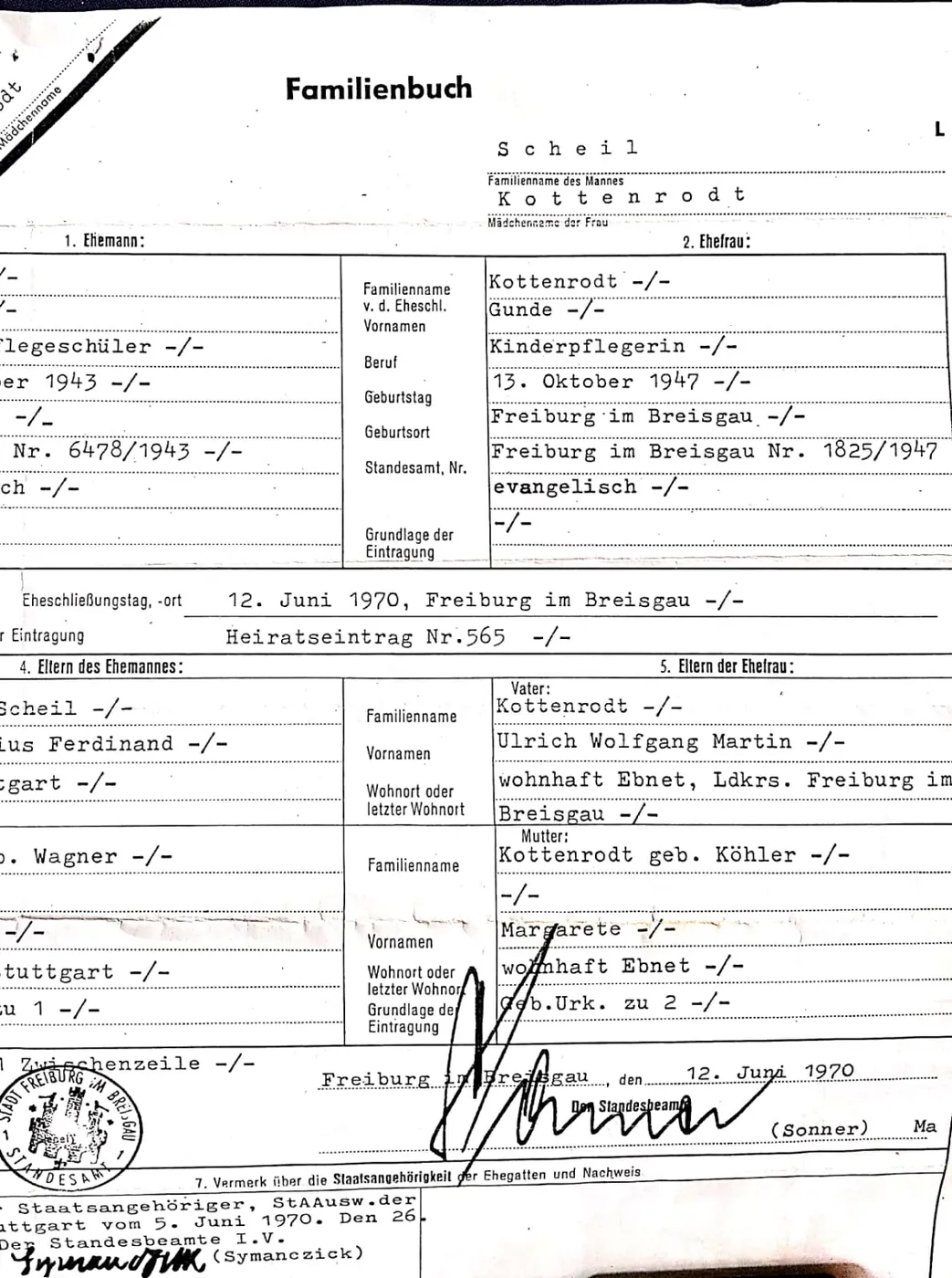
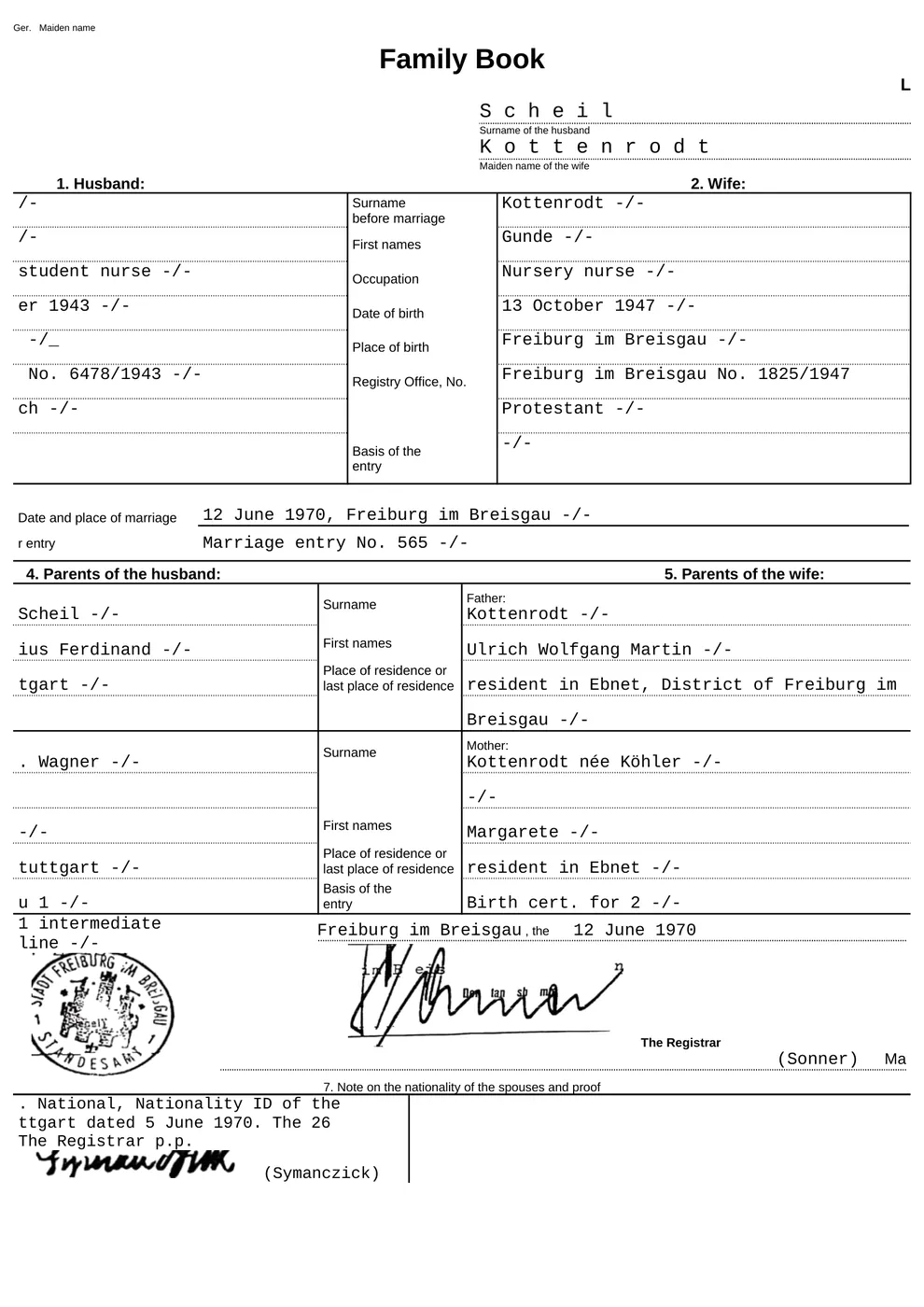
That can be useful for preparing a readable draft or checking what a document contains before arranging a legally certified translation. It doesn’t make an AI translation a sworn translation. ChatsControl’s certified-translation service uses a human translator and a notary for documents that need formal certification, so the certification step isn’t instant or fully automated. Handwriting and heavily degraded scans can also be read unreliably. The ChatsControl translator is one option for document processing, not a substitute for checking the receiving authority’s requirements.
A scan is an image rather than editable text. The text must first be read from the image, and a seal or handwritten date can be harder to interpret than printed body text. That mechanism explains why a blurry stamp can create a problem even when the main text is clear.
On November 13, 2026, a man in Germany uploaded three photos of Kurdish school documents at four in the morning. He needed them in German for the ZAB, the office that rates foreign education. Sorani Kurdish is written in Arabic script, and the documents were phone photos of paper forms with stamps.
The example shows why the file format and the document’s purpose need separate attention. A phone photo may be enough to inspect the contents, but it doesn’t by itself tell you whether a receiving office needs a certified translation, an original, or a particular kind of copy. For the legal submission, confirm those points with the authority handling the case.
A practical process from document check to submission¶
A careful process starts with the authority’s instructions and ends with a check of the finished package. The sequence below helps keep the apostille, translation, and certification in the right order.
-
Identify the receiving authority. Write down the country, authority, and purpose of the application. “For Germany” is less useful than naming the court, registry office, university, or other institution that will review the paperwork.
-
Ask what form it accepts. Confirm whether the authority needs the original, a certified copy, an apostille, a German translation, and a certified translation. Ask whether it accepts a translator authorised in another German-speaking country.
-
Check the original document. Compare names, dates, document numbers, and visible annotations with your other records. If the document has a stamp, seal, handwritten note, or attachment, include every page in the scan you send for assessment.
-
Confirm the apostille route, if required. The competent authority depends on the document category. Germany’s embassy in Ukraine lists different Ukrainian authorities for civil-status, court, notarial, education, and other documents (Embassy of Germany in Ukraine).
-
Choose a translator in the correct jurisdiction. Use the German official database for a submission in Germany and the Austrian register for a submission in Austria. Confirm the language pair and the translator’s status before authorising the work.
-
Translate the complete document. Make sure the translator has all pages and can see the stamps, seals, and annotations. Ask how unclear or unreadable sections will be marked rather than allowing missing words to disappear without explanation.
-
Review the finished package against the instructions. Check that names and dates match the original, that the translator’s signature and seal are present if required, and that the apostille is attached to the document the authority asked to authenticate.
-
Submit the requested form. Keep a copy of the paperwork you send and follow the authority’s instructions for originals, copies, and digital submissions. Don’t send an irreplaceable original unless the authority or procedure requires it.
A self-translation may appear to save money, but it doesn’t satisfy a requirement for a translation certified by a qualified translator in the country where the document will be used. The practical cost of getting the requirement wrong is a rejected submission and the need to arrange a replacement translation or document package. The German Federal Foreign Office recommends a sworn or certified translator in Germany when German authorities or courts require a translation; Austria’s citizenship guidance requires a translation certified in Austria for the documents covered by that process (Germany; Austria). If you want to avoid coordinating the human certification yourself, certified translation is a human-service route; check the receiving authority’s rules before placing an order.
The final review should be more than a glance at the translated paragraphs. A certification may cover the document’s complete contents, including a stamp or seal. On a scan, those elements can remain pictures even after the text has been translated.
On a scanned document, the stamp stays a picture where it was printed, and right under it goes a small note in brackets with the words read off it, like “[Stamp: …]”. A translator needs the stamp’s words as text because a certified translation has to translate the stamp too, and retyping a round stamp by hand is where words get lost.
That detail is easy to miss if you only compare the main body text. Check the translated text against every page and every visible mark, and ask the translator how they will represent text in seals, stamps, or handwritten annotations. Don’t guess at unclear wording.
Where applications go wrong¶
A rejection often starts with a mismatch between what the applicant ordered and what the recipient asked for. The translation can be accurate and still fail a formal requirement if the translator’s status, the original, or the apostille is wrong.
Treating Germany and Austria as one translation system¶
The shared language makes it tempting to use the same certified translation in both countries. The official guidance doesn’t support that assumption: Germany recommends a sworn or certified translator in Germany, while Austria’s citizenship instructions call for a translation certified in Austria (Germany; Austria).
Ask the receiving authority whether it accepts an overseas translator’s certification. Don’t rely on the translator’s general claim that a translation is “internationally valid.” A country-specific status and a clear instruction from the recipient are more useful than a broad label.
Requesting an apostille on the translation¶
An apostille on a translation is not a way to make the translation official. Germany’s Federal Foreign Office says translations aren’t public documents and can’t be apostilled or legalised as public documents (Federal Foreign Office guidance).
If the receiving authority requires an apostille, ask which original public document needs it and which issuing authority handles the procedure. For a Ukrainian document, the apostille comes from the competent Ukrainian body, not the German embassy (Embassy of Germany in Ukraine).
Assuming the apostille confirms the translation¶
The apostille checks aspects of the original public document’s authenticity; it doesn’t verify the translation’s wording. The translation must meet the recipient’s separate requirements. Keep those tasks separate when requesting a quote so you know which service covers which document.
Leaving stamps and notes out of the translation¶
A certificate may contain text outside the main body: an issuing authority’s stamp, a seal, a handwritten date, or a certification note. If the translator sees only a cropped photo or the first page, those elements may be missed. Send complete, legible images and tell the translator that the file is for official use.
A translator should identify content that can’t be read rather than silently filling in a guess. Ask how unclear text will appear in the translated version, and check that a name or date on a stamp hasn’t been confused with the main document text.
Using an old or damaged document without checking¶
A document’s age alone doesn’t tell you whether the authority will accept it. The receiving office may have instructions about issue dates, original condition, or replacements, and those instructions can depend on the application. Ask before ordering a translation if the document is damaged, difficult to read, or an older version.
For older Ukrainian civil-status records, Germany’s embassy says an apostille may be available through any civil registry office if you have the original. If an apostille can’t be placed on an older document, the embassy points to the option of ordering a replacement certificate with an apostille (Embassy of Germany in Ukraine). Check the current procedure with the competent authority before sending an original.
Sending a copy when the recipient needs an original¶
A scan can help a translator assess a document, but it doesn’t automatically count as a valid submission copy. Austria’s e-Justice guidance says a certified copy can be issued by certain bodies, including a notary, district court, or the issuing authority, but not every body can issue every type of copy (e-Justice Austria).
Ask whether the authority wants the original, a certified copy, or both. Keep the translation, apostille, and copy requirements distinct in your notes so you don’t mistake one formality for another.
Germany and Austria: a side-by-side check¶
The main difference is not the language of the translation; it’s the formal status expected from the translator and the authority handling the application.
| Question | Germany | Austria |
|---|---|---|
| Who should translate when an authority requires a translation? | The Federal Foreign Office recommends a sworn or certified translator in Germany | Austrian guidance points to a translator sworn and certified in Austria when a certified translation is required |
| Where can you check a translator? | Official German interpreter and translator database | Official register referenced by the Austrian e-Justice portal |
| What does the certification involve? | The translator’s recognised status is governed by the relevant state rules | Under § 190(1) of the Außerstreitgesetz, the translator states the date, signs, and seals the translation |
| Is an apostille always required? | The receiving authority decides whether it needs proof of authenticity; the procedure depends on agreements and the issuing country | Check the receiving Austrian authority and the document’s country of issue |
| Can a translation itself be apostilled? | No; Germany’s Federal Foreign Office says translations aren’t public documents for apostille or legalisation | Don’t treat an apostille as a substitute for the translation’s certification |
| Are there exceptions for multilingual documents? | Certain multilingual CIEC civil-status documents can be recognised without formalities if they match the convention’s form | Austria is listed among the relevant CIEC countries in German guidance; specific forms may also help with defined Austrian civil documents |
Sources: Federal Foreign Office, German translator database, Migration.gv.at, RIS § 190, and e-Justice Austria.
For an Austrian citizenship application, the government guidance says:
“All foreign language documents must be presented in the original along with a German translation, certified in Austria.”
That instruction is specific to the citizenship context. The portal also advises applicants to confirm the case-specific document list with the competent provincial authority. Don’t extend one application’s rule to every Austrian procedure without checking the authority that will receive your documents.
Germany’s guidance also allows for exceptions in document format, such as qualifying multilingual civil-status records issued under the CIEC convention. That exception depends on the document matching the convention’s form; an ordinary translation or a document with a few bilingual labels doesn’t automatically qualify (Federal Foreign Office).
FAQ¶
Do I need a sworn translator in Germany for Ukrainian documents?¶
If a German authority or court requires a translation, the Federal Foreign Office recommends a sworn or certified translator in Germany. Check the receiving authority’s instructions for your specific document and application (Federal Foreign Office).
What’s the difference between translation requirements in Germany and Austria?¶
Germany recommends a sworn or certified translator in Germany when an authority or court requires a translation. Austria’s citizenship guidance requires a German translation certified in Austria, and Austrian guidance refers to translators sworn and certified there (Germany; Austria).
Do I need an apostille on a Ukrainian document before translating it into German?¶
An apostille and a translation have different purposes. Ask the receiving authority whether it requires proof of authenticity; if it does, the apostille for a Ukrainian document must be handled by the competent Ukrainian authority (Embassy of Germany in Ukraine).
Will Austria accept a translation made by a sworn translator in Germany?¶
Don’t assume that a German translator’s certification will satisfy an Austrian authority. Austrian guidance calls for a translator sworn and certified in Austria when a certified translation is required, so confirm the rule with the authority handling your case (Migration.gv.at).
Can I apostille a translation instead of the original document?¶
No. Germany’s Federal Foreign Office says translations aren’t public documents and can’t be apostilled or legalised as public documents. If an apostille is required, ask which original public document needs it and which authority in the issuing country can issue it (Federal Foreign Office).
Can I translate an official document myself?¶
A self-translation won’t satisfy a requirement for certification by a qualified translator in the relevant country. Germany recommends a sworn or certified translator in Germany when its authorities or courts require a translation, and Austria’s citizenship guidance specifies a translation certified in Austria (Germany; Austria).
Need these documents translated?
Leave your number and we will message you, tell you which certification your institution needs, and name the price. Translation, translator review and notary certification.