A certificate translated into English can still be rejected if the receiving office needs a specific form of certification. The language is only one part of the job: the organisation receiving the document may also care who translated it, who certified the translation, and whether the original document needs an apostille.
So, is English a universal option for official paperwork? English may be the language an organisation asks for, but there isn’t one universal format for the translation itself. A standard translation, a translator-certified translation, a notarized translation, and a translation attached to a document with an apostille aren’t interchangeable.
The safest first move is to ask the organisation receiving your paperwork what it requires. A little clarity before you translate can save you from preparing the right words in the wrong format.
What does English document translation actually mean?
An English document translation is a version of a source document written in English. That definition describes the language of the output, not its legal status or whether a particular organisation will accept it.
People often use “official translation” as if it named one standard package. In practice, the phrase can refer to different things: a translation with a statement from the translator, a translation whose signature is notarized, or a translation submitted with a certified copy or an apostille. The words on the page may be similar, but the evidence attached to them is different.
A translator’s certification is a statement about the translation. The translator confirms that the English text accurately represents the original and identifies themself, often with contact details and a date. A notary’s role, where required, can involve certifying the translator’s signature. A certified copy, by contrast, is a statement that a copy matches an original document. Each statement answers a different question.
GOV.UK makes the distinction clear for England and Wales. Its guidance describes asking a translator to confirm in writing that the work is accurate, with the date, full name and contact details. The same page separately explains that a professional certifying a copy writes that the copy matches the original, then signs and dates it and provides identifying details. Read GOV.UK’s guidance on certifying a document before assuming that certification of a copy also verifies a translation.
“that it’s a ‘true and accurate translation of the original document’”
That wording concerns the accuracy of the translation, not whether the original document is genuine or whether the translator has authority under every institution’s rules. The receiving organisation can still ask for additional steps.
A translation can also be perfectly readable and still fail an administrative check. For example, a university may ask for an English translation but also specify who must certify it. A government office may want a certified copy of the original as well. An employer may need only a translation for internal review. The right format follows the purpose and destination, not the fact that the document is in English.
The phrase “notarized translation” needs particular care. People sometimes mean that a notary has checked the translation’s accuracy. A notary’s involvement may instead certify a signature or a copy, depending on the local procedure. Ask what statement or action the receiving office expects, rather than relying on a label that can mean different things in different places.
How do translation, certification, notarization and apostille fit together?
A document submission can involve several separate checks. Translation deals with language. Certification records a translator’s statement about the translation. Notarization may relate to a signature or another formal act. An apostille concerns the origin of a public document. Treating these as one step is a common reason paperwork ends up incomplete.
A practical way to picture the chain is to ask four questions:
- Does the receiving organisation need the document in English?
- Does it require a particular kind of translation certification?
- Does it require a certified copy of the original?
- Does it require the original public document to carry an apostille or other authentication?
The answers can vary independently. An organisation might want an English translation without an apostille. Another might require an apostille on the original, alongside a translation. A third might want a certified copy as well as a translator’s statement. None of those combinations can be assumed from the destination language alone.
An apostille is not a translation certificate. The Hague Conference on Private International Law explains that an apostille confirms the origin of a public document, including the authenticity of a signature or seal and the authority of the person who signed it. It doesn’t check whether the document’s statements are true, and it doesn’t translate those statements into English.
“An Apostille does not certify the content of the public document to which it relates.”
That distinction matters when a reader is deciding what to arrange first. Paying for an apostille doesn’t turn a document into an English translation, and translating a document doesn’t authenticate the signature on its original. The two processes address different problems.
The receiving country also decides what legal effect to give a document that carries an apostille. The HCCH explains that the apostille doesn’t give the document legal force as to its contents; the authority where the document is submitted decides how to treat it. The apostille is designed for public documents used abroad, not for recognising a document in the country that issued it. Check the requirements of the actual office handling your application rather than treating an apostille as a universal approval.
“Check with the organisation that needs the certified copy - they may have specific rules for who can certify the document.”
That instruction is useful beyond certified copies. The organisation that receives your paperwork is the one that can tell you which certification it accepts. A translator, notary or service provider can explain what they offer, but that doesn’t replace checking the submission rules.
One narrow legal example shows why procedure matters. The UK Companies (Welsh Language Forms and Documents) Regulations 1994 set out who can certify the accuracy of an English translation for documents covered by that specific corporate regime. Depending on where the translation was made, the rule names a notary, a specified lawyer, or a translator whose competence is confirmed by such a professional. The regulation applies to its defined context; it isn’t a general rule for every document submitted in the UK. Read regulation 5 of the 1994 Regulations if your paperwork falls within that regime.
The lesson isn’t that you need every stamp available. It is that each stamp or statement has a job. Ask the receiving organisation which job needs doing, and then arrange only the steps that match.
What happens to a document as it moves through translation?
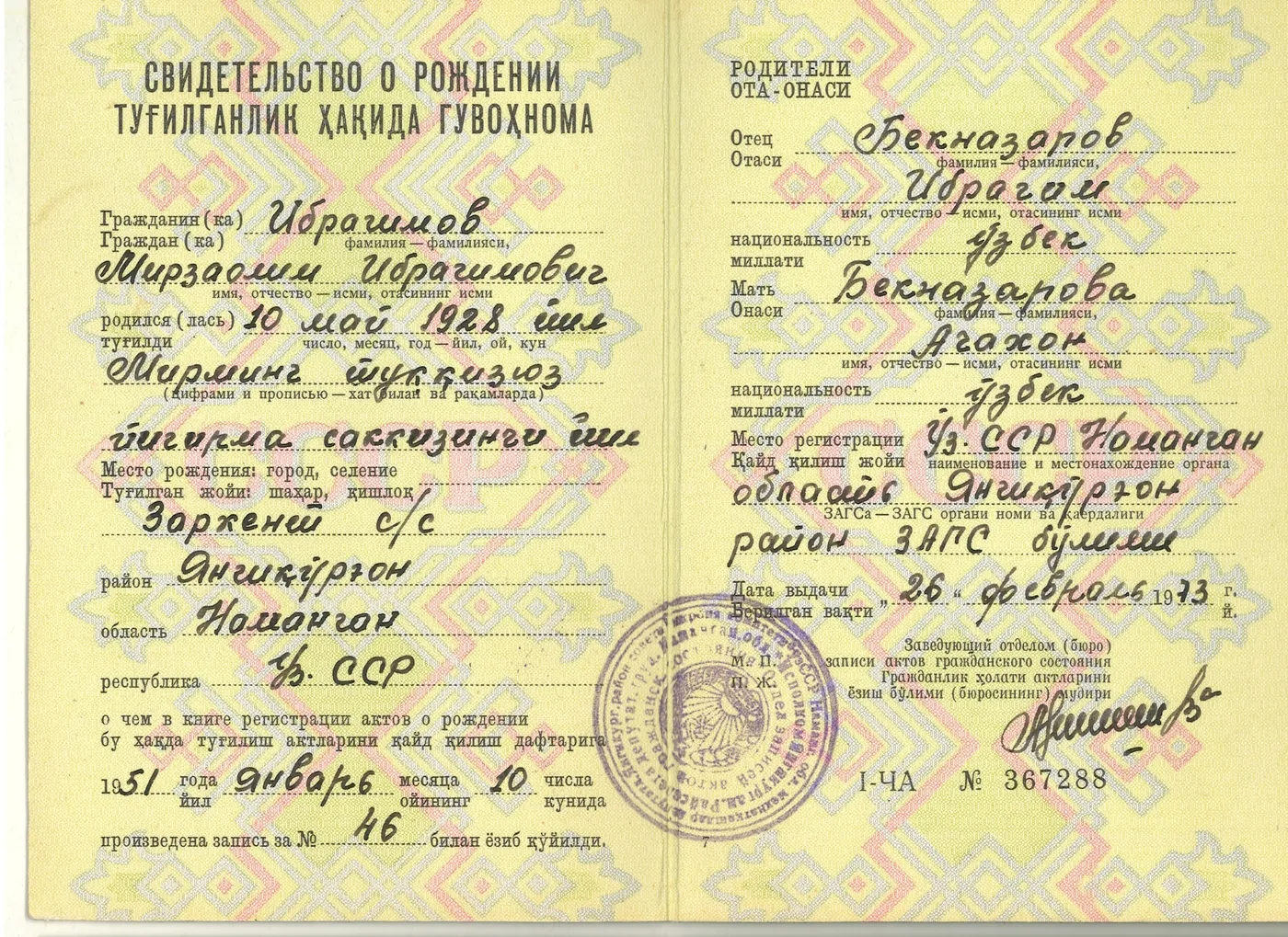
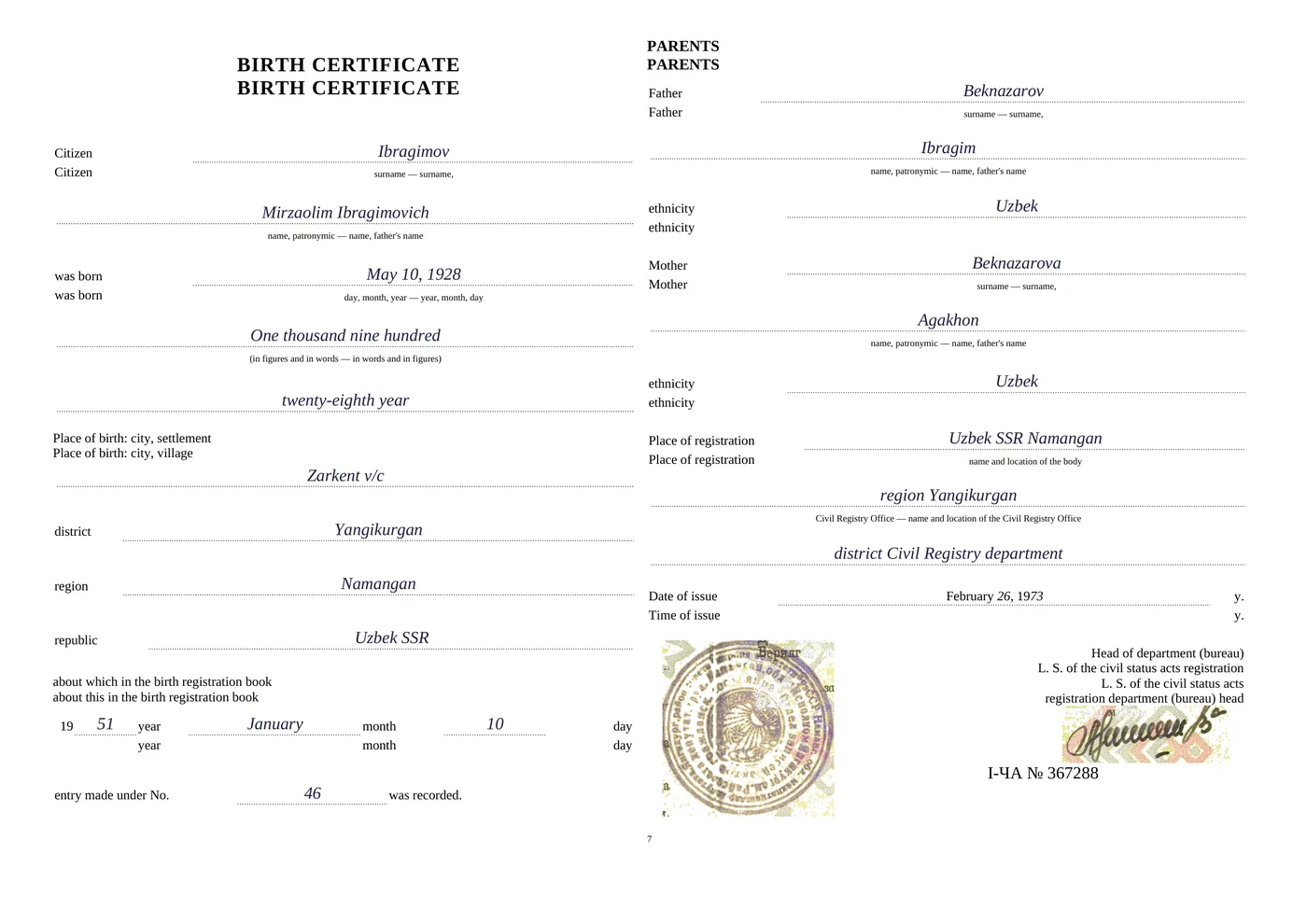
A document isn’t just a set of sentences. Birth certificates, diplomas and official forms can contain names, dates, registration numbers, stamps, signatures, handwritten notes, boxes and tables. A full translation accounts for those elements as well as the main body text.
A translator starts by identifying what is visible and relevant on the document. That means checking the document’s title, each field, the wording on seals and stamps, handwritten entries, and any notes or alterations. The layout can help show which value belongs to which label. A date in the wrong field or a name separated from its context can cause confusion, even when the individual words are correctly translated.
Scans add another layer. A scan is an image of a page, not editable text. The words need to be read from the image before translation can begin. Printed text is often clearer than a faded seal, an angled stamp, or a handwritten date. If part of the image is illegible, a translator shouldn’t silently guess; the uncertainty needs to be handled clearly.
The stamp matters because it can carry information that a reader needs in the translated version. A seal might identify the authority that issued a document or contain a registration detail. Leaving it out can make the translation incomplete, while attempting to recreate a round stamp as ordinary text can make the relationship between the words and the stamp unclear.
When I work with a scanned document, I keep the stamp as a picture where it was printed and put a small note right below it in brackets with the words read off it, like “[Stamp: …]”. A certified translation has to translate the stamp too, and retyping a round stamp by hand is where words get lost.
That approach preserves two things at once: the visual location of the stamp and a readable transcription of its wording. The translator still has to read it carefully, and an unclear or partly missing seal can’t be made certain by changing its layout.
For a translation that needs review rather than immediate formal certification, a bilingual view can help you compare the source and English text line by line. How it works in ChatsControl: upload a DOCX or PDF, then review the English alongside the source, with translated text highlighted and the original available on hover. The tool can also process scanned PDFs and photos by reading the page and rebuilding a formatted Word file. Handwriting and very degraded scans remain difficult to read reliably, and this kind of document translation doesn’t itself provide legal certification.
A careful review should focus first on details that are easy to mishandle:
- Names, including the order of given and family names.
- Dates and numbers, including issue dates, reference numbers and registration details.
- Stamps, seals, signatures and handwritten additions.
- Abbreviations and the names of issuing authorities.
- Any blank, crossed-out or amended fields that appear on the original.
A translator can preserve the words while changing how the page is arranged. That may be fine for an informal review, but an official submission can depend on how the translation identifies the source and its attached material. Keep the original available and check whether the receiving organisation expects a particular layout, certification statement or attachment.
When is an English translation enough, and when isn’t it?
A plain English translation may be enough when the recipient only needs to understand a document and doesn’t ask for a formal certification. A school, employer or adviser might request a translation for review, for example. The specific recipient’s instructions matter more than a general claim that English is accepted.
A translation with a written certification may be needed when an organisation wants a translator to confirm accuracy and identify themself. For England and Wales, GOV.UK says the statement should confirm that the translation is accurate, and include the date, the translator’s full name and contact details. The page doesn’t establish one certification format for every organisation; it explicitly warns that the organisation receiving a certified copy may have its own requirements. Check the latest instructions directly with the recipient at GOV.UK.
A notarized step may be required by a specific procedure, but don’t treat notarization as a synonym for translation certification. Ask whether the recipient needs a translator’s accuracy statement, notarization of a translator’s signature, certification of a copy, or some combination. When the instructions say only “official translation,” ask the office to explain what it means by that term.
An apostille may be required when the recipient wants confirmation of the origin of a public document. It won’t replace translation. The apostille authenticates the origin of a document in the way described by the HCCH; the recipient still decides whether it needs the document translated and what kind of translation it will accept. The HCCH apostille guide explains what the apostille does and, just as importantly, what it doesn’t do.
A recipient may also ask for a certified copy of the original, not just the original document and its English translation. GOV.UK describes certification of a copy as a separate act: a professional confirms that the copy matches the original, then signs and dates the copy with identifying information. That process doesn’t confirm the translation’s accuracy. Find out whether the office wants the original, a certified copy, a translation, or several of those items.
The right option can also depend on the document. A short certificate may contain only printed fields, while a diploma may include a seal, a signature and notes on the reverse. A bank letter may have a different set of requirements from a civil-status record. Don’t assume that a rule you used for one document automatically applies to another.
Before arranging the work, send the receiving organisation a clear question:
“I have a [document type] issued in [country]. Do you need it translated into English? If so, who must certify the translation? Do you also need a certified copy of the original or an apostille?”
That message gives the office enough context to answer the practical question. If it responds with a named form, wording or specific certification method, save the answer and follow it. If it replies with a broad label such as “official translation,” ask for clarification before treating the phrase as a complete instruction.
What can go wrong when you choose the wrong format?
The common mistake is to spend effort on a step that doesn’t answer the recipient’s actual requirement. An apostille may confirm the origin of a document, while the office still needs an English translation. A translator’s statement may confirm translation accuracy, while the office also wants a certified copy. A notary may be involved in verifying a signature, but that doesn’t mean the notary has checked the translated text.
Self-translation can create a similar mismatch. You can produce an accurate English version yourself, but an organisation may require a translator who is independent of the applicant, or a particular certification statement. GOV.UK’s guidance says the receiving organisation may set specific rules about who can certify a document. An accurate translation that fails those rules can still be unsuitable for submission. Ask before translating, especially when the application depends on a formal certificate or a deadline.
Another risk is asking for the wrong object to be certified. Certification of a copy means the copy matches the original. Certification of a translation means the translator confirms the accuracy of the translated text. GOV.UK describes those as distinct procedures. If an office asks for one and you provide the other, the documents may not satisfy the request even if both carry signatures.
A scan can cause errors that are hard to spot if you review only the English result. A low-quality image can obscure a letter in a surname, a digit in a registration number, or wording on a stamp. Compare the translation with the original, especially around names, dates and official marks. If a detail can’t be read, ask how the translator has marked it rather than assuming the translation has resolved the uncertainty.
Some documents contain details on more than one page or on the reverse. A translation based on a partial scan may omit a stamp, a note or an amendment. Before sending a file, check that every page and relevant side is included. If the office wants the original or a certified copy as well, a translation of the pages you happened to scan won’t replace that requirement.
Fees are another source of confusion. Translation and certification can be separate services, and an organisation or professional may charge for certification. GOV.UK notes that a person who certifies a copy may charge a fee, but the guidance doesn’t set one standard tariff. Ask for a breakdown of translation, certification, notarization and any document-authentication steps rather than treating the whole task as a single fixed service.
When instructions seem unclear, don’t start by buying extra stamps or ordering every possible service. Send the receiving organisation the document type, issuing country and intended use, then ask which steps it requires. The right answer should identify the translation format and any separate treatment of the original.
FAQ
Do English translations of documents need to be notarized?
Not always. The receiving organisation decides what it will accept, and some procedures may require a translator’s written certification rather than notarization. Ask whether the recipient needs a certified translation, notarization of a signature, or certification of a copy.
Does an apostille replace an English translation?
No. An apostille confirms the origin of a public document, such as the authenticity of a signature or seal and the signer’s authority. The HCCH explains that an apostille doesn’t certify the contents of a document, so the receiving organisation may still require an English translation.
What should a certified English translation include for use in the UK?
For England and Wales, GOV.UK says the translator should confirm in writing that the translation is accurate and provide the date, full name and contact details. The receiving organisation may set additional rules, so check its instructions as well as GOV.UK guidance.
Can I translate my own document for an overseas application?
You can prepare your own translation, but the recipient may not accept it if its rules require a specific person to certify the work. Confirm who may translate or certify the document before preparing a version for submission.
Does an apostille confirm that the information in my document is true?
No. An apostille confirms the origin of a public document, including the authenticity of a signature or seal and the signer’s authority. The HCCH guide says it doesn’t certify the document’s contents.
Is a certified copy the same as a certified translation?
No. A certified copy confirms that a copy matches the original, while a certified translation confirms that the translated text accurately represents the source. GOV.UK describes them as separate actions, so check which one the receiving organisation requests.
Should I get an apostille before translating a document?
Ask the receiving organisation whether it needs an apostille and whether it wants the apostille translated as well. An apostille authenticates the origin of a public document; it doesn’t replace the translation or decide whether the recipient will accept the document.
Need these documents translated?
Leave your number and we will message you, tell you which certification your institution needs, and name the price. Translation, translator review and notary certification.