A translation tool can process a passport scan, a medical report or a contract before anyone on your team notices that the vendor’s AI terms allow secondary use. For an agency, GDPR review needs to cover the whole workflow, not just the software’s security page.
A vendor saying “GDPR compliant” doesn’t settle the question. Your agency still needs to identify its role, decide what data is necessary, review the processor contract and document how the tool handles access, retention, subprocessors and transfers.
The checklist below helps you compare tools and record the decision. It isn’t a certification, legal opinion or substitute for advice on your agency’s particular processing.
Start with the workflow, not the vendor’s badge
A GDPR-compliant translation tool is one that supports a lawful, documented processing workflow with suitable contractual and technical safeguards. The phrase itself isn’t a certification, and a vendor’s marketing claim doesn’t demonstrate that your agency has met its obligations under GDPR Articles 5 and 24 (GDPR, Articles 5 and 24).
Start by tracing what happens from client intake to deletion. A document may pass through your agency’s inbox, project storage, a CAT tool, a machine translation provider, a human linguist and an archive. Each handoff can create a new copy, recipient or access location.
Record the workflow in plain language. For example: “The agency receives a client’s contract, removes unnecessary identifiers, uploads the approved text to the translation platform, sends the output to an assigned linguist, returns the reviewed file and deletes working copies under the agency’s retention schedule.” Replace that example with what your team actually does.
A vendor may act as a processor when it handles personal data on your agency’s behalf. But labels in a contract don’t decide the parties’ roles. The key question is who determines the purposes and means of processing, as explained by GDPR Articles 4 and 28 and the EDPB controller and processor guidelines.
The same company can have different roles for different activities. A translation provider might process a client document on your instructions but decide independently how to handle account billing data. Assess each processing activity rather than assigning one label to the whole vendor.
According to the European Commission’s GDPR principles guidance:
“Personal data must be stored for the shortest time possible.”
That short quotation points to a practical question: when does the vendor actually erase the source file, translation, temporary working copy and backups? A broad promise to delete data “when no longer needed” doesn’t tell your agency when that happens or how the deadline is applied.
Map the data before you compare tools
List the information that enters the tool, the people who can access it and the output your agency retains. Include information embedded in the file, not only the text your project manager sees on the screen.
| Workflow item | What to record | Why it matters |
|---|---|---|
| Source documents | File types, personal-data categories and client instructions | Shows what the vendor receives and whether the upload is necessary |
| Translation and review | AI services, human reviewers and agency staff with access | Identifies recipients and possible secondary processing |
| Storage and deletion | Active files, temporary copies, logs, backups and deletion triggers | Makes storage limitation testable |
| Transfers | Hosting, support access and onward recipients | Helps identify a Chapter V transfer question |
| Returned files | Who receives the output and how long the agency keeps it | Connects tool use to the agency’s own retention and transparency duties |
A data-flow map doesn’t need to be complicated. A table, process diagram or written sequence can work if it names the systems and handoffs clearly. The map should be specific enough that someone else on your team can follow the file from intake to deletion.
The GDPR’s principles include purpose limitation, data minimisation, storage limitation, integrity and confidentiality, and accountability. Those principles apply to decisions about translation workflows, not just to the vendor’s infrastructure (GDPR Article 5).
An agency should also check whether its own privacy information describes the actual workflow. The European Commission’s guidance on GDPR obligations says transparency information includes processing purposes, categories, legal basis, retention and recipients. Where relevant, people must also be told about transfers outside the EU and their rights.
Check the Article 28 DPA before sending client files
A data processing agreement, or DPA, sets the terms for a controller’s relationship with a processor. Under Article 28, the agreement needs to describe the processing and bind the vendor to specific obligations. A privacy policy alone may not give your agency the instructions, assistance and oversight terms it needs.
Use this table when reviewing a vendor’s DPA. Mark each item as present, missing or unclear, then ask the vendor to resolve unclear terms in writing.
| DPA item | What the agency should be able to identify |
|---|---|
| Processing description | Subject matter, duration, nature and purpose |
| Data and people | Personal-data types and categories of data subjects |
| Documented instructions | What the vendor may do, including rules for transfers and any secondary use |
| Confidentiality | How authorised personnel are bound to confidentiality |
| Security | The measures the vendor applies and how they fit the processing risk |
| Subprocessors | How the vendor obtains authorisation and notifies the agency about changes |
| Individual rights and compliance support | How the vendor assists with requests and the controller’s obligations |
| Incidents | How the vendor notifies the agency and who receives the notice |
| End of service | How the agency chooses return or deletion, including existing copies |
| Evidence and audits | What compliance information the vendor provides and how audits work |
The DPA needs to specify the subject matter and duration, nature and purpose, data types, data-subject categories, and controller rights and obligations. Article 28 also requires the processor to act on documented instructions, bind authorised personnel to confidentiality, address security and subprocessors, help with data-subject requests and compliance duties, and support audits (GDPR Article 28).
Don’t stop at a signed document. Compare the DPA with the product settings and the vendor’s operational answers. If the contract says documents are deleted at the end of a service period but the dashboard offers a different retention setting, ask which term governs and what happens to backups.
Ask what the tool may do with uploaded text
The phrase “used to provide the service” can leave room for different interpretations. Your agency should ask whether uploaded content can be used for model training, product improvement, human review or another secondary purpose, and make sure the answer matches the written instructions and contract.
A contract should describe the vendor’s authorised processing, not just the product’s headline function. If a provider relies on a separate AI service, ask whether that service receives client text and under what terms. The chain matters: a promise made by the first vendor doesn’t automatically explain what a downstream provider does.
A client may impose tighter confidentiality terms than the minimum described in a standard DPA. Record those instructions with the job, then make sure the selected tool and its settings can follow them. If the vendor can’t explain a use of the data, treat that gap as unresolved rather than assuming the use is harmless.
Check authorisation and changes to subprocessors
A subprocessor is another organisation a processor engages to handle personal data for the service. Article 28 requires the processor to have the controller’s prior specific or general written authorisation. With general authorisation, the processor must notify the controller about intended additions or replacements and give the controller a chance to object (GDPR Article 28(2)).
Ask for the current subprocessor list and the process for updates. Look for the organisation’s name, the service it provides, the data it may access and the relevant locations. A list that names only “cloud hosting” or “AI services” may not give your agency enough detail to assess the flow.
The DPA should also say what happens when your agency objects to a change. Check whether the contract describes a workable response, rather than only a notification email. A change to an AI provider, support provider or hosting arrangement can affect confidentiality, transfers and the agency’s own client commitments.
For further context on the distinction between processor terms and transfer terms, see GDPR for Translation Agencies: NDA, DPA and Cloud Tools.
Make the exit clause operational
Article 28 requires the contract to let the controller choose between return and deletion of personal data when the service ends. The processor must delete existing copies unless applicable law requires storage (GDPR Article 28(3)(g)).
Ask the vendor to explain what “delete” covers. Include source files, translated outputs, temporary files, backups, logs and data passed to downstream AI providers. Ask which items are deleted automatically, which need a manual request and what happens when a backup is due for routine removal.
A deletion promise is only useful if the agency can act on it. Put the contact point, request format and any exceptions in your vendor record. If the tool has retention settings, save the configuration or document the setting selected for the workflow.
Evaluate retention, security and privacy by default
Data minimisation and storage limitation are practical controls, not abstract principles. The European Commission’s GDPR principles guidance says personal data should be adequate, relevant and limited to what is necessary, and held no longer than necessary for the purpose.
Before upload, ask whether the tool needs the whole document. Could the task be done with a redacted copy, a short extract or an anonymised version? Remove information the translator doesn’t need, but don’t alter a document in a way that undermines the translation task or a client’s instructions.
Anonymisation means the data can no longer identify a person. Pseudonymisation replaces or separates identifying details but may still allow identification with additional information. The distinction matters: replacing a name with a code doesn’t automatically make a file anonymous if your agency can link the code back to the person.
For every tool, write down the retention trigger and the action it causes. “Delete after the job” needs a definition: does the job end when the file is translated, reviewed, approved by the client or closed in the agency’s project system? The European Commission’s principles guidance advises organisations to set time limits to erase or review stored data.
Security is risk-based. GDPR Article 32 calls for measures appropriate to the state of the art, implementation costs, processing context and risks. The article names examples such as pseudonymisation or encryption, ongoing confidentiality, integrity, availability and resilience, restoration capability, and regular testing (GDPR Article 32).
Ask the vendor to describe its measures in terms your agency can assess. “We use industry-standard security” isn’t enough to understand access controls, encryption, recovery or testing. You don’t need to prescribe one universal technical configuration; Article 32 requires measures that fit the processing and its risks.
Article 25 requires data protection by design and by default. EDPB guidance says the obligation applies to all controllers, regardless of size or processing complexity, and should be considered when planning processing and before it begins (EDPB Guidelines 4/2019).
For an agency, privacy by default can mean limiting account access to people who need the file, disabling optional reuse, setting a defined retention period and avoiding public links. Review the default configuration instead of assuming a tool starts with the most privacy-preserving settings.
Consider sensitive documents separately
Translation projects can contain health data, political opinions, religious beliefs, biometric identification data or trade-union membership. GDPR treats these as special-category data. Processing is generally prohibited unless an exception in Article 9(2) applies, and the agency also needs a legal basis under Article 6 (GDPR Articles 6 and 9).
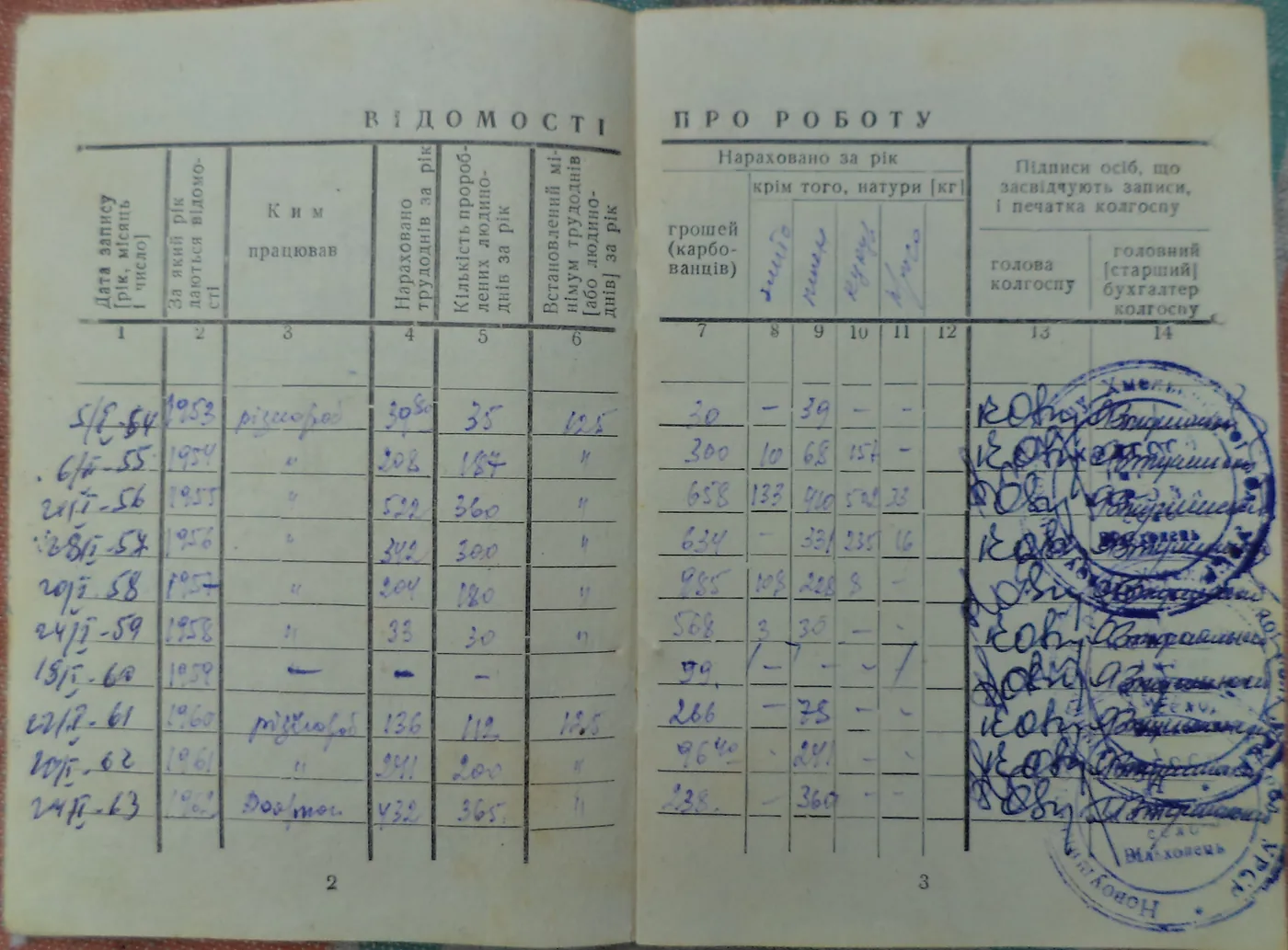
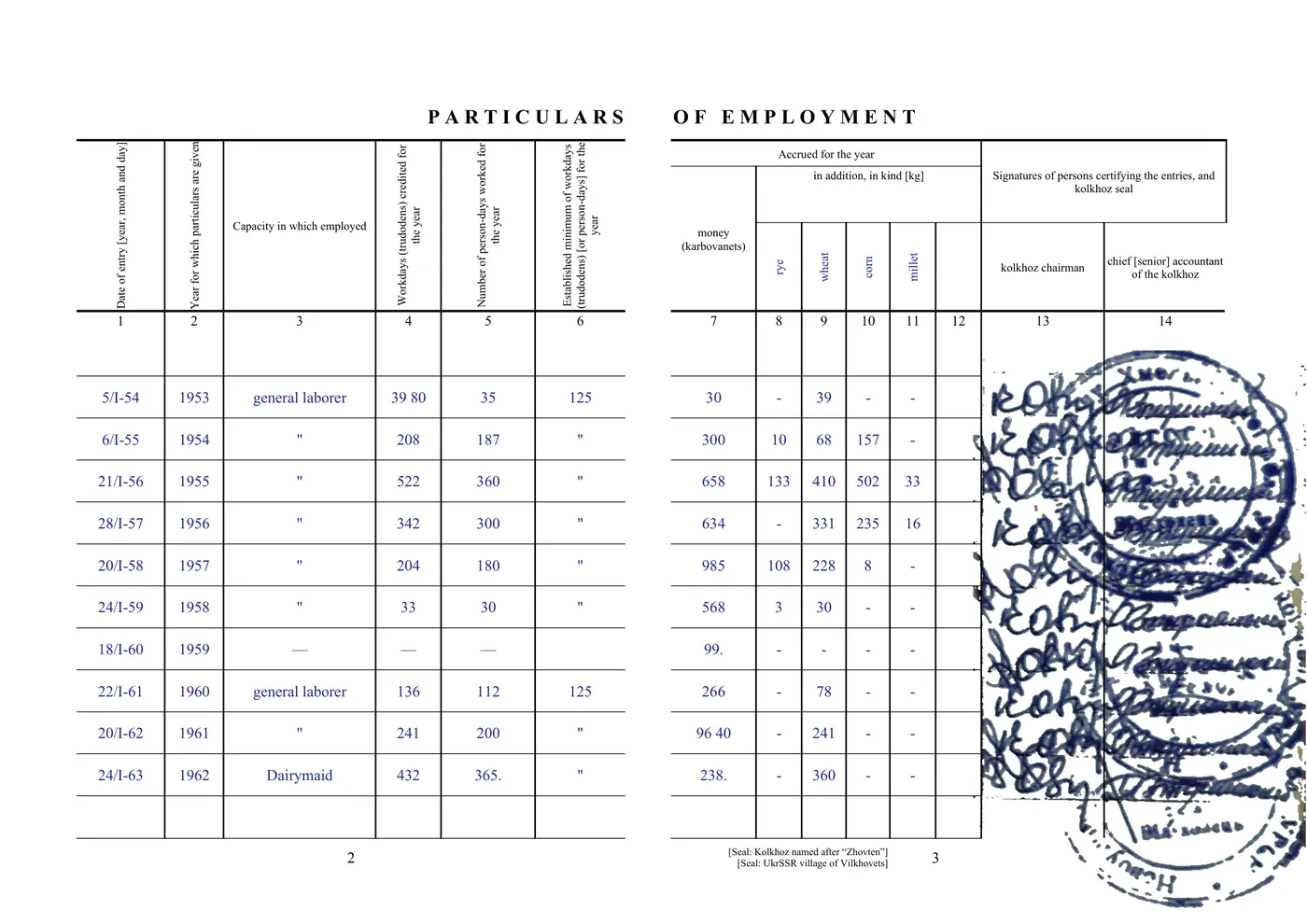
A vendor’s DPA doesn’t create the agency’s legal basis or an Article 9 exception. Before uploading a medical report or identity document, confirm why the agency is processing it, whether the processing is necessary, what client instructions apply and which legal conditions support the work.
A DPIA, or data protection impact assessment, is required before processing likely to result in a high risk to people’s rights and freedoms. Article 35 lists situations that include large-scale processing of special-category data, systematic and extensive automated evaluation with significant effects, and large-scale systematic monitoring of publicly accessible areas (GDPR Article 35).
A single translation job doesn’t automatically require a DPIA. Assess the actual workflow, scale, data and likely risk. If your agency decides a DPIA isn’t required, keep the reasoning with the tool-vetting record so the decision can be reviewed later.
Treat international access as a separate check
Hosting location matters, but a server location alone may not answer every transfer question. Consider who can access the data, where that organisation is located and whether subprocessors can receive it. The EDPB’s guide to international transfers explains that a transfer can occur when a GDPR-subject controller or processor makes personal data available to another organisation outside the EEA.
A transfer outside the EEA raises a Chapter V question in addition to the ordinary GDPR requirements. The EDPB puts it directly:
“Personal data may only be transferred outside of the EEA in compliance with the conditions for such transfers laid down in Chapter V of the GDPR.”
The quotation is a reminder to assess both the vendor relationship and the international transfer. A processor DPA doesn’t replace a transfer mechanism, and an in-region server doesn’t automatically resolve questions about support access or onward recipients.
A transfer may rely on an applicable adequacy decision. Without one, the organisation needs an appropriate safeguard, such as standard contractual clauses (SCCs), binding corporate rules or another listed tool, subject to the applicable requirements (EDPB international transfer guidance).
The European Commission’s modernised SCCs were issued on 4 June 2021. The Commission distinguishes those international-transfer clauses from separate Article 28 controller-processor clauses for processing within the EU or EEA (European Commission SCC information). Check that the chosen module fits the parties and the actual transfer.
SCCs may also require a transfer impact assessment. The exporter should assess, case by case, whether third-country laws or practices affect the safeguards and whether supplementary measures are needed (EDPB international transfer guidance). Record the assessment and the facts it relies on; don’t treat a signed template as the whole analysis.
| Transfer question | Evidence to collect |
|---|---|
| Who receives or can access the data? | Vendor, support teams and named subprocessors |
| Where are those organisations located? | Entity locations and relevant access locations |
| What safeguard applies? | Adequacy decision or the applicable transfer mechanism |
| Do onward transfers occur? | Subprocessor terms and change-notification process |
| Does the safeguard work for this flow? | Transfer assessment and any supplementary measures |
An agency comparing cloud services can use this table during procurement, then revisit it when the vendor changes its subprocessors or access model. Transfer facts and adequacy status can change, so verify the relevant details when approving the tool and when material changes arise.
For a deeper look at AI-specific vendor questions, see AI Translation Vendor DPA Questions: A Buyer’s Checklist and GDPR and AI Translation: Which Tools Are Safe for EU Business.
Compare the tool options against your actual risk
No single tool choice fits every agency. The right comparison depends on what the document contains, what the client has instructed, where the service operates and whether the agency can review and control the resulting data flow.
| Option | Potential fit | Questions to resolve |
|---|---|---|
| Local or manually managed workflow | Processing that must stay within a tightly controlled environment | Can the team maintain access controls, secure storage and deletion records? |
| Cloud CAT or translation platform | Ongoing projects that need shared translation workflows | Who processes source files, translation memories, analytics and support data? |
| Cloud machine translation or AI tool | Drafting or review where the agency can approve the data flow | Is client text reused, retained, reviewed by people or sent to downstream providers? |
| Document translation tool | Individual documents where layout and review matter | Does the service support the required format, retention settings and agency review? |
A cloud tool isn’t automatically unsuitable, and an on-premise tool isn’t automatically compliant. The agency still needs a lawful purpose, appropriate instructions, minimised data, suitable security and a defensible record. The decision turns on the complete processing, not a label such as “cloud” or “local.”
If the practical problem is that a translated document loses its tables and layout, ChatsControl is one document-translation option to assess. You upload a DOCX or PDF and receive a translated Word file designed to retain the document’s layout; a bilingual view lets a reviewer compare source and translation. The tool also offers optional retention settings, and uploaded documents are auto-deleted after 30 days by default. That product setting doesn’t settle the agency’s GDPR assessment: confirm the DPA, data flow, access, subprocessors and transfer arrangements for your use case. ChatsControl is a cloud service, not an offline or on-premise option, and it’s a document tool rather than a full CAT tool or TMS.
A product can solve a formatting problem without being appropriate for every file. The scan of a medical record, for example, needs a different sensitivity assessment from a public brochure. Review the source content and the vendor’s terms before deciding what goes into the tool.
If the agency’s concern is AI confidentiality rather than document layout, AI Translation Confidentiality Checklist for Agencies can help frame the questions about reuse and data handling. Agencies using machine translation inside a wider process can also compare the checks in How to Integrate Machine Translation into Your CAT Tool Pipeline.
Keep a decision record and test the incident process
A vendor review is useful only if your team can show what it checked and why it approved the workflow. Keep the record with the contract or procurement file, and assign someone to review it when the vendor, product settings or processing purpose changes.
A practical vetting file can include:
- A data-flow map showing the source, tool, recipients and output.
- The vendor DPA and the agency’s instructions for processing.
- The current subprocessor list and its change-notification process.
- Hosting and access locations, plus any transfer mechanism and assessment.
- Retention settings and the deletion process for files and copies.
- Security evidence and a record of the agency’s risk assessment.
- Terms on AI training, product improvement and human review.
- The incident contact, notification route and internal escalation plan.
- The agency’s decision on whether a DPIA is needed.
- A check that client-facing privacy information reflects the workflow.
These are operational checks derived from GDPR requirements, not a statutory one-page certification checklist. The GDPR requires controllers to be able to demonstrate compliance, and Article 28 requires a processor to make information available and allow and contribute to audits, including inspections (GDPR Articles 5 and 28).
Ask the vendor what evidence it can provide and how the agency can assess it. A badge or certificate may be useful evidence, but it doesn’t answer every question about the specific product, data flow or instructions.
Confirm breach notification and escalation
A processor must notify its controller of every personal-data breach without undue delay. The agency should make the vendor’s notification channel, contact point and escalation timing explicit in the DPA and incident plan (EDPB data breach guidance).
The EDPB states:
“If your SME is a data processor, processing personal data on behalf of another organisation, you must notify the data controller of any personal data breach without undue delay.”
For an agency, the operational point is simple: a support inbox that nobody monitors isn’t a clear incident route. Record who receives a vendor notice, who assesses the effect on client files and who contacts the client or the relevant internal lead.
Where a personal-data breach is likely to pose a risk to people’s rights and freedoms, the controller must notify the competent supervisory authority without undue delay and, where feasible, within 72 hours of becoming aware (European Commission guidance on GDPR obligations). That deadline concerns the controller’s notification duty; it doesn’t give the processor permission to wait before telling the agency.
Controllers must document all personal-data breaches, including those not reported to the regulator, with the facts, effects and remedial action (EDPB data breach guidance). Keep the incident record even when the assessment concludes that external notification isn’t required.
A practical checklist for agency approval
Use the checklist below during procurement or a periodic review. A “yes” should point to evidence in a contract, setting, vendor answer or internal record. A verbal assurance without a record is difficult to verify when staff or systems change.
- [ ] The agency has mapped the data from client intake through translation, review and deletion.
- [ ] The agency has determined the parties’ roles for each processing activity.
- [ ] The legal basis and, where relevant, Article 9 condition have been assessed.
- [ ] The upload contains only data needed for the translation task.
- [ ] The DPA includes the required processing details and documented instructions.
- [ ] The contract explains whether data can be used for training, improvement or human review.
- [ ] The vendor identifies subprocessors and explains how changes are notified.
- [ ] The security information is specific enough for the agency to assess the processing risk.
- [ ] The retention period and deletion process cover working copies and downstream services.
- [ ] The agency has checked access locations and any Chapter V transfer safeguards.
- [ ] The vendor has a clear breach contact and notification route.
- [ ] The agency has assessed whether a DPIA is required.
- [ ] The agency’s privacy information and client instructions match the real workflow.
- [ ] The approval record includes the vendor documents, settings and review owner.
A “no” doesn’t always mean the tool must be rejected. It means the agency has an unresolved question. Ask for an amendment, choose a safer configuration, remove unnecessary data or select another workflow before sending client information.
The most common mistake is treating a vendor’s general privacy statement as proof that a particular translation workflow is safe. Another is reviewing the DPA but overlooking what the tool’s AI provider, support team or backup process does. A third is approving a tool once and never checking whether the subprocessor list, settings or client instructions have changed.
GDPR compliance isn’t a stamp attached to a translation product. The agency’s defensible decision comes from matching the tool to the task, limiting what it receives, documenting instructions and checking how personal data moves and leaves the system.
FAQ
How can a translation agency check whether a translation tool is GDPR compliant?
Map the workflow, decide the parties’ roles and review the DPA, retention, security, subprocessors, AI reuse and international transfers. Record the agency’s decision and assess whether the processing requires a DPIA; a vendor’s own compliance claim isn’t enough.
What should a translation software DPA include under GDPR Article 28?
The DPA should describe the subject matter, duration, nature and purpose of processing, personal-data types, data-subject categories and controller rights and obligations. It should also cover documented instructions, confidentiality, security, subprocessors, assistance, audits, breach notification and return or deletion at the end of service (GDPR Article 28).
Can a translation agency use a cloud translation tool that stores data outside the EEA?
Potentially, if the agency meets the applicable Chapter V requirements as well as the other GDPR obligations. Check the recipient, access locations, onward subprocessors and transfer mechanism; a server location by itself may not resolve the question (EDPB international transfer guidance).
Should agencies upload health or identity documents to an AI translation tool?
Only after assessing necessity, the legal basis, any applicable Article 9 exception, vendor terms, security and transfer route. Health data and some identity-related information can be sensitive, and a processor contract doesn’t provide the agency’s legal basis (GDPR Articles 6 and 9).
How long can a translation tool retain client documents under GDPR?
GDPR doesn’t set one retention period for every translation job. The agency should set a period that fits the processing purpose, review or delete data when it’s no longer needed, and check how the vendor handles copies, backups and logs (European Commission GDPR principles guidance).
Does using a GDPR-compliant translation tool make an agency GDPR compliant?
No. The tool can support the agency’s controls, but the agency remains responsible for its own legal basis, purposes, minimisation, transparency and ability to demonstrate compliance under GDPR Articles 5 and 24 (GDPR).