A German birth certificate can need more than a translation before a Ukrainian authority will accept it: the authority may also ask for an apostille and a particular form of certification. Start by asking the receiving authority what it wants, then choose a translator and prepare the document to match those instructions.
German-to-Ukrainian document translation can mean several different things. A plain translation helps you understand a letter. A translation prepared for an official procedure may need the translator’s signature notarized. A foreign document may also need an apostille, which confirms the official origin of the document rather than the accuracy of its translation.
The distinction matters in both directions. A Ukrainian notarized translation may not automatically meet a German authority’s requirements, and a German document’s apostille doesn’t replace its Ukrainian translation. The German Embassy in Ukraine advises people to check with the receiving German authority before relying on a translation made in Ukraine.
Start with the receiving authority, not the translation
The receiving authority decides what form of document it will accept. A translator can prepare the Ukrainian text, but can’t decide whether a particular office needs an apostille, a notarized translator’s signature, a specific original, or copies.
First identify where the document will go. A Ukrainian civil registry office, court, university, employer, bank, or public authority may have different requirements. A German embassy procedure can have its own checklist. Don’t assume that a form accepted by one office will work for another.
Next, ask the authority for a written list of requirements. Find out whether it needs the original document or a copy, whether an apostille is required, what language the translation must be in, and whether the translator’s signature must be notarized. If the document is part of a visa or other consular procedure, use the current checklist for that specific category rather than relying on an example from a general information page.
The German Embassy in Ukraine says it doesn’t prepare translations or provide translators. Its service information directs applicants to external providers, so the translation itself needs to be arranged separately from the embassy procedure (embassy guidance).
Apostille and translation answer separate questions. An apostille is a certificate or stamp used to confirm the official origin of a document; a translation communicates what the document says. Neither automatically supplies the other. If the authority asks for both, arrange both, and ask whether it expects the apostille to be attached before the translator works from the document.
For a document used in Germany, the German Embassy’s guidance says to check in advance with the German authority that will receive a translation made in Ukraine. As of June 2024, the embassy stated that recognition of such a translation should be confirmed with the receiving office (embassy guidance on translators and translations).
The embassy puts the point plainly:
Bei Verwendung in einem Verfahren in Deutschland klären Sie bitte vorab mit der deutschen Stelle, ob die in der Ukraine erfolgte Übersetzung anerkannt wird.
“If you plan to use it in a procedure in Germany, please check in advance with the German authority whether the translation made in Ukraine will be recognized.”
That advice is useful even if you’ve already found a translator. A translation can be accurate and still fail to match the receiving office’s rules about who may certify it or how it must be presented. Get the office’s answer before paying for a format it won’t accept.
Which documents might need translation?
The document type gives you a starting point, but it doesn’t settle the formal requirements. Use the table below to organize your questions for the receiving authority; treat the listed documents as examples, not as a promise that every office asks for the same package.
| Document type | What to check with the receiving authority | Common detail to preserve |
|---|---|---|
| Birth, marriage, or death certificate | Whether it needs an apostille, a translation, and a notarized translator’s signature | Names, places, dates, registration details, stamps, and handwritten entries |
| Diploma or education record | Whether the authority needs the diploma, an attachment, transcripts, or other evidence | Institution name, qualification, subjects, grades, and seals |
| Power of attorney | Whether the original needs an apostille and whether the translation must be notarized | The scope of authority, names, dates, notarial wording, and seal |
| Court or notarial document | Whether it needs an apostille and whether the authority requires a complete translation | Case details, legal terms, signatures, stamps, and attachments |
| Employment or income document | Whether the translation needs certification or whether a plain translation is enough | Job title, employer name, figures, dates, and footnotes |
| Personal letter or standard notice | Whether a plain translation meets the purpose | Names, deadlines, reference numbers, and instructions |
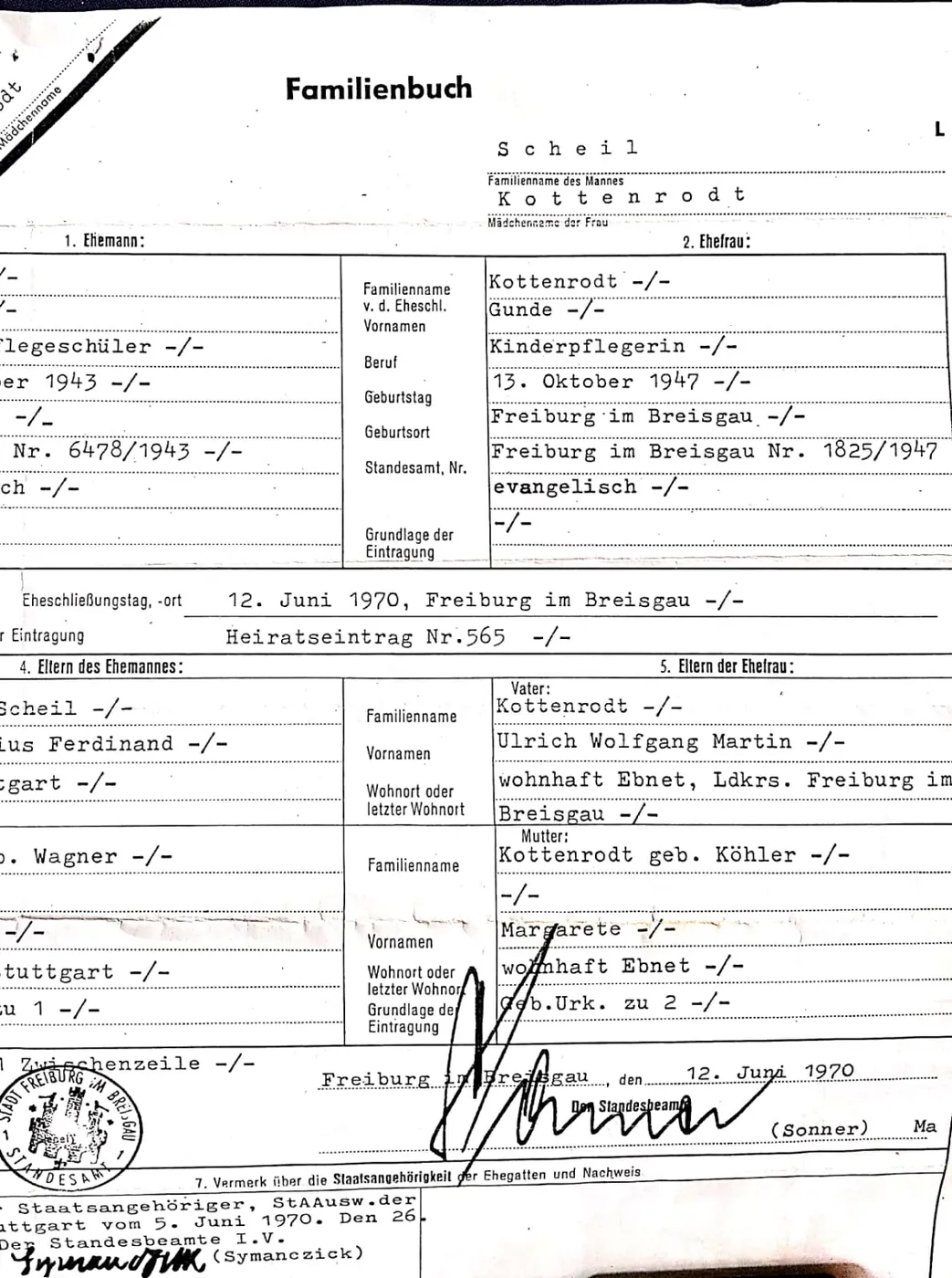
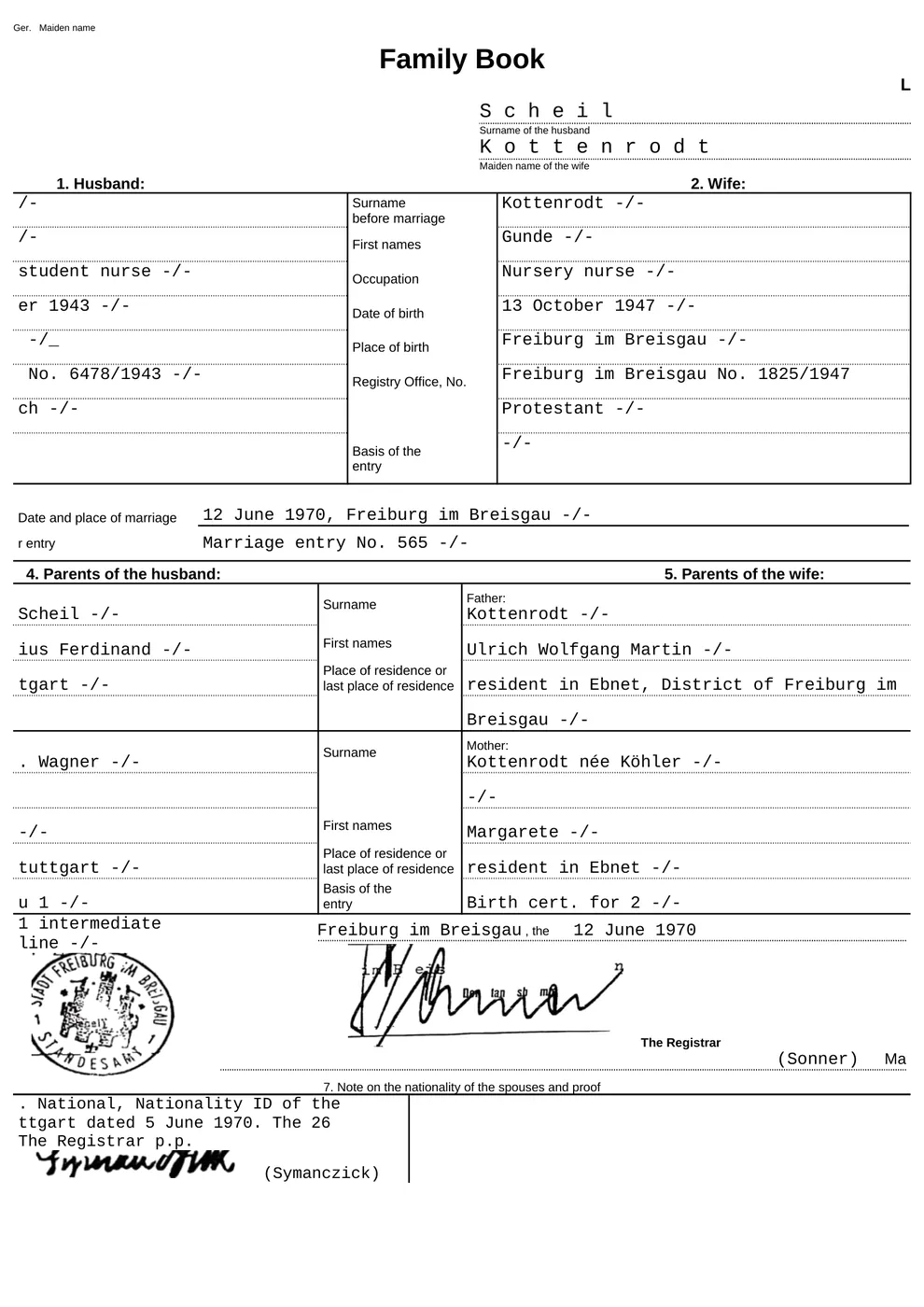
A certificate’s visible text may be only part of the translation job. The translator may also need to account for stamps, handwritten notes, labels, signatures, and attachments. If you send only the main page and leave out the reverse side or an attached page, the translation may be incomplete.
The German Embassy’s visa glossary gives an example for a child’s birth certificate in a visa context: the listed package includes the original and two copies, an apostille, and a translation. The page doesn’t state an update date, so use that example only as a prompt to check the current checklist for the relevant visa category, not as a universal rule (embassy visa glossary).
A related example on the same page concerns a child staying long-term without guardians: the page says a notarized declaration appointing a guardian in Germany may need a German translation and an apostille. The exact requirement depends on the procedure, so confirm it with the authority before preparing the declaration or its translation.
Documents involving a power of attorney need particular care. The embassy’s information says a power of attorney prepared by a German notary and used to obtain a Ukrainian document requires a German apostille and a notarized Ukrainian translation. Because the receiving authority’s requirements matter, verify the formalities before arranging the translation (embassy information on obtaining documents).
A useful document checklist is simple:
- Write down the name of the authority receiving the document and the procedure.
- Ask whether it requires an original, a certified copy, or copies.
- Ask whether the document needs an apostille.
- Ask what form of Ukrainian translation and certification it accepts.
- Include every page, attachment, stamp, and reverse side in the material sent to the translator.
- Check the spelling of personal names against the authority’s requirements.
- Keep the authority’s answer with your documents in case you need to explain the format later.
The list doesn’t replace the office’s instructions. It helps you avoid ordering a translation before you know what the finished package needs to contain.
Choosing between an agency, a freelancer, and an online tool
Each option solves a different part of the problem. Compare what you need: a human who can inspect a complex original, a translator who can discuss terminology directly, a document workflow that preserves layout, or a certified translation arranged with a human service provider.
| Option | What it can suit | What to check |
|---|---|---|
| Translation agency | A document with several pages, formal requirements, or a need to coordinate translation and certification | Who translates, what certification is included, whether the original is needed, and how stamps and attachments are handled |
| Freelance translator | A clear document when you want to speak directly with the person doing the translation | Relevant language and subject experience, the accepted form of certification, and how the final document will be delivered |
| Online document-translation tool | A typed document or legible scan where layout matters and you can review the result | Whether the file format is supported, what happens to scans, whether you need human review, and whether the result can meet your official requirements |
An agency can coordinate several steps, but the word “agency” by itself doesn’t tell you whether its translation will be accepted. Ask who signs the translation, whether a notary certifies that person’s signature, and whether apostille handling is included or separate.
A freelancer may be a good fit when the document is straightforward and you can agree on the terminology directly. Ask how the translator will handle seals and handwritten material, and confirm whether the translator can provide the form of certification the receiving authority asks for. A precise translation isn’t a substitute for required certification.
Online translation tools can help when the main challenge is turning a document into a readable translated file. They don’t remove the need to check the receiving authority’s rules. For official use, distinguish a working translation from a translation that has gone through the required human review and certification process.
How it works in ChatsControl: upload a DOCX or PDF, and the tool returns a translated Word file with the document’s layout, headings, lists, and tables kept in place. For a scan or photo, it first reads the page and rebuilds a formatted Word copy. The scan process can struggle with handwriting and very degraded images, and automated translation isn’t a substitute for a human-certified translation where an authority requires one. ChatsControl also offers a human certified-translation service for documents that need that step.
For a document that needs legal certification, certified translation is a separate service rather than an automatic property of an online translation. Confirm the receiving authority’s exact requirements before choosing between a working translation, a human-certified translation, or both.
The German Embassy warns that its list of translation providers is informational, not an endorsement, and that it doesn’t guarantee a translation’s content, quality, or cost. That means a provider’s appearance on an embassy list shouldn’t replace your own check of the service and the authority’s requirements (embassy guidance on translators and translations).
What certification means in Ukraine and Germany
A “sworn translation” has a particular meaning in Germany. A sworn, authorized, or publicly appointed translator has a status under the relevant German system; a Ukrainian translator’s notarized signature isn’t automatically the same thing.
The German Embassy in Ukraine stated as of June 2024 that Ukraine doesn’t have a general system of sworn, authorized, or publicly appointed translators equivalent to Germany’s. The embassy also says that German “beglaubigte Übersetzungen” aren’t issued in Ukraine with the same status (embassy explanation).
In der Ukraine gibt es keine allgemein beeidigten oder ermächtigten bzw. öffentlich bestellten Dolmetscher und Übersetzer.
“In Ukraine there are no generally sworn or authorized translators, or publicly appointed interpreters and translators.”
The distinction affects the direction of travel. A translation prepared in Ukraine for a Ukrainian authority may need a Ukrainian form of certification. A translation prepared in Ukraine for a German authority may still need the receiving German office’s approval. Don’t assume that one country’s label for a certified translation maps neatly onto the other country’s rules.
For procedures at the German Embassy in Ukraine, including visa and passport matters, the embassy said as of June 2024 that a Ukrainian translator’s translation with the translator’s signature notarized was sufficient. Requirements can change and may differ by procedure, so confirm the current checklist before relying on that general guidance (embassy guidance).
Notarizing a translator’s signature isn’t the same as a notary certifying that every word is accurate. The notary’s role in this format is tied to the signature, while the translator is responsible for the translation. Ask the receiving authority whether it wants that form or another one.
Some people encounter the word “apostille” and treat it as a certification of the translation. It isn’t a replacement for translation. A German apostille may authenticate the official document for use abroad; the Ukrainian translation makes the document’s content accessible to a Ukrainian reader. If an authority asks for both, each serves its own purpose.
The embassy’s information on a German-notarized power of attorney used to obtain a Ukrainian document names a German apostille and a notarized Ukrainian translation among the formalities. The same page cautions, in effect, that the receiving requirements should be checked; ask the office that will use the power of attorney before sending it for translation (embassy information on obtaining documents).
The translation process can also depend on where the underlying civil-status event was registered. The embassy says German birth, marriage, and death certificates are requested from the local Standesamt where the event was registered. Fees depend on the law of the federal state and can differ between registry offices; confirm the issuing office’s current procedure before requesting a certificate (embassy information on obtaining documents).
Comparing price and scope without guessing
The total cost depends on the document and the steps the authority requires. A translation quote alone doesn’t tell you the cost of an apostille, certification, copies, or handling an unclear scan. Ask each provider to state what the quoted price includes and what remains separate.
ChatsControl’s certified-translation service lists translation from 300 to 750 UAH per 1,800 characters depending on the language, notarial certification at 400 UAH per document, and an apostille at 2,100 UAH per document. Those are product prices; confirm the current price and whether the service fits your document and receiving authority’s requirements before ordering.
The German consular fee schedule, effective July 1, 2025, lists a rate of 49 euros per hour for simple written translations such as certificates and standard letters. The same schedule lists certification of a translation’s correctness as charged at an hourly rate, without a fixed amount for that item on the page. The schedule describes fees within consular services, not an average market price for translators in Germany (German consular fee schedule, effective July 1, 2025).
A commercial price list checked during research gave one example of 450 UAH per German translation page of 1,800 characters including spaces, plus 650 UAH for notarizing the translator’s signature. The page didn’t state a price date, so treat those figures as an undated example from one provider, not as a current market average or official tariff. Ask for a current quote instead.
Compare offers using the same questions:
| Cost question | Why it matters |
|---|---|
| Is the quote based on characters, pages, or document type? | A page may be defined by a set character count, not by the printed page in your file. |
| Is certification included? | Translation and notarization can be separate line items. |
| Is an apostille included? | An apostille is a distinct formal step from translating the document. |
| Are stamps and handwritten notes included? | A quote for the main text may not cover every visible mark. |
| Does the provider need the original? | Some formalities depend on seeing the original document or a particular copy. |
| What file or paper format will you receive? | The receiving office may require a physical document or a specific presentation. |
The embassy’s fee schedule is a useful comparison point only when you are considering a consular translation service. It doesn’t establish what a private agency or freelancer should charge. A quote should explain the unit, the services included, and any separate certification or apostille cost.
How to prepare and order the translation
A good order begins with the authority’s instructions, not with a file upload. Use this workflow whether you choose an agency, a freelancer, or an online tool.
-
Identify the receiving office. Write down the authority and the procedure for which you’ll submit the document. A translation for a Ukrainian registry office and one for a German consular procedure may have different requirements.
-
Ask for the required format. Confirm whether the office needs the original, a copy, an apostille, a translation, and notarization of the translator’s signature. Save the reply or checklist.
-
Collect the complete document. Scan or photograph every page, including the reverse, attachments, stamps, and handwritten additions. Don’t crop a seal or signature from the edge of the page.
-
Check names and dates. Compare names with the spelling required by the receiving office and with related documents. The German Embassy specifically advises people to raise the transliteration of names under ISO 9:1995 with the translator when ordering; treat that as the embassy’s recommendation, not a universal rule for every authority (embassy guidance).
-
Choose the translation route. For a document that needs formal certification, confirm that the provider can arrange the human and notarial steps the authority requests. For a working translation or a document where layout matters, an online document tool may be an option, subject to its limitations.
-
Review the finished result. Compare names, dates, document numbers, monetary amounts, stamps, and omitted or added text against the source. Ask the translator about anything unclear before submitting the package.
-
Assemble the submission. Put the original or required copy, apostille if needed, translation, certification, and requested copies together in the order the receiving authority specifies.
A document is more than its typed body. A translator may need to account for the stamp’s wording, a handwritten date, or a note added by an official. A seal left unexplained can make a translation look incomplete even when the main text is accurate.
On a scanned document, I keep the stamp as a picture where it was printed and put a small note in brackets right under it with the words read from it, such as “[Stamp: …]”. A certified translation needs the stamp translated too, and retyping a round stamp by hand is where words can get lost.
A scan is an image, not editable text. The translator has to read the printed content from the image, and seals or handwritten additions can be harder to read than clean typed text. If a mark is illegible, flag it instead of guessing what it says. Send a clearer scan or ask the provider how the uncertainty will be shown in the translation.
Pitfalls that can delay a usable translation
The main avoidable mistake is choosing the certification before identifying who will receive the document. A translation can be accurate but in the wrong form for the procedure. The German Embassy’s advice to check recognition with the receiving German authority is the practical safeguard; its guidance doesn’t specify a standard penalty, fee, or waiting period for a rejected translation (embassy guidance).
Other common problems are less dramatic but still worth catching before submission:
- Treating an apostille as a translation. The apostille and the translation do different jobs. Check whether the authority wants both and whether it expects the apostille to be attached to the document before translation.
- Translating only the typed text. Stamps, seals, notes, and signatures can carry information the authority expects to see represented. Send the complete document and ask how unclear marks will be handled.
- Using inconsistent spellings for names. One version of a name in a birth certificate and a different version in a translation can prompt questions. The embassy recommends raising ISO 9:1995 transliteration with the translator, but the receiving authority’s own instructions take priority.
- Assuming a notarized signature means the translation is recognized abroad. A Ukrainian notarial form doesn’t automatically establish recognition by a German authority. Ask that authority directly.
- Relying on a general example as a personal checklist. The embassy’s visa glossary gives examples, including a birth certificate package, but a page without a stated update date can’t replace the current checklist for the specific visa category.
- Assuming an embassy will obtain the document for you. The German Embassy says it can’t obtain Ukrainian certificates, notarial documents, or court documents for applicants. The interested person or an authorized representative must make the application (embassy information on obtaining documents).
For Ukrainian civil-status records, the embassy says birth, marriage, and death certificates are issued by the relevant Ukrainian civil registry office. If the record is available in the general electronic register, a document or extract may be requested at any registry office or online through the Ministry of Justice service; check whether the service is currently available for your record (embassy information on obtaining documents).
A German document used in Ukraine can raise a different issue from a Ukrainian document used in Germany. For a German-notarized power of attorney intended to obtain a Ukrainian document, the embassy names a German apostille and a notarized Ukrainian translation among the formalities. Confirm the requirement with the office receiving the power of attorney so the translation is prepared for the right package.
FAQ
How much does German-to-Ukrainian document translation and notarization cost?
ChatsControl’s certified-translation service lists translation from 300 to 750 UAH per 1,800 characters depending on the language, notarial certification at 400 UAH per document, and an apostille at 2,100 UAH per document. Confirm the current price and the receiving authority’s requirements before ordering.
Does a German document need an apostille before it’s translated into Ukrainian for use in Ukraine?
An apostille may be required, but the answer depends on the document and the authority receiving it. Ask the authority whether it needs an apostille, a translation, or both before arranging either.
Will a Ukrainian authority accept a German document I translated myself?
A self-prepared translation isn’t automatically accepted for an official procedure. Ask the receiving authority what form it requires; a German authority receiving a translation made in Ukraine should be asked in advance whether it recognizes that translation, according to the embassy’s June 2024 guidance.
How do I notarize a German-to-Ukrainian translation in Ukraine?
First confirm that the receiving authority wants a notarized translator’s signature or another form of certification. Then arrange the translation and the requested formalities; the German Embassy said as of June 2024 that Ukraine doesn’t have a general system of sworn translators equivalent to Germany’s.
Is a Ukrainian notarized translation enough for a German authority?
Not necessarily. As of June 2024, the German Embassy in Ukraine advised applicants to check with the German authority that will receive the document whether it recognizes a translation made in Ukraine.
Does the German Embassy in Ukraine translate documents?
No. The embassy says it doesn’t prepare translations or provide translators, so you’ll need to arrange the translation with an external provider.
Should I ask for ISO 9:1995 transliteration of names?
Ask the receiving authority how it wants names rendered, then tell the translator. The German Embassy recommends raising ISO 9:1995 when ordering a translation, but that recommendation isn’t a universal requirement for every procedure.
Can I use an online translation for a document that needs certification?
An online translation can help prepare a working document, but it doesn’t by itself provide legal certification. If the authority requires a certified translation, check what human review and certification it accepts before submitting anything.
Need these documents translated?
Leave your number and we will message you, tell you which certification your institution needs, and name the price. Translation, translator review and notary certification.