A six-page insurance form can contain the right translated words and still be hard to use if every box, frame, and field has disappeared. Human-in-the-loop translation addresses that gap: a machine produces a draft, then a person checks whether the result is accurate, complete, readable, and fit for its purpose.
The reviewer’s job isn’t to give every sentence a stylistic polish. It’s to find the errors that matter, including errors that look natural enough to escape notice. A fluent sentence can still reverse a condition, shift responsibility, or use a familiar term in the wrong way.
What human-in-the-loop translation means
Human-in-the-loop translation is a workflow in which a person checks or edits machine-generated text before someone uses it. The human step can range from a focused check for basic understanding to full post-editing for a polished, audience-ready translation.
The distinction matters because “AI reviewed” can describe very different work. One reviewer may scan the target text for obvious mistakes. Another may compare each sentence with the source, confirm terminology, check numbers and omissions, and revise the wording for a specific reader. Those processes don’t offer the same level of confidence.
The European Commission separates two related activities. Post-editing means correcting a machine-generated translation. Revision means checking a translation against its source text. A human reviewer can perform both kinds of work in a single workflow, but naming the task helps a team state what was actually checked. See the Commission’s description of revision and post-editing.
The European Commission defines revision as a bilingual process where a “second pair of eyes” compares the translation with the source text to verify accuracy and completeness.
The phrase “second pair of eyes” doesn’t mean that a reviewer merely rereads the translated text. Bilingual revision requires access to the source, because accuracy and completeness can’t be confirmed from the target text alone.
A separate monolingual review checks whether the target text is clear, appropriate in tone, and suitable for its intended audience. The European Commission’s translation-quality guidance describes this as a review focused on clarity, tone, and audience suitability. A text can pass one check and fail the other: a sentence may accurately reflect the source but sound unnatural, or read smoothly while quietly changing the source meaning.
The practical workflow usually has three parts:
- Generate a draft. A machine translation system turns the source into a target-language version.
- Check it against a defined brief. A translator or reviewer inspects the output for errors relevant to the content and its intended use.
- Resolve and document findings. The reviewer corrects issues, raises unresolved questions, and records any decisions the rest of the team needs to apply.
A clear brief makes the human step more useful. It can identify the audience, purpose, preferred terminology, tone, and any requirements for layout or delivery. Without that information, a reviewer has to guess whether a phrase should sound formal, whether a term should match existing materials, and whether the text is meant for internal understanding or publication.
Human-in-the-loop translation isn’t a single quality level or a promise that every error will be found. It’s a way to assign human attention to the places where a machine-generated draft needs interpretation, comparison, or judgment.
Why fluent AI output still needs a reviewer
The main risk isn’t that every machine translation looks obviously broken. The more difficult problem is that an output can read smoothly while transferring the wrong meaning. Grammar and fluency are visible on the page; a missing condition or altered relationship may only become clear when someone compares the translation with the source.
Meaning can shift through a small word, a changed reference, or a sentence structure that no longer expresses the original relationship. Negation, exceptions, qualifications, and conditions deserve special attention. A sentence may sound perfectly natural while turning “unless approved” into “when approved,” or assigning an action to the wrong party.
A 2024 Korean-English legal translation study examined human translations, raw machine output, and post-edited machine output using accuracy, fluency, and terminology criteria. The study found that post-edited output had the fewest errors in its test, while human translation retained an advantage for accuracy, particularly meaning transfer. The result applies to the study’s Korean-English legal materials and setup, not to every language pair or subject area. The study also found that accuracy errors were prominent across the output types it examined.
“Fluency and terminology errors were generally corrected in MTPE, but accuracy errors, particularly distortion, requiring substantial cognitive effort, often remained uncorrected.”
- Jieun Lee and Hyoeun Choi, study abstract, 2024
The finding explains why proofreading only for smoothness can miss the hardest problems. A reviewer may notice a clumsy phrase and fix it quickly, while a distortion takes more effort: the reviewer has to compare the sentence with the source, understand the context, and judge whether the relationship between ideas has changed.
A 2019 study of professional neural machine translation post-editing found that lexical errors were a frequent focus of quality-assurance work. The researchers also discussed a possible priming effect: a later reviewer may be influenced by corrections an earlier post-editor has already made. The study is specific to its own material and workflow, but it points to a practical safeguard: don’t treat an earlier person’s acceptance as independent confirmation. Read the source and target afresh when the risk warrants it. See the 2019 study.
A reviewer also needs context that the machine may not have. A product name could be a proper noun, an industry term could have a preferred translation, and a short instruction could rely on a rule explained elsewhere. A draft can be linguistically plausible while violating a company glossary or a previously approved style.
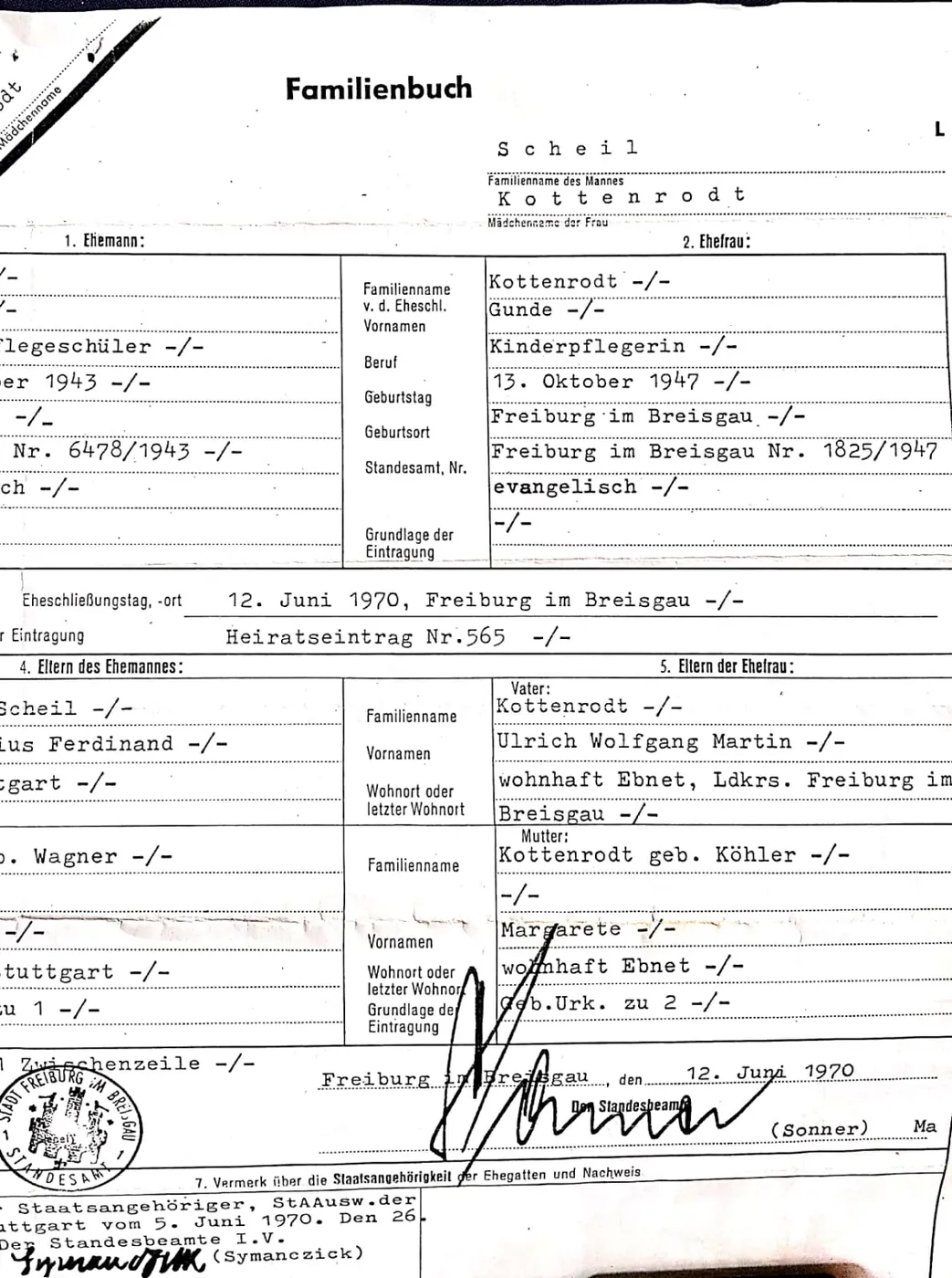
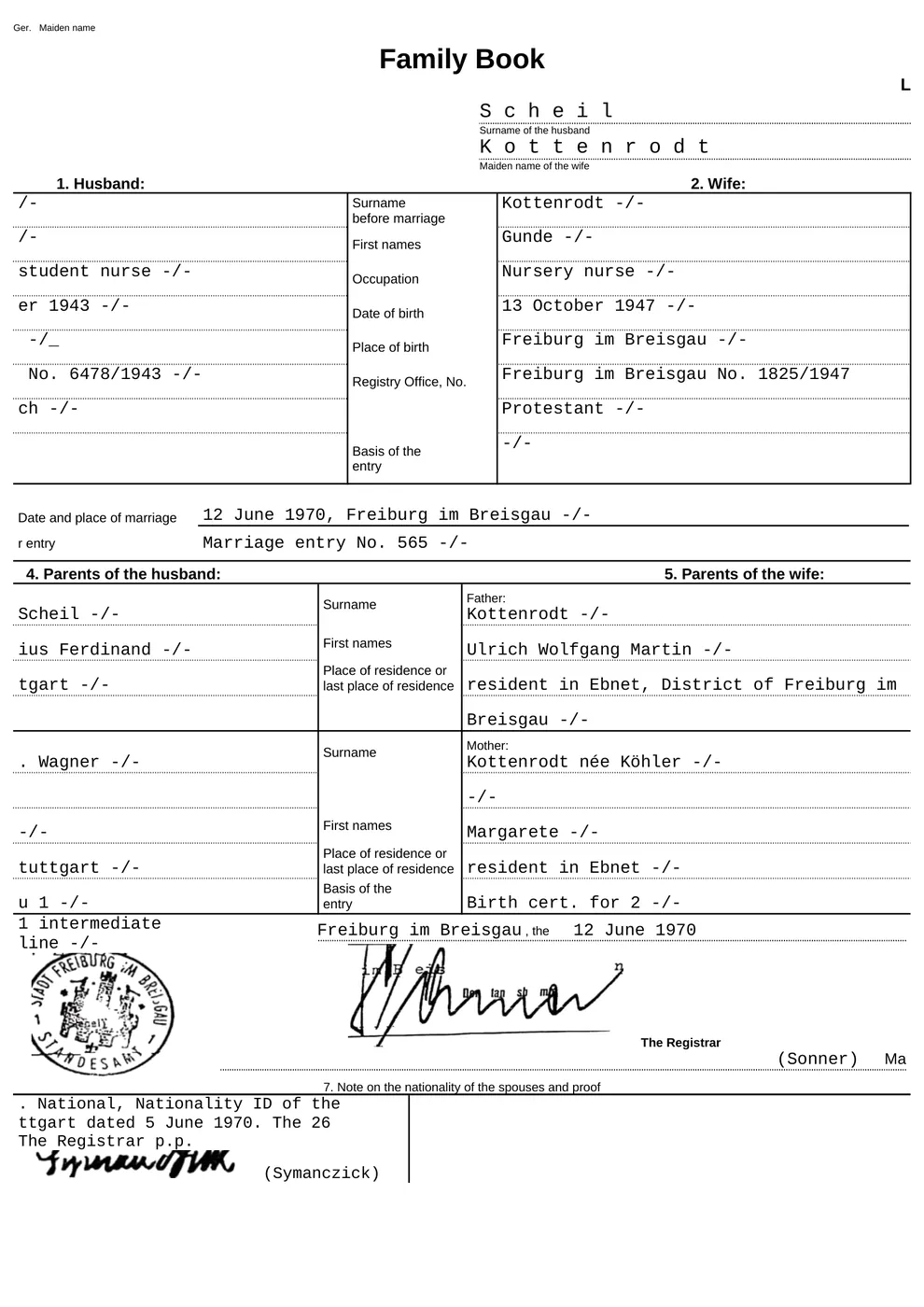
Layout can complicate review too. A form’s labels, checkboxes, and nearby instructions show which answer belongs in which field. A paragraph extracted from that form may preserve all the words but lose the relationships that make them usable.
On November 13, 2026, a six-page US insurance claim form full of frames and checkboxes was converted from its text layer. The words came out exact, but every frame and box was lost; built from the scan, every frame and box was there. For forms, the layout is half the document, and a translator who has to redraw it loses more time than the translation takes.
The lesson is broader than forms: reviewers need to inspect the deliverable in the form people will use, not only a text export. When structure carries meaning, check that labels still match their fields, tables still connect headings with entries, and callouts haven’t become detached from the relevant text.
The EU Commission’s translation-quality guidance treats quality as more than linguistic accuracy. Context, intended use, conventions, drafting, and reader needs all affect whether a translation works. A reviewer can’t judge those factors without knowing what the document is for.
What a human reviewer should check
A useful review starts with the source and the purpose of the text, not with a search for awkward sentences. The reviewer needs to know what the output is meant to do: help a colleague understand a message, guide a customer through a task, support a legal decision, or appear in public communications.
Meaning and completeness
Compare the source and translation passage by passage. Check whether the target preserves the source’s claims, conditions, relationships, and level of certainty. Pay particular attention to negation, exceptions, dates, qualifications, and references such as “they,” “it,” or “the former.”
Check for omissions as well as additions. A machine may skip a phrase, repeat an idea, or produce a target sentence that introduces a detail not present in the source. Review headings, footnotes, labels, and small-print text, not just the main paragraphs.
For high-impact content, ask a specific question about each instruction or obligation: who has to do what, under which condition, and by when? A fluent translation that leaves any of those points unclear needs attention.
Names, numbers, and terminology
Verify names, identifiers, figures, units, dates, and references against the source. A digit can be copied incorrectly even when every surrounding sentence looks natural. Date formats can also change across languages, so compare the underlying date rather than relying only on visual similarity.
Check terminology against the organization’s preferred terms and the document’s own usage. A machine may translate the same concept in different ways, or choose a familiar everyday word where the field expects a precise term. Confirm that a name stays consistent across headings, tables, and body text.
The European Commission’s description of its translation tools notes that its translators use CAT tools linked to Euramis, a translation-memory database that can retrieve previously translated segments, and IATE, its multilingual terminology database. Those resources show why terminology and reuse need active management: consistent choices don’t come from fluency alone.
Audience, tone, and usability
A translation should sound natural to its intended reader without changing the source’s effect. Review the level of formality, the clarity of instructions, and whether the phrasing fits the audience and channel. A customer-facing notice, an internal report, and a technical procedure may need different wording even when they describe the same subject.
Read the target text as a standalone piece as well as alongside the source. The side-by-side check helps expose meaning changes; the standalone read helps reveal awkward flow, confusing references, or phrasing that assumes too much knowledge.
Layout and document structure
Check how the text appears in its actual document. Confirm that headings remain attached to the right sections, table content lines up with the correct row and column, and form labels still point to the right fields. For scanned material, check whether stamps, signatures, handwritten notes, or low-quality areas are legible before relying on the translation.
A text-only review can miss a layout problem that changes how a reader interprets the document. A line moved under the wrong heading, for example, may appear to belong to a different instruction. Treat structure as part of the review whenever the source uses layout to guide the reader.
Unresolved questions and review notes
A reviewer shouldn’t quietly guess when the source is ambiguous. Flag the unclear passage, explain what’s uncertain, and ask the requester or subject-matter expert to resolve it. Record terminology decisions and recurring corrections so later sections or documents can follow the same choice.
Separating corrections from queries makes the workflow easier to manage. A correction fixes a clear translation error. A query asks for information the source doesn’t provide or a decision that belongs to the client. The distinction helps a reviewer avoid inventing meaning while still moving the work forward.
Light post-editing, full post-editing, and revision
The right amount of human work depends on how the text will be used and what a mistake could affect. A short internal message and a public-facing safety instruction shouldn’t automatically receive the same review.
The European Commission describes light post-editing as work focused on basic accuracy and understanding, while full post-editing aims for clearer, more polished output. Both approaches seek to improve machine-generated text, correct errors, improve fluency, adapt the output for its audience, and meet relevant standards. The Commission’s guidance on post-editing gives the distinction; the client and provider still need to agree what each level means for a particular job.
| Review approach | Main question | Typical focus |
|---|---|---|
| Light post-editing | Can the intended reader understand the essential message? | Basic accuracy, major errors, and clear obstacles to understanding |
| Full post-editing | Is the translation accurate and ready for its intended audience? | Meaning, completeness, fluency, terminology, tone, and usability |
| Bilingual revision | Does the translation match the source? | Accuracy, completeness, and changes in meaning |
| Monolingual review | Does the target text work for its audience? | Clarity, tone, naturalness, and suitability |
Light post-editing doesn’t mean “don’t check accuracy.” It means the agreed goal is limited, often because the audience only needs to understand the main point. A rough internal draft may fit that purpose. Content that people will publish, sign, submit, or use to make a consequential decision needs a closer fit-for-purpose review.
Full post-editing takes the target text further, but a polished result isn’t automatically verified. If a reviewer edits only the target language, the prose may improve without confirming that it still says what the source says. A team that needs both accuracy and readability should specify both, rather than using “full edit” as a vague label.
Bilingual revision focuses on the relationship between source and translation. Monolingual review focuses on the target text’s clarity, tone, and audience fit. A quality plan can use one or both, depending on the project’s risks and needs.
A 2024 study offers a useful caution about treating post-editing as a simple polish pass. In its Korean-English legal materials, the researchers reported that fluency and terminology errors were generally corrected during post-editing, while accuracy errors, particularly distortions, often remained uncorrected and required substantial cognitive effort. The findings are specific to that study, but the mechanism is relevant: spotting a smoothness problem is not the same as proving meaning has survived.
On November 13, 2026, Réka Patik, an English-to-Hungarian translator, tried ChatsControl and wrote that it “created a really good Hungarian translation! Better than most machine or AI output I post-edit”. Her comment describes her judgment of one tool’s output, not a guarantee for other documents, languages, or subject areas.
The human reviewer remains responsible for deciding whether the output meets the job’s brief. A positive impression can help identify a useful draft, but it doesn’t replace checks for source meaning, terminology, omissions, and audience fit.
When to use human review, and where to focus effort
Translation risk depends on what an error could do, not just on how long the text is. A short sentence can carry a high-stakes instruction; a long internal summary can have limited consequences if it only helps a team get the gist.
The European Commission describes a project-by-project approach to quality risk. Its guidance considers both the potential impact and likelihood of translation errors, and names time pressure, resource availability, and translator expertise among the relevant factors. Higher-risk content calls for more experienced translators and more extensive checks. See the Commission’s translation-quality guidance.
A practical risk assessment can start with four questions:
- What will readers do with the translation? Reading for background is different from using the text to make a decision or follow an instruction.
- What could a mistake change? Consider rights, obligations, money, safety, access, compliance, reputation, or trust.
- How difficult is the material? Technical subject matter, ambiguous source wording, and specialized terminology raise the need for expertise.
- What checks are already in place? A glossary, a subject-matter expert, and a bilingual reviewer can address different risks; one doesn’t automatically replace the others.
Higher-stakes content needs a reviewer who can understand both the language and the subject matter, with a process that compares source and target. Legal translation is a clear example: small wording changes can affect how a condition, responsibility, or qualification is understood. The reviewer should query ambiguity rather than silently choose an interpretation.
Public-facing policy and communications also deserve careful review. A wording error may not change a legal obligation, but it can still confuse readers or damage credibility. Product instructions and support material need checks for actions, warnings, and terminology that users depend on.
Lower-risk content may need a lighter process. An internal draft used only to understand the general direction of a message can be reviewed for major meaning errors and basic comprehension. If the same text is later used in a customer email or published document, reassess the required level rather than carrying over the first review decision.
Deadline pressure changes the risk picture. Rushing a reviewer can leave less time for source comparison and unresolved queries. The Commission lists time pressure as a risk factor, which is a reason to set review scope before the deadline gets tight, not after an error appears.
Human review doesn’t always mean that every word receives the same level of attention. A workflow can focus more time on high-risk segments, unclear source passages, and terminology that affects decisions. But a targeted check should still have a defined method. “We looked at the important bits” isn’t a usable record unless the team can say which bits were considered important and why.
Common review failures and how to prevent them
The first failure is treating fluency as proof of accuracy. A sentence that reads naturally may still change the source’s meaning. Prevent that mistake by keeping the source available during bilingual checks and comparing meaning, not just style.
The second failure is checking each sentence alone. References and terminology often depend on earlier or later passages. Review the document’s structure, keep related material together, and verify that names and concepts stay consistent throughout.
The third failure is assuming that an earlier post-editor has already settled every difficult issue. Research on neural MT post-editing has discussed a possible priming effect, where later reviewers may be influenced by a previous editor’s corrections. An independent check should focus on the source and the agreed brief, not simply accept the earlier decision. The 2019 study discusses this possibility in its own professional post-editing context.
The fourth failure is asking for “full review” without defining the outcome. A reviewer may focus on grammar while the requester expects verification against the source, consistent terminology, and publication-ready wording. Agree on the review type, reference materials, and intended audience before work begins.
The fifth failure is overlooking document structure. A correct sentence in the wrong cell or beneath the wrong heading can mislead a reader. Review the finished file, not just copied text, and give forms and tables a specific layout check.
The sixth failure is hiding uncertainty. Ambiguous source content can’t be solved by making the translation sound more confident. Mark the question, explain why it matters, and request a decision from someone who owns the source meaning.
A useful review brief can include:
- The target audience and how readers will use the translation.
- The required review level: light post-editing, full post-editing, bilingual revision, monolingual review, or a defined combination.
- Preferred terms, names, reference material, and style guidance.
- Whether layout, tables, forms, or scanned pages are part of the deliverable.
- How the reviewer should flag uncertainty and who can answer questions.
- What counts as an accepted final file and who approves it.
Document structure creates a practical review problem when tables or page layout are lost during translation. In ChatsControl, a translator can upload a DOCX or PDF and use the bilingual side-by-side view to compare source and translated text; the tool also has a built-in quality check for issues such as numbers, names, terminology, and omissions. The workflow supports review, but a person still has to judge meaning and resolve uncertain passages. It’s a document-translation tool, not a full CAT tool or team project-management system, and handwriting or very poor scans can still need a human with the original in hand. See ChatsControl.
A review process works best when the checks match the reason the translation is being made. A bilingual comparison can catch changed meaning; a monolingual review can improve clarity and tone; a subject-matter expert can resolve technical questions. Teams should assign those jobs explicitly instead of assuming one person or one automated check covers everything.
FAQ
Why does AI translation need a human reviewer?
AI can produce fluent text while changing meaning, omitting details, or mishandling terminology. A reviewer compares the output with the source and checks whether it fits its intended use.
What should a human reviewer check in machine-translated text?
Check meaning, names, numbers, dates, negation, terminology, omissions, tone, and whether the text suits its audience. For higher-risk content, compare every target passage with the source.
What is the difference between light and full post-editing?
Light post-editing focuses on basic accuracy and understanding. Full post-editing aims for clearer, more polished output that reads naturally for its audience.
How does human post-editing improve legal translation quality?
A qualified reviewer checks whether legal meaning, conditions, parties, and obligations survived translation. Post-editing can correct many issues, but it doesn’t remove the need to inspect meaning against the source.
When should a business use human review for AI translation?
Use human review when an error could affect rights, money, safety, compliance, reputation, or a decision. Low-risk internal material may need only a lighter check.