A discharge summary can be only a few pages and still carry the detail a foreign doctor needs to make a decision: the diagnosis, treatment, test results, medication, and follow-up plan. A missed dosage or an unexplained abbreviation can make the document harder to use, even when the translation reads smoothly.
The practical question isn’t just “Which language?” You also need to know what the recipient expects, which pages belong in the packet, and whether anyone needs to certify the translation. A clinic, insurer, and immigration authority can ask for different formats.
This guide explains how to prepare a discharge summary or epikrisis for translation, compare options, and review the result. It also covers certification, apostilles, scanned pages, and the details most likely to cause trouble.
What a discharge summary translation needs to do
A medical discharge summary translation transfers the content of a hospital record into another language while keeping the clinical meaning, document structure, and relevant administrative details clear. An epikrisis is a summary of a patient’s treatment or condition; the exact format and name vary between healthcare systems.
In Ukraine, Form 027/o is a certificate excerpt from an outpatient or inpatient medical record. The Ukrainian Ministry of Health’s page identifies an instruction edition dated 13 March 2020, but that form is an explanation of one document type, not a universal template for every hospital’s epikrisis (Ministry of Health regulation).
A useful translation needs more than word-for-word equivalence. A doctor reading it should be able to identify what happened, when it happened, what the tests showed, which treatment the patient received, and what the original clinician advised next.
That means the translator must distinguish between similar-looking details. A diagnosis may have a full name and a code; a medicine may have a brand name and an active ingredient; a lab value may appear with a unit and a reference range. The translation should preserve what the source says rather than silently “correcting” or simplifying it.
The document’s layout also helps explain the record. Headings, tables, and sections such as “Diagnosis,” “Treatment,” and “Recommendations” show how the hospital grouped information. If the translated file turns those sections into one continuous block, the words may still be present but the clinical relationships become less obvious.
A discharge summary often sits beside other records, not in place of them. A doctor may ask for recent test results, imaging reports, a current medication list, or specialist opinions. The receiving clinic decides which documents matter for its review; a translator can’t determine the clinical completeness of the packet.
For context, the European Commission describes the digital Patient Summary as a way for doctors to access essential information in their own language when a patient arrives from another EU country. The summary may include allergies, current medicines, past illnesses, and operations. That digital exchange applies where the relevant service is implemented; it doesn’t mean every paper discharge summary can be submitted without translation (European Commission: electronic cross-border health services).
Before commissioning a translation, find out whether the recipient needs the full record, a selection of pages, or a short summary. A patient preparing for a second opinion may need different supporting material from someone submitting a document to an insurer or an immigration authority.
Decide what to translate before choosing a provider
A quote based on the first page can be misleading if the original includes attachments, tables, stamps, or test results. Send the complete document for assessment, then confirm which parts the recipient actually wants translated.
The checklist below helps you define the scope before asking a translator or service for a price.
| Document or detail | Why the recipient may need it | What to check before translation |
|---|---|---|
| Discharge summary or epikrisis | Gives the clinical overview and the hospital’s conclusions | Include every page, continuation sheet, and recommendation |
| Diagnosis and diagnosis codes | Identifies the conditions recorded by the treating team | Preserve the original wording and codes; don’t guess at a local equivalent |
| Treatment and procedures | Shows what the hospital did during the admission | Check medicine names, dates, and procedure descriptions against the source |
| Test results | Adds measurements and findings that may support the diagnosis | Include the units, reference ranges, and result dates shown on the report |
| Imaging reports | Records the written interpretation of scans or other imaging | Ask whether the clinic needs the report, the image files, or both |
| Medication list | Helps a receiving clinician understand current treatment | Preserve strength, dosage, route, frequency, and duration as written |
| Specialist opinions | Adds conclusions from clinicians outside the main hospital team | Include only what the receiving clinic requests or considers relevant |
| Stamps and handwritten notes | May contain signatures, dates, clinic details, or extra text | Send a clear scan and ask how unreadable text will be marked |
A complete packet doesn’t always mean translating every medical record the patient has ever received. It means translating the material the recipient has asked to review, with enough context to interpret the discharge summary. If a clinic requests a specific test or date range, follow that instruction instead of assuming a general checklist will meet its needs.
Medical records can also repeat information. A lab result may appear in a hospital attachment and again in a separate report. Ask the receiving clinician whether both copies are required. Removing a duplicate can reduce unnecessary work, but omitting a record that supports a diagnosis can leave the reviewer without context.
The record’s age doesn’t automatically determine whether a translation is useful. An older discharge summary may be important for prior surgery, an allergy, or a chronic condition. The recipient, not the translator, should decide whether the information is relevant to the current request.
The most useful file for a quote is a clear scan or photo of all pages and attachments. A provider can then see the language, document length, handwriting, stamps, and layout before estimating the work. Tell the provider the target language, the intended recipient, and whether that recipient has given instructions about certification.
Don’t send only a cropped image of the diagnosis if the recipient expects the complete record. The omitted page may contain the date, hospital information, or explanation that makes the diagnosis understandable. A translator can only translate the material supplied.
Choose between a translation bureau, a freelancer, and an online tool
The right option depends on the document and the recipient’s rules. A readable typed record for personal reference has different needs from a faded scan that must be certified for an official filing.
A translation bureau can coordinate translation, review, formatting, and certification where those services are available. A bureau may suit a packet with several document types or an unclear administrative requirement because you can ask one point of contact to clarify what it can provide. Ask whether the quoted service covers the full record, attachments, stamps, and any certification. “Medical translation” alone doesn’t tell you which of those tasks the price includes.
A freelance translator may be a good fit when the language pair and medical terminology are clear and the translator has relevant experience. Before agreeing, ask how the translator handles unclear handwriting, abbreviations, and diagnosis codes. Find out whether a second review is included, and whether the translator can provide the certification the recipient asks for. A freelancer’s translation may not come with notarization or an apostille.
An online document-translation tool can help when you need a formatted draft or a translation for review and the recipient doesn’t require a specific human certification. In ChatsControl, you upload a DOCX, PDF, or image scan and receive a translated Word file that keeps the document’s layout. A scanned page is read first and rebuilt as a formatted document; the source and translation can then be reviewed side by side. The tool can also run checks for names, numbers, terminology, and omissions. It isn’t a substitute for a certified human translation when the recipient requires one, and handwriting or very poor scans can be read unreliably.
The price model depends on the provider. Some charge by page, others by character count, and certification or delivery may be separate. Compare quotes only after checking what a “page” means and whether the estimate includes tables, attachments, stamps, and review. A short but dense scan may take more attention than a longer, cleanly typed document.
| Option | What it can suit | What to confirm | Main limitation |
|---|---|---|---|
| Translation bureau | A document packet needing coordination or a formal service | Scope, language pair, review, certification, and delivery | The word “bureau” alone doesn’t guarantee a particular certification |
| Freelance translator | A clear document with a known language and recipient requirement | Medical experience, handling of unclear text, review, and certification options | Extra administrative steps may be your responsibility |
| Online document tool | A readable file or scan needing a formatted draft for review | File type, privacy settings, scan quality, and recipient requirements | An automated translation isn’t automatically certified or clinically validated |
For a record that will influence treatment, make the recipient’s requirements part of the comparison. A low-cost draft is no substitute for a required certified translation. On the other hand, ordering notarization and an apostille before anyone asks for them can add steps that the recipient doesn’t need.
How scans, tables, and stamps affect the translation
A printed PDF and a scanned PDF may look alike on screen, but they contain different kinds of information. A text PDF stores letters positioned on a page. A scan is an image of the page; a translator must first read the image before translating its words.
That distinction matters for medical records. A scan may contain a faded hospital stamp, handwritten date, signature, or small dosage value. The main text can be readable while one small piece of information is not. The translator should mark uncertainty rather than guess, and you may need to ask the issuing hospital for a clearer copy.
Tables can create a separate problem. Test results often depend on the relationship between a name, value, unit, and reference range. If those columns shift or collapse during conversion, a number can become detached from the test it describes. Review the translated table against the original instead of checking only whether every number appears somewhere on the page.
On 30 October 2026, I worked on a scanned document where the stamp stayed as a picture in its original position, with a small bracketed note right below it containing the words read from the stamp, such as “[Stamp: …]”. A translator needs those words as text because a certified translation has to translate the stamp too, and retyping a round stamp by hand is where words get lost.
That distinction is useful when you review a translated scan: the image of a stamp and the translated words are two separate things. Check that the stamp remains represented in the page and that its readable text appears in the translation. If part of the stamp can’t be read, ask how the uncertainty is shown rather than accepting a guessed clinic name or date.
ChatsControl processes scans by reading the page and rebuilding it as a Word document. The rebuilt copy can retain tables, fields, stamps, seals, signatures, and pictures in their page positions, while readable stamp text can be represented as text for translation. A quality grade indicates when a scan may be difficult to read; poor image quality and handwriting remain limitations, so check the result against the original.
Before uploading a scan, make sure every page is in focus and photographed straight on. Include the edges, not just the body text. Keep the original file too: if a number or stamp is unclear in the translation, the original helps you and the receiving clinician check what the hospital actually issued.
A translation tool or translator can’t restore information that isn’t visible in the source. If the original page is cut off, ask the hospital for a replacement. If the handwriting can’t be read, the translator should identify the unclear part so you can seek clarification from the issuing clinician.
Certification, notarization, and apostille aren’t the same thing
Certification describes a translator’s statement about the translation, while notarization and apostille are separate formal steps. A recipient may ask for one, several, or none of these. Confirm the exact requirement before ordering extra processing.
A translator’s certification usually identifies the translator and states that the translation is complete and accurate. Requirements differ by recipient and process, so don’t assume one standard wording works everywhere. Ask the clinic, insurer, university, or authority whether it requires a signed statement, a certified translator, notarization, or another format.
For a U.S. immigration filing with USCIS, the rule is specific: a document in a foreign language must come with a full English translation certified as complete and accurate, and a statement that the translator is competent to translate from the foreign language into English. The rule comes from 8 CFR 103.2(b)(3), and it applies to USCIS submissions, not to every clinic or country (current eCFR text).
“Any document containing foreign language submitted to USCIS shall be accompanied by a full English language translation which the translator has certified as complete and accurate, and by the translator’s certification that he or she is competent to translate from the foreign language into English.”
- 8 CFR 103.2(b)(3), U.S. Electronic Code of Federal Regulations
The practical takeaway is to follow the receiving process’s own instructions. An ordinary translation that a clinic accepts may not meet USCIS requirements, while USCIS’s wording shouldn’t be treated as a global standard for medical records.
Notarization generally concerns a signature or document formalities, not the medical accuracy of the translation. Ask what the notary is being asked to certify and whether the recipient requires that step. A stamp from a translation provider, a translator’s certification, and notarization aren’t interchangeable labels.
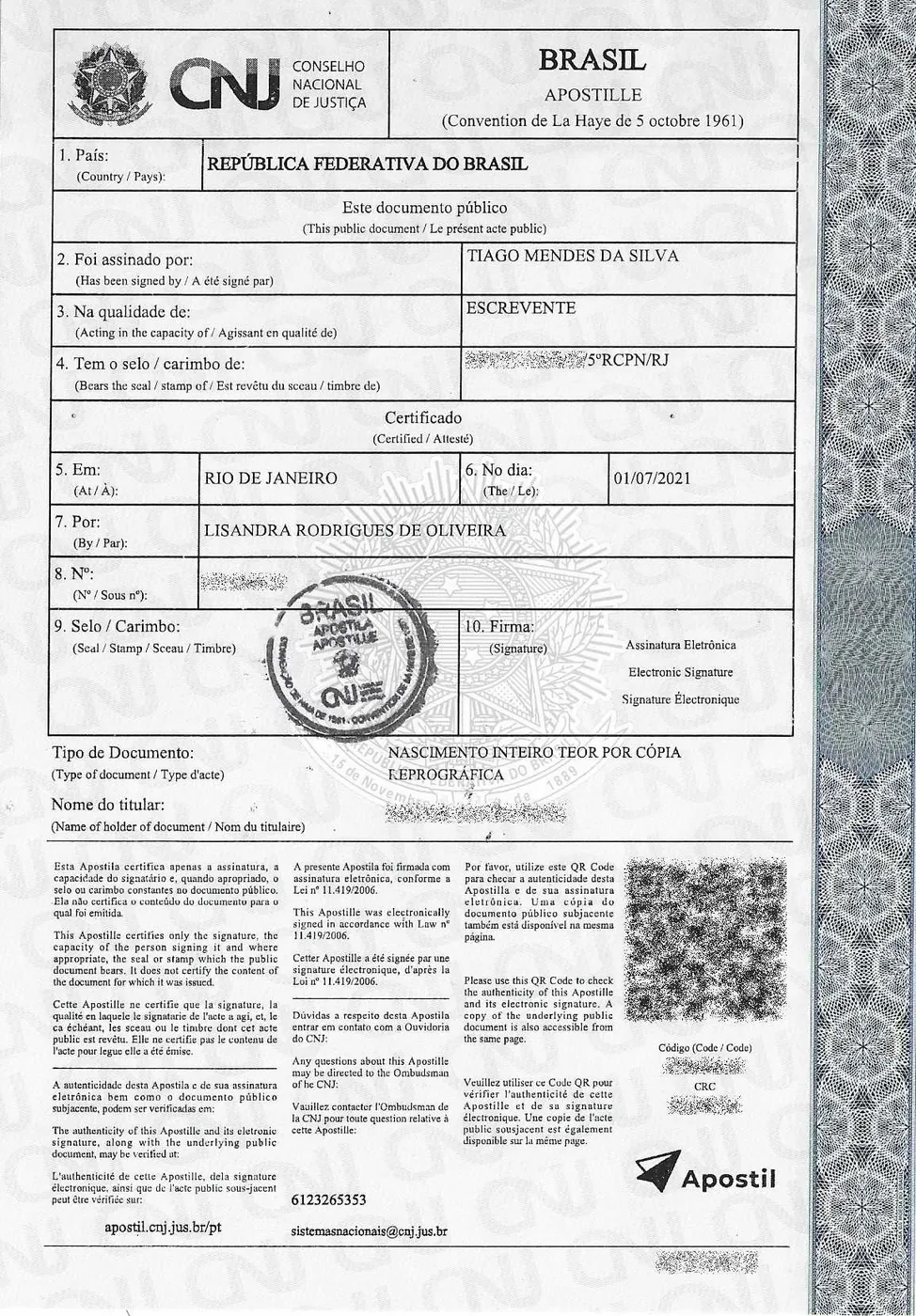
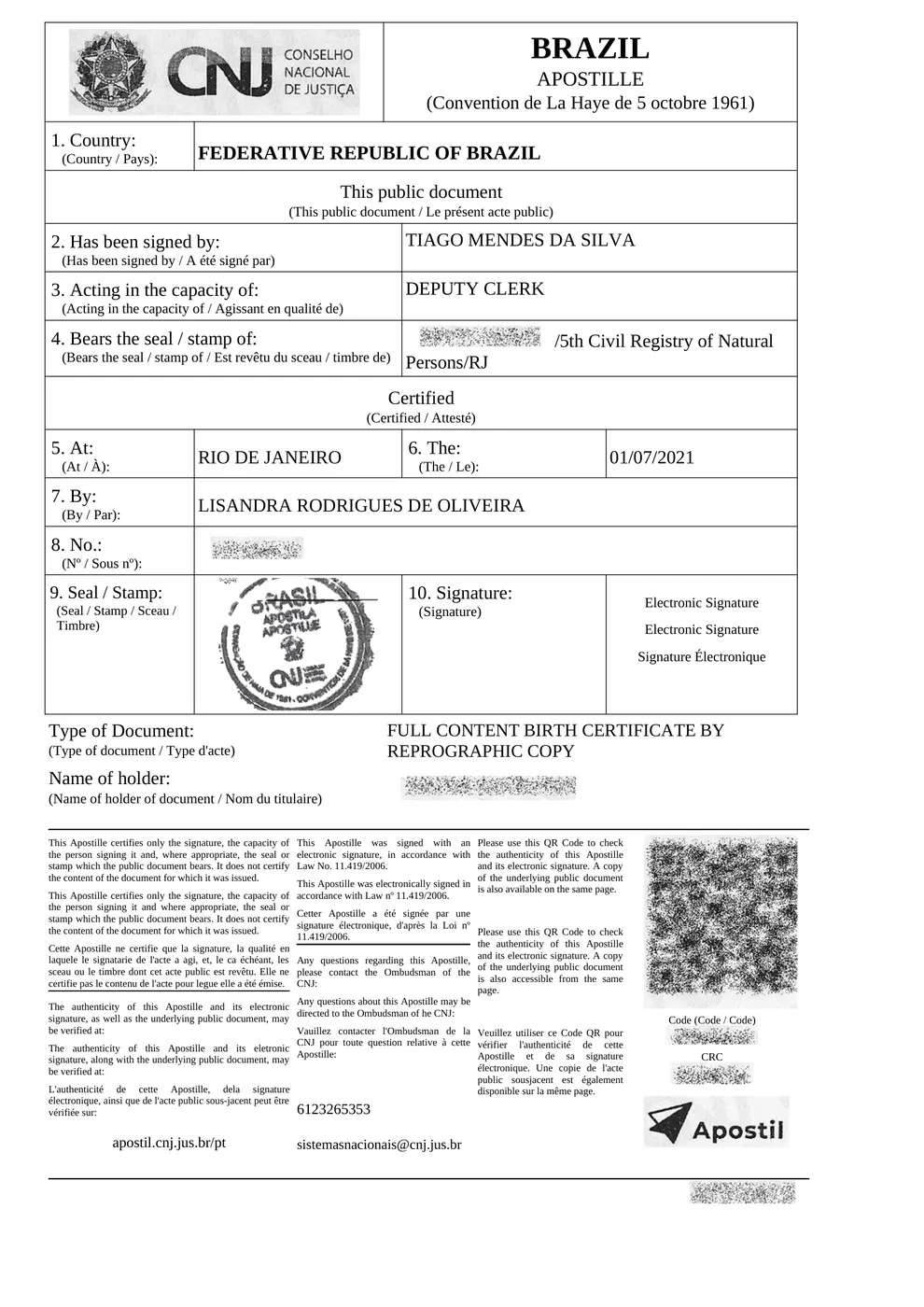
An apostille is a certificate issued by a competent authority for eligible public documents. The Hague Conference on Private International Law says the Apostille Convention replaces traditional legalisation for documents within its scope with one apostille issued in the place where the document originates. The HCCH doesn’t issue apostilles; the competent authority does. Check whether the destination country participates and whether the particular record qualifies before arranging the process (HCCH Apostille Section).
“The purpose of the Convention is to abolish the traditional requirement of legalisation, replacing the often long and costly legalisation process with the issuance of a single Apostille certificate by a Competent Authority in the place where the document originates.”
An apostille doesn’t translate the medical content, and it doesn’t certify that a doctor agrees with the diagnosis. It authenticates an aspect of the public document under the applicable process. The receiving organization still decides whether it needs an apostille at all.
The safest first step is a written question to the recipient: “Do you need a full translation? Does it need a translator’s certification or notarization? Does the original medical record need an apostille?” Keep the answer with the document packet so you can share it with the provider preparing the translation.
For a translation that needs a human certified service, the certified translation service is a separate option from an automated draft. The service’s current reference pricing is 300 to 750 UAH per 1,800 characters depending on language, 400 UAH per document for notarization, and 2,100 UAH per document for an apostille. Check the current quote and confirm the receiving authority’s requirements before ordering; those listed amounts are service prices, not universal government fees.
A practical workflow from scan to submission
A clear handoff prevents avoidable questions later. Use the steps below whether you work with a translator, a bureau, or an online tool.
- Get the complete source file. Scan or photograph every page, continuation sheet, and attachment. Keep pages in the right order and make sure small text, stamps, and table headings are visible.
- Ask the recipient what it accepts. Confirm the target language, whether it wants a full translation, and whether it requires certification, notarization, or an apostille. Ask whether it needs original paper documents or accepts copies.
- Define the scope. List the discharge summary and supporting records the recipient wants. Include test results, imaging reports, medicines, and specialist opinions only when requested or relevant to the stated purpose.
- Get a quote based on the full packet. Send the complete scan, target language, recipient, and certification instructions. Ask which pages are included and whether tables, stamps, handwritten notes, and attachments affect the quote.
- Agree how unclear content will be handled. Ask the translator to mark unreadable text rather than guess. If a scan is poor or a handwritten note is essential, request a better copy from the hospital.
- Review the translation against the source. Check names, dates, diagnoses, codes, medicine names, dosages, units, and page order. Compare table rows and confirm that stamps and visible notes are accounted for.
- Submit the format the recipient requested. Follow its instructions about a digital file, a paper translation, the original, or a copy. Keep your own copy of the source and final translation.
The review step deserves time because medical errors can hide in a document that looks neat. A person’s name may be transliterated differently across records; a decimal point may be difficult to see in a scan; a unit may be printed in a narrow table column. Compare each item with the source, not with what you think the record ought to say.
ChatsControl’s bilingual review view shows the source alongside the translation, with translated text highlighted and the original available for comparison. That makes it easier to check a name, number, or medicine without switching between separate files. The tool can flag issues such as changed numbers or possible omissions, but a flagged result still needs a human to compare it with the original.
If a translation will be submitted to USCIS, follow the specific certification requirements in 8 CFR 103.2(b)(3). USCIS may reject or deny a filing that doesn’t meet the applicable rules or instructions, and the filing date may not be preserved after rejection. The same regulation says applicable fees generally aren’t returned, so an error in a submission can have consequences beyond paying for a corrected translation; the effect depends on the particular process (8 CFR 103.2). Don’t assume that this U.S. filing rule applies to a foreign clinic.
Common mistakes and how to avoid them
The most common translation problems start before translation begins: a missing attachment, an unclear recipient requirement, or a scan that doesn’t show the full page. Other errors appear during review, when a reader checks fluent sentences but overlooks the clinical details.
Sending only the first page. A discharge summary may continue onto another page or include recommendations in an attachment. Send the full set first, then let the recipient identify what it needs. A partial translation can leave out a follow-up plan or the information that connects a test to a diagnosis.
Treating every abbreviation as obvious. Medical shorthand depends on context and local practice. The translator should not invent an expansion when the original is ambiguous. Ask the issuing hospital to clarify an abbreviation that affects treatment, and share the clarification with the translator.
Converting a diagnosis code without instruction. A code may be part of the source record, but its presentation or equivalent can differ across systems. Preserve the original code and wording unless the recipient specifically asks for a mapped code or explanation. A translator shouldn’t silently replace the hospital’s record with a guessed local equivalent.
Leaving out units or reference ranges. A lab result without its unit may be hard to interpret, and a value separated from its reference range loses context. Check that the translated report keeps the numbers beside the correct test name and preserves any units and ranges printed in the source.
Assuming a stamp is only decoration. A hospital stamp may carry a name, date, or other text. A certified translation may need to account for text on stamps and seals as well as the main body. If the stamp is illegible, ask the provider to mark that limitation rather than make up its contents.
Ordering an apostille as a default. An apostille is a formal document-authentication step, not a translation upgrade. The HCCH describes it as a replacement for traditional legalisation for eligible documents within the Convention’s scope. The relevant competent authority issues it, and not every medical record or destination necessarily needs one (HCCH Apostille Section). Ask the recipient first.
Assuming “official translation” means the same thing everywhere. A clinic may accept a translator’s signed statement, while an immigration process can set its own requirements. USCIS, for example, specifies a full English translation and a translator’s statement of completeness, accuracy, and competence under 8 CFR 103.2(b)(3) (eCFR). Don’t carry a rule from one recipient over to another.
Checking only the translated prose. A smooth paragraph can still contain a misspelled name, a wrong date, or a dosage separated from its unit. Make a focused pass through the details most likely to affect care: patient identifiers, diagnosis, medicines, measurements, allergies, dates, and recommendations.
A useful final check is to compare the translation page by page with the original. Confirm that the same pages appear in the same order, that tables still associate labels with values, and that visible stamps and signatures are represented. Ask for a correction before submission if a factual detail differs.
FAQ
How much does it cost to translate a medical discharge summary?
The price depends on the language, length, scan quality, and whether certification or notarization is required. Ask for a quote based on the complete document and confirm whether attachments, stamps, and delivery are included. The certified translation service’s current reference prices are 300 to 750 UAH per 1,800 characters depending on language, with separate listed fees for notarization and apostille; confirm the current quote before ordering.
Does a discharge summary for a foreign clinic need notarization?
Not automatically. Ask the clinic in writing whether it accepts an ordinary translation, needs a translator’s certification, or requires notarization. A notary’s involvement doesn’t by itself prove that the medical translation is accurate.
Do I need an apostille on a medical discharge summary for treatment abroad?
Only if the receiving authority requires one and the document qualifies under the applicable process. The HCCH says competent authorities in participating states issue apostilles for documents within the Convention’s scope; confirm the destination’s rules and the document’s eligibility with the recipient and relevant authority (HCCH Apostille Section).
Which pages and test results should I translate with an epikrisis?
Translate the complete discharge summary and the supporting records the receiving clinician requests. Those may include relevant test results, imaging reports, a medication list, or specialist opinions, but the clinic should define the final packet.
How can I check a medical discharge translation before submitting it?
Compare each page with the original and check names, dates, diagnoses, codes, medicine names, dosages, units, and test values. Check that tables keep their headings, attachments are included, and readable stamp text is represented. Ask the translator to clarify anything that remains uncertain.
Will a foreign clinic accept an AI-generated medical translation?
Acceptance depends on the clinic’s own rules and the purpose of the record. Ask whether it requires a human translator or a particular certification, and don’t present an automated draft as certified. A tool can help prepare or check a translation, but it can’t decide whether the clinic accepts that format.
Can I translate the discharge summary myself?
You can prepare an informal translation for your own understanding, but the recipient may require a full translation and a particular certification. USCIS, for example, requires a translator’s certification of completeness, accuracy, and competence for foreign-language documents submitted to that agency under 8 CFR 103.2(b)(3) (eCFR). Check the recipient’s instructions before relying on a self-made version.
Should I translate the whole medical history or only the latest discharge summary?
Ask the receiving clinician which records support the decision they’re making. A current discharge summary may be enough for one review, while earlier surgery records, test results, allergies, or medication history may matter for another. Don’t omit a record the clinic has specifically requested.
Need these documents translated?
Leave your number and we will message you, tell you which certification your institution needs, and name the price. Translation, translator review and notary certification.