The translation is only one part of getting a power of attorney accepted abroad
A translation can be accurate and still fail to meet a foreign bank’s or notary’s requirements. Before arranging translation, find out where the power of attorney will be submitted, what the recipient needs you to do, and whether it expects an apostille or a particular form of certification.
That distinction matters because a power of attorney can involve several separate things: the document’s legal form, the authority of the person who certified it, the language of the text, and the way the translation is certified. An apostille deals with a signature and official capacity. A translation deals with the words. Neither one answers whether the powers in the document are sufficient for the transaction.
The Ministry of Justice advises people to check the requirements of the country and receiving institution before using a power of attorney abroad (Ministry of Justice guidance). A bank may have its own document rules; a notary may need particular wording; a public authority may require a different format. Don’t assume that one institution’s acceptance means another will accept the same paperwork.
The safest starting point is a written request to the recipient. Ask which language it accepts, whether it needs a translation of the notarial certificate and any apostille, what kind of translator or certification it accepts, and whether it wants the original, a certified copy or a scan for preliminary review. Keep the reply with the document file.
The Ministry of Justice describes an apostille as a special stamp that confirms the validity of a signature, the authority of the person who signed the document and, where relevant, the authenticity of a seal or stamp (Ministry of Justice).
That description explains the boundary: an apostille doesn’t translate the document, check the wording of the powers, or confirm that the foreign recipient will accept them. Treat translation and authentication as separate questions.
What to confirm before you choose a translation option
A power of attorney gives another person authority to act for you, so the recipient usually needs to understand both the document’s content and the formalities attached to it. The right translation route depends on the document’s origin and destination, not just on the language you want.
Start by identifying the direction of use. A Ukrainian document intended for a foreign institution isn’t the same case as a power of attorney issued by a foreign notary for use in Ukraine. The Ministry of Justice’s examples about foreign documents and bilateral agreements relate to the direction stated in its guidance; don’t use them as proof that an apostille is or isn’t needed for a Ukrainian document abroad (Ministry of Justice).
Then ask the receiving institution these questions:
- Which language should the power of attorney be in?
- Does the institution need the full document translated, including the notarial certificate?
- Does it also need the apostille translated?
- What form of translation certification will it accept?
- Does it require the original document, a notarized copy or a scan?
- Does it need specific wording about the representative’s powers?
- Will it review a draft before the document is signed or certified?
A short written reply is more useful than a general answer such as “we accept translated documents.” That phrase doesn’t tell you which translator’s certification is accepted, whether the notarial wording must be translated, or whether the institution expects the apostille to appear on the translated version.
The document’s use also affects who should prepare it. If you haven’t yet signed the power of attorney, ask the recipient whether it has a form or required wording. If the document is already signed, don’t amend it yourself. A change to a notarized document can require a new document and another appointment.
The Ministry of Justice’s explanation of powers of attorney made abroad is useful background on the difference between a document’s origin and where it will be used. For a power of attorney, however, confirm the recipient’s own requirements rather than relying on a rule for a different document type.
Which parts may need translation
A foreign institution may need to read more than the main text of the power of attorney. The notarial certificate, seals, stamps and apostille can all carry information relevant to how the document was issued.
| Document element | What it tells the recipient | What to ask |
|---|---|---|
| Main text of the power of attorney | Who grants authority, who receives it and what actions are permitted | Does the recipient require a particular wording or terminology? |
| Notarial certificate | Who certified the signature and what formal act the notary performed | Does the recipient need this section translated and certified? |
| Seal or stamp | Official or identifying information printed on the document | Must the stamp text be translated, and how should it be shown? |
| Apostille | Authentication details for a signature, official capacity and, where relevant, a seal | Does the recipient require an apostille, and must its text also be translated? |
| Attached pages or copies | Additional document text or certification connected to the power of attorney | Does the recipient require every page and attachment in the translated set? |
The table is a checklist, not a universal rule that every institution asks for every item. Get the recipient’s answer before you order the translation. If the institution says “translate the document,” ask whether that includes the notarial certificate, apostille and any attachments.
Apostille and translation solve different problems. An apostille authenticates certain details about the signature and the signer’s capacity; a translator renders the text into another language. The Ministry of Justice explains the apostille’s role on its current apostille procedure page. The Hague Convention’s mechanism also depends on the countries involved, the document’s status under the law of the country where it was issued, and whether the destination country requires an apostille for recognition (HCCH Apostille Handbook).
The apostille doesn’t confirm that the power of attorney contains the correct powers for the intended transaction. The Ministry of Justice notes that an apostille on a document signed in a private capacity can authenticate the notarial certification of the signature; it doesn’t validate the substance of the document or the scope of the representative’s authority (Ministry of Justice explanation).
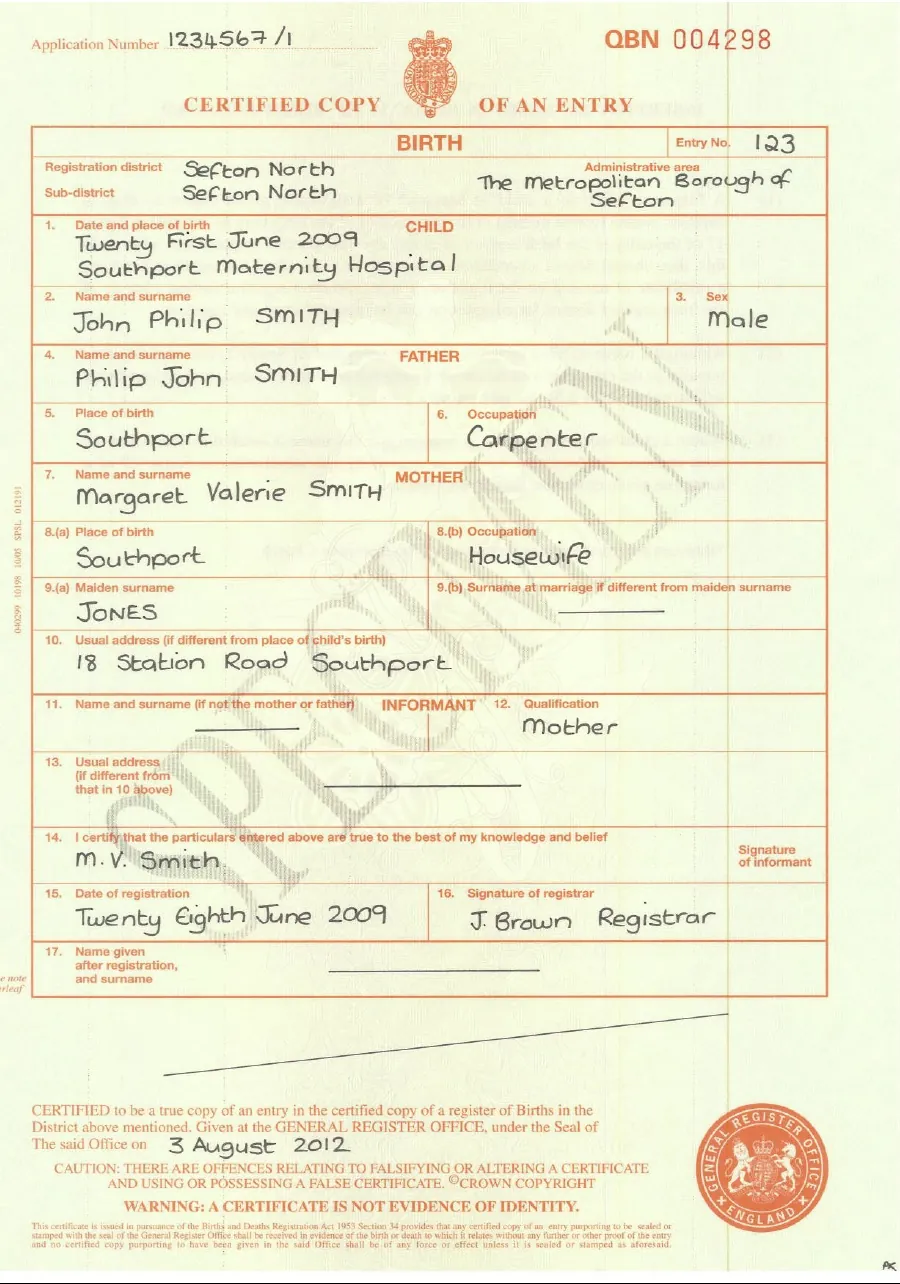
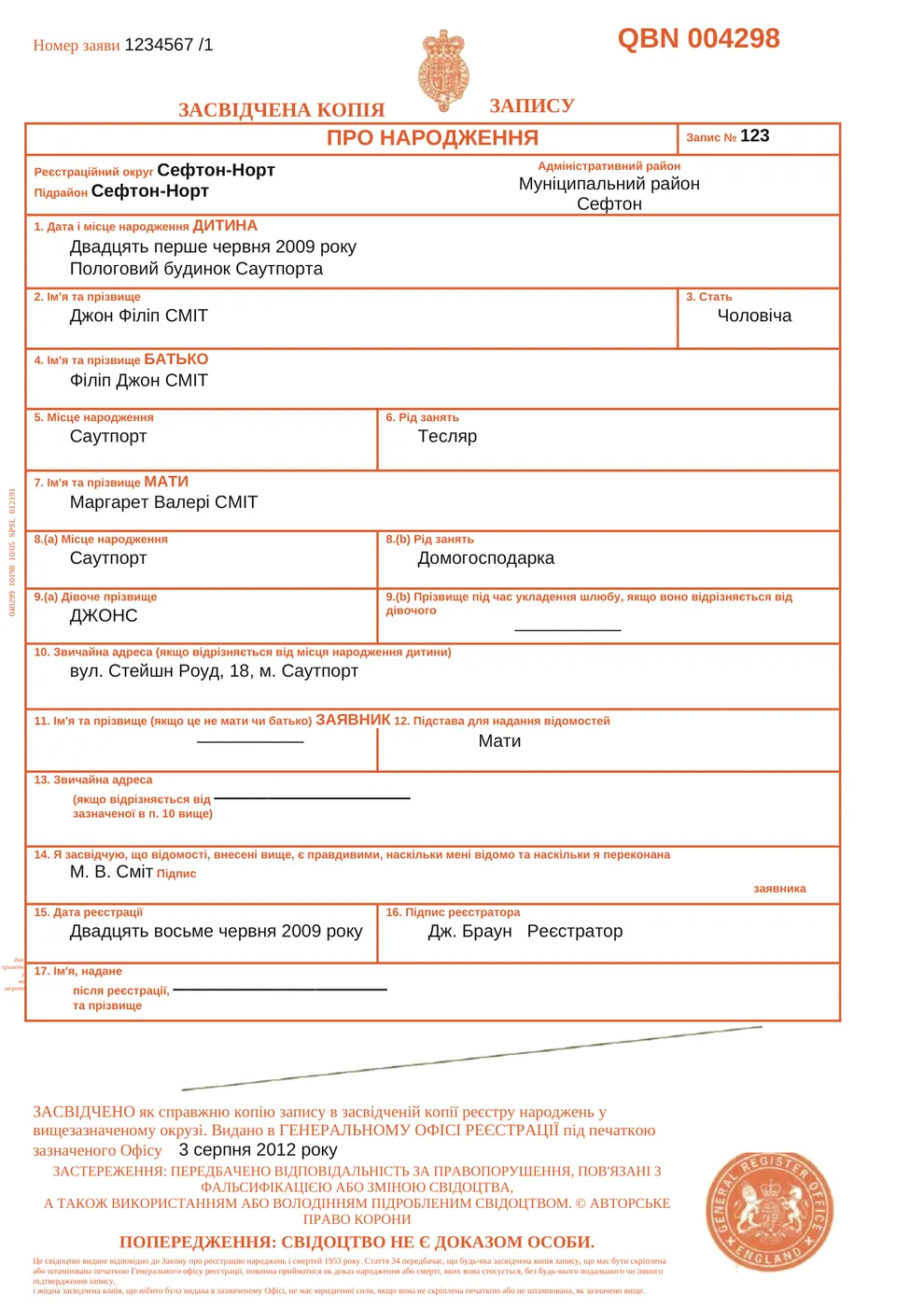
I’ve seen a scanned document where the stamp stays as a picture in its original position, with a small note in brackets underneath showing the words read from it, like “[Stamp: …]”. A translator needs the stamp’s wording as text because a certified translation has to translate the stamp too, and retyping a round stamp by hand is where words get lost.
A scan can make the stamp harder to read than the main text. Send the clearest available copy, and tell the translator which pages contain stamps, handwritten notes or seals. If a mark can’t be read, don’t silently guess at its wording; ask how the translator will show the unreadable part.
Translation routes: agency, individual translator or online workflow
The main choice isn’t simply between a “good” and “bad” translator. It’s about matching the work to the recipient’s rules, the document’s condition and the level of review or certification you need.
A translation agency can coordinate translation and additional formalities when you need several parts handled together. Ask who will translate the document, whether the notarial certificate and apostille are included, and whether certification is performed by a Ukrainian notary, a sworn translator or another person accepted by the destination institution. The word “certified” can mean different things in different systems, so ask the agency to describe exactly what it will provide.
An individual translator can suit a straightforward document when you already know the target language and certification requirements. Confirm that the translator can work with the complete document, including stamps and attachments. Also ask whether the translator can prepare the form of certification the recipient requires. A translation alone may not meet a rule that calls for a sworn translator or another recognized certifier.
An online document workflow can help when the immediate task is preparing a readable translation from a DOCX, PDF or scan. In ChatsControl, you upload a document, the tool reads its text and layout, and you receive a translated Word file. A scan or photo goes through text recognition first, and the result can retain a structured layout rather than arriving as a plain block of text. That can help with checking names, numbered powers and the position of stamps.
A document-translation tool isn’t the same as a legally certified translation. If the receiving institution requires a certified or sworn result, that human certification step still matters. ChatsControl’s certified translation service uses a human translator and notary for documents that need that form of certification; confirm that the service’s specific form is accepted by the recipient before proceeding.
Online processing also has limits. Handwriting and very degraded scans can be read unreliably, so use a clearer copy or arrange human review against the original when the wording matters. An automated layout can help preserve the document’s structure, but it can’t decide whether the foreign institution accepts the document or whether the powers are legally sufficient.
For further context about how translation, certification and delivery can affect a document workflow, see what makes up the cost of a translation from Ukraine abroad. The relevant cost for a power of attorney depends on the language, the form of certification and any separate authentication or delivery steps; don’t compare quotes until you know which items each one includes.
Compare the options against the recipient’s requirements
A side-by-side comparison is most useful after you know what the receiving institution will accept. Without that information, a low-friction translation route can still leave you with a document you can’t submit.
| Route | Useful when | Check before proceeding | Main limitation |
|---|---|---|---|
| Translation agency | You need help coordinating translation and related formalities | Who translates, what is certified, and whether the recipient accepts that certification | A broad service description may not specify exactly what the recipient requires |
| Individual translator | The document is clear and you know the required language and certification | Experience with legal documents, treatment of seals, and form of certification | You may need to coordinate authentication and submission yourself |
| Online document workflow | You need a translated file for review or the recipient accepts the resulting form | Whether the recipient accepts the translation and whether human certification is required | Automated processing doesn’t replace a required sworn or notarized step |
| Local sworn translator | The destination institution asks for a translator recognized in that jurisdiction | Whether that translator’s status and format meet the recipient’s rule | You need to confirm the local route and provide a usable source document |
For an online draft or review copy, a tool can be convenient because it works with the document rather than only pasted text. That difference matters when the power of attorney has numbered clauses, tables or stamps that need to stay associated with the right text. It doesn’t remove the need to check names, dates, authority clauses and the recipient’s requirements.
A certified translation is a separate option, not a label to apply to every translated file. Ask what the certification means in practice: who signs or stamps the translation, what document they certify, and whether the recipient accepts that form. If the institution requires a sworn translator in its own country, a Ukrainian notary’s certification may not be an acceptable substitute.
What does “notarized translation” mean here?
A notarized translation usually refers to a notary certifying an aspect of the translation process, such as the translator’s signature or qualifications under the applicable procedure. It doesn’t mean that the notary has confirmed the legal sufficiency of the powers in the document or guaranteed acceptance abroad.
The receiving country may use different terms and recognize different professional roles. Ask the institution to identify the form it accepts rather than asking only whether it needs a “notarized translation.” A direct question avoids confusing a notarized translator’s signature with a sworn translation, an apostille or a certified copy.
A step-by-step process before you submit the document
A careful sequence can prevent a translation from being prepared in a format the recipient rejects. Work from the institution’s requirements toward the document, not from the translation quote toward an assumption about acceptance.
-
Name the institution and the transaction. Write down the bank, notary, court or public authority that will receive the power of attorney, and what your representative needs to do. A power of attorney for one action may not give the representative enough authority for another.
-
Get requirements in writing. Ask for the accepted language, translation format, certification type and apostille requirement. Ask whether the original, a notarized copy or a digital scan is needed. Keep the written reply.
-
Confirm the document route. Establish whether the power of attorney is Ukrainian or foreign, who issued or certified it, and where it will be used. The Ministry of Justice describes a Ukrainian consulate and a local notary as options for a person abroad who needs a power of attorney for use in Ukraine; that guidance concerns the stated direction of use, not automatic acceptance by a foreign institution (Ministry of Justice).
-
Check whether an apostille applies. The Hague Convention’s apostille mechanism depends on the countries involved, the document’s status and the destination’s requirements. Check the current country status and any relevant agreements, then confirm the recipient’s rule before applying (HCCH Apostille Handbook).
-
Prepare the complete source file. Include every page, attachment and visible certification mark the recipient expects. Use a clear scan or photograph, and don’t crop off a seal, signature or page edge. If the recipient requires an original, a scan can’t replace it.
-
Choose translation and certification together. Send the institution’s written requirements to the translator or service. Confirm who will translate the main text and stamps, what certification will be attached, and whether any apostille will be translated as well.
-
Review the result against the source. Compare names, passport details, dates, the representative’s details and each power granted. Check that the notarial wording and stamp information are present if the recipient asked for them.
-
Submit in the requested format. Follow the institution’s instructions for originals, copies, translation attachments and delivery. Keep a copy of what you submit and the written requirements you relied on.
The review step deserves particular attention. A translation can preserve the general meaning while still having a wrong name spelling or a missing clause. The authority granted in a power of attorney is often the part that matters most to the recipient, so compare each action in the translation with the original rather than checking only the heading and personal details.
If the institution allows a draft review before you sign or certify the document, use that option. Local consular procedures can vary: for example, the Ukrainian consulate in Edinburgh describes a process that includes an advance appointment for each notarial act, a Word file submitted electronically and signing in front of a consular officer (Edinburgh consular guidance). That’s an example of a local procedure, not a universal rule for all consulates or foreign institutions.
Pitfalls that lead to delays or a new document
The most expensive mistake may be arranging formalities in the wrong order. If the institution wants a particular form of power of attorney, translating a document with different wording won’t fix the underlying problem. If the recipient requires an apostille, a translation won’t take its place. If it accepts only a particular kind of translation certification, an accurate translation in another form may still be rejected.
Treating the apostille as a translation
An apostille authenticates certain details associated with the signature and the signer’s official capacity. It doesn’t render the power of attorney into another language. Ask whether the receiving institution wants both the apostille and a translation of its text, rather than assuming that one replaces the other.
The Ministry of Justice lists the competent authority for apostilles on Ukrainian notarized documents on its apostille procedure page. The HCCH’s Ukraine authority profile also identifies the relevant Ukrainian authorities for apostille matters involving notarized documents. Check the current procedure and competent authority before submitting a specific document.
Assuming a consular document is automatically accepted abroad
The Ministry of Justice says that a power of attorney certified at a Ukrainian consular office for use in Ukraine doesn’t need further legalization or translation for that use (Ministry of Justice). That statement doesn’t guarantee that a foreign public authority, bank or notary will accept the same document for a different use.
The direction of use is decisive. A consular document intended to operate in Ukraine and a Ukrainian document intended for use abroad are different cases. Ask the institution that will receive the document before choosing a consular or local-notary route.
Signing before checking the wording
An error in a power of attorney can require a replacement document. The Embassy of Ukraine in Germany warns that changes aren’t made to a power of attorney after certification; if an error is found, a new document is prepared and payment is charged again (German Embassy consular guidance).
“If an error is found, a new document is prepared with payment charged again.” (Embassy of Ukraine in Germany)
That warning is a reason to check names, identification details, the representative’s details and the powers granted before the appointment. Don’t assume you can correct a typo on a signed or certified document afterward.
Translating only the main text
A notarial certificate or an apostille can contain details the receiving institution needs to read. If the recipient asks for a complete translation, confirm whether “complete” includes the notarial wording, stamps, seals, apostille and attachments. A round stamp can be difficult to read from a poor scan, so send an uncropped, clear image and ask the translator to flag anything unreadable.
A document tool can help with layout and text recognition, but it can’t make an unclear handwritten note reliable. ChatsControl processes a scan by reading the page and rebuilding a structured Word file; handwriting and very degraded scans remain unreliable and need human review against the original. Use that kind of workflow for a readable draft or review file, not as a substitute for a certification the institution requires.
Treating an old example as a current rule
A country example in a government article can depend on a bilateral agreement and the direction in which the document is used. The Ministry of Justice gives examples involving powers of attorney from Poland and the Czech Republic for use in Ukraine; don’t transfer those examples to Ukrainian powers of attorney submitted abroad (Ministry of Justice guidance).
Apostille rules and fees also need a current check. The Ministry of Justice announced that, from May 3, 2025, the fee for an apostille on listed documents was 610 UAH for individuals and 1,060 UAH for legal entities (Ministry of Justice fee notice). Those are historical rates for applications from that date, not a promise of the current fee. Check the current tariff before paying.
The current Ministry of Justice apostille page identifies the procedure established by Order No. 3177/5 of November 20, 2025; verify the live page before applying rather than relying on older instructions (Ministry of Justice apostille procedure). Consular fees also depend on the type of notarial act, and the amount, currency and payment method should be checked with the specific consular office under the applicable consular fee rules (Ministry of Foreign Affairs Order No. 182).
Regional and institutional differences
A rule that works for one country, consulate or receiving institution may not work for another. The apostille process depends on the countries involved and the document’s status, while consular offices can set local appointment and document-submission procedures.
For a Ukrainian power of attorney intended for use abroad, check the current status of the issuing and destination countries under the Hague Convention and whether an applicable treaty changes the process. The Convention’s mechanism applies only when its conditions are met, including the relevant countries’ participation and the destination’s requirement for an apostille (HCCH Apostille Handbook). Don’t assume that a country’s participation alone answers whether this particular document needs an apostille.
The Ukrainian consulate in Germany lists documents that an applicant may need for a power of attorney, including a personally signed application, passport, tax identification number and a prepared document; the application is signed in front of a consular officer (Embassy of Ukraine in Germany). The exact list depends on the case and should be checked before booking.
Other posts can have different steps. The Ukrainian consulate in Edinburgh describes advance appointments and electronic submission of the draft in Word, while the Embassy of Ukraine in Egypt asks applicants to send a draft at least four days before a visit (Edinburgh consular guidance; Embassy of Ukraine in Egypt). The four-day lead time is a local instruction in the Egypt example, not a general deadline for other consular offices.
The translation requirement can also vary by institution within the same country. A bank, local notary and government office may each ask for different supporting documents or certification. Send the same concise list of questions to the institution handling the transaction, and request an answer that identifies the format it will accept.
FAQ
Does a Ukrainian power of attorney need an apostille before translation for use abroad?
Not automatically. The need depends on the countries involved, the document’s status under Ukrainian law, applicable agreements and the recipient’s requirements. Confirm the rule with the receiving institution and check the current apostille procedure before applying (HCCH Apostille Handbook).
What parts of a power of attorney need translation for a foreign institution?
Ask whether the institution needs the main text, the notarial certificate, stamps and any apostille translated. An apostille authenticates certain details; it isn’t a translation of the power of attorney.
Will a foreign institution accept a translation certified by a Ukrainian notary?
There isn’t one answer for every institution. Ask whether the recipient accepts a Ukrainian notary’s certification or requires another form, such as a sworn translation in the country where you’ll use the document.
How can I check whether a particular country requires an apostille?
Check the current country status and applicable agreements, then ask the receiving institution to confirm its requirement in writing. The Hague Convention’s apostille mechanism depends on the countries involved, the document’s status under the issuing country’s law and whether the destination requires an apostille (HCCH Apostille Handbook).
Can I have a Ukrainian power of attorney issued at a Ukrainian consulate abroad?
The Ministry of Justice describes a Ukrainian consulate and a local notary as options for someone abroad who needs a power of attorney for use in Ukraine (Ministry of Justice). A document intended for use by a foreign institution needs a separate check against that institution’s rules.
How can I translate a power of attorney so a foreign bank or notary accepts it?
Ask the bank or notary for its requirements before arranging translation. Confirm the language, whether the notarial certificate and apostille must be translated, and which form of certification it accepts.
How much does an apostille on a Ukrainian power of attorney cost?
The Ministry of Justice announced a fee of 610 UAH for individuals from May 3, 2025, for the listed documents (Ministry of Justice fee notice). That’s a historical rate; check the current tariff before paying.
What happens if I find a mistake after the power of attorney is certified?
The Embassy of Ukraine in Germany says that changes aren’t made after certification and that an error requires a new document with payment charged again (Embassy of Ukraine in Germany). Check the wording and personal details before the appointment, and confirm the current procedure with the relevant consular office.
Need these documents translated?
Leave your number and we will message you, tell you which certification your institution needs, and name the price. Translation, translator review and notary certification.