A passport translation can be rejected even when the names and dates look right: the receiving office may require a particular certification, or the translation may leave out a stamp that appears on the page. The useful first step isn’t picking a language or a notary. It’s finding out exactly what the institution receiving your Ukrainian passport will accept.
A Ukrainian passport translation is a written rendering of the passport’s visible text into another language. Depending on the purpose, the translated document may also need a notary’s certification, a sworn translator, or an apostille. Those are separate requirements, not interchangeable labels.
The rules depend on where you’re submitting the passport and what you’re using it for. A bank, an immigration office, a marriage registrar, and a consulate may ask for different formats. This guide explains how to check those requirements, what to send for translation, how certification works, and what can go wrong.
Start with the receiving institution’s requirements
The receiving institution decides which language and form of translation it accepts. A translation that works for one application may not be suitable for another, even if both applications use the same passport.
Before you order, ask the institution these questions:
- Which passport pages or sides do you need translated?
- Which language do you accept?
- Do you require a sworn translator, notarization, or another form of certification?
- Does the original document need an apostille or other legalization?
- Do you need the original passport, a certified copy, or only a translation?
- Will you accept a digital copy, or must the translator or notary see the original?
Ask for an answer in writing if possible. A short email from the caseworker can be more useful than a general checklist written for a different application route.
A translation’s language requirement can also depend on the route, not just the destination. The Dutch government says Ukrainian-language documents submitted in the Netherlands need a translation into Dutch, English, French, or German; the acceptable language depends on the route. Check the Netherlands’ official instructions for Ukrainian documents before choosing a translator.
Why certification isn’t automatic
Notarization is one way to give a translation official confirmation, but Ukraine’s Ministry of Justice doesn’t describe it as a universal requirement for every document. The office receiving your passport sets the format it will accept. The Ministry’s guidance, published on August 30, 2025, explains the Ukrainian certification routes and says the receiving institution’s requirement should be checked before submission (Ministry of Justice guidance).
The distinction matters because “notarized translation” can mean different things in everyday conversation. A notary may certify that the translation is accurate, or may certify the translator’s signature. The route depends on whether the notary knows the relevant languages and on the applicable procedure.
For a passport application, don’t decide that notarization is needed just because the document is official. Equally, don’t assume a plain translation is enough because another office accepted one. Ask the receiving office what it wants for this specific application.
Which parts of the passport should be translated?
There isn’t a universal page list in the available official guidance. The receiving institution may ask for the personal-data page, all pages with entries, or a complete copy. Get its list before sending the document, especially if the passport includes stamps, notes, or older entries.
A Ukrainian citizen may have an ID card, a passport booklet, an international passport, or more than one of these documents. Tell the translator which document you need translated and share the institution’s instructions. Don’t substitute one document for another unless the institution confirms it will accept that.
| Document or page | What to check before translation |
|---|---|
| Ukrainian ID card | Ask whether the institution needs the card’s front and back, and whether it wants the separate residence-registration information. |
| Internal passport booklet | Ask whether the office needs only pages with personal details or every page containing an entry, stamp, or note. |
| International passport | Ask whether the personal-data page is enough and whether any stamps or visas must also be translated. |
| Passport with damage or handwritten changes | Ask whether the receiving office will accept the original and whether the translator can read every affected detail. |
| Copy or scan | Check whether the office accepts a copy and whether the translator or notary needs to inspect the original. |
The table is a preparation checklist, not an official universal rule. In particular, don’t leave out a stamp just because it doesn’t contain your name. Some institutions require every visible element to be represented in the translation.
On November 13, 2026, I recorded a problem with passport PDFs made using the iPhone Notes app: the file can look like a normal digital PDF but contain an invisible text layer over the page image. A converter that trusts that layer can return an almost empty document, so we now treat such a file as a scan and read the picture itself.
A scan and a text-based PDF aren’t always what they appear to be. A scan is an image of the page; a text-based PDF contains selectable text. Some files combine both, but the hidden text may be incomplete. When you share a passport PDF, check that the visible page has actually been captured and that every page is upright and readable.
If the receiving institution wants a full copy, follow its rules for what counts as full. The Consulate of Ukraine in Porto, for example, asks for an original document with an apostille and a complete copy as part of its own translation-certification procedure. That is a local consular example, not a general rule for every institution or consulate (Consulate of Ukraine in Porto).
Three ways to arrange a passport translation
You can use a translation bureau, work directly with a translator, or use an online document-translation service. The right choice depends on the institution’s rules, the condition of your source document, and whether you need a human certification step.
A translation bureau
A bureau can arrange translation and, where available, coordinate notarial certification or another formal step. This can help when you don’t want to coordinate separate providers yourself or when the institution has supplied detailed format instructions.
Ask for the full price in writing. Check whether the quote covers translation, certification, copies, and any apostille-related work. A low price for translation alone doesn’t tell you what the complete document package will cost.
A bureau is also a sensible choice when the passport is damaged, difficult to read, or contains handwriting. A translator can compare the translation directly with the original and ask you about illegible details. No service should guess an unclear name or date.
A freelance translator
A freelance translator may suit a straightforward document when you already know the required language and format. Before agreeing, confirm the translator’s qualifications and whether they can arrange the certification your receiving institution requires.
Ukraine’s Ministry of Justice says that when a notary certifies a translator’s signature, the translator must present identity documentation and a document confirming qualifications. That requirement is part of the process described by the Ministry, not proof that every passport translation needs notarization (Ministry of Justice guidance).
Ask who will handle the notary appointment, which pages will be attached, and whether the notary needs the original document. A translator’s statement that a translation is “official” isn’t a substitute for the receiving institution’s written requirements.
An online document tool
An online tool can help when you have a clean scan or digital document and need a working translation to review. It doesn’t automatically turn the result into a notarized or sworn translation. Certification remains a separate step involving a qualified human translator or other process accepted by the receiving office.
In ChatsControl, you can upload a DOCX or PDF and receive a translated Word file that keeps the document’s layout. For a scan or a phone photo, the system reads the page image and rebuilds a formatted Word copy before translation. The tool also shows source and translated text side by side for review. That can help you check names, dates, and entries, but handwriting and very degraded scans may be read unreliably. ChatsControl is a document-translation tool, not a replacement for a required notary or sworn translator (ChatsControl).
The choice is not simply “online or professional.” You can use an online tool for a draft or initial review and then arrange a human-certified translation if the receiving institution requires one. When the requirement is unclear, confirm it before relying on a digital result.
| Option | Useful when | Check before proceeding |
|---|---|---|
| Translation bureau | You need translation and want help coordinating formal steps. | Ask what the full quote includes and whether the requested certification is available. |
| Freelance translator | The document is clear and you know the language and format required. | Confirm qualifications, certification arrangements, and how the original will be checked. |
| Online document tool | You have a clear digital file or scan and want a document-format translation to review. | Check whether the institution accepts the resulting format; arrange human certification separately if required. |
How to arrange the translation without missing a step
A little preparation can prevent a wrong language, an incomplete translation, or a wasted notary appointment. Use this checklist before sending the passport.
- Get the receiving office’s requirements. Ask about language, pages, certification, apostille, and whether it needs the original or a copy.
- Choose the document to submit. Confirm whether the office expects an ID card, an internal passport, an international passport, or a specific combination.
- Make a clear, complete scan. Include every page or side the office requested. Keep stamps, signatures, and page edges visible; make sure the page is upright.
- Send the instructions with the scan. Tell the translator the receiving country, institution, purpose, and required spelling of your name if the office has specified one.
- Review names, dates, and numbers. Compare each entry with the passport. Check transliteration against the spelling the receiving institution expects.
- Arrange the required certification. If the office requires a notary, sworn translator, or other confirmation, agree on that route before the translation is finalized.
- Check the final package against the checklist. Confirm that the correct pages and attachments are present and that the format matches the receiving office’s instructions.
Names deserve special attention. A transliteration that looks reasonable may not match the spelling on another document or the spelling required by the institution. Give the translator any official spelling the receiving office has provided, but don’t ask them to silently change what the passport says.
How Ukrainian notarial certification works
Ukraine’s Law on Notaries says a notary certifies the accuracy of a translation if the notary knows the relevant languages. If the notary doesn’t know those languages, a translator prepares the translation and the notary certifies the authenticity of the translator’s signature. Article 79 of the Law of Ukraine on Notaries sets out this distinction; Chapter 8 of the Procedure for Notarial Acts, Order No. 296/5 gives procedural detail.
That distinction affects what you should ask for. If the notary is certifying the translator’s signature, the translator needs to provide identity and qualification documents, as described by the Ministry of Justice. Ask the translator and notary how they will handle those documents before you book an appointment (Ministry of Justice guidance).
A notary can certify a translation following an interested person’s oral request or a request made during another notarial act, according to the Ministry’s explanation of the procedure. The details still depend on the current rules and the notary’s process. Check the current Ukrainian rules before arranging an appointment.
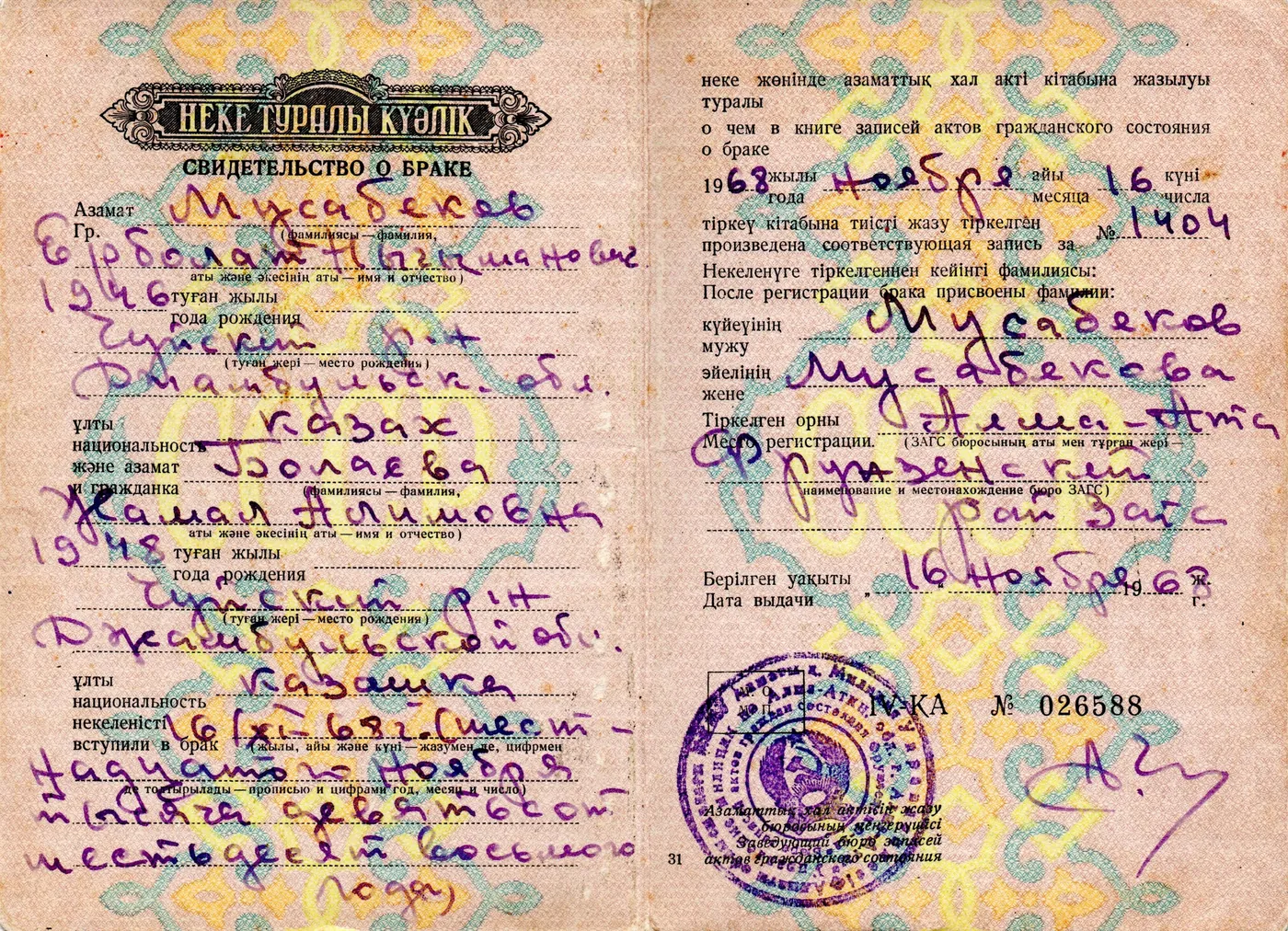
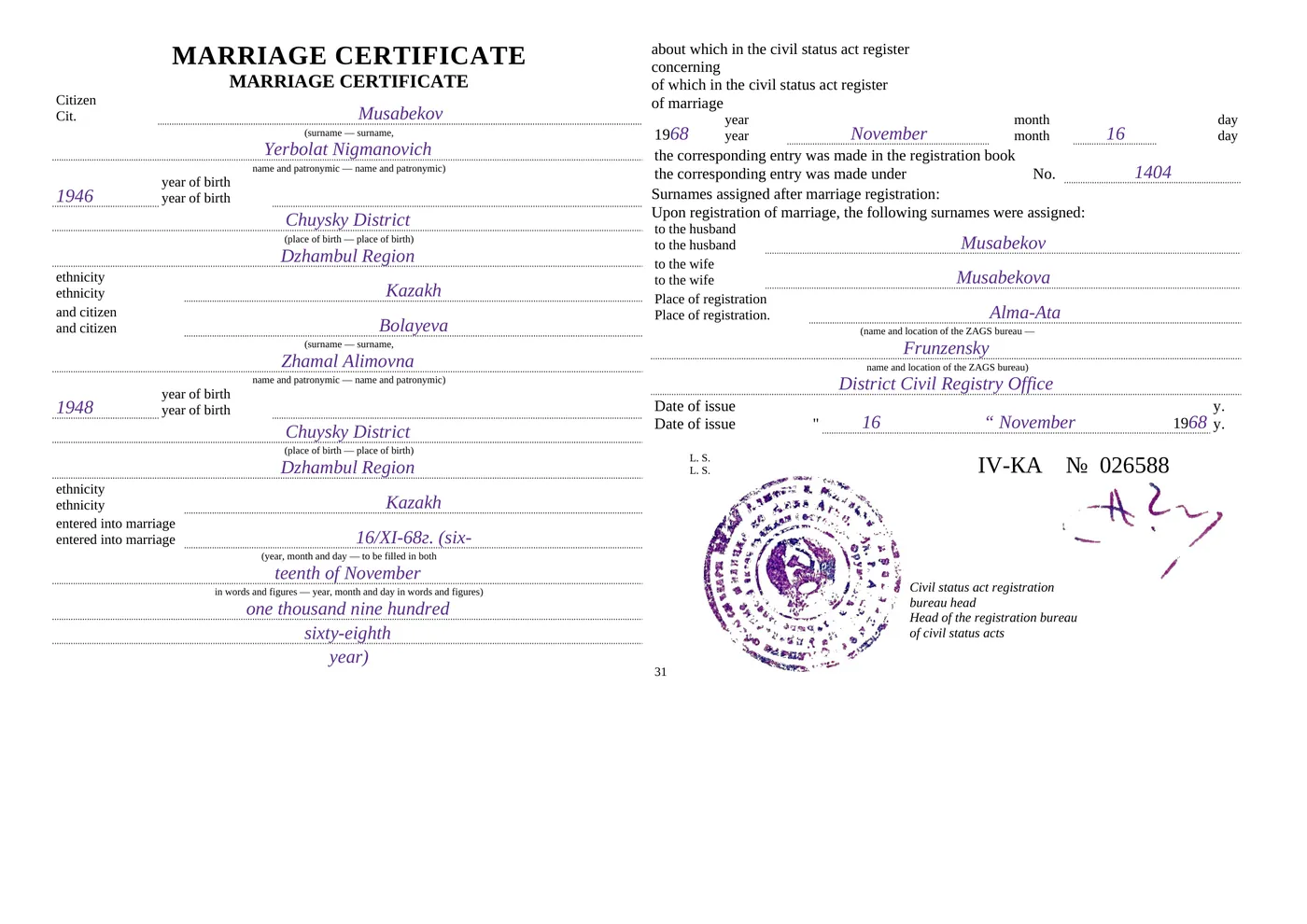
Ukrainian consulates can also certify translations under Article 38 of the Law on Notaries. A consulate’s availability, language pairs, booking system, and required documents are local matters, so contact the specific post rather than assuming its procedure matches a notary’s in Ukraine.
How to check a translation before certification
Review the translation against the passport, not against your memory. Compare the spelling of names, dates, document numbers, issuing authority, and every stamp or handwritten mark the office asked to have translated.
A bilingual review view can make comparison easier. In ChatsControl, the source and translation appear side by side, with translated text highlighted and the source available for checking. That helps you spot a mismatch before you send the file for a separate human certification step. It doesn’t decide which translation format a government office accepts.
Costs: compare the whole document package
The cost depends on language, the amount of text, and the certification or legalization steps your receiving institution requires. Compare full quotes, not just the price of translating the passport’s main page.
ChatsControl lists its certified translation service at UAH 300 to 750 per 1,800 characters, depending on language, with notarial certification at UAH 400 per document and an apostille at UAH 2,100 per document. Those are the service’s listed prices for November 2026; confirm the current price and whether the service fits your document route on the certified translation service page.
The apostille price isn’t a reason to add an apostille automatically. First find out whether the receiving institution requires one and which document needs it. An apostille on a document and certification of a translation address different things.
When comparing quotes, ask whether the amount includes:
- Translation of all requested pages and visible entries.
- Translation of stamps, seals, signatures, and any certification text.
- Notarial certification, if required.
- A notarial copy or other copy of the original, if required.
- Apostille or legalization, if required.
- Delivery or collection arrangements.
A quote that separates these items is easier to compare with another provider. If you don’t know whether a step is required, don’t pay for it until the receiving institution confirms the route.
Apostille and country-specific rules
An apostille is a certificate used to authenticate a public document’s signature or seal for use abroad. It doesn’t confirm that the document’s contents are correct. Whether you need an apostille, and whether it applies to the original, the translation, or both, depends on the destination country’s rules and the receiving institution.
The Netherlands gives a specific example. Its government describes two routes for Ukrainian documents: have a sworn translator translate the document and apostille the document together with the translation, or apostille the original in Ukraine and have a sworn translator in the Netherlands translate it. Under the second route, the translation doesn’t need an apostille. The same Dutch instructions say Ukrainian embassy and consulate documents are exempt from legalization, while Ukrainian-language documents still need translation into an accepted language (Dutch government guidance).
Those are Netherlands-specific instructions. Don’t apply them to another country without checking that country’s official guidance. The same government page also warns that an apostille confirms the signature or seal, not the contents of the document.
A Ukrainian consulate may have its own separate process. The Consulate of Ukraine in Porto says translations for its notarial certification must match the original fully, including stamps, seals, earlier certification statements, and signatures; translator explanations aren’t allowed. The consulate also lists an application, a valid international passport with a copy, the original document with an apostille, and a complete copy for its procedure. One appointment slot is for certifying one document. These are the Porto consulate’s published requirements, not universal requirements for all consulates (Consulate of Ukraine in Porto).
Common problems and how to avoid them
Assuming notarization is always needed
The phrase “notarized translation” can sound like a standard requirement for every official paper. Ukraine’s Ministry of Justice describes notarization as a way to give a translation official confirmation, while leaving the required format to the receiving institution. Ask the receiving office before you pay for a step it may not need (Ministry of Justice guidance).
Leaving out stamps or other visible text
A passport translation that omits a stamp may fail a procedure that expects a complete rendering. The Porto consulate’s instructions specifically include stamps, seals, earlier certification statements, and signatures. Other institutions may set a different scope, so get their page list and requirements directly.
Sending a damaged or altered original
The Porto consulate says it won’t accept damaged documents or documents with unreserved erasures, additions, crossings-out, or other corrections for its translation-certification procedure. That rule applies to the Porto procedure; it doesn’t establish what every other office will do. Contact the receiving institution before arranging a translation if the passport is damaged or has unexplained alterations.
Treating every passport PDF as selectable text
A PDF can have a text layer that doesn’t match the visible page. A converter that reads only that layer may miss passport entries entirely. Check the scan visually, and make sure the resulting translation includes the printed information and visible marks the receiving office needs.
On November 13, 2026, I documented a related scan problem: people often photograph documents sideways or upside down. Before text is read in our processing, each page is checked for orientation; on our test set, the check identified all 39 upright pages correctly and corrected all 26 pages that were turned.
Those figures describe that test set, not a guarantee for every phone photo. Check the pages yourself before you send them. A clear image with the text upright makes it easier to compare the result with the original, but a very poor scan or handwriting still needs human review.
Getting a name or date wrong
A passport translation needs exact details, not a plausible reconstruction. Compare each letter and number with the original, and tell the translator if the receiving office requires a particular transliteration. A professional should flag unclear text rather than guess.
The National Chamber of Notaries of Ukraine reported in January 2022 that Ukrainian migration authorities and civil registry offices had refused some translations of Russian passports because a name or patronymic field was rendered incorrectly. Its report concerned Russian passports, not evidence about refusal rates for Ukrainian passports; the practical lesson is to check how personal-name fields are represented rather than assuming that every language uses the same structure (National Chamber of Notaries of Ukraine, January 21, 2022).
The Chamber described people as often receiving refusals because of “incorrect” translation formatting. That statement referred to its report about Russian passports. A rejection can mean repeating translation or certification steps, and a consular appointment may need to be booked again. The Porto consulate’s one-document-per-slot rule shows why checking the package before an appointment matters, but it doesn’t establish the cost or waiting time for a new slot.
“Individuals often receive refusals because of ‘incorrect’ translation formatting.”
The quote is translated from the National Chamber of Notaries of Ukraine’s January 21, 2022 report and refers to Russian passport translations, not Ukrainian ones. Treat it as a warning about precise formatting, not as a statistic about Ukrainian passport applications.
Paying for an apostille before checking the route
Apostille requirements are not universal, and the apostille authenticates a signature or seal rather than the document’s contents. The Netherlands’ official instructions show that the order of translation and apostille can change depending on where the sworn translation is made. Check the destination country’s official process before paying for legalization.
FAQ
Does a Ukrainian passport translation need notarization?
Not always. The receiving institution decides what it accepts; Ukraine’s Ministry of Justice describes notarization as an official way to confirm a translation, not an automatic requirement for every document (Ministry of Justice guidance).
How much does a notarized Ukrainian passport translation cost?
ChatsControl lists notarial certification at UAH 400 per document and translation from UAH 300 to 750 per 1,800 characters, depending on language, for November 2026. Confirm the current price and whether the service fits your route on the certified translation service page.
Which passport pages should I translate for an application abroad?
Ask the receiving institution which pages it needs. The available official guidance doesn’t establish a universal page list, and some procedures require a complete copy of the document.
Does a Ukrainian passport translation need an apostille?
Not automatically. Apostille rules depend on the country, document, and translation route; the Netherlands, for example, describes two routes for Ukrainian documents in its official instructions.
Can I use the English text in my Ukrainian international passport instead of a translation?
Don’t assume the bilingual entries replace a translation. The receiving institution sets its own requirements for the document and its contents, so ask whether the passport’s existing English text is enough for your application.
Will an embassy or government office accept an online translation?
Acceptance depends on the office’s rules and the form of certification it requires. An online draft alone isn’t the same as a human-certified translation; confirm the exact requirement before you submit it.
What if the passport scan is blurry or has handwriting?
A poor scan or handwriting can make text hard to read, and an automated translation tool may not read it reliably. Send a clearer image if you can, and use a human translator who can flag unclear details rather than guess.
Need these documents translated?
Leave your number and we will message you, tell you which certification your institution needs, and name the price. Translation, translator review and notary certification.