A one-page certificate can take up more than a page of work: someone has to identify the document, read its fields and stamps, translate the text, check names and dates, and prepare the result in the form you need. The quoted price may therefore look like the cost of two pages even when the original fits on one sheet.
The key is to find out what “page” means in the quote. A page might mean a sheet of the original, a set volume of translated text, a standard document charged at a flat rate, or a minimum order. Those are different pricing methods, and they can produce different totals for the same certificate.
What does a translation “page” mean?
A translation page is a billing unit defined by the provider, not necessarily a physical sheet of paper. The provider may count the translated text, charge a flat rate for a document type, or apply a minimum fee when the text is short.
That distinction explains many surprising quotes. A birth certificate can occupy one original sheet but contain less text than a full page under a character-based price list. Another provider may charge a set amount for a standard certificate regardless of its text volume. A third may count both sides or bill extra work separately.
Ask for the unit in plain terms before comparing prices:
- Is the price per original sheet, per translated sheet, per character, or per document?
- Does the character count include spaces?
- What is the minimum billable volume?
- Does the quoted amount include stamps, handwritten notes, tables, or formatting?
- Is certification included, or does it appear as a separate line?
A “standard page” is often a defined amount of text. Some Ukrainian price lists use 1,800 characters including spaces and paragraphs as one translation page. That figure is an example of a provider’s pricing definition, not a universal rule for every translator or bureau. Ask the provider to confirm the current definition in writing.
Character-based billing can be sensible for a long document because the amount of text gives a clearer measure of translation volume than the number of sheets. A page with a large table and dense text may contain much more work than a mostly blank form. But a short certificate can still cost a full minimum unit if the provider does not bill fractions of a page.
The word “page” can also refer to a standard document category rather than a literal count. A provider might quote a fixed price for a routine certificate, then use a per-character rate for a letter, contract, or other non-standard text. A client comparing only the numbers may think one provider is charging more for the same page when the providers are using different pricing models.
For a practical comparison, request a written breakdown rather than asking only, “How much is one page?” A useful answer identifies the billing unit, the counted volume, any minimum, and separate services such as certification or layout. The guide to translation pricing by word, page, or document explains how those units compare.
Why can a short document trigger a full-page charge?
A minimum charge covers fixed handling work that does not shrink in proportion to the amount of text. A translator still needs to inspect the source, identify the language and document type, confirm names and dates, translate the content, and deliver it in the agreed format.
A certificate with a few fields may contain little text, but those fields can carry important details. One wrong digit in a date or a misspelled name can matter more than an awkward phrase in a long informal letter. Checking a short document carefully takes time even if the translated text would occupy only part of a standard page.
The minimum fee also makes it possible to handle very small jobs. Without a floor, a provider would need to charge a tiny fraction of a page for a document that still needs intake, communication, file preparation, and delivery. Each provider decides how to account for that fixed work, so minimums and flat document fees vary.
On November 13, 2026, a man in Germany uploaded three photos of Kurdish school documents at four in the morning. He needed them in German for the ZAB, the office that rates foreign education. Sorani Kurdish is written in Arabic script, and the documents were phone photos of paper forms with stamps.
That job shows why the sheet count alone can be misleading. The source was not editable text: the content had to be read from photographs, and the forms included stamps as well as printed fields. A short or compact-looking document can involve more source-reading work than its visible amount of text suggests.
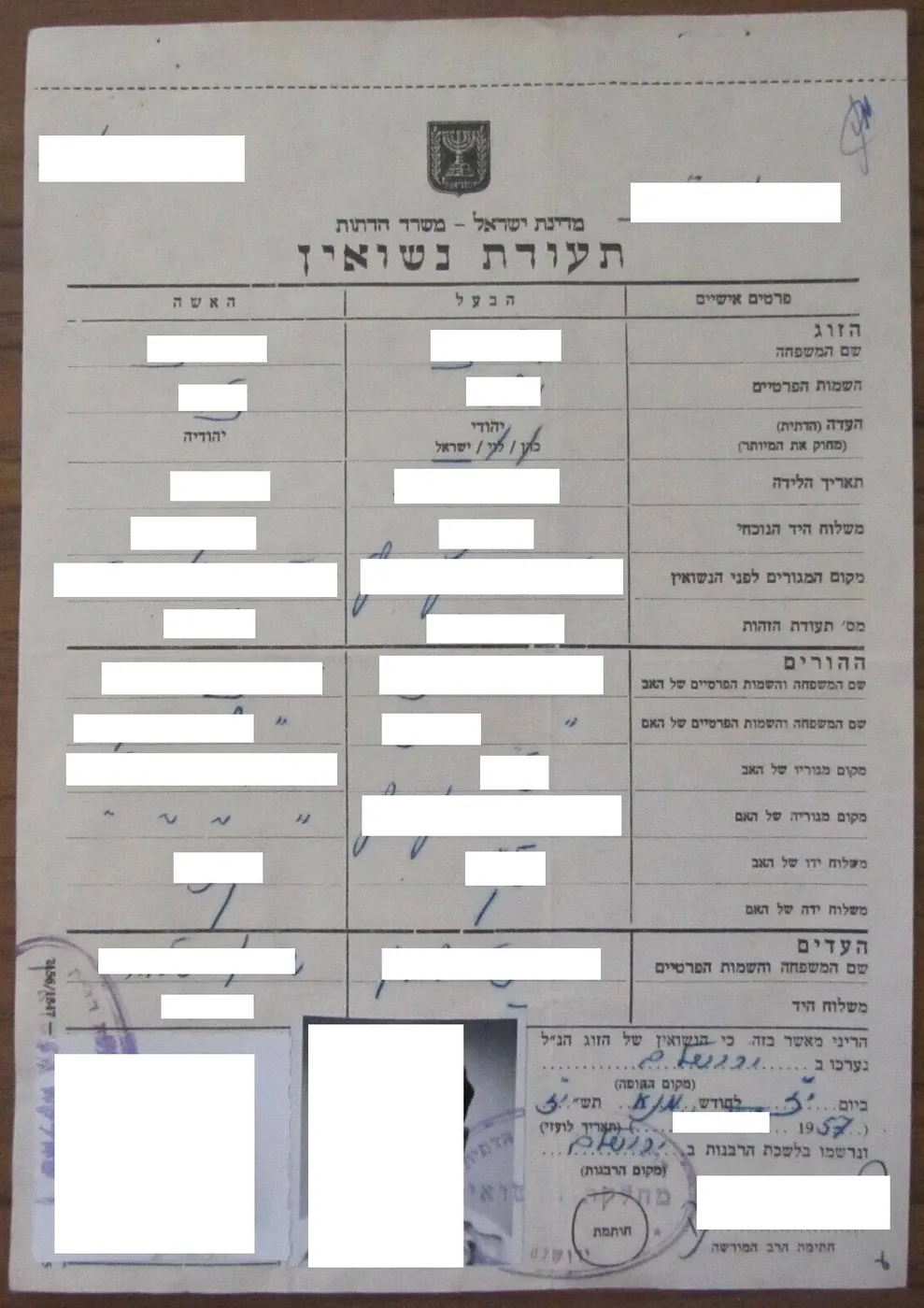
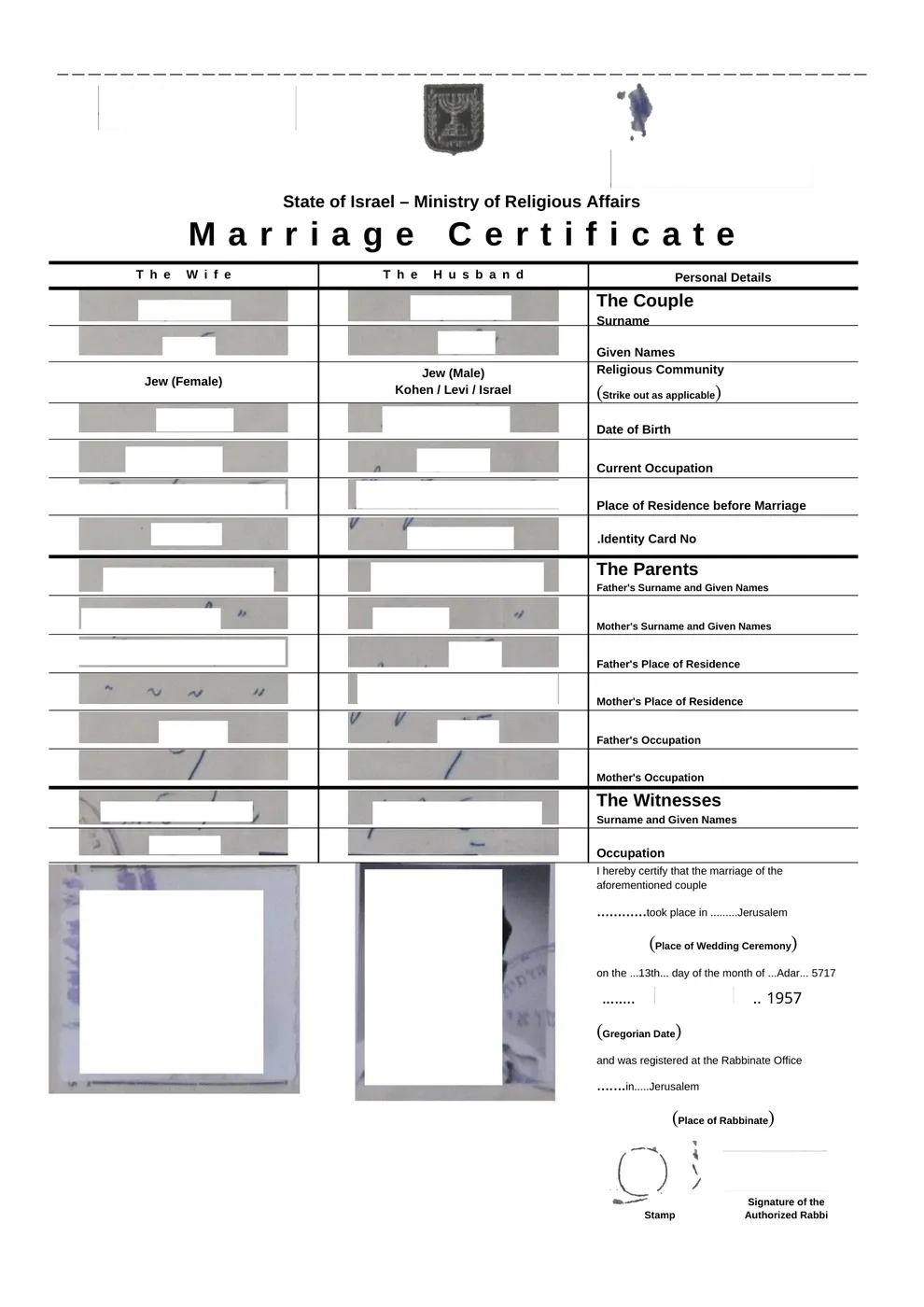
The same issue appears with certificates that contain official marks. A stamp may include an authority name, place, date, or handwritten addition. If the receiving institution expects those elements to be represented in the translation, the translator must account for them rather than translating only the largest printed heading.
Ask whether the minimum charge applies to each document or to the whole order. A bundle of short certificates may be priced differently from several separate orders, but do not assume a bundle discount: get the provider’s rule and total before sending the files.
What adds work beyond the text itself?
The final quote can include work that a character count does not capture. The source file’s condition, its layout, the subject matter, the deadline, and the required certification can all change what the provider has to do.
Scans and photos need to be read first
A scan or phone photo is an image of text, not editable text. Before translating, someone or something has to identify the words in the image. Blurry print, shadows, stamps, handwriting, and skewed pages can make that reading harder.
A text PDF behaves differently from a scan. A text PDF stores selectable characters, while a scanned PDF may contain only page images. Some files appear to have searchable text but contain an inaccurate or incomplete hidden text layer. The translation provider may need to inspect the page image rather than trust the text extraction.
On November 13, 2026, a passport scanned in the iPhone Notes app came out as a PDF with an invisible text layer on top of the picture. The file looked like a normal digital PDF, but its words were hidden, and a converter that trusted the text layer returned an almost empty document. We now treat such a file as a scan and read the picture itself.
That case explains why “PDF” is not enough information to predict the work. Two PDFs can look similar on screen but contain different kinds of data: one may have readable text, while another needs image recognition. If a quote changes after a provider checks the file, ask whether the cause was the scan quality, hidden text, or the amount of reconstruction required.
If you want to check a file yourself, try selecting a sentence and copying it into a plain text document. A clean result suggests the PDF contains accessible text, but it does not guarantee that every character or field is correct. A blank result, scrambled characters, or missing lines suggests that the page image needs review. More examples of how scan quality affects the job appear in why blurry document scans cost more to translate.
Layout may need rebuilding
A form is more than a sequence of words. Labels sit beside fields, table headings align with values, and stamps or signatures occupy particular positions. A translation that turns the page into a single block of text may be linguistically complete but hard to compare with the original.
Languages also differ in how much space their words take. A translated label may be longer than the original, or a table cell may need more room. Preserving the layout can require adjusting line breaks, table widths, or page flow. When a provider quotes a separate layout charge, ask whether the deliverable is a formatted file, a plain text translation, or both.
Editable files can reduce some preparation because a translator can work with the text and structure already present. A photo or image-only PDF may require recognition and reconstruction before the translation can be placed into a usable document. That difference is one reason to send the clearest source file you have, rather than taking a new phone picture if an original PDF or Word file is available.
Specialist subject matter can change the quote
A short medical, legal, or technical document may use terms that require particular care. A brief report can contain abbreviations, product names, or specialized wording that is not obvious from ordinary context. The quote may reflect that subject matter, although providers do not all classify specialist work the same way.
Ask what the price includes when a document has a technical or professional purpose. Does the translator check terminology against a glossary you provide? Does the quote include a second review? Will the translator keep abbreviations as written, expand them, or translate them? Clear answers help you compare scope rather than just a headline rate.
A document being official does not automatically mean its language is specialized. A standard certificate may have familiar fields, while a short attachment to it could contain dense legal or medical wording. Give the provider the full document and explain where you will submit it so the quote reflects the actual material.
Urgency can mean a different schedule
An urgent fee usually reflects a scheduling decision: the provider needs to move the job ahead of other work or arrange a faster review and delivery. A one-page document may still need careful checking, and the short length alone does not guarantee immediate completion.
State the deadline and the reason for it when requesting a quote. A deadline may include time for a notary appointment, a courier, or submission to an institution, not just the time needed to translate. Ask whether the promised delivery covers the translation only or also any certification and physical handling.
Prices and urgency conditions change between providers, so use the current written quote rather than relying on an old price list or someone else’s estimate. For a fuller view of the costs that can sit around a translation, see translation economics: why translation costs what it costs.
When does certification create a separate charge?
Certification is a formal step that confirms a translation or a translator’s signature under a particular procedure. The word “certified” can mean different things in different countries and institutions, so check what the receiving authority actually requires before paying for an extra service.
Ukraine’s Central Interregional Department of the Ministry of Justice explains that a notary can certify the translation directly if the notary knows the relevant languages. If the notary does not, a qualified translator prepares the translation and the notary certifies the translator’s signature. The procedure depends on the notary’s language skills and the form of certification required.
The Ministry of Justice also explains that a translation can be placed alongside the original document or on a separate sheet attached to it. When a notarial act and certification of the translation happen together, the two actions are registered separately, as the department states in its guidance on certification of translations:
“Important: when a notarial act and certification of a translation are performed at the same time, each is registered separately.”
The point for your quote is practical: translation and notarial work are not necessarily one combined service. Ask whether the quote covers translation only, the translator’s signature, a notarial act, or another form of certification. The Law of Ukraine on Notaries and the Ministry of Justice’s procedure for notarial acts provide the legal framework, but the receiving institution’s requirements still determine what document you need to present.
A notary may also need to see the complete source document, not just the part you want translated. Stamps, seals, signatures, and previous certification notes can matter. Tell the provider what the receiving organization asked for and share the full source so the quote can include the parts that must be translated.
Do not confuse certification of a translation with an apostille. An apostille is a separate form of authentication for certain public documents used abroad; it does not translate the text. Whether you need one depends on the document, destination, and receiving authority. Check the destination authority’s instructions before adding an apostille to a translation quote.
For a closer look at the distinction between a notarial act and a translated document, read what notarized translation is and when it’s needed. If the receiving institution specifically asks for a notarized translation, confirm the requested format and who must sign before arranging the work.
How can you compare quotes without being misled by the page count?
A useful quote lets you compare the same scope across providers. Ask each provider to identify its pricing unit, minimum, included work, and separate charges, then give each one the same complete source file and deadline.
Use this checklist:
- Send the complete source. Include all pages, both sides where relevant, stamps, attachments, and any certification notes.
- Describe the destination and purpose. Tell the provider whether the translation is for an institution, an application, a school, or another recipient.
- Ask what “page” means. Confirm whether the provider counts original sheets, translated text, characters, or a standard document.
- Confirm the minimum. Ask whether a short document is billed as a full page, a flat document rate, or a minimum order.
- Separate the services. Request distinct lines for translation, formatting, urgency, certification, notarization, and delivery if they apply.
- Confirm the final file and deadline. Ask whether you will receive a formatted document, a plain text file, a paper copy, or a combination.
A low per-page figure may not be the lowest total if the provider adds fees for formatting or certification. A higher figure may include work another quote treats separately. Compare the complete amount for the same deliverable, not one line from each price list.
How it works in ChatsControl
A document tool can help when the cost question comes from a scan that is difficult to count or prepare. In ChatsControl, you can upload a PDF or a supported image, and the service reads the image before building a formatted Word copy for translation. The result is a document rather than a block of extracted text, which can make the layout easier to review.
The method has limits: handwriting and very degraded scans can be read unreliably, so those files still need a person to check them against the original. A scan is also handled differently from editable text because the page image must first be read. That distinction matters when you compare an automated document workflow with a human translator’s quote.
A one-page quote is easier to understand once you can see whether the source contains selectable text, an image, or an unreliable text layer. The ChatsControl document translator is one way to inspect and translate supported document files, but a document that needs legal certification still requires the appropriate human and notarial steps.
Common pricing misunderstandings
The biggest pricing surprises often come from comparing unlike services. These checks can prevent a quote from looking inconsistent when the providers are actually offering different things.
Counting original sheets as translated pages
One sheet of paper is not automatically one billable translation page. A provider that counts characters may charge by translated volume, while a provider with a standard-document rate may use a flat price. Ask for the unit before multiplying a per-page figure by the number of sheets.
Assuming every mark on a document is irrelevant
A stamp or handwritten addition may carry information that the receiving institution expects to see. Send the entire source and ask whether stamps, seals, signatures, and handwritten notes are included in the quoted translation. Leaving them out of the file at the start can lead to a revised quote or an incomplete deliverable.
Treating every PDF as editable text
A PDF can contain text, a page image, or both. A hidden text layer may not match what appears on the page. If the extracted words look incomplete, tell the provider that the file may need to be treated as a scan rather than assuming the translation can start from the text layer.
Adding notarization without checking the recipient’s rule
Some recipients request a translation, while others specify a form of certification or notarization. Paying for a procedure that the recipient does not require adds cost without solving a real problem. Ask the recipient for its exact wording, then share that wording with the translator or notary.
Comparing a standard-document price with a text-volume price
A flat price for a familiar certificate and a per-page rate for an unusual letter may not use the same assumptions. Check whether the quoted item is a standard document or a non-standard text. The comparison guide for document translation pricing can help you identify the difference.
Sending a partial image and expecting a complete translation
A crop may omit a reverse side, stamp, or note that changes the meaning of the document. Send the full page and disclose anything that is hard to read. A complete source gives the provider a better basis for both the quote and the finished translation.
FAQ
Why does translating one page cost as much as two?
A provider may apply a minimum charge, count translated text rather than original sheets, or include extra work such as scan handling, formatting, or certification. Ask for an itemized quote that names the billing unit and every separate service.
How many characters count as one translation page?
There is no single definition used by every provider. Some price lists define a page as a set volume of text and count spaces, while others use a flat rate for standard documents or a different unit; ask which rule applies to your quote.
Why is a short certificate charged as a full page?
A short certificate still needs intake, reading, translation, checking, and delivery. A minimum fee accounts for that fixed work even when the text occupies less than one standard billing unit.
What do I pay separately for notarized translation?
The translation and notarial act may be separate charges. Ukraine’s Ministry of Justice says a notary can certify a translation directly if the notary knows the languages, or certify a qualified translator’s signature when the translator prepares it.
Why does a scanned or urgent translation cost more?
A scan may need to be read or recognized before translation, and its layout may need reconstruction. An urgent request can also require a different schedule; ask the provider which part of the work changes the price and what the deadline includes.
Need these documents translated?
Leave your number and we will message you, tell you which certification your institution needs, and name the price. Translation, translator review and notary certification.