A translation quote can look respectable on a spreadsheet and still pay badly once the email thread, file cleanup, terminology research, revisions, and invoice are counted. Translators undercharge when they price the visible words but forget the work and business costs surrounding them.
A low quote isn’t always a mistake. A deliberately discounted project can make sense when its scope is clear and the trade-off is worth it. The trouble starts when a discounted rate becomes your default, or when you don’t know what a project earns per hour after all the work is finished.
The fix isn’t to copy a rate you found online or to raise every quote by the same percentage. Build a minimum from your own costs and available work time, check the result against real projects, then explain your pricing in a way clients can assess.
Why translators undercharge
Undercharging usually comes from a pricing method that leaves out part of the job. A per-word rate can make a quote feel simple and objective, but it doesn’t automatically account for taxes, software, sales work, project communication, or the time between assignments.
The first common mistake is treating revenue as personal income. A self-employed translator has costs that an employee may not see on a payslip: equipment, software, marketing, bookkeeping, client communication, and self-employment tax. The American Translators Association (ATA) lists these costs as inputs to a sustainable service price in its guidance on appropriate pricing. If the invoice total is your only reference point, the rate can look profitable while the business is quietly paying its bills out of your future income.
A second mistake is counting every working hour as a billable hour. Translators spend time looking for work, preparing quotes, replying to clients, reading briefs, maintaining terminology, and handling accounts. Those hours keep a freelance business running, but clients don’t pay for each one as a separate line item. A rate based on the assumption that every available hour will be billable will come up short.
The ATA puts the capacity problem plainly in its rate-setting guidance:
“The problem is that you cannot work on billable, paying jobs all of the time.”
That point changes the calculation. A translator who needs to earn a certain amount each month can’t divide that target by every hour spent at a desk. The denominator must reflect the hours that can realistically be invoiced, not all working time.
Some translators also treat a client’s budget as proof of the market rate. A buyer’s offer tells you what that buyer is prepared to pay for that project. It doesn’t tell you whether the work covers your costs or whether another kind of client would value the same service differently.
Online rate discussions can make the problem worse. A ProZ article describes bids for the same jobs ranging from $0.01 per word to €0.25 per word. Those figures are a reported example of bidding variation, not a representative market survey, and the article’s publication date isn’t confirmed in the available summary (ProZ discussion of bidding). A dramatic low bid can catch your eye, but it doesn’t tell you what the bidder included, how they work, or whether they accepted the job.
A final trap is using experience as a reason to stay cheap. Experience can improve speed, judgment, and consistency, but faster work doesn’t have to mean lower earnings. When specialist knowledge lets you produce a reliable result efficiently, a pricing model that rewards only word count can make your expertise less valuable to you.
What a translation rate needs to cover
A minimum rate is the lowest price that lets your business meet its obligations and pay you for the work you do. It isn’t the one “correct” rate for a language pair, and it isn’t a rate you have to accept just because a buyer calls it standard.
The ATA says there is no universal going rate: prices vary with language combination, technical difficulty, qualifications, specialization, target market, and cost of doing business (ATA guidance on appropriate prices). That makes a single online average a poor substitute for a personal calculation.
Start by listing what the business has to pay. Include self-employment taxes, equipment, software, marketing, bookkeeping, and time spent on administration and communication. Add any other recurring business costs that apply to you. Separate business expenses from personal income needs so you can see what each part of the quote has to support.
Next, estimate the income you need from the business. “What I want to take home” and “what clients need to pay” are not the same amount: gross revenue has to cover business expenses and taxes before it becomes personal income. Keep your estimate grounded in your own business and tax situation rather than copying an income target from a survey conducted in another country.
Then estimate billable capacity. Think through your working hours, time off, and the time you spend on work that can’t be invoiced directly. The ATA’s rate guidance identifies work speed, business expenses, taxes, language pair, location, service type, specialization, experience, working hours, vacation plans, and income needs as inputs to a rate calculation (ATA guidance on setting rates). A rate that works for a translator with a full pipeline and one that works for someone building a client base may not be the same.
A simple planning formula is:
Minimum billable revenue per hour = (annual business costs + annual taxes and required personal income) ÷ realistic annual billable hours
The formula gives you a floor for paid time. It doesn’t set your market position or dictate the final quote. If your required hourly revenue is higher than a client’s implied rate, you can change the scope, use a different pricing method, negotiate, or decline. You can’t make the gap disappear by ignoring the unpaid hours.
Translate the hourly floor into the unit you use to quote. If you charge per source word, estimate how many source words you can translate and check in an hour for the kind of work in question. Don’t use your fastest hour on an easy text as the baseline for every job. A technical document with research, formatting, and client questions may take longer per word than a familiar, clean file.
A worked calculation should use your numbers, not someone else’s. Suppose your expected billable hours are lower than the hours you spend working because you need time for marketing, administration, and leave. The business must recover its costs and income target from those billable hours alone. If a quote produces less than your calculated hourly floor, the project needs a reason to make sense: perhaps the scope is smaller than it appears, or the client provides reliable repeat work. A vague hope that the next assignment will make up the difference isn’t a pricing strategy.
Why a benchmark isn’t your minimum
A benchmark describes a group or market sample. Your minimum describes the conditions under which your own business can keep operating. The two can inform each other, but they answer different questions.
A Belgian survey collected 377 precise rate observations across translation, revision, and post-editing. The survey covered Belgium-based freelancers, so the findings are a local reference rather than a universal rate card (Belgian rates report). The report was published in September 2025 and its survey collected rates in 2024.
For translation in Belgium, the survey reported an average of €0.12 per source word for direct clients and €0.10 for agencies, excluding agency CAT discounts. Those are averages from rates collected in 2024 and reported in September 2025, not guaranteed quotes for a particular language pair or specialization (Belgian rates report). The same survey reported average revision rates of €48 per hour for direct clients and €28 per hour for agencies, based on its 2024 data and published in September 2025 (Belgian rates report).
The figures suggest a gap between direct-client and agency work in that survey. They don’t tell you what a translator in another country should charge, what a buyer pays after every discount, or whether a specific job is profitable. The report notes that its agency translation rates were recorded before CAT-tool discounts, so a translator comparing offers needs to use the payable amount after discounts, not only the headline rate (Belgian rates report).
Industry surveys also describe different parts of the market. The European Language Industry Survey 2024 received 1,776 responses, including 919 independent language professionals, 257 language companies, and 78 language departments or buyers (ELIS 2024 report). The report says that buyer-facing and freelancer-facing price trends can diverge: many language companies reported increased buy-in rates while language professionals reported price decreases. Those responses relate to price changes during 2023, as reported in the 2024 edition (ELIS 2024 report).
The practical takeaway isn’t that one client type always pays more. A direct client may pay more per word but need extra explanation, coordination, or invoicing work. An agency may offer repeat assignments and a clearer workflow but apply discounts or offer a lower rate. Compare what the project actually pays against your own minimum and the time it actually takes.
Find out what your current rates really earn
A quoted rate tells you what a client pays per word, page, hour, or project. Your realized hourly earnings tell you what the work pays after you account for the time it took to deliver.
Track the whole project, not just translation time. Record the fee and the time spent reading instructions, preparing the file, researching terms, translating, checking, answering questions, making revisions, and preparing the invoice. Divide the project fee by the total hours. The ATA recommends this approach and says the result can guide a higher quote next time or a decision to decline low-yield work (ATA guidance on freelance money matters).
A short project log can include:
| Project detail | What to record |
|---|---|
| Scope | Language pair, subject, word count or deliverable |
| Fee | Amount payable after discounts and agreed adjustments |
| Time | Translation, research, checking, communication, and revisions |
| Changes | Extra work caused by new instructions or source-file changes |
| Result | Realized hourly earnings and whether the project met your floor |
Use the log to look for patterns, not to punish yourself for one slow job. Maybe a particular client sends clear files but often requests revisions after approval. Maybe your quoted per-word rate looks acceptable until you include repeated terminology checks. Maybe a small project takes disproportionate time because the setup and client communication are similar to those for a much larger job.
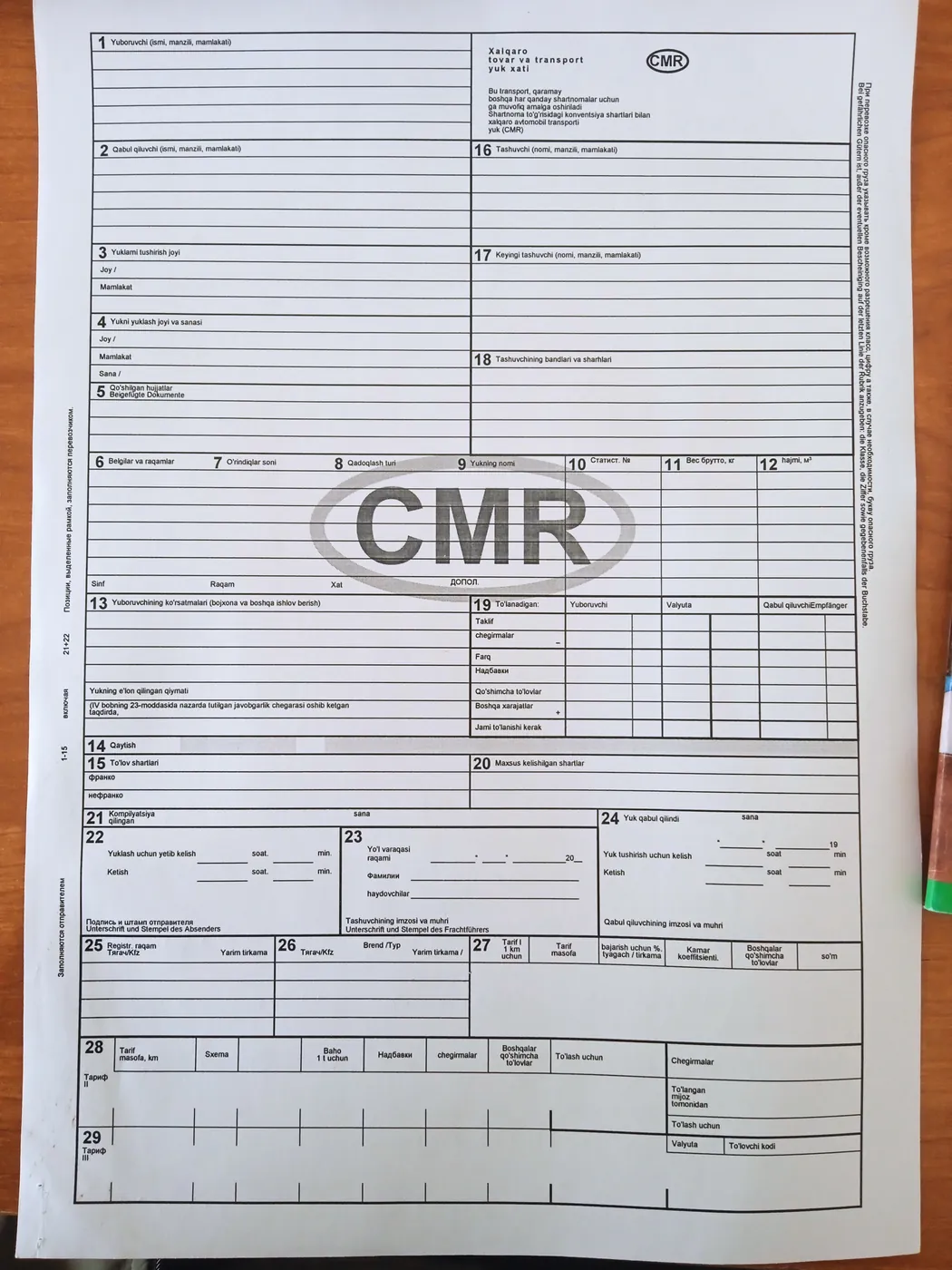
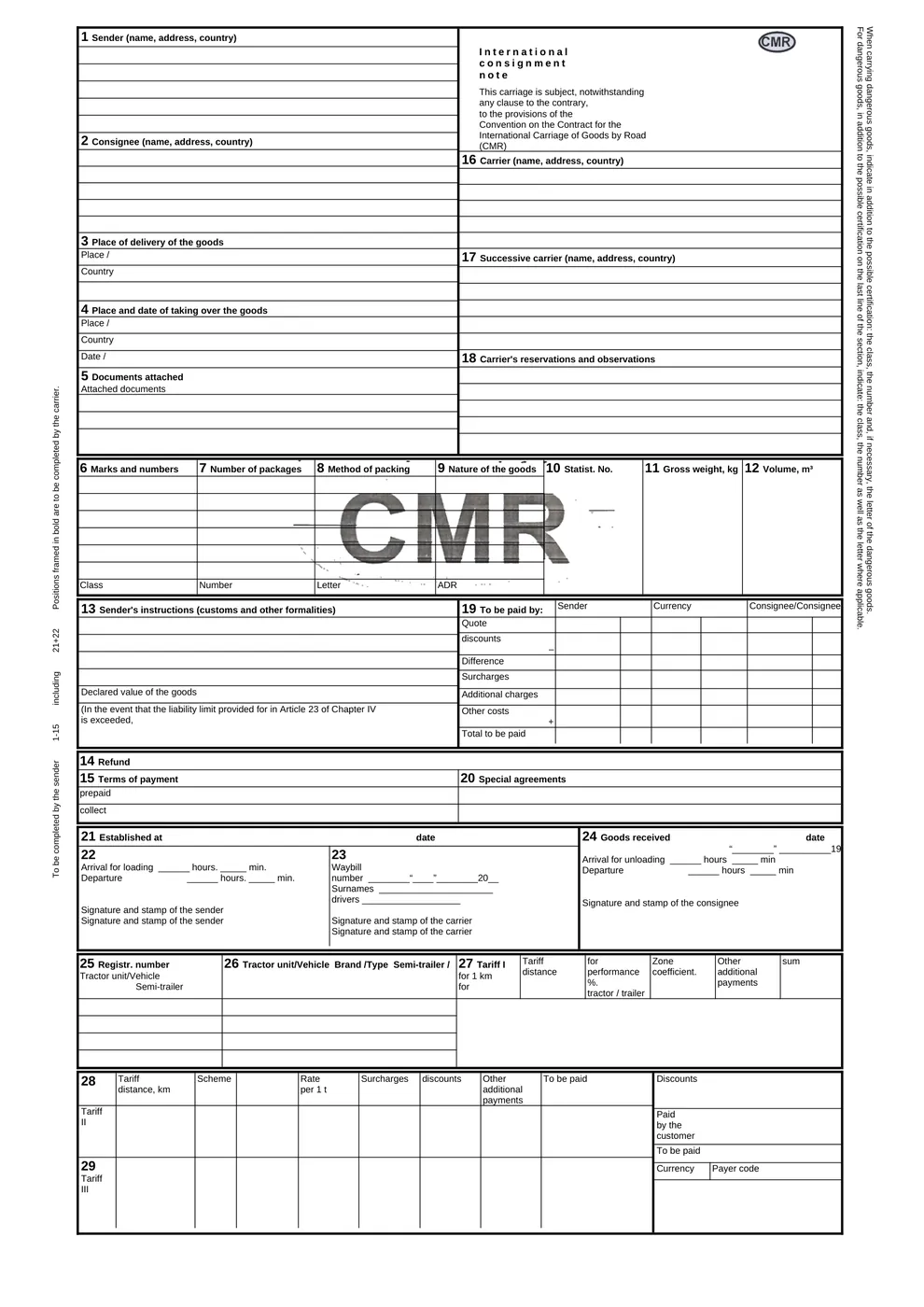
Forms and constrained layouts show how a project can hide a second task inside the translation. I saw a six-page US insurance claim form full of frames and check boxes: converted from its text layer, the words came out exact but every frame and box was lost; built from the scan, every frame and box was there. For forms, the layout is half the document, and a translator who has to redraw it loses more time than the translation takes.
That distinction matters when you price document work. A file with the same word count can take very different effort depending on whether the layout is usable, whether the text is editable, and whether the translated document must preserve fields and boxes. State what your quote includes, and price reconstruction or formatting separately when it’s outside your normal translation scope.
Document format can affect the work even when no boxes are involved. A PDF doesn’t contain the same paragraph and table structures as an editable Word file; its text is placed on a page at coordinates. When a translator receives an awkward file, reconstructing the structure can add work that a word-count-only quote doesn’t show.
For a project where a Word or PDF file needs translation without losing its layout, ChatsControl accepts the document and returns a translated Word file with its tables, headings, lists, and layout kept in place. That can reduce the need to rebuild a document before reviewing it, but it’s a document-translation tool, not a full CAT tool with translation memories or project management. The translator still needs to check the output and price the review work.
A project log is useful only if you use what it shows. For recurring clients, calculate realized earnings across several assignments rather than responding to one unusual job. For a one-off project, check whether the quote covers the actual scope before you accept. A low rate can be a deliberate choice; a low rate you haven’t measured is simply a risk.
Choose a pricing method that fits the work
No pricing unit fixes an underpriced job by itself. A per-word quote can be efficient, an hourly quote can be fairer for uncertain effort, and a project fee can make the scope easier for a client to understand. Each method needs a clear agreement about what the price includes.
Per-word pricing
Per-word pricing works when the source text is clear, the word-count method is agreed, and the work is predictable. It lets both sides calculate a quote from a defined volume. A 2024 Slator article reported that 91% of surveyed language service providers continued to use per-word rates, while a linguist survey referenced in the article found that 77% were paid by source word and 13% by target word. The article’s summary doesn’t specify the surveys’ exact fieldwork periods, so treat those figures as context reported in 2024, not as a current universal standard (Slator’s 2024 article on translation costs).
Per-word pricing can underpay you when the rate doesn’t reflect research, file problems, repetitions, or extensive client communication. Agree whether the count is based on source or target words, how repetitions are treated, and what happens if the source changes after you start. When a file needs substantial layout reconstruction, don’t assume the word rate covers that work unless you have priced it into the rate.
Hourly pricing
Hourly pricing can suit revision, consultation, terminology work, research, and projects whose scope may change. It connects the fee to time spent and can reduce the pressure to guess how many words an unclear brief will contain.
Clients may want a budget before the work begins, so explain what the hourly quote covers and how you’ll report time. If you can define an expected range, offer it as an estimate rather than pretending the final hours are certain. Set out what counts as additional work, such as a changed source file or a new review round.
Project pricing
A project fee can work when the deliverable and scope are clear. The client gets a price for an outcome rather than an open-ended time estimate, while you can account for work that a word count doesn’t capture.
Define the deliverable, file formats, deadline, included review, and assumptions about the source. If the brief changes or the client adds content, explain how the fee changes before doing the extra work. A fixed fee without boundaries can turn a manageable job into an unlimited service.
Minimum charges and surcharges
A minimum charge accounts for setup and communication on small jobs. A tiny file can still require a brief review, terminology checks, correspondence, and an invoice. Set a minimum that covers that effort rather than treating short jobs as automatically quick.
Add a separate fee only when you can explain the work it pays for. Rush work, difficult formatting, file conversion, or specialist research may need different pricing from standard translation, but a surcharge should reflect added effort or a real scheduling trade-off. Tell the client what changed and why before the work starts.
Whichever method you choose, keep your internal minimum separate from the client-facing unit. You can quote per word while checking the job against your hourly floor. You can quote a project fee while tracking time to see whether your scope assumptions were right. A client doesn’t need to see every step of your calculation, but you do.
How to raise rates and negotiate without guessing
A rate increase is easier to discuss when you can explain what it changes and when it takes effect. You don’t need to justify your business costs line by line, but you should be able to state your new rate clearly and give the client time to decide.
Start with evidence from your project records. If a client regularly sends work that takes longer than the quote allows, or asks for substantial revisions outside the agreed scope, describe the pattern in practical terms. Keep the message about the work and the terms, not about what you think the client can afford.
Give existing clients notice before applying a new rate. State the effective date, the rate unit, and whether the change applies to new projects, future assignments, or work already agreed. Avoid apologizing for a rate that reflects the service you provide. A calm, direct explanation gives the client a clear choice: accept, discuss the scope, or decline future work.
A negotiation doesn’t have to end in a discount. If the client’s budget is firm, discuss what could change: fewer services, a longer deadline, less project communication, or a smaller scope. Don’t promise a full service at a rate that fails your minimum and hope that speed will make the numbers work.
One ProZ forum post describes a translator offering €0.12 per source word for a technical English-to-French project above 30,000 words. The prospective agency proposed about €0.09 per word; the translator declined and didn’t get the assignment. The post is dated April 3, 2021, and is one negotiation anecdote, not a representative market benchmark (ProZ forum post).
The agency’s reply, quoted in that post, was:
“We know that it’s a normal rate for [Subject], but [Limitations] able to offer a specific rate around 0,09 /word.”
The quote shows why a buyer’s budget and a translator’s minimum can diverge even when the buyer acknowledges a higher rate. The translator can accept, negotiate a smaller scope, or say no; the decision depends on their business, not on proving the buyer wrong.
If you decide to decline, make it brief and professional. Thank the client, state that the rate doesn’t fit the project, and leave the door open for a future assignment if the rate or scope changes. Losing one job can feel like evidence that your price is too high. One rejected quote doesn’t tell you whether the rate is sustainable or whether the opportunity suited your business.
Raising rates with a long-standing client can feel more personal than quoting a new one. The client may be used to a particular figure, but a familiar rate doesn’t automatically stay viable as your costs or service change. If the new rate isn’t workable for them, a smaller scope or a different service level may still be possible. Don’t silently keep doing extra work for the old fee.
Common pricing mistakes that keep rates low
A pricing review can reveal more than a low number. The way you frame and apply your rate can also create avoidable losses.
Copying an online average. A reported average may cover a different country, language pair, specialization, service, or year. Use a benchmark as a question to investigate, not as proof that your own minimum is too high or too low. The Belgian report’s rates, for example, apply to respondents based in Belgium and reflect rates collected in 2024, as reported in September 2025 (Belgian rates report).
Comparing headline rates instead of payable rates. A quoted agency rate may be adjusted by discounts or other terms. The Belgian survey reports that its agency translation rates excluded CAT-tool discounts, so a translator evaluating a real offer should calculate the amount that will actually be paid (Belgian rates report).
Treating every project as equivalent. A clean, familiar text and a form with a complex layout may have similar word counts but very different demands. Write down the scope and any unusual file work before you quote. For example, a form that needs its boxes and frames preserved may require time beyond translating the text.
Discounting without a limit. A temporary discount can be a conscious business choice. A permanent reduced rate, applied to every repeat assignment without review, can become a hidden obligation. Record the regular rate, discounted rate, reason for the discount, and point at which you will reassess it.
Ignoring non-billable capacity. If your calculation assumes you can invoice every working hour, the rate is built on a false premise. Marketing, administration, and time off reduce the hours available for paid work. The ATA’s guidance specifically includes working hours, vacation plans, and business expenses among the factors to consider when setting rates (ATA guidance on setting rates).
Leaving scope unclear. A client may reasonably assume that revisions, formatting, or new material are included if the quote doesn’t say otherwise. Define the deliverable and the limits of the fee in plain language. Clear scope helps both sides distinguish a correction to the agreed work from a new request.
A Luxembourg-based sworn court translator-interpreter once told me he’d tried CAT tools and wasn’t satisfied because he translates himself and “the most time takes rebuilding the layouts.” After trying ChatsControl on his documents, he wrote “I’m amazed”; his review appears on the site under his name, Miroslav Božić.
His comment points to a cost that can be easy to overlook in a word-based quote: the time spent rebuilding a layout. A tool or workflow that reduces that task doesn’t remove the need to review the translation, but it can change which part of the job takes the time. Price the service you actually provide and check the finished project against your project log.
Assuming a high rate always means more profit. A larger quote can bring more revenue, but profitability still depends on the effort, overhead, and time required. Use project records to see whether higher-priced work actually improves the return or simply comes with a larger scope.
FAQ
Why do freelance translators undercharge for their work?
Freelance translators undercharge when they set prices from a client budget or online anecdote instead of calculating their costs, taxes, non-billable work, and realistic paid capacity. Per-word pricing can also hide time spent on research, revisions, communication, and file preparation.
How should a freelance translator calculate a minimum rate?
Add the business costs and income the business needs to support, then divide that total by realistic billable hours. Convert the resulting hourly floor into your quoting unit and check project fees against it using the total time spent on each job.
Should translators charge per word or per hour?
Per-word pricing fits predictable text with an agreed counting method. Hourly pricing can fit work with uncertain scope, such as consultation or research, while a project fee can work when the deliverable and boundaries are clear. You can quote in one unit and still track the job by the hour.
How can translators raise rates with existing clients?
Tell the client the new rate, the effective date, and which future work it covers. Use project records to explain any scope or workload change, and discuss a smaller scope if the client’s budget can’t support the new rate.
How do translation agency rates compare with direct client rates?
A Belgian survey published in September 2025 reported average translation rates of €0.10 per source word for agencies and €0.12 for direct clients, based on rates collected in 2024. The figures are a Belgium-based benchmark, and the agency rates excluded CAT-tool discounts, so they aren’t a universal comparison of take-home project value (Belgian rates report).