A client approves a translation, then asks for the next one to sound warmer, less formal, and more like the brand. The translator has heard the preferences, but the next brief goes to someone else, who makes different choices. A translation style guide turns those scattered preferences into decisions a whole team can repeat.
A useful guide isn’t a manifesto about the brand. It’s a working reference that answers the questions translators actually face: Should a button say “Start” or “Get started”? Do we address customers formally? Which spelling belongs in this market? Can a product name take a plural ending? When instructions answer those questions clearly, clients spend less time correcting the same choices, and translators can focus on meaning.
This article walks through how to write a translation style guide that people will use, how to separate it from a glossary, and how to keep it helpful as content and teams change. If you need a broader implementation plan for an in-house team, see how to create and implement a translation style guide for your team.
What a translation style guide is, and what it isn’t
A translation style guide is a set of language and style rules for creating consistent content in a target language and market. Microsoft describes localization style guides as collections of rules for language and style conventions, often including general localization guidance, technical writing style, and market-specific data formats (Microsoft Learn).
The guide doesn’t tell a translator to copy the source sentence word for word. Translation changes one language into another. Localization adapts a product and its related content for a specific country. Internationalization means designing content or products to reduce the work required for localization. Google distinguishes these activities in its guidance for writing for a global audience. A style guide helps with the language and editorial choices involved, but it can’t replace sound source writing, product context, or decisions about what a market needs.
A glossary has a different job. The glossary records terms and preferred translations. A style guide explains how the content should sound, how to make choices, and what to do when the rules don’t settle a question. The two resources support each other, but neither replaces the other.
| Resource | Main question it answers | Example |
|---|---|---|
| Translation style guide | How should this content read? | Address customers directly and use a friendly, professional tone. |
| Translation glossary | Which term should we use? | Use the approved target-language term for the product feature. |
| Translation brief | What does this particular assignment need? | This campaign targets existing customers and should emphasize ease of use. |
A brief adds project-specific context. The guide sets conventions that apply across projects, while the glossary stores approved terms that recur. A single assignment might need all three: the client sends a brief, the translator follows the guide, and the glossary settles product vocabulary.
A practical reference hierarchy prevents conflicting instructions from turning into a debate. Google puts project-specific style guidance first, its general style guide second, and external references after those if the higher-priority sources don’t answer the question (Google developer documentation style guide). A client can adopt that logic: follow the assignment brief for its defined exception, follow the localization guide for recurring client preferences, then consult the chosen language reference for unresolved details.
The hierarchy needs one boundary. A project-specific exception should not quietly become a permanent rule. If the same exception appears repeatedly, add it to the guide or glossary and explain which future work it covers. Without that step, individual translators have to rediscover the same decision, and reviewers have to correct it again.
Start with the decisions people keep making
The first draft shouldn’t begin with a blank page and a list of brand adjectives. Start by collecting decisions that have caused questions, inconsistent revisions, or repeated client feedback. Existing translated content, review comments, product copy, and approved terminology can reveal the choices a guide needs to settle.
Ask the people who request, translate, review, and publish the content. Each group sees a different source of friction. A marketing manager might know that the company avoids a certain kind of claim. A translator might know that the source uses a term in two different ways. A reviewer might notice that three translators format headings differently. A guide that includes only the brand team’s abstract preferences can miss the practical decisions that keep work moving.
Sort the material into three groups:
- Decisions that apply across content. These belong in the core guide: formality, spelling variety, punctuation, capitalization, and basic expectations for clarity.
- Decisions that apply to a subject area or product. These may belong in a specialized guide or glossary: technical terminology, feature names, and distinctions between similar concepts.
- Decisions that apply to one assignment. These belong in the brief: audience, channel, campaign goal, and a one-off exception.
A short intake conversation can produce more useful material than a long questionnaire. Ask clients to show examples of content they consider on-brand and content they would revise. Ask what the example gets right: the directness, vocabulary, formality, humor, or level of detail. Ask who the reader is, what the reader needs to do, and what a successful translation should let them understand.
Turn each answer into an observable choice. “Professional” is hard to apply consistently because one client may mean formal language and another may mean clear, accurate, and restrained language. “Use direct sentences and avoid slang in customer support content” gives a translator a decision they can apply and a reviewer a rule they can check.
Don’t assume source content already expresses the intended voice. A company might want confident, friendly translations even when its English source is full of jargon or long sentences. If a source phrase is unclear, the translator shouldn’t have to guess which meaning the client intended. Add a rule for when to query the client, and give the project brief a place to explain the context.
A focused translation brief can capture those assignment-specific details without turning the permanent guide into a record of every campaign. The distinction keeps the guide stable while allowing each project to have its own audience, purpose, and constraints.
Define voice, tone, audience, and purpose
Brand voice is the relatively consistent character of a brand’s communication. Tone is the adjustment the writer makes for a specific context and the reader’s state of mind. Microsoft makes this distinction in its brand voice guidance: voice stays constant, while tone adapts.
That distinction matters in translation because a single brand may publish a playful product announcement, a calm support article, and a serious security notice. The brand shouldn’t become a different organization in each channel, but it shouldn’t sound equally lighthearted in every situation either. A guide can define the voice as a stable set of traits and then describe how tone shifts by content type.
Abstract traits need examples. If a client wants the brand to sound “warm,” say what that means in the target language: use direct address, acknowledge the reader’s situation, and prefer everyday words over corporate phrasing. Then show a sentence that demonstrates the choice. If the client wants the brand to sound “crisp,” explain whether that means shorter sentences, fewer modifiers, or a clear action at the start.
Microsoft uses “warm and relaxed,” “crisp and clear,” and “ready to lend a hand” as examples of making voice principles concrete (Microsoft Writing Style Guide). A client doesn’t have to use those traits. The useful idea is the move from a broad label to language decisions that a translator can see in an example.
The guide should also name the audience. “General public” is rarely enough. Clarify what the reader knows about the subject, what the reader is trying to do, and whether the content is for customers, specialists, employees, or another group. When the audience changes, terminology and explanation may change too. A product feature might need a plain-language explanation for new customers but no extra definition in documentation for experienced users.
Add a purpose for each major content type. A help article should enable a reader to complete a task. A marketing page might introduce a benefit and invite the reader to explore. A legal notice needs careful wording and clear scope. Purpose helps translators decide which parts of the source are essential and which may need a natural, market-appropriate rendering.
Google recommends a conversational, friendly, respectful tone that stays approachable without slang or excessive informality. The same guidance says content should remain useful to readers who may be in a hurry (Google voice and tone guidance). Those are practical checks: a friendly sentence still needs to be clear, and a concise instruction shouldn’t sound cold or abrupt.
As Google puts it in its guidance for global audiences:
“Consider global audiences and translation and write in a way that’s clear, concise, and unambiguous.” (Google developer documentation style guide)
For a client, that principle means a translator shouldn’t need to untangle unnecessary ambiguity before deciding how to express the sentence. If a phrase can mean two things, clarify which meaning the source intends or rewrite the source.
Turn preferences into rules translators can apply
The most useful rule has four parts: the decision, where it applies, an example, and any exception. “Be concise” is a preference, not a complete instruction. “For product instructions, put the action before the explanation and use one instruction per sentence where possible” is easier to apply. An example lets the translator see what the client means.
A small rule template can keep entries consistent:
| Field | What to write |
|---|---|
| Rule | State the preferred choice in plain language. |
| Applies to | Name the content, market, or situation covered. |
| Example | Show a short example that follows the rule. |
| Avoid | Show a common alternative that doesn’t fit. |
| Exception | Explain when another choice is permitted. |
| Rationale | Give the reason if the choice isn’t self-explanatory. |
The rationale shouldn’t become a long defense of every preference. A brief reason helps translators apply a rule to new situations. “Use the same term for the feature because users see it in the interface and the help center” explains the consistency goal. The translator can then recognize that changing the term for variety would create confusion.
Write rules for clear source language
A style guide can improve translated content by improving the source. Google’s global writing guidance recommends clear, concise, unambiguous language, simpler words, and shorter sentences (Google guidance). Google also explains that longer sentences can make understanding harder, create rendering issues, lengthen translation time, and increase translation and review costs. Those are reasons to address sentence structure in the client’s content rules rather than treating every awkward source sentence as a translation problem.
Microsoft recommends short, simple sentences and suggests replacing complex sentences or paragraphs with lists and tables where suitable (Microsoft writing tips). A guide can make that advice specific to the client’s content: use a list when a reader must compare options or complete a sequence; keep related conditions together; avoid embedding several separate instructions in one sentence.
Prefer clear verbs to phrasal verbs when a simpler equivalent fits. Spell out abbreviations when they may confuse readers outside their original context, and define an abbreviation at first use when the content needs it. Make pronoun references explicit when a translator might not see the surrounding text. Google includes these points in its global audience guidance.
These source-writing rules become especially useful when content is translated in small segments. A translator may receive a short interface string without the sentence that came before it. A pronoun such as “it” may then have no clear referent. A guide can tell source writers to repeat the noun when the reference might be unclear, and tell translators when to flag an ambiguous string rather than invent context.
Make terminology rules consistent
A glossary should record approved terms, but the style guide should explain how translators use them. Define whether the preferred term is mandatory, whether grammatical changes are allowed, and what to do when the term doesn’t fit the sentence. Include a short definition or context note where a term has more than one possible meaning.
Microsoft recommends using one word consistently for one concept in source content intended for machine translation (Microsoft writing tips). That principle also helps human translators: if the source alternates among synonyms without a reason, translators may reasonably infer that the words refer to different concepts. A terminology rule can clarify whether the variation is meaningful or merely stylistic.
Don’t put every term in the style guide. Keep a separate translation glossary when the list needs regular updates or contains detailed subject-specific material. The guide can explain the naming rules and point to the glossary. A translator should be able to tell which resource is authoritative and how to report a term that’s missing or unclear.
Set grammar and formatting conventions
Name the target-language conventions that matter to the client. The list may cover spelling variety, punctuation, capitalization, number formats, dates, units, quotation marks, headings, lists, and forms of address. Don’t assume one global rule covers every market. A localization guide should identify the relevant language and market so a translator knows which conventions apply.
Choose a reference for unresolved grammar and spelling questions. Google’s editorial reference hierarchy places project-specific guidance first, its own style guide second, and third-party references after those (Google style guide). Google gives examples of external references for spelling, nontechnical style, and technical style. A client can name the references it prefers and explain what to do when the house guide doesn’t answer a question.
Google also says style recommendations are guidelines rather than absolute rules. A writer can depart from a recommendation when doing so improves the content, but should remain consistent when departing (Google style guide). A client guide benefits from the same principle: rules should settle recurring choices without forcing a translator into unnatural or misleading language.
Make the guide easy to use during real work
A guide can be accurate and still go unused if the team can’t find the relevant instruction. Put it where clients and translators already exchange the brief and files. Use descriptive headings, a short contents list, and links to the glossary or language-specific references. Keep instructions near the decisions they support rather than making readers search through a long narrative.
The first page should tell readers the guide’s scope: which brand, target language, market, and content types it covers. Add an owner or contact route for unresolved questions. If a rule applies only to marketing, say so in the rule itself. A translator shouldn’t have to infer whether guidance for a campaign also applies to a technical manual.
Put examples next to the rules
Examples show how a rule behaves in context. A good entry might show a source sentence, the preferred translation, and a brief explanation of the relevant choice. If a client doesn’t want literal translations of idioms, the example should demonstrate a natural alternative and explain whether translators should preserve the meaning, the tone, or both.
Avoid examples that only illustrate an easy case. Include the edge cases that create genuine uncertainty: a product name in a sentence, a heading that needs to fit a narrow space, or an instruction that depends on an unclear pronoun. Examples should be short enough to scan but complete enough to show why one choice fits.
Record questions and decisions
A guide doesn’t need to predict every problem. It needs a clear way to handle the ones it can’t answer. Tell translators how to raise a query, what context to include, and who can approve a decision. Tell reviewers not to silently rewrite a recurring choice without recording the change. Otherwise, a preference can exist in someone’s comments but remain invisible to the next translator.
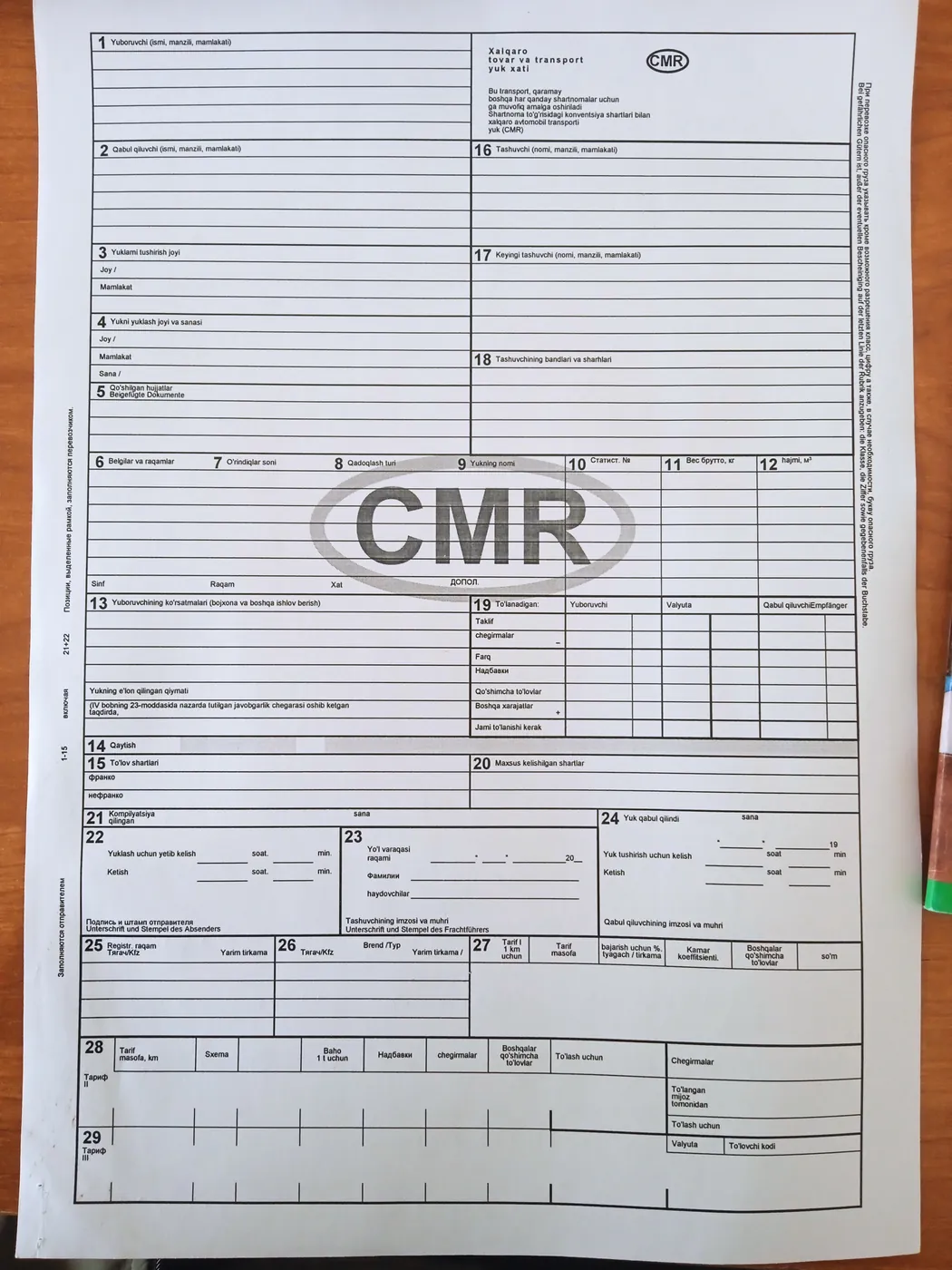
On October 30, 2026, I worked with a scanned document where the stamp stayed as a picture in its original place, with a small note underneath in brackets showing the words read from it, like “[Stamp: …]”. A translator needs those words as text because a certified translation has to translate the stamp too. Retyping a round stamp by hand is where words get lost.
A scan shows why a rule needs to cover more than ordinary body text: marks, seals, signatures, and text embedded in images may need special treatment. ChatsControl offers one way to make scanned document text available for translation: the document is read first, and the recognized stamp wording can be represented as text alongside the retained picture. The capability addresses the problem of missing words in an image, but it doesn’t replace a human translator’s review of the source and the translation.
How it works in ChatsControl
For document work that needs a consistent tone and terminology, ChatsControl lets the user set the domain, audience, tone, free-text context, and preferred terminology before translation. Those instructions are applied throughout the translation process. The tool returns a document for review, but it’s a document-translation tool rather than a full CAT tool or team-management system, so it doesn’t replace the client’s guide, glossary, or translator workflow.
Keep regional choices visible
A localization style guide should be specific about language and market. A label such as “English” doesn’t tell a translator whether the client wants a particular spelling variety, date convention, punctuation style, or form of address. The right choices depend on the audience and the product, so the guide should state the intended market rather than leave the translator to guess.
Create a distinct section for each target-language market where conventions differ. Not every rule needs a separate document, but the scope should be visible in the heading and in each market-specific instruction. If a client uses one term across markets for product reasons, say so. If local usage should take priority for certain kinds of content, explain where that applies.
A market section can cover:
- Preferred spelling and vocabulary.
- Date, time, number, and measurement formats.
- Punctuation, quotation marks, and capitalization.
- Forms of address and gendered language choices.
- Terms that should remain unchanged, such as product names.
- Any local content convention the client has explicitly approved.
Don’t create regional rules from assumptions about what an audience prefers. Ask the client which market they serve and collect approved examples. When the client has no policy for a choice, select a reliable reference and document the decision so future translators don’t make a different guess.
Microsoft’s localization guidance describes market-specific data formats as one area that localization style guides usually cover (Microsoft Learn). That point is easy to overlook when a team thinks of style as tone and word choice alone. Dates and other formats can affect comprehension even when every translated word is technically correct.
The same principle applies to content that appears in a product interface, a website, a document, and a support article. Layout constraints may change how a translated phrase fits, while the underlying terminology and voice should remain consistent. The guide can identify which choices are fixed and which can change to fit the channel.
When a guide isn’t needed, and common mistakes
A full guide isn’t necessary for every assignment. A one-off translation with a clear audience, no recurring brand language, and little risk of inconsistent terminology may need only a brief with context and any essential preferences. A small glossary can help if a few product terms matter. Creating a long document for a single low-context task adds reading without settling decisions that are likely to recur.
A guide becomes more useful when a client has ongoing content, several translators or reviewers, multiple target markets, or repeated revisions about the same choices. The trigger isn’t the size of the document. The trigger is whether the same language decisions keep coming back and whether different people need to make them consistently.
Common mistakes make guides hard to use:
Writing a list of adjectives without examples. “Friendly, bold, modern” doesn’t explain what to write. Translate each trait into observable decisions and show them in context.
Mixing the guide, brief, and glossary. Assignment details change from project to project. Terms need regular maintenance. General language rules should remain easy to locate. Separate the resources and explain which one answers which question.
Adding rules no one owns. A rule with no decision-maker can remain unresolved when reviewers disagree. Name who can approve changes and how translators should raise questions.
Using examples without explaining the choice. A translation example may look like a one-off if the reader doesn’t know which rule it demonstrates. Add a short reason and clarify whether the example is mandatory or illustrative.
Treating every rule as absolute. Languages don’t map neatly from one sentence to another. A translator may need to depart from a preferred construction to preserve meaning or naturalness. Explain how to handle conflicts and when to query the client.
Letting revisions create silent contradictions. If a client approves a new term, the old glossary entry or guide example can send the opposite signal. Update the relevant resource and note the scope of the change.
Writing instructions that repeat general advice. A guide earns its place by recording client-specific decisions. Advice such as “write clearly” is more useful when the client defines what clarity means for its readers and content.
Microsoft recommends conventional grammar and punctuation, simple sentence structures, and standard subject-verb-object order where possible for content intended for machine translation (Microsoft writing tips). The point isn’t to flatten every writer’s voice. The point is to reduce avoidable ambiguity when content needs to travel across languages.
A review process can check whether the guide works without turning into a research project. Look at translated content that has gone through the normal workflow. Note repeated questions and edits, then identify whether the guide is missing a rule, gives a vague rule, or is hard to find. Revise the smallest relevant part and tell the people who use it what changed.
The guide should evolve, but not every reviewer preference deserves a permanent rule. A one-off edit may be specific to a sentence or campaign. A recurring decision that affects the same content type is a stronger candidate for inclusion. Keeping that distinction prevents the guide from growing into a record of every comment.
FAQ
What should a translation style guide include?
Include the target language and market, audience, voice and tone, terminology policy, spelling and grammar preferences, formatting conventions, examples, and a process for queries and updates. Keep recurring project-specific instructions in the brief and detailed term lists in a glossary.
How long should a translation style guide be?
There isn’t a fixed ideal length. Keep the core reference concise enough to consult during work, but detailed enough to answer recurring questions without guesswork. Move large term lists and market-specific details into linked resources instead of adding them all to the main guide.
What is the difference between a translation style guide and a glossary?
A style guide defines how content should read and how translators should resolve editorial choices. A glossary records terms and their approved translations or definitions. The guide should tell users how to handle a missing or disputed term in the glossary.
How do you write translation instructions translators will follow?
Make each instruction specific, name where it applies, and add an example that shows the preferred choice. Explain how to ask a question when the guide doesn’t settle a decision, and put the reference where translators receive the assignment.
How should a style guide handle tone, terminology, and regional formats?
Define brand voice as the consistent character of the communication and tone as the adjustment for a particular context. Record preferred terms in a glossary, then identify spelling, punctuation, and data formats for each target language and market.
When should a client create a separate style guide for a language?
Create a language-specific guide when the client’s choices for that language need their own examples, grammar conventions, or market rules. A shared core guide can still cover the brand voice and workflow, with each language section providing the decisions translators need for their target readers.