A birth certificate can be genuine and still be rejected abroad if the receiving authority needs proof that the issuing signature or seal is official. An apostille connects those two things, but the right route depends on the certificate’s age, condition, and destination.
The process is manageable once you separate three questions: whether the document can be apostilled in Ukraine, whether you need a new certificate, and what the receiving authority wants to see after the apostille. Getting the order wrong can mean preparing a translation that doesn’t include the apostille or trying to submit a document the Ukrainian service won’t accept.
What a birth certificate apostille does
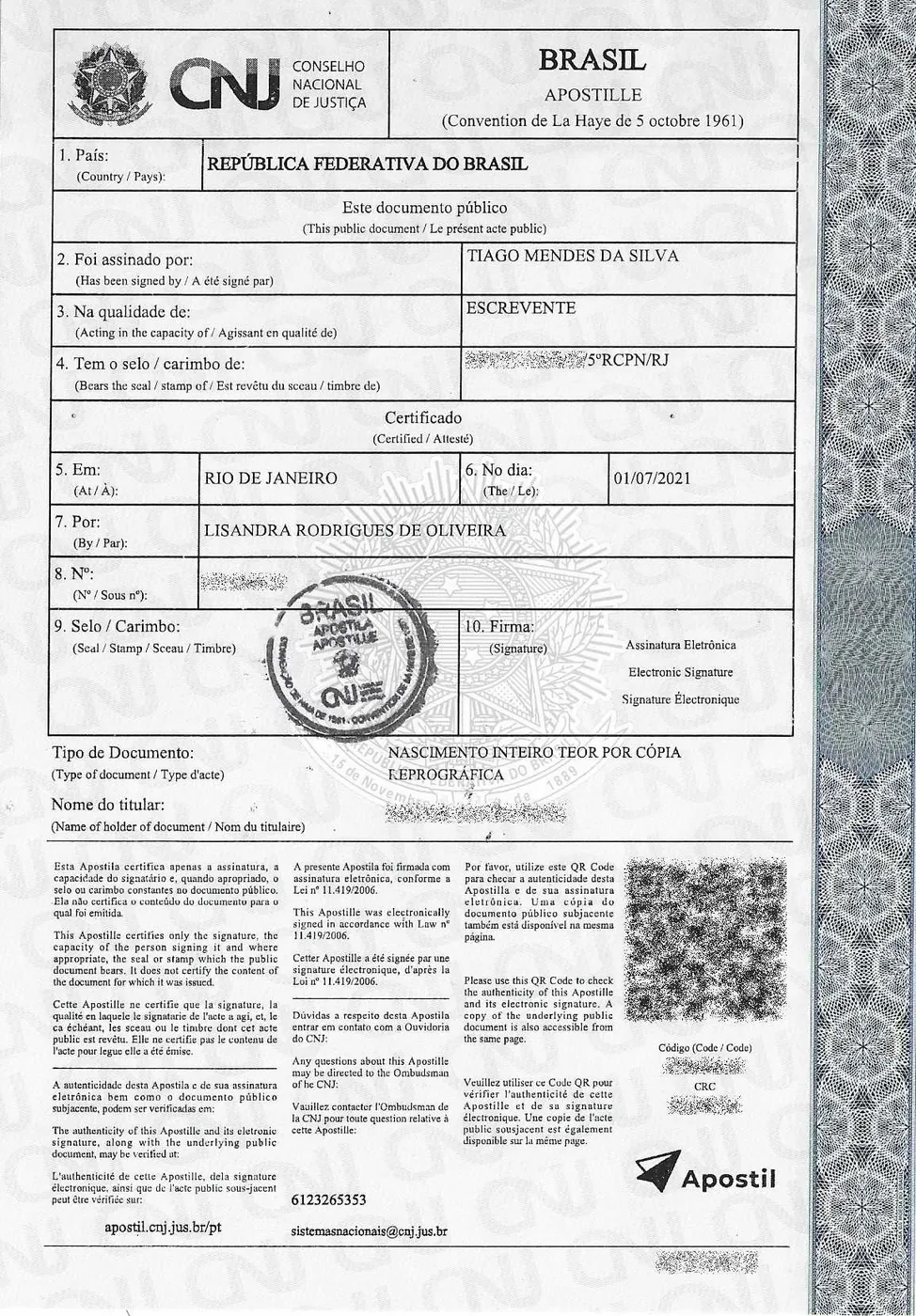
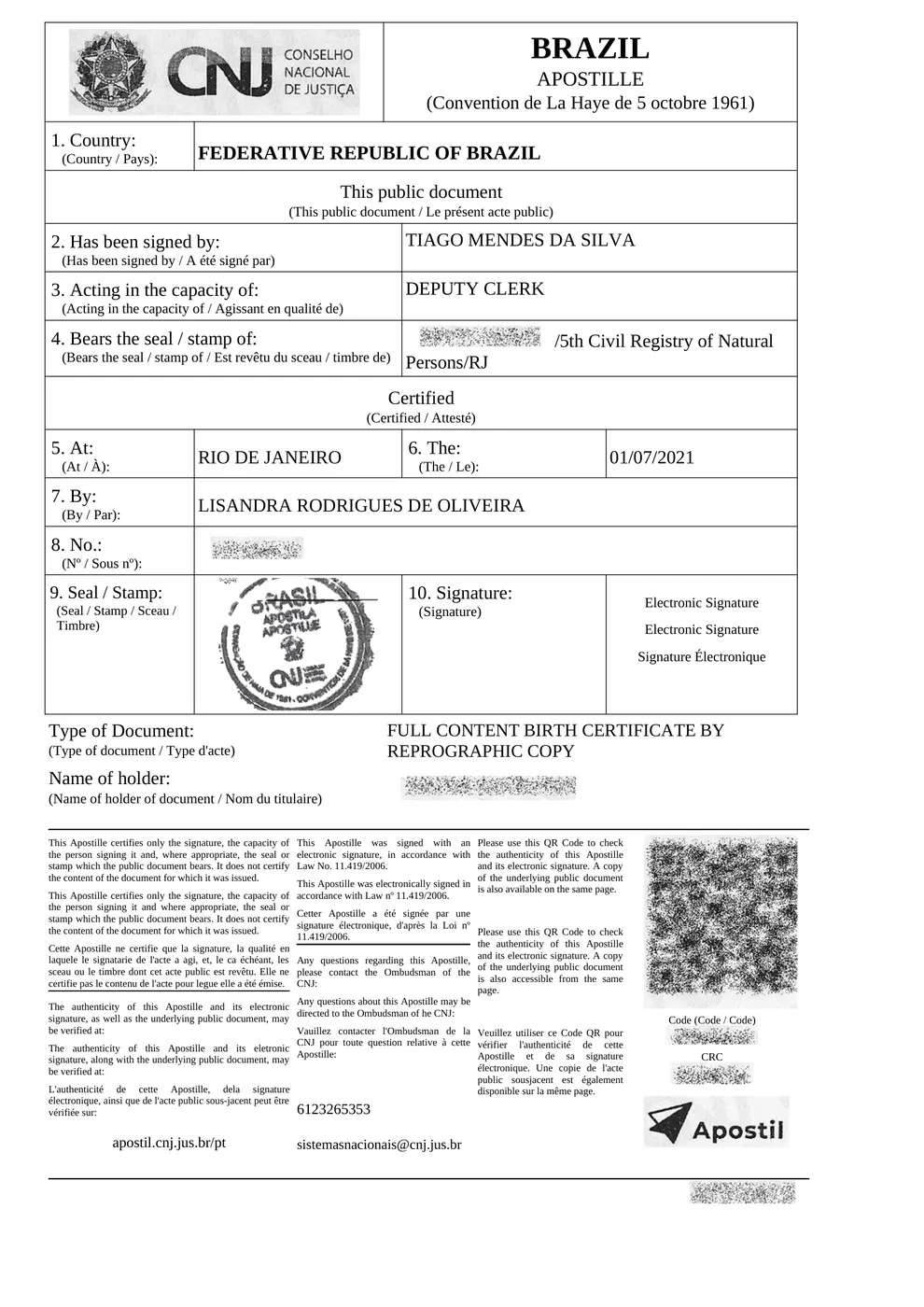
An apostille is an official certificate that confirms the origin of a public document for use abroad. It verifies the authenticity of the signature, the capacity in which the person signing acted, and, where relevant, the identity of the seal or stamp. It doesn’t confirm that every detail in the birth record is correct, and it doesn’t translate the document.
Ukraine’s Ministry of Justice apostille service covers official documents issued by justice authorities, courts, and state archives, as well as documents drawn up by Ukrainian notaries. Birth registration documents issued by civil registry offices, known in Ukraine as DRATS, fall within the service category described by Diia.
The apostille system comes from the Hague Convention of 5 October 1961, which replaced a longer legalization process between participating countries. The Convention entered into force on 24 January 1965, and the HCCH status table listed 130 contracting parties as of 30 June 2026 (HCCH status table). The table includes countries for which the Convention had already entered into force as well as some where entry into force was still pending, so the number of parties alone doesn’t establish whether a particular document will be accepted in a particular country.
An apostille doesn’t replace the receiving authority’s document rules. A foreign civil registry office, court, immigration authority, university, or other institution can still specify whether it wants the original, a recent certificate, a translation, or a particular form of certification. Ask the receiving institution what it requires before you submit the Ukrainian document for apostille.
The apostille also doesn’t certify a translation. If the authority needs a certified or sworn translation, that is a separate service and process. The right sequence depends on whether the apostille is attached to the original, a certified copy, or a translated document. For a closer explanation of that distinction, see apostille on a translation versus apostille on the original.
The route from certificate to accepted document
Start with the authority that will receive the document, not with a translation provider or an apostille application. Ask for the exact format it expects. A short written answer can help you distinguish between requirements for the Ukrainian certificate itself and requirements for its translation.
A practical route looks like this:
- Confirm the destination country’s rules. Ask whether the authority requires an apostille, whether it accepts the Ukrainian certificate you hold, and what kind of translation it needs.
- Check the certificate. Make sure you have the original or determine whether a properly certified copy is acceptable. Check the names, dates, place of birth, signatures, stamps, and physical condition.
- Get a replacement if necessary. If the certificate is lost, damaged, or not suitable for the application, ask a civil registry office about repeat issuance.
- Choose the apostille document. Submit the original or, where the service permits, a properly certified copy.
- Prepare the application and identity documents. Include the application, proof of payment or exemption, and an identity document.
- Apply in person for the apostille. The Diia service description says the applicant applies personally. Check the current office, procedure, and fee before going.
- Review the apostille and plan the translation. Confirm that the apostille is legible and attached to the document set, then arrange the translation in the format the receiving authority accepts.
The list of application items and the in-person requirement come from the Diia apostille service guide. The guide says the applicant’s information and details about the document are entered in the Electronic Apostille Register. It lists information such as the competent authority, applicant identification data, document details, and mobile number. The register entry is part of the official process; it doesn’t remove the need to bring the required documents.
The order of steps can change when the destination authority accepts a certified copy rather than the original, or when it asks for an apostille on a translation. Don’t assume that every country or institution treats those options as interchangeable. If you’re unsure whether to apostille first or translate first, the guide to choosing the correct order lays out the difference.
The key decision is not simply “apostille or no apostille.” The receiving institution may want an apostille on the certificate, an apostille on a certified copy, or a particular translation format. An apostille confirms the document’s official origin; it doesn’t decide the foreign authority’s internal rules.
Which documents to prepare
The Diia service guide lists four core items for an apostille application. Use this as a preparation checklist, then confirm the current submission arrangements with the authority handling the application.
| Item | What to prepare | What to check |
|---|---|---|
| Application | The application for apostille | Confirm where and how the current application must be submitted |
| Payment evidence | Proof of payment or proof that you qualify for an exemption | Confirm the current amount and payment instructions before paying |
| Identity document | A document that establishes your identity | Ukrainian citizens need an identity document; foreign nationals may use a national passport or another document identifying them as a foreign national |
| Document to apostille | The original birth certificate or a properly certified copy | Check that the certificate is readable, complete, and the format matches the receiving authority’s requirements |
The requirements in the table come from the Diia service guide. The service description permits a properly certified copy in place of the original. That doesn’t mean an ordinary photocopy is enough: the copy must be certified in the required manner.
Apostilling a copy can be useful if you need to keep the original, if the original is fragile, or if the receiving authority has explicitly accepted a certified copy. Before choosing this route, ask the receiving authority whether it accepts an apostilled copy and ask the Ukrainian office what kind of certification it requires. A copy can satisfy the Ukrainian submission rules and still fail the destination authority’s format rules.
Check that the identity document you plan to use is one of the types accepted for your applicant category. The Diia guide lists an identity document for a Ukrainian citizen and a national passport or other identity document for a foreign national. Don’t assume a document used for another service will automatically meet this requirement.
The guide requires proof of payment, but it doesn’t provide a dependable current apostille fee. Don’t rely on a price quoted in an old post or a copied checklist. Confirm the amount and payment details with the office before paying; a payment made using outdated instructions can delay the application.
Keep the certificate and any separate papers together as you prepare them. Names may appear in several scripts or spellings across the certificate, passport, and other records. The apostille doesn’t correct differences in spelling or establish that two different spellings refer to the same person. If a mismatch could affect the application, ask the receiving institution how it wants the discrepancy handled before submitting the documents.
Getting a replacement certificate
A replacement birth certificate may be the cleanest starting point when the original is lost, damaged, or difficult to read. Diia says a repeat certificate has the same legal force as the one issued first and can be issued when the original has been lost (repeat issuance service).
The repeat-issuance service page described an online application with a form, a choice of Ukrposhta delivery by branch or courier, payment, signing with a qualified electronic signature or Diia.Signature, submission to the civil registry office, and status checks in the user’s account. The same page warned that the online service was temporarily unavailable when checked. Check the page before relying on the online route, because its availability can change.
“This is a document that has the same legal force as a certificate issued for the first time.”
- Diia, repeat issuance service
That means a repeat certificate isn’t a lesser version of the original simply because it was issued later. The receiving authority may still have its own rules about the document’s age or format, so confirm those requirements separately.
The service page listed an estimated application time of about 10 minutes and a service period of 3 working days when checked. Those figures describe the repeat-certificate service page at the time of review, not the apostille process, and they aren’t a current guarantee. The page also showed a charge of 51 kopecks while warning that the online service was temporarily unavailable, so don’t treat that amount as a guaranteed current price; check the current cost with Diia or the civil registry office before applying (Diia repeat issuance service).
If the online option isn’t available, Diia describes an offline alternative: apply for repeat issuance at the nearest civil registry office. Diia says most offices work Tuesday through Saturday and close on Sunday and Monday, but check the office’s current schedule before traveling (repeat issuance service).
The service identifies several categories of people who may obtain a repeat certificate, including an individual for themselves, a child when the applicant has a passport, adoptive parents, and other people provided for by law. Online issuance through the described service can’t be obtained on the basis of a power of attorney. The service FAQ describes a separate route for issuing civil registry documents to a third party with an appropriately certified power of attorney or proof of representation, so confirm the procedure with the office before making travel plans.
If the civil registry record hasn’t been restored for the relevant years, Diia advises contacting the state archive for the region and requesting a duplicate. That is a different problem from replacing an available certificate: the issuing record itself may need to be located or reconstructed before a new document can be issued.
Diia also notes that the online repeat-issuance service is unavailable in temporarily occupied territories and areas of active hostilities. The service page’s availability and regional access can change, so use the current instructions rather than assuming the online route will work everywhere (Diia repeat issuance service).
If the registrar refuses a repeat certificate, Diia says the registrar will state the reason, the applicant should correct the issue and apply again, and the repeat-issuance service doesn’t need to be paid for again. That instruction concerns the repeat certificate service only. It doesn’t say that an apostille payment is refunded or waived.
“The state registrar will state the reason for refusal. Correct the issues and submit the application again. You don’t need to pay the service fee again.”
Use the stated reason to identify what needs fixing before you submit again. Don’t assume the same payment rule applies to an apostille application, which is a separate service.
Three ways to handle the paperwork
You can prepare the documents yourself, use a document service for part of the process, or work with a translator for the translation stage. Those options solve different problems. A translator can’t decide whether a particular foreign institution will accept a copy, and an apostille service can’t choose the translation format for the receiving authority.
| Route | What you handle | When it can fit | What to verify |
|---|---|---|---|
| Do it yourself | Request a replacement if needed, prepare the application, and submit the document for apostille | You can contact the offices and follow their requirements directly | Current submission location, payment details, identity document, and whether the destination accepts your document format |
| Use a document-handling service | Ask a provider what part of the process it handles and what you still need to supply | You need help coordinating paperwork or are outside Ukraine | Who submits the application, what authorization is needed, what is included, and what happens if the document is not accepted |
| Arrange translation separately | Get the certificate and apostille translated into the required language and form | The destination authority asks for a certified or sworn translation | Whether the translator must translate the apostille and whether certification or notarization is required |
The official service guide says an individual applies for the apostille in person. Don’t assume a private provider can bypass that rule or submit an application for you without a valid procedure. Ask exactly who will appear, what authority they rely on, and whether the office accepts that arrangement.
A translation service becomes relevant after you know what needs translating and how the receiving authority wants it certified. For a document requiring a certified translation, ChatsControl’s certified-translation service connects the translation step with human review and certification through a partner translator. The human certification step is separate from automated document translation; confirm that the available language and form match the authority’s requirements before proceeding.
For a translation draft or a working copy, ChatsControl accepts document uploads and returns a translated Word file while keeping the document layout. A scan or photo is read first and rebuilt as a formatted Word document, so printed text, fields, and seals can be represented in the translation workflow. The tool is not designed for handwriting or very poor-quality scans, and an AI translation isn’t a substitute for a certified translation when the receiving authority requires one.
“The service is temporarily unavailable.”
That warning is a useful reminder to check the status of online services before planning around them. A page can describe a process even when the online application is temporarily closed, so keep an offline civil registry route in mind for a replacement certificate.
Translation order and document checks
A translation is most useful when it matches the complete document set that the foreign authority will review. If the apostille is attached to the certificate, the apostille’s text may also need to appear in the translation. If an authority accepts an apostilled certified copy with a translation, the set may be prepared differently. Ask the destination institution rather than choosing a sequence based only on what is convenient in Ukraine.
The order matters because an apostille and a translation serve different purposes. An apostille authenticates the public document’s origin. A translation conveys the text in another language. A translator doesn’t authenticate the signature on the Ukrainian certificate, and an apostille doesn’t certify the translator’s work.
Before sending the documents for translation, check the complete set:
- The birth certificate is present and legible.
- Names and dates can be read, including entries in stamps or handwritten fields.
- Any apostille or certification is included in the files sent to the translator if it must be translated.
- The translation language matches the receiving authority’s instructions.
- The required certification, sworn status, or notarization has been confirmed with the receiving institution.
- The original and translation will be presented in the order the institution expects.
A scan is an image rather than editable text. A translator or document tool has to read the printed words from the image before translating them, and faint print, handwriting, seals, and damaged areas can be harder to interpret than typed text. If a stamp is unreadable, don’t guess at its contents. Ask whether a clearer scan, another copy, or a replacement document is needed.
On a scanned document, the stamp stays as a picture where it was printed, and right under it goes a small note in brackets with the words read off it, like “[Stamp: …]”. I keep the stamp as an image because a translator needs the stamp’s words as text for a certified translation, and retyping a round stamp by hand is where words get lost.
A translation of a birth certificate may need to include the certificate text, seals, stamps, and apostille. Don’t send only the main printed fields if the receiving authority expects the complete document. The translation brief should identify which pages and attachments belong to the set.
If a name appears differently across the certificate and the applicant’s passport, treat the mismatch as a separate issue, not a translation typo. The apostille won’t resolve a spelling difference or amend the civil record. Ask the receiving authority what evidence it accepts for the discrepancy, and avoid silently changing the certificate’s spelling in the translation.
Old and Soviet-era birth certificates
A Soviet-era certificate needs a different check from a Ukrainian certificate issued by a current authority. The central issue is not just the paper’s age: the issuing institution and the document’s legal form affect whether Ukraine can apostille the document itself.
The Diia apostille guide says original official documents issued by institutions of former Soviet republics aren’t accepted for apostille in Ukraine. The service description separately allows apostille on copies or photocopies certified in Ukraine, including copies with a translation (Diia apostille service guide).
That route doesn’t automatically mean the destination country will accept the copy. Ask the receiving authority whether it accepts an apostilled Ukrainian-certified copy of a Soviet-era document, whether it needs a translation, and whether it requires another legalization route for the original. The guide itself says the question of legalizing the original should be checked against the destination country’s requirements.
A practical decision tree is:
| Your document | First step |
|---|---|
| Ukrainian birth certificate issued by a Ukrainian civil registry office | Check whether the original or a properly certified copy is suitable for apostille |
| Original certificate issued by an institution of a former Soviet republic | Don’t submit the original for Ukrainian apostille; ask about an apostilled copy certified in Ukraine |
| Certificate is lost or too damaged to use | Ask a Ukrainian civil registry office about repeat issuance and, if the record isn’t restored, check the relevant state archive |
| Foreign authority has specified a required form | Follow that instruction and confirm whether it accepts the proposed Ukrainian apostille route |
Old paper can also create practical reading problems. Faded type, handwriting, worn seals, or a format that differs from current certificates can make information hard to verify. A fresh repeat certificate may be more practical when a Ukrainian record exists and can be used to issue one. If the document was issued by a former Soviet republic, however, replacing it with a Ukrainian certificate isn’t something the apostille guide promises; check the relevant civil registry or archive route.
Apostille on a certified copy and apostille on an original aren’t the same outcome. The copy route may preserve the old document while creating a Ukrainian-certified copy for the apostille process, but acceptance abroad remains a separate decision. For more on these documents, see apostilles for pre-2003 Soviet-era documents.
Common problems and how to avoid them
Most avoidable delays start with an assumption: that any copy is good enough, that the online replacement service is always available, or that an apostille settles the receiving authority’s translation rules. Check each assumption before paying or traveling.
Submitting an ordinary photocopy
The service guide allows a copy certified in the required manner, not an unspecified photocopy. Ask the office what certification it accepts and whether the receiving authority accepts an apostilled copy. A clear image of a certificate is not automatically a legally certified copy.
Treating the apostille as a translation
An apostille authenticates the origin of a public document; it doesn’t translate the certificate or confirm the accuracy of the information in it. If the destination authority needs a translation, ask whether it must be sworn, certified, or notarized, and whether the apostille itself must be translated.
Relying on an online service without checking its status
Diia’s repeat-issuance page described an online application but displayed a temporary-unavailability warning when checked. The same page provides an offline route through a civil registry office. Check current availability before building a schedule around online submission.
Applying with the wrong identity document
The apostille guide lists an identity document as an application item and distinguishes between Ukrainian citizens and foreign nationals. Check the category and document type accepted for your application before visiting the office.
Assuming a power of attorney works for every step
The online repeat-certificate service says an application through that service can’t be made on the basis of a power of attorney. The service FAQ describes a separate process for third-party issuance with properly certified authorization or proof of representation. Ask the civil registry office which route applies to your situation; don’t transfer the rule for one service to another.
Assuming an old certificate can be apostilled as an original
The guide says originals issued by institutions of former Soviet republics aren’t accepted for apostille in Ukraine. A certified copy may be a route, but the destination country’s acceptance rules still matter. Confirm the route before sending the original or arranging a translation.
If an application for repeat issuance is refused, Diia says the registrar must state the reason and the applicant should correct the issue before applying again. That instruction can help with a repeat certificate, but it doesn’t guarantee that the apostille application will be accepted or that its fee will be treated the same way. Keep the repeat-certificate and apostille processes separate in your planning.
FAQ
How do I apostille a Ukrainian birth certificate?
Prepare an application, proof of payment or exemption, an identity document, and the original certificate or a properly certified copy. The Diia service description says an individual applies in person, so confirm the current submission office and instructions before visiting (Diia apostille service guide).
What documents do I need for a birth certificate apostille?
The Diia guide lists an application, payment evidence or proof of exemption, an identity document, and the document to be apostilled. The document can be a properly certified copy instead of the original, subject to the required certification and destination authority’s rules (Diia apostille service guide).
Can I apostille a Soviet birth certificate?
Ukraine doesn’t accept the original official document issued by a former Soviet republic for apostille. The Diia guide describes apostille on copies or photocopies certified in Ukraine, including with a translation, but you should check whether the destination authority accepts that format (Diia apostille service guide).
Should I translate a birth certificate before or after the apostille?
Ask the receiving authority which document set it accepts. If the apostille is attached to the original and must be translated, include it in the material sent for translation; if the authority accepts an apostilled certified copy with translation, the preparation may differ.
Can I get a replacement Ukrainian birth certificate if the original is lost?
Yes. Diia describes repeat issuance online when the service is available and offline through a civil registry office. The repeat certificate has the same legal force as the certificate issued first (Diia repeat issuance service).
Can someone apply for the apostille on my behalf?
The Diia apostille service description says an individual submits the application personally. Rules for a third party seeking a repeat birth certificate are separate, so ask the relevant office what authorization it accepts before arranging representation.
How much does an apostille on a birth certificate cost?
The Diia apostille guide requires proof of payment but doesn’t show a dependable current fee. Confirm the amount and payment details with the office handling the application before paying (Diia apostille service guide).
Does an apostille guarantee that a foreign authority will accept my certificate?
No. An apostille authenticates the origin of the public document; the receiving authority can still set rules for the document’s format, age, translation, and certification. Ask that authority what it expects before submitting the certificate.
Need these documents translated?
Leave your number and we will message you, tell you which certification your institution needs, and name the price. Translation, translator review and notary certification.