A birth certificate can be one page and still trigger several separate checks: whether the document needs an apostille, which language the receiving authority accepts, and whether the translation must be sworn or notarised. The right order depends on where you plan to use it and where the translation will be prepared.
A translation doesn’t replace an apostille, and an apostille doesn’t translate the certificate. Treat them as separate parts of the paperwork, then confirm the receiving organisation’s instructions before you submit anything.
What you may need to do
A birth certificate for use abroad may need a translation, an apostille, or both. The receiving organisation decides which form it accepts, so the first task is to identify that organisation and check its current instructions.
An apostille is a certificate attached to a public document to simplify its legalisation for use abroad. It confirms the status of the document or signature under the applicable process; it doesn’t translate the text or establish that every detail in the document is true. Ukraine’s rules for apostilles on official documents intended for use abroad were approved by a joint order dated 17 March 2023; check the published regulation for the legal framework.
Translation is a separate step. The receiving authority may specify the language, translator’s status, format, or whether the translation must be attached to the apostilled original. Those requirements can differ by country and by organisation within a country.
For example, official Dutch guidance checked in March 2025 says that a Ukrainian document for use in the Netherlands generally needs an apostille issued by Ukrainian authorities. The same guidance lists Dutch, English, French and German as acceptable languages for the translation. Rules can depend on the receiving organisation, so don’t treat those instructions as a universal rule for every destination.
Start with these questions:
- Which organisation will receive the certificate?
- Does it need the original, a newly issued certificate, or an extract?
- Does it require an apostille on the certificate?
- Which translation languages does it accept?
- Must the translation be made by a sworn translator, or can it be completed in Ukraine?
- If the translation is made in Ukraine, does the authority require an apostille on the translation too?
That last question can change the order of the work. A certificate translated before the apostille may follow a different route from one apostilled in Ukraine and translated abroad.
The Dutch government explains the distinction in its instructions for Ukrainian documents:
“Uw document moet origineel en compleet zijn.”
Translation: “Your document must be original and complete.”
The instruction is a practical reminder: a neat translation can’t fix a missing original or an incomplete document set. If the certificate refers to another document or an attachment, Dutch guidance checked in March 2025 says that material must also be included.
Which documents and details to prepare
Before you request a translation, gather the document the authority will actually assess. The checklist below helps you identify what to confirm; it doesn’t override the receiving organisation’s own instructions.
| Item to check | What to look for | Why it matters |
|---|---|---|
| Birth certificate | Whether you have the original, a duplicate, or an extract | Some authorities ask for an original and a complete document |
| Apostille | Whether the destination requires one and which document it must cover | The apostille and the translation are separate procedures |
| Translation language | The precise language accepted by the receiving organisation | A translation into a language it doesn’t accept can be unusable |
| Translator status | Whether the authority accepts a sworn translator or requires another form | Requirements differ between processes and destinations |
| Stamps and seals | Whether all printed and handwritten text is legible | The translation may need to include text in stamps and seals |
| Names and dates | Whether spellings match passports and other records | A difference can prompt questions even when the certificate itself is valid |
| Related documents | Any document or attachment referenced by the certificate | Dutch guidance calls for referenced documents to be included |
| Submission format | Original, paper translation, digital file, or a combination | Ask the receiving organisation before arranging delivery |
A Ukrainian birth certificate and an extract are civil-status documents issued by Ukrainian civil registry offices. The German Embassy in Ukraine’s information page, checked in March 2025, says that when a record is available in the electronic State Register of Civil Status Acts, a certificate or extract can be requested at any Ukrainian civil registry office or through the Ministry of Justice’s online service. Check the page for current access arrangements before relying on an online request.
A Ukrainian certificate issued by a Ukrainian diplomatic mission in Germany follows a different apostille route. The German Embassy’s page, checked in March 2025, says that documents issued by the listed Ukrainian diplomatic missions are exempt from the apostille requirement. The page also says Ukrainian-language documents still need translation for use in Germany. Confirm that the issuing office and the document you hold fall within that guidance.
Read more about the destination-specific process in Birth Certificate Translation for Germany, or compare the questions of translation, notarisation and apostille in Birth Certificate Abroad: Translation, Notary or Apostille?.
Choosing a translation route
The main choice isn’t simply between an agency and an individual translator. First decide what kind of translation the receiving authority accepts and whether it needs a legal certification. Only then can you compare the people or services able to provide it.
Translation bureau
A bureau can coordinate translation and, where offered, certification or other document steps. That arrangement may be useful when the receiving authority has specific formal requirements and you want one point of contact for questions about the file.
Ask the bureau what the quoted service includes. Does it translate the apostille as well as the certificate? Does the translator include stamps, seals, handwritten notes and the reverse side? Will you receive a digital copy, a paper copy, or both? If a notarial or sworn step is involved, ask who performs it and what exactly gets certified.
A bureau can’t decide for the receiving authority what it will accept. Send the authority’s written instructions to the bureau and ask it to explain which parts of the proposed process meet those instructions. If the authority requires a particular translator status, don’t assume that a general notarised translation is equivalent.
Freelance translator
A freelance translator may be a suitable route when you know the target language and formal requirements, and the translator can provide the format the authority requests. Ask about experience with civil-status documents, the treatment of stamps and seals, and how the translator will handle names whose spelling differs across records.
A good working file needs more than the main printed text. It should account for headings, registration details, signatures, seals, handwritten additions and any apostille attached to the certificate. If the source is a scan, agree in advance how unclear text will be flagged rather than silently guessed.
The translator’s credentials alone don’t tell you whether the receiving authority will accept the result. Check the authority’s rules first, then confirm that the translator can meet them. For a destination that requires a sworn translation, ask whether the translator is recognised for that destination and whether the authority requires a particular attachment or certification process.
Online document translation
An online document tool can help when you need a readable draft or a formatted translation for review, but an automated translation isn’t automatically a certified translation. For an official submission, separate the language work from any required human review, sworn status or notarisation.
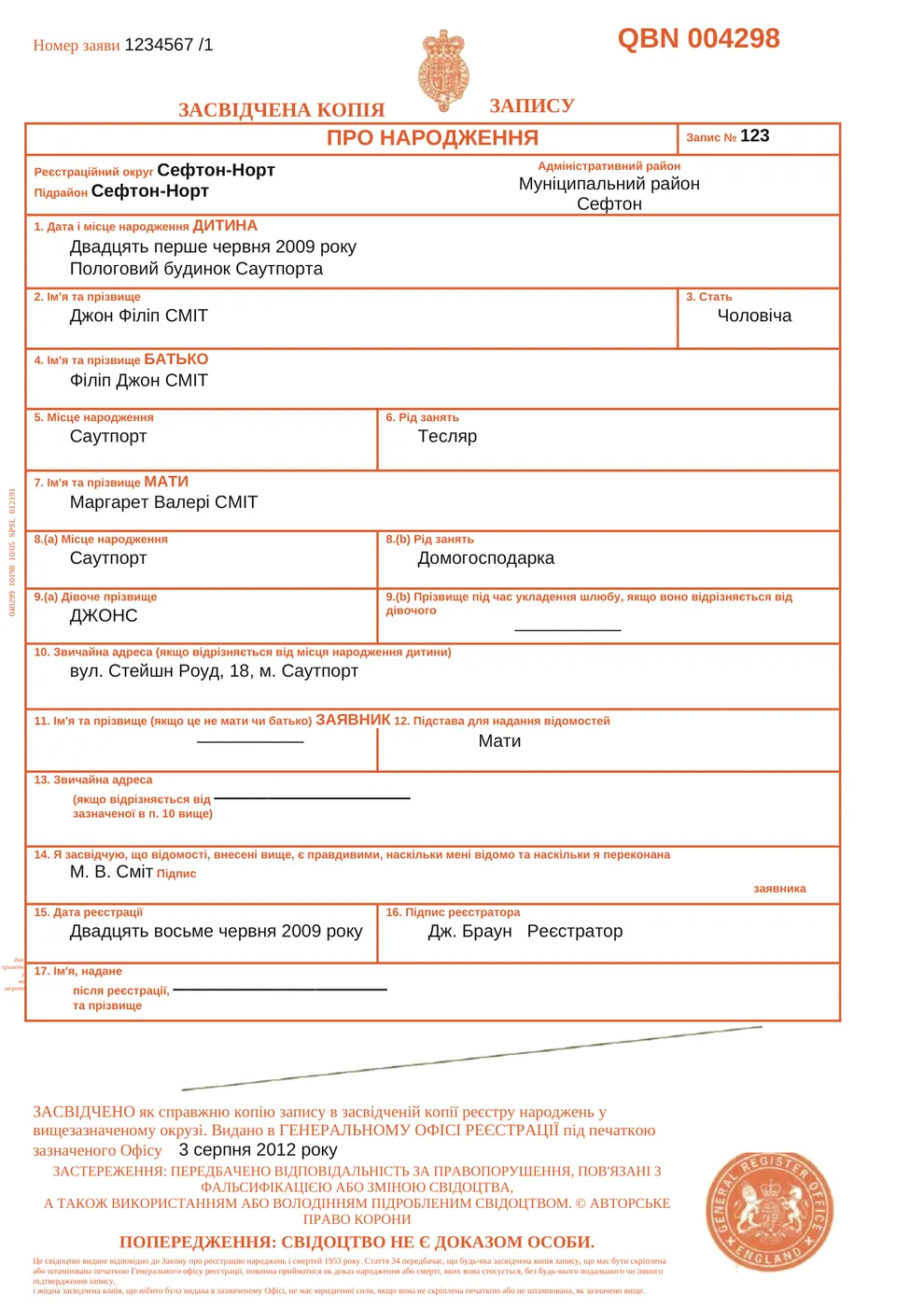
In ChatsControl, you can upload a DOCX, PDF or scan and receive a translated Word file that keeps the document’s layout. For a scan or photograph, the system reads the page first and reconstructs a formatted copy; the tool can also show the source and translation side by side for review. That can make it easier to inspect names, dates and the text around a stamp. It isn’t a substitute for a sworn or legally certified translation, and handwritten or heavily degraded scans can be read unreliably.
The source page matters. A scan is an image rather than editable text, so the text must be recognised before translation can begin. A printed name may be clear while a faint stamp or handwritten date isn’t. If the unreadable detail could affect the authority’s decision, check the original with a human translator instead of relying on a guessed reading.
If the submission requires a human-certified result, see the certified translation service. A human translator and notary may be part of that service; the required form still depends on the destination and the receiving organisation.
Compare the options before deciding
The best route depends on the official requirement, the condition of the source, and whether you need a translation for understanding or for a formal submission. Use the table to frame the questions, then check the actual receiving authority’s instructions.
| Route | Useful when | Confirm before proceeding | Main limitation |
|---|---|---|---|
| Translation bureau | You need help coordinating translation and certification steps | Which steps are included, who certifies the translation, and what format you’ll receive | A bureau can’t guarantee acceptance if the authority’s rules aren’t checked |
| Freelance translator | You have clear instructions and can verify the translator’s status | Whether the translator meets the required status and includes all document text | You may need to arrange certification or document handling separately |
| Online document tool | You need a draft, formatting support, or a way to review a document | Whether the output is suitable for your purpose and what human certification remains necessary | Automated output isn’t a sworn translation, and difficult handwriting needs human review |
| Translation in the destination country | The authority accepts or specifies a local sworn translator | Which languages and translator status it accepts | You may need to handle the apostille and original document in advance |
A second useful comparison is the order of apostille and translation. Dutch official guidance checked in March 2025 sets out two routes for a Ukrainian document:
| Route | Sequence | Apostille on translation? |
|---|---|---|
| Translate in Ukraine | Translate the document in Ukraine, then have both the original document and the translation apostilled | Yes, the official Dutch instruction says both the document and translation need an apostille |
| Translate in the Netherlands | Apostille the original document in Ukraine, then have it translated in the Netherlands | No, the instruction says the translation doesn’t need a separate apostille |
Those routes are specific to the Dutch guidance and may not apply to another country. The official Netherlands instruction for documents from Ukraine, checked in March 2025, explains the permitted sequence and translation languages. Ask the receiving organisation which route it expects before commissioning a translation.
A step-by-step plan
A clear sequence reduces the chance of paying for a translation in the wrong form or preparing a document the authority won’t accept. Keep the organisation’s instructions with the file, so every person handling the document can work from the same requirements.
- Identify the receiving organisation. Write down the exact authority, registry office, immigration service or other organisation that will review the birth certificate. Don’t rely only on the destination country’s general rules if the organisation has its own submission instructions.
- Confirm the document form. Ask whether the authority needs the original, a duplicate, an extract, or another document. Check whether it accepts a document issued by a Ukrainian diplomatic mission, since that can affect apostille requirements for Germany.
- Check the apostille requirement. Confirm whether the original needs an apostille and which Ukrainian authority or process applies. Ukraine’s apostille rules for official documents are set out in the joint order dated 17 March 2023.
- Choose the translation location and language. For use in the Netherlands, guidance checked in March 2025 lists Dutch, English, French and German. The instructions also distinguish between translation in Ukraine and translation in the Netherlands.
- Send the complete document for translation. Include all pages, both sides if they contain content, the apostille if already attached, and any document or attachment referenced by the certificate. Dutch guidance checked in March 2025 requires a complete document and says referenced materials must also be included.
- Check names and visible details. Compare names with the identity documents the authority will see. Ask the translator to include stamps and seals, and to flag text that can’t be read confidently.
- Check the final package against the instructions. Make sure the certificate, apostille, translation and any required attachments are in the requested form before submitting them.
Apostille and translation order isn’t a minor production preference. Under the Dutch instructions checked in March 2025, translating in Ukraine first means apostilling both the document and the translation; apostilling the original in Ukraine and translating in the Netherlands means the translation doesn’t need a separate apostille. Choosing the wrong sequence can leave you with an extra legalisation step or a package that doesn’t follow the receiving authority’s instructions.
The Dutch authority states the limit of legalisation directly:
“De legalisatie betekent niet dat de inhoud klopt of dat het document echt is.”
Translation: “Legalisation doesn’t mean the contents are correct or that the document is genuine.”
That caution matters because an apostille isn’t a guarantee that a receiving organisation will accept the document without further checks. The Dutch guidance says a municipality, the Immigration and Naturalisation Service (IND), or another organisation may examine it separately. A translation can make the contents accessible to the reviewer, but it doesn’t settle questions about the record itself.
Details that can cause problems
The most frequent risks are not exotic legal rules. They are mismatches between the document you prepare and the instructions the receiving organisation actually applies.
Missing pages or attachments
Dutch guidance checked in March 2025 says the document must be original and complete. If the certificate refers to another document or an attachment, include it. A translation of only the first page may be incomplete even if that page contains the child’s name and date of birth.
Check the back of the certificate too. A reverse side may contain an endorsement, registration mark or other text. If the receiving authority asks for the original, a scan of the front alone won’t satisfy that requirement.
Stamp text left out
A stamp is part of the document, not decoration. Its text may identify the issuing authority, authenticate the page or add information that the receiving organisation expects to see in the translation. Ask the translator to account for every legible stamp, seal, signature and handwritten entry.
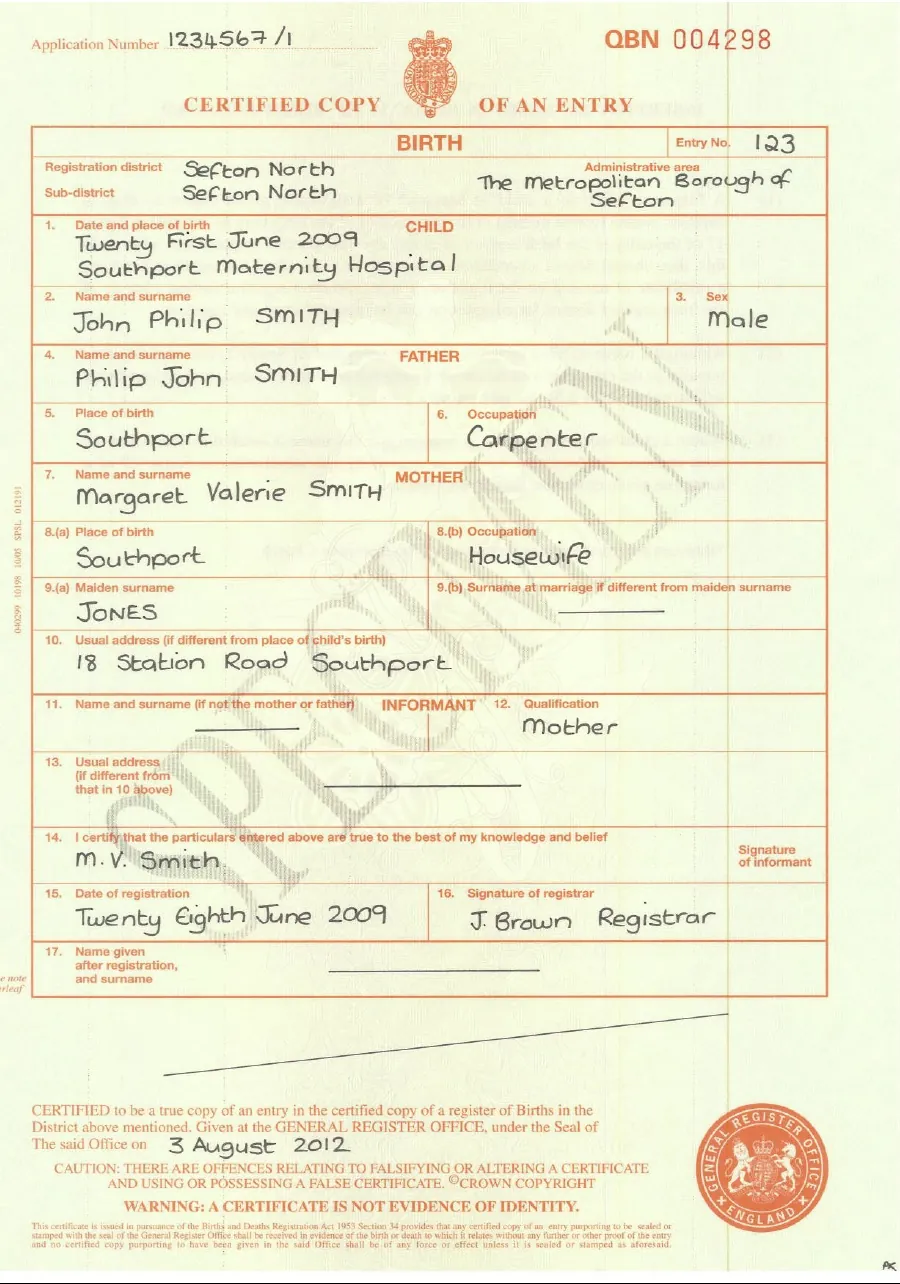
I keep the stamp in a scanned document as a picture where it was printed, then put a small note in brackets right under it with the words read off the stamp, like “[Stamp: …]”. A certified translation needs the stamp’s words as text too, and retyping a round stamp by hand is where words get lost.
The practical point is to preserve the stamp’s position and translate its readable content. A note should make clear which words come from the stamp, rather than presenting them as ordinary certificate text. If the scan doesn’t show the wording clearly, get the original checked instead of filling in what you think the stamp says.
Names spelled differently across records
A name may appear differently in a birth certificate, passport or another identity document because each was issued or transcribed in a different context. A translator should reproduce the source accurately, not silently change the certificate to match a passport.
Before submission, compare the spellings and ask the receiving authority how it handles differences. If the authority needs an explanation or additional evidence, a translation alone won’t correct the underlying civil-status record. A mismatch can prompt questions even when the translation itself is faithful.
For older handwritten or unusual certificates, see Translating Soviet Birth Certificates: Handwritten Cyrillic and Old Formats. Handwriting and faded marks need particular care because a translator may not be able to distinguish letters confidently from a scan.
Assuming the apostille checks the facts
An apostille isn’t a review of the birth record’s factual accuracy. Dutch official guidance checked in March 2025 warns that legalisation doesn’t confirm that the contents are correct, and says the receiving organisation may check the document separately.
The same distinction applies to the translation. A translator can accurately reproduce what the certificate says without confirming that the underlying civil-register entry is correct. If a date, name or parent detail is wrong on the certificate itself, ask the relevant civil registry authority what correction or replacement process applies.
Country-specific points to verify
A single certificate can go through different routes depending on where it was issued and where it will be submitted. The details below show why the receiving organisation’s instructions matter.
The Netherlands
For use in the Netherlands, official guidance checked in March 2025 says that a Ukrainian document generally needs an apostille issued by Ukrainian authorities. The translation must be in Dutch, English, French or German under that guidance.
The instructions give two sequences. Translate in Ukraine first, and both the certificate and the translation need an apostille. Apostille the original in Ukraine and translate it in the Netherlands, and the translation doesn’t need a separate apostille. A sworn translator may translate the document, but the acceptable route depends on where the translation is prepared.
Dutch guidance also says that Ukrainian documents issued by a Ukrainian embassy or consulate don’t need legalisation, although a Ukrainian-language document still needs translation for use in the Netherlands. The receiving organisation may separately review the document, even after legalisation.
The age of the certificate isn’t a universal reason to order a new one. Dutch guidance checked in March 2025 says the validity of the document or legalisation depends on the receiving organisation; under Dutch rules, the age of a birth or marriage certificate by itself doesn’t matter. Check the organisation’s own submission requirements before replacing an older document.
Germany
The German Embassy in Ukraine’s page on requesting civil-status documents, checked in March 2025, says Ukrainian certificates and extracts are issued by Ukrainian civil registry offices. If the record is in the electronic State Register of Civil Status Acts, an applicant may request a document at any Ukrainian office or through the Ministry of Justice’s online service, subject to current availability.
Ukrainian diplomatic missions in Germany can access the State Register and issue certificates or extracts. The embassy page says documents issued by the listed diplomatic missions are exempt from apostille. The exemption concerns those documents; don’t assume it applies to every certificate issued in Ukraine.
The embassy also says a person seeking a Ukrainian document must establish a legitimate interest and provide detailed information about the record, including the person’s name, the place and date of the event, and, where possible, the act-record number. If the birth was registered in Ukraine, obtaining the original, duplicate or copy is a matter for Ukrainian authorities, not the German Embassy.
An instruction about a power of attorney is easy to misapply. The embassy page says a Ukrainian power of attorney made before a German notary must have a German apostille and a notarised Ukrainian translation. That requirement concerns the power of attorney used to request documents, not the translation of the birth certificate itself.
For a broader comparison of German authority requirements, read Ukrainian Birth Certificate for Standesamt: Is an Apostille Required?.
Other destinations
Don’t carry Dutch or German procedures over to another country without checking. Requirements for apostilles, accepted languages and translator status can differ by destination and by the organisation that receives the document.
Start with the authority’s own instructions and ask about the exact document you hold. A certificate issued in Ukraine, one issued by a Ukrainian diplomatic mission, a duplicate, and an extract may not follow identical processes. The authority should also tell you whether it wants the translation attached to the original, a certified copy, or a separate paper translation.
FAQ
Does a Ukrainian birth certificate need an apostille for the Netherlands?
Usually, yes. Dutch guidance checked in March 2025 says a Ukrainian document for use in the Netherlands generally needs an apostille issued by Ukrainian authorities. Confirm the requirement with the organisation receiving the certificate, because its instructions determine what it will accept.
Should I get the apostille before translating a birth certificate?
The sequence depends on where the translation will be made. Dutch guidance checked in March 2025 says to apostille both the original and translation if you translate in Ukraine first; if you apostille the original in Ukraine and translate in the Netherlands, the translation doesn’t need its own apostille.
Which languages are accepted for a Ukrainian document in the Netherlands?
Dutch guidance checked in March 2025 lists Dutch, English, French and German. Ask the organisation receiving your document which of those languages it accepts for your specific application.
Does an apostille prove that the information on a birth certificate is correct?
No. Dutch authorities say legalisation doesn’t confirm that the document’s contents are correct, and a municipality, IND or another organisation may check the document separately. An apostille and a translation don’t correct an error in the civil record.
Does an apostille on a birth certificate expire?
The receiving organisation determines what it will accept. Dutch guidance checked in March 2025 says the validity of a document or legalisation depends on that organisation, while the age of a birth or marriage certificate by itself doesn’t matter under Dutch rules.
Can I translate a birth certificate myself?
Check the receiving authority’s requirements before translating it. Dutch official guidance checked in March 2025 allows translation by a sworn translator and sets out different legalisation sequences depending on whether the translation is made in Ukraine or the Netherlands.
What if the certificate is a scan or a photo?
First confirm that the receiving organisation accepts a scan rather than the original. For translation, a legible scan helps the translator read names, dates, stamps and handwritten entries; an unclear or handwritten document may need a human to check it against the original.
What if I don’t have the original birth certificate?
Ukrainian civil-status certificates and extracts are issued by Ukrainian civil registry offices. The German Embassy in Ukraine’s page, checked in March 2025, says that when the record is in the electronic State Register, a certificate or extract may be requested at a Ukrainian office or through the Ministry of Justice’s online service; check current availability and eligibility before applying.
Need these documents translated?
Leave your number and we will message you, tell you which certification your institution needs, and name the price. Translation, translator review and notary certification.