A Soviet-era marriage certificate, a new divorce certificate, or a paper issued by a Ukrainian civil registry office can each lead to a different apostille process. The key question isn’t only whether the document has a stamp. You need to know who issued it, when it was issued, and what the foreign authority expects to receive.
An apostille is an official certificate that verifies the signature, the official capacity of the person who signed a public document, and the seal or stamp on it. It doesn’t confirm the facts in the document and it doesn’t translate the text. Ukraine’s Ministry of Justice handles apostilles for civil registry documents, including marriage and divorce certificates.
The rules changed in 2026, and the old fee figure often quoted online applies to 2025 applications only. Here’s how to work out what to submit, where to apply, what the official processing period means, and when translation or a replacement certificate comes into the picture.
What you need to do before sending a certificate abroad
Start with the receiving authority, not the apostille counter. A marriage or divorce certificate is often part of a larger application, and the office handling that application decides whether it needs an apostille, a translation, a recently issued certificate, or a particular form of translation certification.
The apostille process is about the origin of a public document. A foreign clerk needs a way to verify that the signature and seal belong to an authorised Ukrainian official. The apostille supplies that verification under the Hague Apostille Convention. Ukraine lists the Ministry of Justice as a competent authority for relevant public documents under Article 6 of the Convention (HCCH’s Ukraine authority record).
The Ministry of Justice explicitly includes certificates of marriage and divorce among documents that can receive an apostille (Ministry of Justice apostille procedure). That means a Ukrainian civil registry certificate can be considered for apostille. It doesn’t mean every receiving office will accept every version of the certificate without further conditions.
Before applying, ask the foreign authority these questions:
- Does this particular procedure require an apostille on the certificate?
- Does the authority accept the certificate I already have, or does it require a newly issued one?
- Does it require a translation, and should translation happen before or after the apostille?
- Does it accept a certified translation, a notarially certified translation, or only a translation made by a translator it recognises?
- Does the original certificate have to be submitted, or will a properly certified copy work?
A clear answer matters because an apostille doesn’t fix other issues. A document can be genuine and properly apostilled but still fail an authority’s rules about document type, age, name spelling, or translation. Ask the receiving office to state its requirements for the exact application you plan to make.
Apostilles on Ukrainian civil registry documents fall within the Ministry of Justice’s area of responsibility. The Ministry’s procedure page explains that an apostille certifies the signature, the signer’s capacity, and the seal or stamp, rather than the truth of the document’s contents (Ministry of Justice procedure). If a foreign office questions whether a marriage or divorce was legally recorded, the apostille isn’t a substitute for the underlying record or a recognition process.
If you’re preparing documents for a specific country, the country-specific details can change the order of steps. For example, a certificate for a German civil registry application may involve different translation expectations from a certificate used for another purpose. See the guide to a Ukrainian marriage certificate for a German Standesamt or the broader guide to marriage certificates for use abroad.
Which certificate and supporting documents should you prepare?
A successful application starts with the right document version. The table below helps you identify the main route before you travel to a civil registry office or arrange a submission.
| Document situation | What to check | Likely next step |
|---|---|---|
| Current Ukrainian marriage certificate | Confirm that the receiving authority accepts this certificate and hasn’t requested a newly issued one | Apply for an apostille if the foreign authority requires one |
| Current Ukrainian divorce certificate | Confirm that the document records the event the foreign authority needs to establish | Apply for an apostille if required, then arrange any required translation |
| Lost Ukrainian certificate | Ask whether a repeat certificate can be issued and accepted for the foreign procedure | Obtain a repeat certificate before applying for apostille |
| Soviet-era certificate issued in Ukraine | Check whether the original can be apostilled directly | The Ministry of Justice says to obtain a repeat certificate in Ukraine |
| Certificate issued by a former Soviet republic other than Ukraine | Identify the issuing country and its rules | Don’t assume Ukraine can apostille the foreign original |
| Certificate issued in another country | Identify that country’s competent authority | Follow the issuing country’s apostille process rather than Ukraine’s |
For the application, the Diia service guide lists an identity document, the original document or a properly certified copy, and proof of payment. The guide describes the service as available to individuals (Diia apostille service guide). The civil registry office may need to examine the document to verify its signature or seal, so don’t replace the original with an ordinary photocopy unless the office confirms that a properly certified copy is acceptable.
The distinction between an original and a certified copy matters. A phone photo or an ordinary photocopy isn’t automatically a properly certified copy. If you want to submit a copy, confirm what certification is required and whether the foreign authority will accept an apostille attached to that version.
A repeat certificate can be useful when the original is lost or no longer suitable for the application. Diia describes a repeat marriage certificate as having the same legal force as the original (Diia repeat marriage certificate service). Before requesting one, ask the foreign office whether it accepts a repeat certificate and whether it has any rules about how recently the document must have been issued.
The issuing place doesn’t limit where you can apply. The Ministry of Justice says applicants can go to any civil registry office in a territorial body of the Ministry, rather than only the office in the town where the marriage or divorce was registered (Ministry of Justice application procedure). That can make the process simpler if you live elsewhere in Ukraine or are handling the paperwork from a different region.
A certificate issued by an institution in another former Soviet republic is a different case from a Ukrainian certificate issued in the Soviet period. The Diia guide says originals of official documents issued by institutions of former Soviet republics can’t be accepted in Ukraine for apostille. It also describes apostille on properly certified copies or photocopies made in Ukraine, with translation where needed (Diia apostille guide). Ask the receiving authority and the Ukrainian office what form is acceptable before paying or mailing anything.
Where to get the apostille: the official route and translation options
The Ministry of Justice is the Ukrainian authority responsible for apostilles on the relevant civil registry documents. An apostille request for a marriage or divorce certificate goes through a civil registry office in a territorial body of the Ministry of Justice. The certificate doesn’t have to be apostilled in the place where it was issued (Ministry of Justice procedure).
You can keep the process direct by handling the administrative step yourself. The important parts are making sure the document is eligible, submitting the correct original or certified copy, and presenting proof of payment so the application can be registered. If the certificate is old, damaged, issued outside Ukraine, or based on a record with a spelling variation, contact the relevant office before relying on a routine submission.
A translation provider deals with a different part of the job. A translator can prepare the foreign-language version of the certificate and apostille, but a translator doesn’t issue the apostille. Some authorities want the apostille attached before translation, while others specify a different sequence or form of certification. Follow the receiving authority’s instruction rather than treating one sequence as universal.
When the receiving office requires a certified translation, the translation stage may involve a human translator and a notary. ChatsControl’s certified translation service describes a human review and certification route; it isn’t the same as placing an apostille on the Ukrainian certificate. The certificate still needs to go through the competent public authority for apostille.
| Route | What the route handles | What to confirm |
|---|---|---|
| Apply directly through a civil registry office | The Ukrainian apostille application | Eligibility of the certificate, acceptable document form, payment details, and current procedure |
| Use a translation provider | Translation and any required translation certification | Whether the receiving authority accepts that translation format and whether it should follow apostille |
| Handle apostille and translation separately | Each stage through its relevant provider or authority | Whether the document must remain attached to the apostille and whether the translation must include both |
Don’t choose a provider on the assumption that it can bypass an eligibility rule. A private translation service can’t make an ineligible Soviet-era original eligible for direct apostille, and a translation can’t replace a missing apostille where the foreign authority requires one.
The Ministry’s procedure also describes electronic verification. Under the procedure in force from February 1, 2026, the result can be checked through the Ministry of Justice web resource and a QR code; an available record may display a scan of the document together with the apostille (Ministry of Justice procedure). Electronic verification helps a receiving office check the apostille, but it doesn’t remove the need to present whatever document format that office requires.
What the apostille fee and processing period mean
The official processing period and the time you spend completing the whole task aren’t the same thing. The Ministry’s new procedure, Order No. 3177/5, took effect on February 1, 2026, replacing the earlier procedure under Order No. 2268/5 (Ministry of Justice announcement; Order No. 3177/5).
Under the procedure in force from February 1, 2026, the application or refusal is considered within up to three working days. The clock starts on the day after the application is registered in the Electronic Apostille Register (Order No. 3177/5, section I, paragraph 5). The period isn’t counted from the moment you decide to apply, arrive at an office, or make a payment.
Registration depends on the application having proof of payment. The Diia guide says, “The application is formed and registered only if a document confirming payment for the apostille service is present.” The original Ukrainian wording is: “Заява формується та реєструється виключно за наявності документа про оплату послуги з проставлення апостиля” (Diia apostille guide). In practical terms, a missing receipt or payment with incorrect details can delay the start of the official processing period.
The exact current fee needs checking before you pay. The Ministry of Justice announced a fee of 610 UAH for individuals and 1,060 UAH for legal entities from May 3, 2025. Those rates applied to applications submitted in 2025, not to applications submitted in 2026 (Ministry of Justice fee notice). Don’t copy the 2025 figure into a 2026 payment.
The 2025 fee notice also described the calculation as 0.2 of the subsistence minimum for employable persons for individuals and 0.35 for legal entities, using the amount set on January 1 of the year of application and rounding to the nearest 10 UAH (Ministry of Justice fee notice). Treat that as the formula reported in the 2025 notice, not as confirmation of a specific 2026 amount. Check the current payment details with the office or official service before submitting.
The total calendar time can be longer than the official review period. You may need to obtain a repeat certificate, resolve a mismatch, get a certified copy, or arrange a translation after the apostille. The three-working-day period applies to consideration after registration; it doesn’t promise that every preparatory or follow-up stage will be finished within that period.
How to apply for an apostille step by step
A clear sequence reduces avoidable delays. The steps below follow the Ukrainian process and keep the foreign authority’s requirements in view.
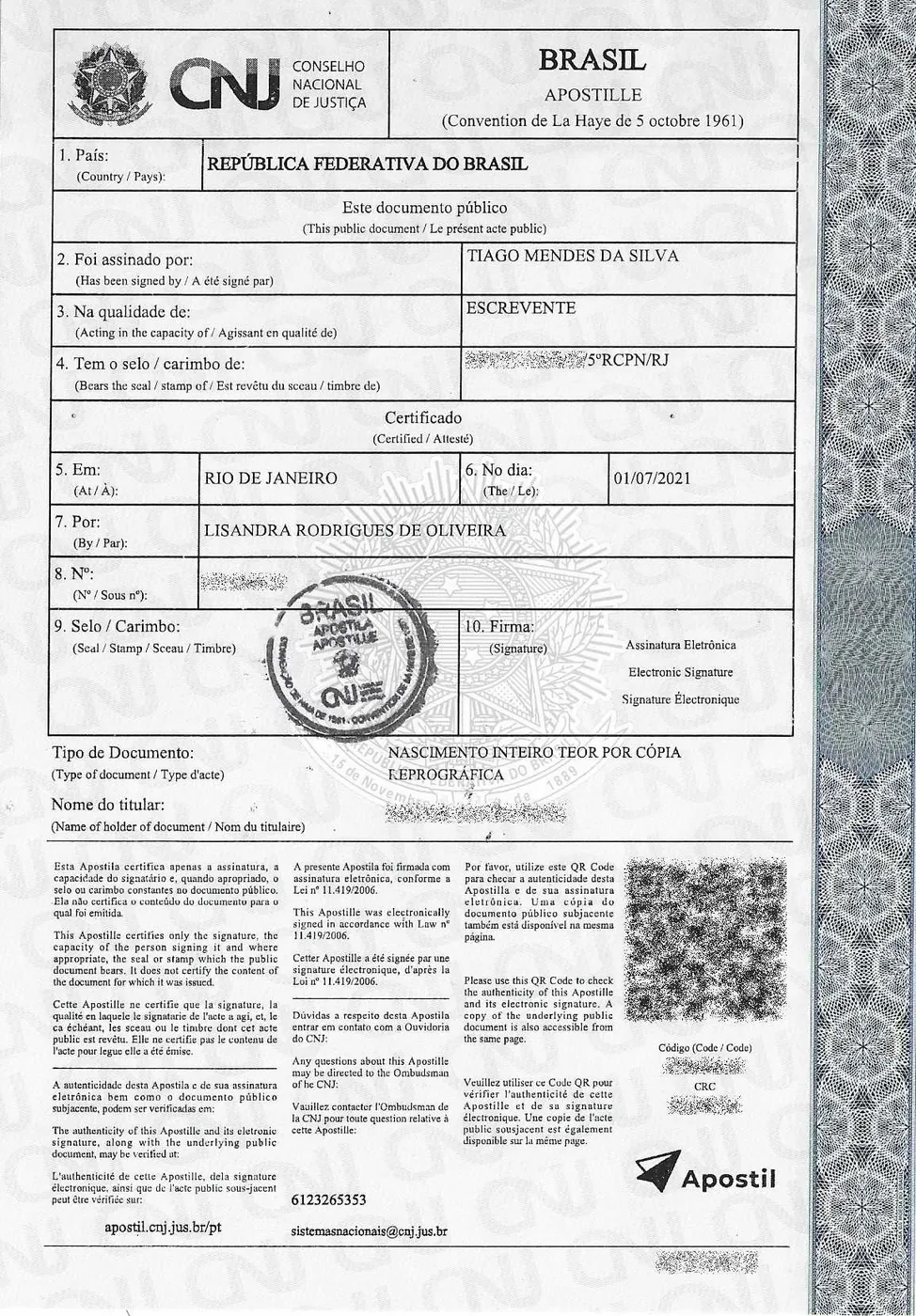
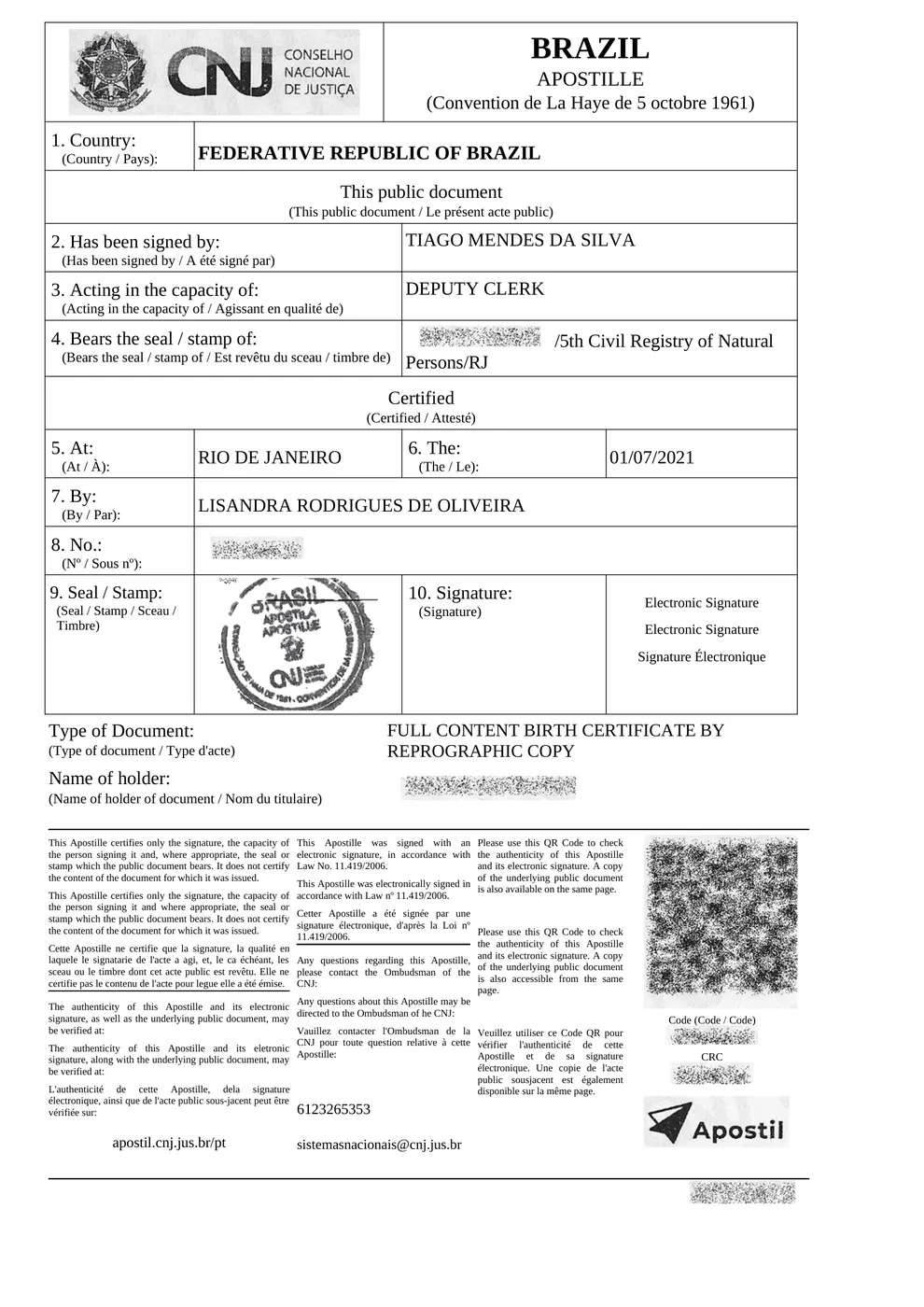
-
Ask the receiving authority what it needs. Confirm whether the marriage or divorce certificate requires an apostille, whether the office accepts your document version, and whether translation or certification is also required. Ask about the required sequence if the authority specifies one.
-
Check who issued the certificate and when. A current Ukrainian civil registry certificate, a Soviet-era Ukrainian certificate, and a document issued by another former Soviet republic don’t follow the same route. The Ministry of Justice says Soviet-era Ukrainian civil registry originals can’t be apostilled directly; obtain a repeat certificate from a civil registry office in Ukraine (Ministry of Justice explanation).
-
Prepare the document and identity proof. The Diia guide lists an identity document and the original document or a properly certified copy (Diia apostille service guide). Check whether your document is legible, intact, and complete, including any reverse side or attached page that forms part of it.
-
Confirm where you can submit it. You can apply at any civil registry office in a territorial body of the Ministry of Justice; you don’t have to return to the town where the certificate was issued (Ministry of Justice procedure).
-
Check the current fee and payment instructions. Use the current official details rather than an old receipt or a fee quoted for a previous year. Keep the proof of payment because the application is registered only when that confirmation is present (Diia apostille service guide).
-
Submit the application and track the result. The review period under Order No. 3177/5 is up to three working days from the day after registration, under the procedure in force from February 1, 2026 (Order No. 3177/5). Ask the office how it will notify you or return the document.
-
Check the apostille and arrange translation. The Ministry’s procedure describes verification through its web resource and a QR code (Ministry of Justice procedure). Then follow the foreign authority’s instructions for translating the certificate and apostille.
A common point of confusion is the difference between the official review time and the time needed to fix a document problem. If a Soviet-era Ukrainian certificate needs replacement, the apostille clock can’t start on the old document while you wait for a new one. If a payment confirmation is missing, the application may not yet be registered. Plan around the steps that happen before registration, not just the published review period.
The Ministry of Justice announced that Ukraine’s new apostille procedure took effect on February 1, 2026 (Ministry of Justice announcement). HCCH also reported that Ukraine began issuing e-Apostilles on March 1, 2026. The Ministry issues them for civil registry documents among other public documents, and a paper apostille is accompanied by a digital version of the public document available for download from the register (HCCH e-APP notification). The paper and electronic features support verification; check what form the receiving authority wants you to submit.
Translation, scans, and document details that can cause trouble
An apostille doesn’t translate a marriage or divorce certificate. It verifies the signature, the official capacity of the signer, and the seal or stamp on the public document (Ministry of Justice procedure). A translation is a separate task, and the receiving authority decides whether it needs one and what kind it accepts.
Ask whether the translation must cover only the certificate or also the apostille. If an apostille page is attached, a foreign authority may need to read the text on that page too. The receiving office’s instructions should settle the scope and the sequence. For more detail on the translation stage, see marriage certificate translation and certification.
Scanned documents need special care because a stamp is part of the official record, not a decorative mark. A translator needs to render legible stamp text as well as the printed certificate text. A blurry seal, handwritten addition, or faded signature can make a scan hard to read, and a translation can’t restore information that the image doesn’t show.
On October 30, 2026, I worked with a scanned document where the stamp stayed as a picture in its original position, with a small note in brackets directly below it containing the words read from the stamp, like “[Stamp: …]”. A translator needs those words as text because a certified translation has to translate the stamp too, and retyping a round stamp by hand is where words get lost.
That distinction is useful when you prepare a scan for translation. Preserve the stamp image and its position, but make sure the stamp’s readable wording is available to the translator as text. If the wording can’t be read from the scan, arrange a better image or ask the receiving authority how it wants the unclear part handled rather than guessing at the text.
How the file is produced can affect whether the layout survives translation. In ChatsControl, you can upload a PDF or image and receive a translated Word document that follows the page layout; for a scan, the tool reads the page first and rebuilds a formatted copy. A scan with handwriting or very poor image quality can still be read unreliably, so use a clear scan and check the result against the original. The ChatsControl document translator can help with the document translation stage, but it doesn’t issue the apostille or replace a human-certified translation when the receiving authority requires one.
Names deserve a separate check. A Ukrainian certificate may spell a name differently from a passport or a foreign record because of transliteration, a name change, or a different document date. Don’t alter the certificate during translation to make it match another document. Ask the receiving authority whether it requires an explanation or supporting document for the difference.
A repeat certificate may help if the original is lost, but it doesn’t guarantee that every foreign office will accept it for every procedure. Diia describes a repeat marriage certificate as having the same legal force as the original (Diia repeat certificate service). The foreign authority still controls its own application requirements, so confirm acceptance before arranging the apostille.
Common pitfalls and how to avoid a rejected application
Most avoidable problems start with assumptions: that every old document can be apostilled, that any copy will do, or that the apostille includes a translation. The official rules and the receiving authority’s instructions answer different questions, so check both.
Submitting a Soviet-era Ukrainian original for direct apostille. The Ministry of Justice says Ukrainian civil registry originals issued in the Soviet period aren’t apostilled directly. Its guidance points applicants to a repeat certificate from any civil registry office on territory controlled by Ukraine (Ministry of Justice explanation). Check the specific certificate before making plans, particularly if it is damaged or difficult to replace.
Treating a foreign Soviet-era document as Ukrainian. An original issued by an institution in another former Soviet republic isn’t a Ukrainian document just because it is in Russian or was issued during the Soviet period. The Diia guide says originals from institutions of former Soviet republics can’t be accepted in Ukraine for apostille. It describes a possible route using a properly certified copy or photocopy made in Ukraine, with translation where needed (Diia apostille service guide). Ask the relevant Ukrainian office and the receiving authority to confirm that route before proceeding.
Paying without checking the current amount or payment details. The 610 UAH fee for individuals applied to applications submitted from May 3 through the end of 2025, not to 2026 applications (Ministry of Justice fee notice). A payment amount or reference copied from an old page may not match current instructions.
Counting from the wrong date. Under Order No. 3177/5, the up-to-three-working-day period begins on the day after the application is registered, not when you begin preparing documents. The Diia guide says the application is registered only when proof of payment is present (Order No. 3177/5; Diia apostille guide). Keep the receipt and confirm that the application has actually been registered.
Assuming the apostille verifies the contents. An apostille verifies the signature, official capacity, and seal or stamp. It doesn’t certify that the marriage details are factually correct, settle a divorce recognition question, or translate the text (Ministry of Justice procedure). If the foreign authority is assessing the legal effect of a divorce, an apostille on a certificate may not answer every question in that process. A separate guide explains recognition of a Ukrainian divorce in Germany.
Translating only the certificate when the apostille also needs to be read. The apostille is a separate page or attachment with its own text. Ask the receiving authority whether the translation must include it, and keep the certificate and apostille together if the authority expects them to be presented as one document.
Using a blurry photo as the only translation source. A stamp, signature, or handwritten note may be less legible than the printed certificate. Send a clear image of every page and attached sheet. Don’t invent words that can’t be read; ask how the receiving authority wants an illegible section handled.
A practical checklist can help catch these issues before submission:
| Before you apply | Check |
|---|---|
| Receiving authority | Apostille, document type, translation, certification, and sequence |
| Certificate | Issuing country, issuing period, legibility, and whether it is original or certified copy |
| Old or lost record | Whether a repeat certificate is needed and accepted |
| Payment | Current amount, correct payment details, and receipt |
| Submission location | A civil registry office in a territorial body of the Ministry of Justice |
| Translation | Whether it must include the apostille and what certification the foreign office accepts |
The most expensive mistake is often not the fee itself but discovering a document mismatch after you’ve arranged a translation or submitted an application abroad. A wrong document can mean starting a stage again, arranging a new translation, or returning to the foreign authority with a different certificate. Confirming the receiving office’s requirements first is a practical way to avoid that cycle.
FAQ
How do I apostille a Ukrainian marriage certificate?
Take an identity document, the original certificate or a properly certified copy, and proof of payment to a civil registry office in a territorial body of the Ministry of Justice. You can apply at any such office in Ukraine, not only where the certificate was issued (Diia apostille service guide; Ministry of Justice procedure).
How long does it take to apostille a marriage or divorce certificate?
The procedure in force from February 1, 2026, provides for consideration within up to three working days. The period starts on the day after the application is registered in the Apostille Register, so missing proof of payment can delay the start (Order No. 3177/5; Diia apostille guide).
How much does an apostille on a marriage certificate cost in 2026?
The exact 2026 fee isn’t confirmed by the fee notice cited here. The 610 UAH fee applied to individual applications submitted from May 3 through the end of 2025, so check the current amount and payment details before paying (Ministry of Justice fee notice).
Can I apostille a Soviet-era Ukrainian marriage certificate?
The Ministry of Justice says Soviet-era Ukrainian civil registry certificates can’t be apostilled directly. Obtain a repeat certificate from a civil registry office in Ukraine, then confirm that the foreign authority accepts it for your application (Ministry of Justice explanation).
Does a divorce certificate need an apostille and a translation?
A foreign authority may require an apostille on a Ukrainian divorce certificate, but its requirements depend on the purpose of your application. An apostille doesn’t translate the document, so ask the authority whether it also needs a translation and what form of certification it accepts (Ministry of Justice procedure).
Can someone else submit my certificate for an apostille?
The Diia guide lists an identity document, the original or a properly certified copy, and proof of payment, and describes the service as available to individuals. Contact the civil registry office about any additional requirements for a representative before sending the document (Diia apostille service guide).
Does an apostille guarantee that a foreign authority will accept my certificate?
No. An apostille verifies the signature, the signer’s official capacity, and the seal or stamp. The foreign authority decides whether the document type, issue date, and translation satisfy its rules for your application (Ministry of Justice procedure).
Can an apostille be checked online?
The Ministry’s procedure describes verification through its web resource and a QR code. HCCH reported that apostilles issued by the Ministry after November 9, 2015, are available for verification through the Electronic Apostille Register (Ministry of Justice procedure; HCCH e-APP notification). The receiving authority may still require the paper document or another specified format.
Need these documents translated?
Leave your number and we will message you, tell you which certification your institution needs, and name the price. Translation, translator review and notary certification.