Yes, you can have a Ukrainian marriage certificate translated for use abroad, but translation alone may not satisfy the receiving authority. The required language, certification, and apostille depend on the destination country and the office reviewing your documents.
A marriage certificate translation can be needed for a residence permit, a family-status update, an application to a public authority, or another procedure involving proof of marriage. The useful first step isn’t choosing a translator: ask the receiving authority exactly what format it accepts. A beautifully prepared translation in the wrong certification format can still be rejected.
How marriage certificate translation works
A marriage certificate translation is a rendering of the certificate’s printed and legible marked content into another language, prepared in the form the receiving authority accepts. The translation may need to be accompanied by a notarial certification, an apostille, or another official procedure. Those requirements are separate: an apostille doesn’t translate the text, and a translation doesn’t itself prove that the certificate is authentic.
Start with the office that will receive the document. Ask for the required language, whether it accepts a translation certified by a Ukrainian notary, whether the original or a copy must be submitted, and whether an apostille or legalization is required. If the office gives you written instructions, keep them and share them with the translator.
The notarial form depends on who can attest to the translation. Article 79 of Ukraine’s Law on Notaries provides for a notary to certify the accuracy of a translation when the notary knows the relevant languages. If the notary doesn’t know those languages, a translator prepares the translation and the notary certifies the authenticity of the translator’s signature. The law’s Article 79 describes these two routes.
Ukraine’s Ministry of Justice says that a translator whose signature is to be notarized must provide identification and evidence of qualifications. The Ministry also says a notary can certify a translation if the notary knows the languages involved. Check the current instructions with the notary before booking, because the notarial procedure depends on the form of certification you need. The Ministry’s translation guidance explains the requirements.
For an overseas submission, distinguish three questions:
- Does the receiving authority require proof of authenticity? An apostille or legalization may be part of that requirement.
- Does it require a translation? If so, identify the accepted language and certification.
- What must be translated? The answer may include an apostille, seals, stamps, and endorsements, not only the main printed text.
Apostille requirements aren’t universal for Ukrainian documents. Ukraine’s Ministry of Justice says that an exemption from apostille doesn’t remove a destination country’s separate requirement for a certified translation. The Ministry’s explanation of exemptions from legalization and apostille makes that distinction.
For certificates of marriage and other Ukrainian civil-status documents, the competent authority for apostilles is Ukraine’s Ministry of Justice. Ukrainian embassies and consulates don’t issue apostilles for those documents, according to the Ukrainian Embassy in Hungary. The Hague Conference’s competent-authority listing for Ukraine also identifies Ukrainian authorities for the documents covered by the Convention.

How to prepare your certificate, step by step
A complete request starts with the receiving authority’s rules, not a guessed package of translation, notarization, and apostille. Use the following checklist before sending a document or paying for a service.
- Check the receiving authority’s rules. Ask which language it accepts, whether it requires a certified translation, whether it accepts Ukrainian notarial certification, and whether an apostille or legalization is necessary. Ask whether the authority needs the original certificate or will accept a certified copy.
- Check the certificate itself. Look at the names, dates, issuing details, and every seal, stamp, or handwritten mark. If the certificate is damaged, faded, or difficult to read, ask the receiving authority whether it will accept it before you pay for translation.
- Send a clear scan for a preliminary review. Include the whole page and all edges, not a cropped image of the main text. Tell the translator the destination country and purpose, and share the spellings of names shown in the passports you plan to submit.
- Confirm the apostille and translation order. Ask whether an apostille is needed and whether the authority expects the original certificate to receive it. Find out whether the apostille must also be translated.
- Choose the required certification. Confirm whether a Ukrainian notarized translation is acceptable or if the authority requires a sworn translator, a local translator, or another form. Don’t treat these labels as interchangeable.
- Review the finished work against the original. Check names, dates, registration details, stamps, seals, and endorsements before submission. Ask the translator to flag anything illegible instead of guessing at a word or leaving out a mark without explanation.
A scan is an image, not editable text. A reader has to identify what is printed before a translator can translate it. Stamps can be harder to read than typed lines, and a cropped or blurry image can hide a date, a seal, or a line at the page edge. Send a complete, clear image, but don’t assume that a scan accepted for a quote will also meet the receiving office’s document rules.
In ChatsControl, you can upload a PDF or a photo for text recognition and a formatted Word translation. The system reads the page, rebuilds its layout, and places stamps and signatures as images; that can help you review the document’s structure, but handwriting and severely degraded scans can still be read unreliably. ChatsControl’s document translator is a translation option, not a substitute for confirming which certification the receiving authority requires.
On a scanned document the stamp stays a picture where it was printed, and right under it goes a small note in brackets with the words read off it, like “[Stamp: …]”. A translator needs the stamp’s words as text, because a certified translation has to translate the stamp too, and retyping a round stamp by hand is where words get lost.
That distinction matters when you review a translation: the image preserves the stamp’s appearance, while a bracketed note gives the reader its words. Ask how the translator will represent a stamp that can’t be reproduced as editable text, and make sure the readable content hasn’t disappeared from the translation.
For a Ukrainian document translated in Ukraine, a notary may certify the translation or the translator’s signature, as described in Article 79 of the Law of Ukraine on Notaries. A notary’s signature certification isn’t the same thing as the notary personally confirming the accuracy of a translation in a language the notary doesn’t know. Ask which form will appear on the final document.
How much does a marriage certificate translation cost?
The total price depends on the language, the certification form, whether an apostille is needed, and what the receiving authority expects you to submit. Ask for a quote for the complete package rather than comparing a translation-only rate with a quote that includes certification.
| Service item | ChatsControl listed price | What to confirm |
|---|---|---|
| Certified translation | 300-750 UAH per 1,800 characters | The rate depends on the language. Confirm the amount for your language and full document. |
| Notarial certification | 400 UAH per document | Confirm which form of certification the receiving authority accepts. |
| Apostille | 2,100 UAH per document | Order one only after checking whether the receiving authority requires it. |
The listed amounts come from the ChatsControl certified-translation service pricing for this article dated November 2026. The certified translation service involves a human translator and notarial certification when required; it isn’t an instant automated stamp. Confirm the current quote and document requirements before proceeding.
An apostille is a separate step from translation and notarization. Adding one without checking the destination rules can mean paying for a procedure the receiving office didn’t ask for. Skipping one when the office does require it can leave you with a translation package that isn’t ready to submit.
The European Union’s public-document rules illustrate why a broad answer can mislead. The EU rules cover public documents issued in one EU country and presented to an authority in another EU country; they shouldn’t automatically be applied to a Ukrainian certificate issued outside the EU. The Your Europe guidance explains the scope.
The same EU guidance says that some documents covered by the rules may not need an official translation if they’re in an accepted language, and that multilingual standard forms can help with translation. Those provisions don’t mean every Ukrainian certificate is exempt from translation or apostille requirements. Ask the authority handling your particular application.
What documents can be translated, and what can cause problems?
A translation can cover a legible marriage certificate and its readable marks, but the translator can’t make an unclear or damaged document acceptable to a foreign authority. Check whether your certificate’s condition, age, or format will be accepted before ordering the final version.
Ukraine has certificates from different periods and formats. The UK government’s profile of Ukraine describes Soviet-style marriage certificates from approximately before 1992 and Ukrainian-style certificates from 1992 onward. An older format can affect readability and available details, so show it to the receiving authority if you’re unsure whether it will accept the document. See the UK government Ukraine profile, updated 9 September 2025.
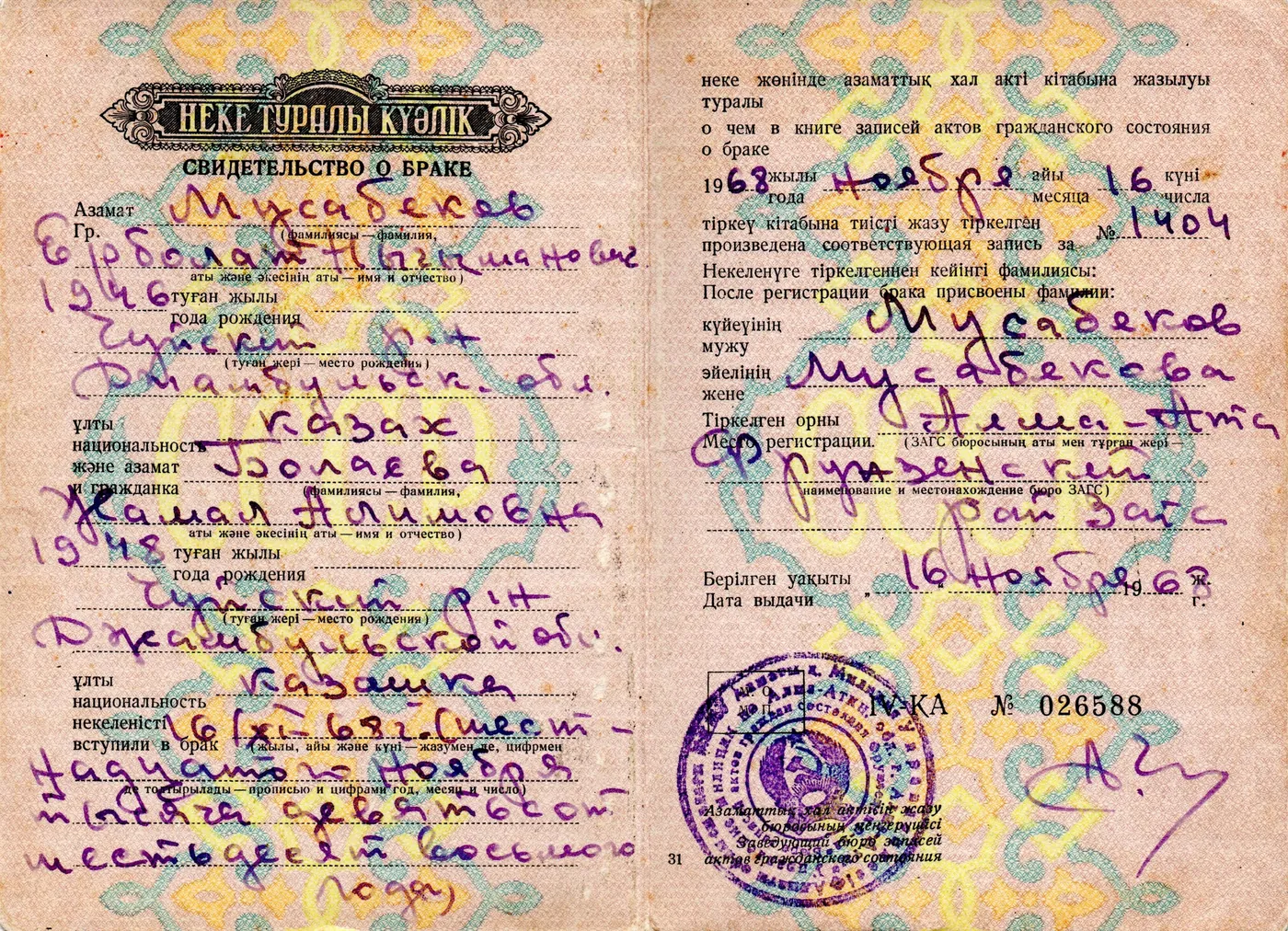
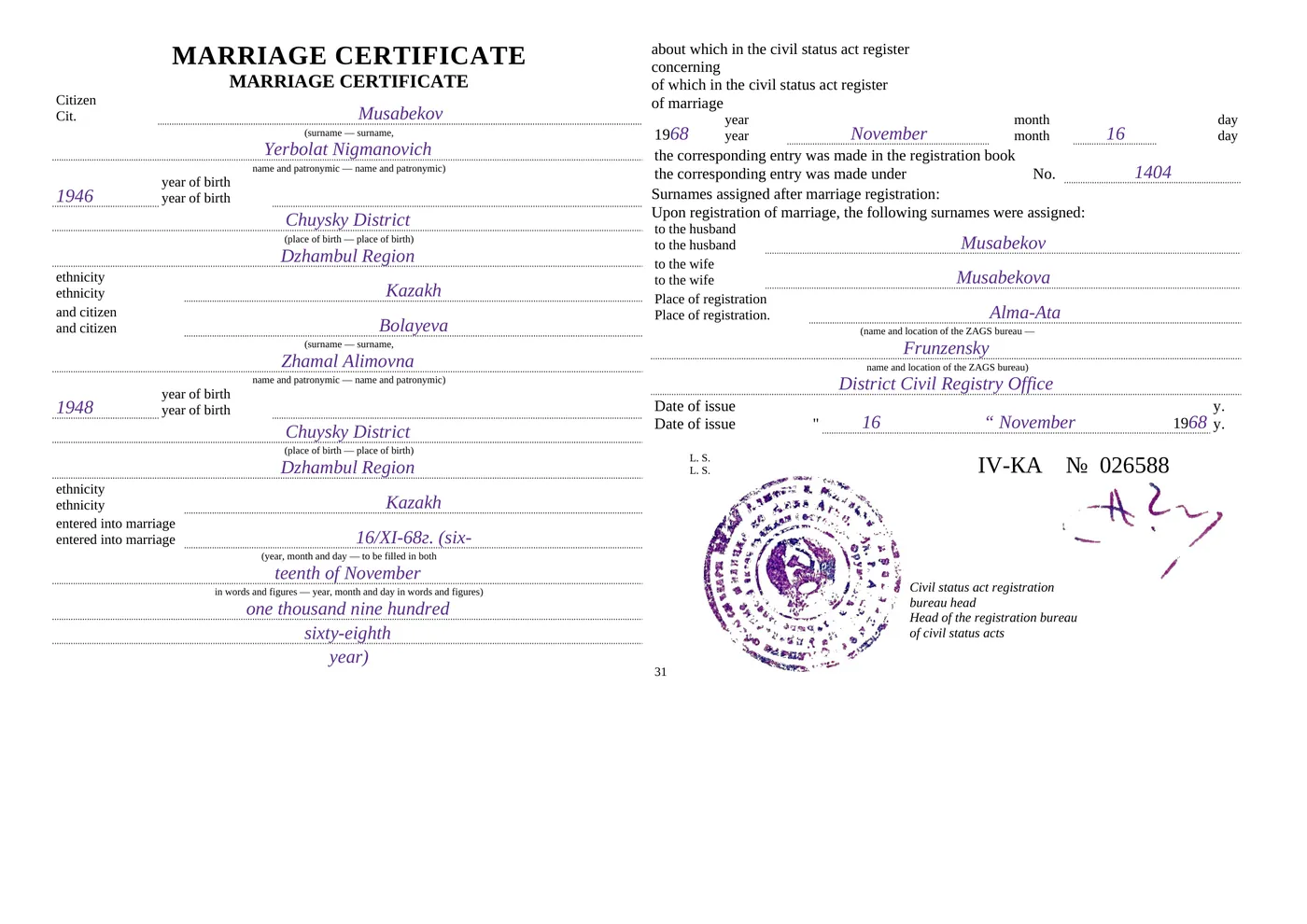
A translation doesn’t repair a missing seal or make a faded entry legible. If a name or date can’t be read, the translator should identify the uncertainty rather than invent a spelling. A receiving authority may also want a replacement certificate or another document; the translator can’t decide that requirement on the authority’s behalf.
Name consistency deserves particular attention. A transliteration can differ from the spelling used in a passport, especially when a document and passport were issued at different times or use different spellings. Share the passport spelling with the translator and ask the receiving authority how it handles discrepancies. Don’t alter the source document’s content to force a match.
A full translation may need to include certification notes and marks in addition to the certificate text. The Ukrainian Consulate in Porto, for example, says its translation-certification service requires the translation to cover the full text, including seals, stamps, previous certification endorsements, and signatures. Those are instructions for that particular consular service, not a rule for every foreign authority; check the Consulate’s requirements.

A phone photo can be enough to assess whether the page is legible and to prepare a preliminary quote. A photo doesn’t establish that the original is unnecessary for notarization or submission. Ask the translator and the receiving authority separately: one question concerns whether the work can be prepared from an image, and the other concerns what document the authority will accept.
Will an embassy or government office accept the translation?
No translation format is accepted everywhere. A Ukrainian notarial translation may be suitable for one authority and unsuitable for another, which is why you need the destination office’s instructions before choosing the service.
The EU rules on public documents concern authenticity, not automatic recognition of a document’s legal effect. Your Europe puts the distinction this way:
“These rules only apply to the authenticity of public documents, not the recognition of their legal effects outside the EU country where they were issued”
In other words, a process that confirms a document’s authenticity doesn’t decide whether the destination country recognizes the marriage or its legal consequences. National law in the country receiving the document determines those consequences, as the EU guidance on public documents explains.
Country-specific instructions can differ. The Ukrainian Consulate General in Milan says that documents submitted to Italian authorities need legalization and an Italian translation, and advises using sworn translators in Italy. That is guidance for submissions to Italian authorities, not a universal instruction for every country. Read the Milan Consulate’s civil-status guidance and check the requirements of the office receiving your application.
Before ordering, ask the authority these questions in writing:
- Does it require an apostille or consular legalization for this Ukrainian marriage certificate?
- Must the apostille be attached to the original, a copy, or another document?
- Does it accept a translation certified by a Ukrainian notary?
- Does it require a sworn translator in the destination country?
- Must the translation include the apostille, seals, stamps, and prior endorsements?
- Will it accept a scan for review, or must you submit the original or a certified copy?
If a public office, university, embassy, or immigration authority refuses the translation, ask which exact requirement wasn’t met. The cause could be the apostille, the translator’s status, the language, a missing stamp translation, or the document format. A specific reason helps you order the right correction rather than paying to repeat the entire process blindly.
For consular legalization of Ukrainian civil-status documents, Ukraine’s Ministry of Foreign Affairs says that it accepts documents issued or certified by territorial departments of the Ministry of Justice. The Ministry also says that a copy or official translation of a Ukrainian document must first be certified by the Ministry of Justice before legalization. Check the Ministry of Foreign Affairs consular-services guidance for the procedure that applies to your case.
How to order the right version
A request is easier to assess when it includes the complete certificate, destination, purpose, and the receiving authority’s instructions. Send those details together so the translator can quote the required work rather than guessing which certification to include.
- Check the receiving authority’s rules. Ask which language, translation certification, apostille or legalization, and document format it requires.
- Check the certificate. Review the names, dates, issuing details, seals, stamps, and handwritten text; ask about a replacement if the document is unreadable or unacceptable.
- Send a clear scan for review. Share a full-page image and tell the translator the destination country and purpose.
- Confirm the apostille and translation order. Find out whether an apostille belongs on the original and whether it must be translated.
- Choose the required certification. Confirm whether the authority accepts a Ukrainian notarial translation or requires another format.
- Review the finished translation. Compare names, dates, certificate details, stamps, and endorsements with the original before submission.
ChatsControl offers a human certified-translation route for documents that need legal certification. The service lists translation at 300-750 UAH per 1,800 characters, notarial certification at 400 UAH per document, and an apostille at 2,100 UAH per document in the November 2026 pricing information above. The right combination depends on the receiving authority; a translation service can’t determine whether that authority will accept a particular format.
If you only need a readable translation for your own review, an automated document translation may be enough. If the receiving office requires a sworn translation or a notarized signature, use a human service that can provide that format. A certified or sworn result includes a human step and isn’t the same as an automatic translation file.
FAQ
How much does a notarized marriage certificate translation cost?
ChatsControl’s listed certified-translation price is 300-750 UAH per 1,800 characters, depending on the language, with notarial certification listed at 400 UAH per document. The service lists an apostille at 2,100 UAH per document; confirm whether your receiving authority requires one before including it.
Does a Ukrainian marriage certificate need an apostille for use abroad?
Not in every case. The requirement depends on the destination country, any applicable international agreement, and the office receiving your documents. Ask the authority before arranging an apostille.
Should I get the apostille before or after translation?
Ask whether the apostille must be attached to the original certificate and whether its text must appear in the translation. When the authority requires an apostilled original and a translation of the complete document, arrange the apostille first and have the apostille translated as part of the document.
Will a foreign authority accept a translation certified by a Ukrainian notary?
Acceptance depends on that authority’s rules. Ask whether it accepts a Ukrainian notarial translation or requires a sworn translator or another form of certification; don’t assume that a notary’s certification has the same effect in every country.
Can I translate a marriage certificate from a photo or scan?
A clear photo or scan can help a translator assess the document and prepare a preliminary quote. The receiving authority or notary may still require the original or a notarized copy, so confirm that separately before ordering.
Does the translation have to include stamps and handwritten marks?
Ask for a complete translation of all readable text that the authority requires, including stamps, seals, signatures, and certification endorsements. Unclear handwriting should be identified as unclear rather than guessed at or silently omitted.
What if the names on the certificate differ from our passports?
Give the translator the passport spellings and ask for a careful comparison across the documents in your application. The receiving authority decides how it handles differences, so ask whether it needs an additional explanation or supporting document.
Need these documents translated?
Leave your number and we will message you, tell you which certification your institution needs, and name the price. Translation, translator review and notary certification.