A diploma translation can look complete and still leave an application short: the supplement, a stamp, or a record of earlier education may be missing. Recognition is a document-by-document process, so the translation plan matters as much as the main certificate.
What recognition means and who handles it
Ukraine’s official term is recognition of foreign education documents. “Nostrification” is the widely used older name for the procedure, whose purpose is to support further study and/or professional activity in Ukraine, according to the Education Ombudsman’s guide dated 2023-04-21.
For higher education documents, the competent body depends on what you need the recognition for. A Ukrainian higher education institution can handle recognition when you want to study at that institution. The Ministry of Education and Science of Ukraine handles recognition for study in Ukraine and/or professional activity, under the procedure in Order No. 504 as amended by Order No. 784, in force since 2022-11-01.
Documents for general secondary, vocational and professional pre-higher education fall under the same order and its amended procedure. The first practical question, then, isn’t “Where can I get a diploma translated?” It’s “Which authority will receive my application, and what does it require for this type of education document?”
The word “recognition” also helps keep separate steps from being confused. Recognition assesses a foreign education document for use in Ukraine. Translation makes its content readable to the authority. Authentication, such as an apostille where required, concerns the document’s official status in its country of origin. One step doesn’t automatically replace another.
A translation agency or translator can prepare the Ukrainian text, but the competent authority decides what the application needs and whether the submitted materials meet its rules. Don’t rely on a checklist for a different country or assessment system. Requirements for WES, for example, aren’t the Ukrainian recognition procedure.
Which documents may need translation
The main document is only one part of the file. Under point 1 of Section IV of the recognition procedure, the package includes a copy and Ukrainian translation of the education document, certified in the legally prescribed manner. It also includes a copy and translation of the supplement and/or other documents describing the programme’s content and learning results.
The exact supporting records depend on the application. The procedure also provides for copies of previous education documents, official confirmation of academic or professional rights in the country of origin, and identity documents for the applicant and the document owner when those people are different. Treat those as possible parts of the package, not as a reason to translate every document you own.
| Document or record | Why it may be part of the package | Translation planning |
|---|---|---|
| Diploma, certificate or other education document | Identifies the qualification being submitted for recognition | Translate the complete document, including printed details and visible entries |
| Diploma supplement or transcript | Describes subjects, programme content or learning results | Check every page and table; don’t assume the diploma alone covers the academic record |
| Other programme or learning-results records | May supply information not shown in the diploma or supplement | Match the document to the authority’s request before ordering translation |
| Previous education documents | May be required to establish earlier education | Confirm which previous documents apply to your case |
| Confirmation of academic or professional rights | May show the rights attached to the qualification in its country of origin | Check whether the authority requires official confirmation |
| Applicant and document-owner identity documents | Relevant when the applicant and the education-document owner are different people | Confirm whose identity documents are required |
The legal requirement is not simply “translate the diploma.” The procedure names the education document and its supplement and/or other records about programme content and results. A translation quote based only on the diploma can miss pages that the authority later needs.
The procedure asks for “a copy and translation into Ukrainian of the Document, certified in accordance with the procedure established by law.” - Order No. 504, Section IV, point 1
That wording connects three details: the copy, the Ukrainian translation, and the required certification. Ask the receiving authority what form of certification it expects before paying for a translation or arranging a notarial step.
An electronic education document may be submitted with a Ukrainian translation certified in the prescribed manner in the cases provided for by the procedure. The authority may still ask you to present the original paper document, under the same procedure, in force since 2022-11-01.
A practical checklist before requesting a quote:
- The diploma or certificate, including every page.
- The supplement or transcript, including all pages and tables.
- Any additional programme or learning-results records requested for the case.
- Previous education records, if applicable.
- Official confirmation of academic or professional rights, if applicable.
- Identity documents for the applicant and document owner, if they’re different.
- The apostille or other authentication attached to a document, if required for that country and document.
- A clear scan or photo of every page, including the reverse when it contains text, marks or stamps.
A list like this helps you get a quote for the full set rather than a single title page. The receiving authority’s instructions still take priority: don’t order translations of extra records just because they appear on a general checklist.
Translation bureaus, freelancers and online tools
Three routes can work for a Ukrainian translation: a translation bureau, an independent translator, or an online document-translation tool. The right fit depends on the file, the certification wording and how much checking the document needs.
A bureau can coordinate translation and a human certification step, which is useful when you need one point of contact for a multi-document package. Ask whether the quote covers both the diploma and supplement, how stamps and handwritten entries are handled, and what form of certification is included. A bureau quote may separate translation, notarial certification and authentication charges.
A freelancer can be a direct option when the document is clear and you already know what certification the authority requires. Agree on the target language, page count, treatment of names and stamps, and whether the translator can arrange or support the required certification. A low quote for the main text doesn’t necessarily include the supplement or the notarial step.
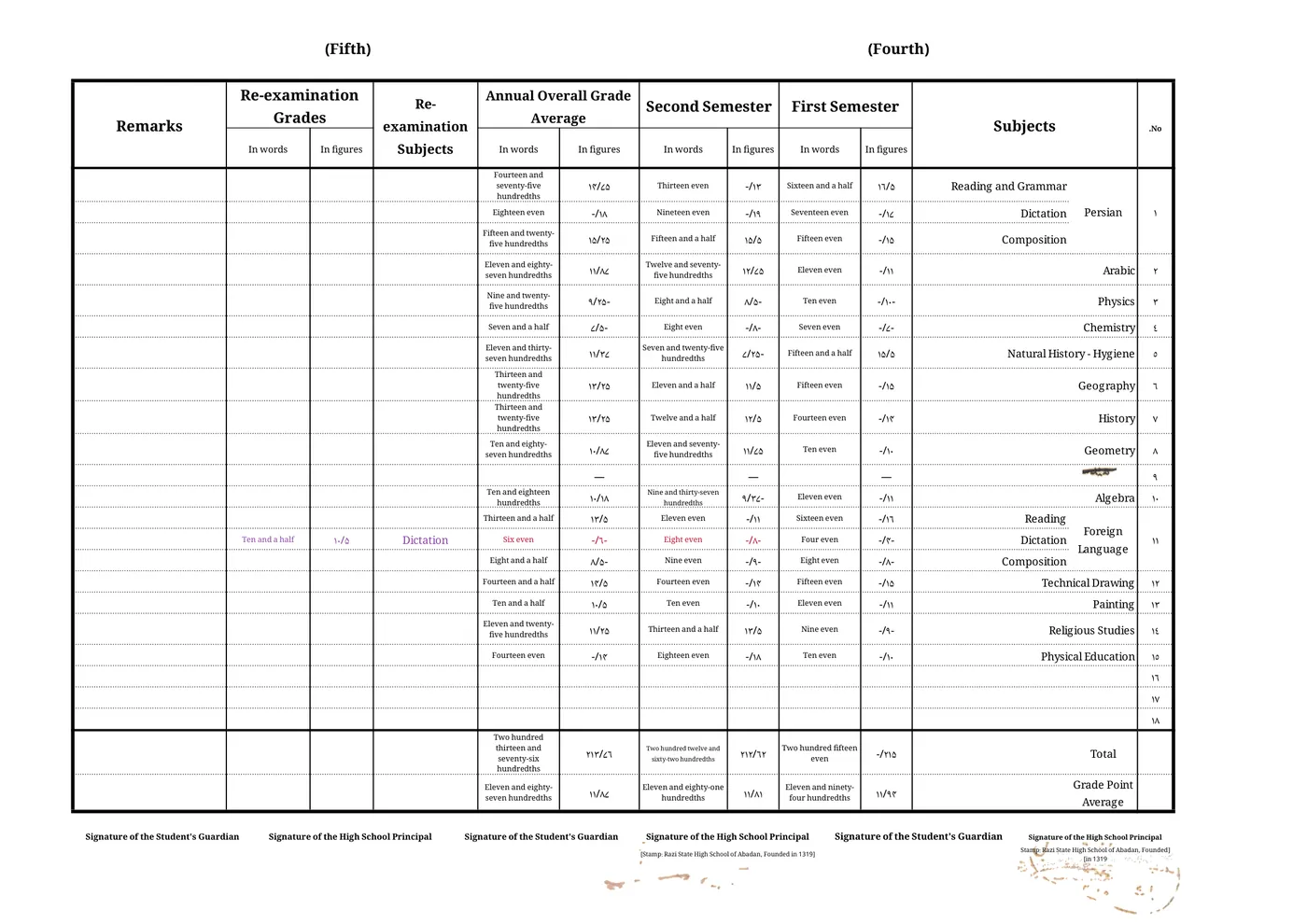
An online tool can help when you need a working translation or a formatted draft, especially if a scan contains tables and repeated fields. In ChatsControl, you upload a DOCX or PDF, the service translates the document while preserving its layout, and you receive a Word file. Scanned PDFs and photos can be read first and rebuilt as formatted Word documents; stamps and seals stay positioned as images, while recognized text can be represented in the document.
A tool-generated translation isn’t automatically a certified translation. ChatsControl offers a human certified-translation route through a partner translator for documents that need legal certification, so the human review and certification remain a separate step. Handwriting and very poor-quality scans can be read unreliably, and those cases need human checking against the original.
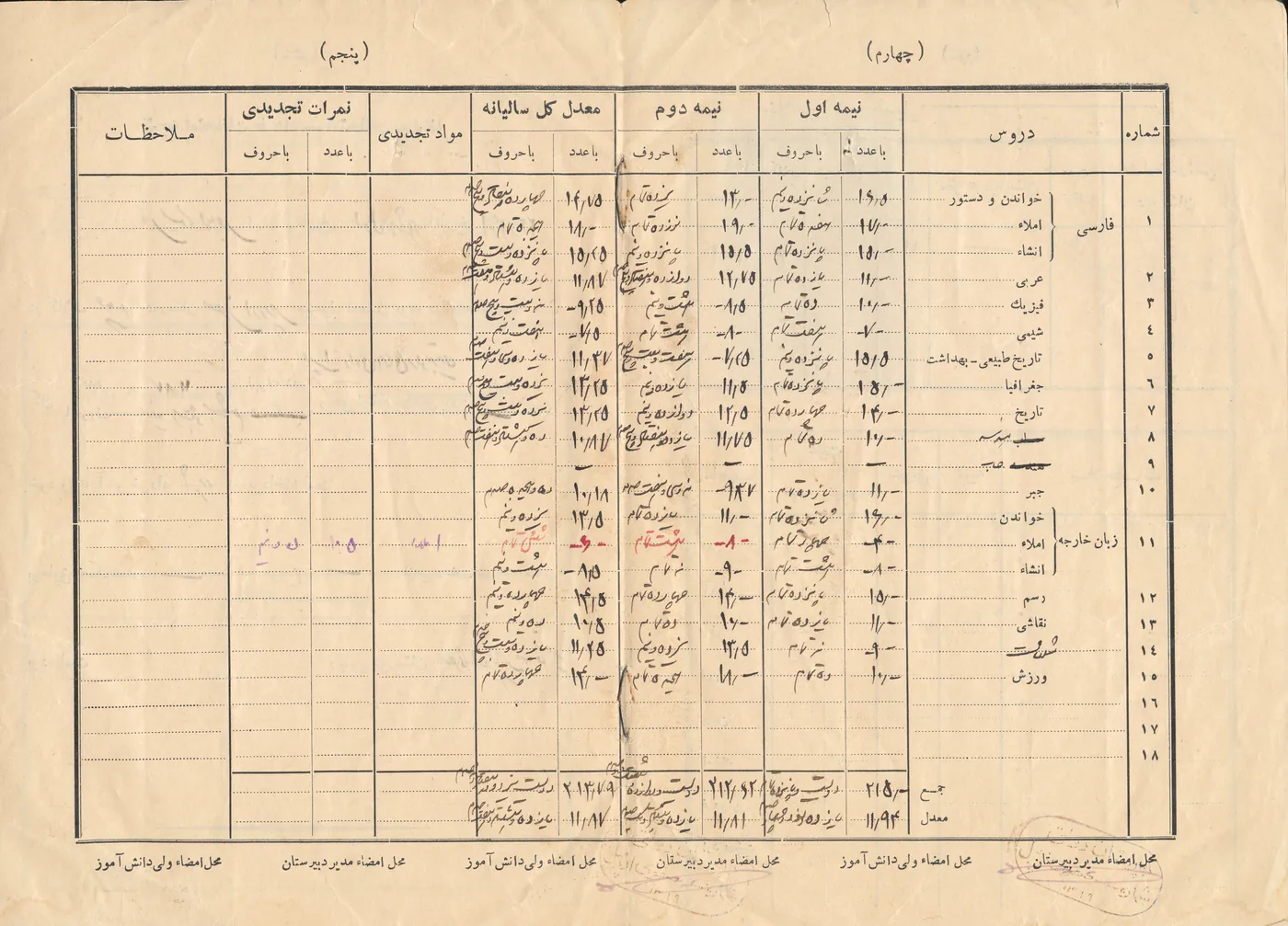
The scan itself explains why quality matters. A scan is an image, not editable text. The text must first be read from the image, and a printed line is generally easier to interpret than a faint stamp, a handwritten date or a blurred name. A translation can preserve the page’s structure and still need a person to resolve uncertain words.
On 2026-11-13, a man in Germany uploaded three photos of Kurdish school documents at four in the morning because he needed them in German for the ZAB, the office that rates foreign education. Sorani Kurdish is written in Arabic script, and the documents were phone photos of paper forms with stamps. The case shows why a photo’s language, script and image quality all matter before anyone can promise a finished translation.
For Ukrainian recognition, the same practical check applies: tell the translator what language the document is in, whether the file is a scan or photo, and whether stamps or handwritten parts need to be read. A translator who sees only a file name can’t assess those details.
Compare the options before you order
A translation quote should make clear what you receive, what certification is included and what still depends on the authority. Use the table below to compare the three routes rather than comparing a per-page price without scope.
| Option | Useful when | Questions to settle first | Main limitation |
|---|---|---|---|
| Translation bureau | You want translation and coordination of a certification step through one provider | Does the quote include the supplement, stamps, certification and any delivery? | Separate services can appear as separate charges |
| Independent translator | You have a clear brief and know the required certification format | Who certifies the translation or translator’s signature, and is that accepted by the recipient? | You may need to coordinate the notary or other steps yourself |
| Online document tool | You need a formatted draft from a DOCX, PDF, scan or photo | Does the result need human review or legal certification? Can the scan be read reliably? | Automated output isn’t a substitute for required certification or checking difficult handwriting |
Notarial certification is not one single action in every case. Article 79 of Ukraine’s Law on Notaries, in the version dated 2026-10-23, distinguishes a notary certifying the accuracy of a translation when the notary knows the relevant languages from a notary certifying the translator’s signature when a translator prepared it. The receiving authority’s wording should determine which form you arrange.
Article 79 distinguishes certification of the accuracy of a translation from certification of the translator’s signature. - Law of Ukraine on Notaries
The distinction matters because a translated text and a notarized translator’s signature are not the same thing. Ask the authority which one it expects, then share that exact wording with the translator or bureau.
| What you’re comparing | Bureau | Freelancer | Online tool |
|---|---|---|---|
| Human translation | Ask who translates and who checks the work | Confirm the translator’s role and subject familiarity | Automated translation can provide a draft; human review may still be needed |
| Layout and tables | Ask whether the delivered file follows the original | Confirm the format before sending a scan | A document tool can retain document structure, but review the result |
| Certification | Confirm whether it is included or arranged separately | Confirm who handles the required notarial step | Certification is a separate human service where legally required |
| Stamps and seals | Ask how each mark is rendered and translated | Include stamp text in the brief | A scan workflow can preserve the stamp image, but its wording needs checking |
| Difficult scans or handwriting | Ask whether the translator checks against the original | Send the clearest source available | Very poor scans and handwriting can be unreliable |
One useful approach is to separate the task into two decisions. First decide what the authority requires: translation, certification, authentication, or some combination. Then decide who can provide each part. A service that translates well may not handle authentication, while a provider who arranges an apostille may not include translation.
A step-by-step plan for preparing the package
A complete process starts with the receiving authority’s requirements, not with a request for “a notarized diploma translation.” The phrase can mean different things, and a wrong assumption can leave you with a correctly translated document in the wrong format.
-
Identify the receiving authority and purpose.
Decide whether you’re seeking recognition for study at a particular Ukrainian higher education institution or for study and/or professional activity through the Ministry of Education and Science. The competent-body distinction for higher education documents appears in Section II of Order No. 504 as amended by Order No. 784, in force since 2022-11-01. -
Ask for the complete document list and certification wording.
Find out whether the authority needs the diploma, supplement, prior education records, proof of academic or professional rights, identity documents, or other programme records. Ask whether it needs the translation certified in a particular way. A precise written instruction is more useful than a general request for “notarization.” -
Check authentication for the country and document.
Section IV requires documents listed in specified parts of the package to be authenticated in the country of origin using a method officially applied there. An apostille or legalization therefore depends on the country and document; don’t order the same authentication automatically for every diploma. The rule appears in Order No. 504 as amended by Order No. 784, in force since 2022-11-01. -
Make a page-by-page inventory.
List the diploma, supplement and supporting records separately. Note whether each has a stamp, seal, handwritten entry, reverse-side text or attached authentication. A diploma and its supplement can be separate documents for apostille purposes when an apostille is required. -
Send readable copies for a scope check.
Share every page with the translator or bureau and state the target language, purpose and required certification. Don’t send an original education document by post to the Information and Image Centre. Its guidance says preliminary materials can be sent by post, while originals are presented during an in-person visit. The Education Ombudsman’s guide describes the process as of 2023-04-21. -
Review names, dates, marks and tables.
Compare the translated version against the source. Check the spelling of names, qualification titles, dates, subject names and grades. Confirm that every page and stamp has been addressed, and that tables haven’t lost their headings or relationships between columns. -
Arrange the required certification and assemble the final set.
Use the certification form stated by the authority. Keep each original, copy, translation and authentication together in the order the authority requests. An electronic document may be accepted with a properly certified Ukrainian translation in the cases provided for by the procedure, but the paper original may still be requested.
The Information and Image Centre says it analyses materials submitted for preliminary review within 10 working days after receipt and then contacts the applicant for a consultation, according to its guidance dated 2023-04-21. That preliminary review is separate from the decision period for recognition.
A translation workflow can help with the review step when formatting makes it hard to compare pages. ChatsControl displays the source and translation side by side, with translated text highlighted and the original available on hover. That view can help you spot a missing line or mismatched entry, but it doesn’t decide whether a translation meets the authority’s certification rules.
“Original education documents must not be sent by post.” - Information and Image Centre guidance
The practical consequence is simple: mail preliminary materials only through the route the Centre describes, and keep original education documents for the in-person stage if required. Don’t confuse mailing an application package with mailing the original diploma.
What can go wrong, and how to reduce the risk
The most expensive mistake may be preparing a complete translation of the wrong set of documents. An incomplete package can be returned without consideration within 15 working days, according to the source dated 2026-10-30. The return can mean preparing the missing material and moving the submission date; the cited guidance doesn’t state a separate fine for a translation error.
A decision period of up to 45 calendar days begins after all documents and information have arrived, not simply from the date of the first submission. Requests for missing information can affect the start or completion of that period, according to the recognition guidance dated 2026-10-30. Treat the 45 days as the period for a complete file, not a guaranteed count from the first contact.
“I translated it myself. I asked a friend with a translator’s diploma to sign it, then had his signature certified by the nearest notary. It all worked.” - A forum participant discussing WES assessment
That account describes an individual WES case, not a rule for recognition in Ukraine. Requirements from one assessment system don’t transfer automatically to another. Use the receiving authority’s wording and the distinction in Article 79 of the Law on Notaries, in the version dated 2026-10-23.
Apostille timing and charges also need careful checking. The Centre’s page lists regular apostille processing as 30 working days in its service table, while another part of the page describes regular document processing as 40 working days. The page itself therefore presents different timeframes for different service information; check the current calculator or written confirmation before payment. The figures are stated on the Centre’s page before 2026-12-01.
The same page lists a regular apostille at 300 UAH per document, plus a mandatory 51 UAH administrative fee for an individual for each apostille, for the tariff before 2026-12-01. A diploma and supplement count separately when each needs an apostille. Those are apostille charges, not translation costs or a recognition fee. The page says Centre service tariffs rise from 2026-12-01, so don’t carry the listed amounts forward past that date without checking the current tariff information.
The Centre’s table also lists urgent apostille processing without a request in 2 working days at 960 UAH per document, plus the separate 51 UAH administrative fee for an individual per apostille, for the tariff before 2026-12-01. The urgent service and regular service are distinct; confirm the applicable service and total before paying through the Centre’s tariff page.
The Centre treats the document and its supplement as separate documents, each requiring its own apostille and administrative fee if an apostille is needed for the country of origin, according to its document list dated 2026-11. An apostille on the diploma doesn’t automatically cover the supplement.
On a scanned document, the stamp stays as a picture where it was printed, with a small note in brackets right under it containing the words read from the stamp, such as “[Stamp: …]”. I use that format because a certified translation needs to translate the stamp too, and retyping a round stamp by hand is where words get lost. The note makes the stamp’s text visible to the translator without pretending the image itself is ordinary typed text.
A scan tool can preserve a stamp’s position and image, but a person still needs to check the words and the final certified version. ChatsControl can rebuild a scan into a formatted Word file; handwriting and very poor-quality scans remain unreliable, so send a clearer image or ask for human review where the stamp is hard to read.
Regional and submission differences
The translation target is Ukrainian, but the institution receiving the application changes the first steps. For higher education, a university can handle recognition when the purpose is study at that university. The Ministry of Education and Science handles recognition for study in Ukraine and/or professional activity, under Section II of the procedure, in force since 2022-11-01.
The submission route can also differ by stage. The Information and Image Centre describes a preliminary review, a personal account for submission and status tracking, and in-person presentation of originals. Its guidance says materials for preliminary review can be sent by post, but original education documents shouldn’t be mailed. Those details come from the Centre guidance dated 2023-04-21.
Authentication depends on the country where the document was issued and the officially applied method there. The recognition procedure doesn’t make one apostille rule fit every country. Check the specific document and country before ordering an apostille or legalization, and ask the receiving authority if the instruction isn’t clear.
The Centre’s apostille page says the applicant is responsible for preparing the package, the accuracy of information and the authenticity of documents. It also says applications must be completed in Ukrainian, legibly and without corrections, according to its document list dated 2026-11. Those requirements concern the apostille application and shouldn’t be confused with the separate recognition decision.
A recognition procedure doesn’t have a fixed fee set in Order No. 504, according to the guidance dated 2026-10-30. Ask the competent authority about its current payment requirements. Keep that possible fee separate from charges for translation, apostille, verification or support.
FAQ
Which education documents need translation for recognition in Ukraine?
The package can include the diploma or certificate, its supplement, and other records about the programme and learning results. Previous education records, proof of academic or professional rights, and identity documents may also be needed for the case.
Does a diploma translation for recognition in Ukraine need notarization?
The translation and copies must be certified in the manner set by law. The required notarial step depends on the receiving authority’s wording and may involve certification of the translation or certification of the translator’s signature.
Do I need to translate the apostille and diploma supplement?
The supplement and other required education records need Ukrainian translations. If an apostille is part of the submitted document, confirm with the receiving authority how it must be presented and translated.
How long does recognition of a foreign education document take in Ukraine?
The decision period is up to 45 calendar days after all required documents and information have arrived, according to the source dated 2026-10-30. A request for missing information can affect when that period starts or finishes.
What happens if my recognition application is incomplete?
An incomplete package may be returned without consideration within 15 working days, according to the source dated 2026-10-30. You may then need to prepare and submit the missing material again.
Can I send original education documents by post?
The Information and Image Centre says not to send original education documents by post. Its process allows preliminary materials to be sent by post, with originals presented in person.
Can I translate my own diploma for recognition?
The key requirement is a translation certified in the legally required manner, not simply a translated text. Confirm the receiving authority’s exact certification wording before deciding who should translate and certify it.
Is there a fixed fee for recognition of a foreign diploma?
The recognition procedure doesn’t set a fixed fee in the cited guidance. Check the competent authority’s current payment requirements and keep them separate from translation, verification or apostille charges.
Need these documents translated?
Leave your number and we will message you, tell you which certification your institution needs, and name the price. Translation, translator review and notary certification.