A €50 consular fee and a possible six-month wait for an appointment can shape an education plan for Italy, but neither tells you whether your diploma also needs an Italian translation. The answer depends on the procedure: the Kyiv embassy’s requirements for a Dichiarazione di Valore differ from the general route for using a Ukrainian document in Italy.
A Dichiarazione di Valore, usually shortened to DDV, is an embassy document that describes the value of an educational qualification within the education system where it was issued. It isn’t an Italian recognition decision. A university, public authority, or other competent institution decides whether the qualification meets its own requirements.
The distinction matters before you pay for translation, apostille, or certification. A translation ordered for the wrong procedure can add cost and appointments without meeting the requirement that actually applies. Start with the institution that will receive the document, then choose the route that institution asks for.
Start by choosing the right route
A Ukrainian educational document can need different processing depending on what you’re doing with it in Italy. The DDV route is for an embassy declaration about an educational qualification. The general document route is for presenting a Ukrainian document to an Italian recipient that requires an apostille, a translation, and proof that the translation corresponds to the source.
The Kyiv embassy’s DDV guidance applies to educational documents obtained in Ukraine and recognized in the Ukrainian education system. The qualification must be at least a complete secondary education qualification. For professional recognition, the profession must be regulated in Italy. The embassy issues the DDV for use in a procedure before an Italian state administration. Check the current embassy guidance on Dichiarazione di Valore before assembling the application, because consular requirements can change.
The DDV isn’t a substitute for recognition, admission, or professional licensing. The embassy states that the document isn’t recognition, equivalence, or homologation of a qualification. The authority or institution responsible for your procedure makes that decision. If you’re applying to university, the university assesses foreign qualifications for admission. Universitaly’s guidance for international students says that consular documents aren’t binding on, or compulsory for, an institution’s admission decision under Article 2 of Italian Law No. 148/2002. The page identifies its procedures as valid for academic years 2026/27 and 2027/28, so check the rules for the academic year you’re applying to.
The Kyiv embassy says: “La DDV non costituisce riconoscimento, equipollenza od omologazione del titolo.” Translation: “The DDV does not constitute recognition, equivalence, or homologation of the qualification.”
That sentence is the key to avoiding a costly misunderstanding. A DDV can describe a qualification for a procedure, but it doesn’t compel a university or professional authority to accept it.
Before arranging a translation, write down the receiving institution, the purpose of the application, and the exact document it wants. Ask whether it needs the DDV, an Italian translation, both, or neither. For a degree-admission question, the guide to Ukrainian diploma recognition in Italy gives more context on the role of the DDV and the university’s decision.
| Your purpose | Route to check first | Translation question |
|---|---|---|
| Applying for a DDV for a Ukrainian educational qualification | Follow the Kyiv embassy’s DDV instructions | The embassy says the qualification itself doesn’t need an Italian translation for DDV issuance |
| Applying to an Italian university | Ask the university what it requires for admission | Don’t assume a DDV or embassy-certified translation is mandatory |
| Using a Ukrainian public document for another procedure in Italy | Ask the receiving authority and check the general embassy guidance | The route may require a full Italian translation and certification |
| Seeking recognition of a regulated professional qualification | Ask the competent Italian authority for that profession | The translation and supporting-document requirements depend on that procedure |
The embassy publishes separate guidance for DDVs and for translation and legalization. Those are separate services, not automatic consecutive stages. For general document use, its translation and legalization instructions describe a route that starts with an apostille on the original, followed by a full Italian translation and certification of the translation. Confirm the receiving institution’s requirements before following that route.
Which documents go into a DDV application?
A DDV application is about one educational qualification, not a bundle of qualifications treated as one. The embassy says it issues a declaration for a single qualification and doesn’t issue cumulative DDVs. If your education pathway includes an earlier certificate, that supporting record may help establish the length of your studies, but it isn’t automatically a second qualification to include in the same declaration.
The embassy’s published list for a DDV application includes:
| Item | What to prepare | Check before submitting |
|---|---|---|
| Educational qualification | The original qualification document with an apostille | Confirm which Ukrainian authority is competent to apostille that document type |
| Identity document | A copy of a valid passport; Italian citizens can provide an ID | Check that the copy is legible and the identity document is valid |
| DDV form | A completed and signed form | Download the current version from the embassy’s guidance |
| Evidence of purpose | Documents showing why you need the DDV | Make the intended use clear |
| Italian institution details | The Italian public institution where the qualification will be used | Identify the institution and the procedure |
| Earlier education records, when needed | Simple copies used to establish the length of the education pathway | For the Kyiv DDV route, the embassy says these copies don’t need an apostille, translation, or certification |
The embassy can request additional documents. A checklist is a starting point, not a promise that every application has identical supporting material. Read the current form and the instructions for your particular purpose before sending an appointment request.
The apostille is an authentication certificate attached to a public document. It confirms the origin of the document for use abroad; it doesn’t translate the document or validate the academic content. Ukraine and Italy apply the Hague Apostille Convention of 5 October 1961. For relevant Ukrainian public documents, an apostille replaces consular legalization of the original. The competent Ukrainian authority depends on the type of document. Check the Hague Conference status table and the embassy’s instructions to identify the procedure for your document.
The embassy’s DDV page says the educational qualification must have an apostille, but it doesn’t require an Italian translation of that qualification for the DDV itself. The embassy puts the rule plainly:
“Per il rilascio della DDV non è richiesta la traduzione in italiano del titolo.” Translation: “An Italian translation of the qualification isn’t required for the issue of the DDV.”
That instruction is specific to DDV issuance in Kyiv. It doesn’t mean you can submit an untranslated diploma to every Italian university, employer, court, or public office. A receiving institution can have separate requirements for its own procedure.
The embassy also says previous education documents needed to establish the length of the education pathway can be provided as simple copies. For this DDV procedure, those copies don’t need an apostille, translation, or certification. Keep that rule in its lane: it applies to supporting records for the Kyiv DDV process, not automatically to other documents or other Italian consulates.
For the related question of what an institution may request when assessing professional qualifications, see document translation for accountants and qualification recognition abroad. Regulated professions can have their own recognition route, so a DDV alone doesn’t settle the professional decision.
Three ways to arrange an Italian translation
When the receiving institution does require a translation, you have several ways to arrange it. The choice affects coordination, checking, formatting, and certification. No translation provider can decide in advance that an Italian institution will accept a particular format unless that institution has stated its requirements.
A translation agency
An agency can coordinate a translator, review, and any certification steps you request. That can help when the file contains several document types, complicated stamps, or a deadline involving more than one institution. Ask the agency to itemize translation, apostille handling, certification, copies, and delivery separately. A bundled quote can hide the fact that some steps aren’t needed for your route.
Ask how the agency handles names, dates, handwritten entries, seals, and attachments. A translation should cover the parts the receiving institution requires, not just the main printed text. If a document has an apostille, ask whether the apostille text and any attached sheets will also be translated.
The Kyiv embassy says it doesn’t translate documents itself. You can select your own translator, and using a professional on the embassy’s list isn’t mandatory. The embassy’s wording is direct:
“L’utilizzo di un professionista presente nell’elenco dell’Ambasciata non è obbligatorio.” Translation: “Using a professional on the embassy’s list isn’t mandatory.”
The embassy’s list can help you find a translator, but it isn’t a requirement to use one. The receiving institution’s instructions still matter more than a provider’s general claim that a translation is “official.”
A freelance translator
A freelancer can be a practical fit when you have one or a few documents and already know what form of certification the recipient accepts. Ask for a sample of the layout approach, how the translator will handle names and seals, and whether the quote includes review and the certification step. A translation and its certification are separate tasks, so confirm who is responsible for each.
A freelancer’s price may not include the apostille, a notarial act, consular certification, or asseverazione. Asseverazione is a process in Italy where a translator swears to the translation before the competent court under Italian rules. Don’t treat “certified,” “sworn,” and “notarized” as interchangeable labels. Ask the receiving body which form it wants.
If you’re comparing offers, compare the same scope. One quote may cover only translation; another may include checking, copying, certification, or coordination. A lower headline price doesn’t tell you which pieces are missing.
An online document-translation tool
A document tool can help with a readable file when the immediate need is a draft translation or a formatted working copy. It doesn’t replace a sworn translator or the required certification. If an Italian authority needs a legally certified translation, ask how the human certification step works before relying on an automated result.
ChatsControl accepts DOCX and PDF files and returns a translated Word document while preserving document structure such as tables, headings, lists, and layout. A scan or phone photo is first read as an image and rebuilt into a formatted Word file. That can be useful when the translation needs to stay aligned with the source for checking, but handwriting and badly degraded scans are read unreliably and still need human review.
A scanned page isn’t stored as editable paragraphs in the way a Word file is. The text has to be read from the image, then set into a document structure. Names, stamps, small print, and handwritten additions can be less clear than ordinary typed text, so compare the returned translation against the original. For official use, the tool is one part of the process, not proof that the recipient will accept the result.
Compare the routes before paying
| Option | Useful when | What to confirm | Main limitation |
|---|---|---|---|
| Agency | Several documents or coordinated steps need handling | Which steps and fees are included, and who checks certification requirements | A package may include steps your recipient doesn’t require |
| Freelancer | You have a defined translation task and can coordinate the rest | Whether review, apostille translation, and certification are included | You may need to arrange separate appointments or services |
| Online document tool | You need a formatted working translation or want to review a file alongside its source | Whether a human certification step is available and accepted for your purpose | Automated output isn’t itself a legally certified translation |
A commercial provider’s price list can be a rough point of comparison, but it isn’t a state tariff or a universal market rate. The figures in the dossier come from one provider’s published list, which has no clear effective date; confirm any quote directly before ordering. The list gives 280 UAH for standard Italian translation, 350 UAH for specialized subject matter, and 460 UAH for an accredited standard document translation. It also lists non-standard accredited translation from 350 UAH per 1,800 characters. Those are provider-specific figures, not guaranteed prices for a DDV package.
For certified translation, the same provider lists a 1,600 UAH Ministry of Justice apostille service for individuals and 900 UAH for DDV submission, plus a fee for the document package. The list says DDV timing depends on embassy workload. The fees are the provider’s service prices, not government charges, and the page doesn’t give a clear effective date. Use them only as a dated point of comparison, not as a quote for your case.
ChatsControl’s human certified-translation service is a separate option from its automated document translation. The published service prices are 300 to 750 UAH per 1,800 characters depending on language, 400 UAH per document for notarial certification, and 2,100 UAH per document for an apostille. Those are current product prices in the product reference, but confirm that the specific certification route fits the recipient’s requirements before ordering.
A practical step-by-step plan
A good sequence starts with the Italian recipient, not with a translation order. The recipient determines what procedure the document must support; the embassy instructions tell you how to prepare documents for its own service.
-
Name the receiving institution and purpose. Write down the university, public authority, or other institution that will use the document. Note whether the process is admission, a DDV request, professional recognition, or another matter.
-
Ask for the exact document requirements. Ask whether the institution needs a DDV, an Italian translation, a certified translation, an apostille, or a combination. For university admission, check the university’s own requirements because it evaluates qualifications for admission.
-
Choose the correct route. Use the Kyiv embassy’s DDV instructions for a DDV application. Use the embassy’s separate translation and legalization guidance for other document-use procedures, subject to the receiving institution’s rules.
-
Check which original needs an apostille. For a DDV, the embassy requires an apostille on the original qualification. For another public document, confirm the competent Ukrainian authority and whether an apostille applies.
-
Prepare the document set. For a DDV, gather the apostilled qualification, identity-document copy, completed and signed form, evidence of purpose, and details of the Italian institution. Add any supporting education records as simple copies when they are needed to establish the length of the education pathway.
-
Request the right appointment. Email the DDV appointment request to kiev.legalizzazioni@esteri.it. Identify the applicant, the document, the purpose, the Italian institution, and whether the application will be presented in person or by a delegate. A delegate needs a signed power of attorney and their own identity document.
-
Translate and certify only when the recipient requires it. For a general document route, translate the whole document and its formalities, then use one of the permitted ways to certify conformity. Ask the recipient whether it accepts embassy certification in Kyiv or an asseverazione in Italy.
-
Check the file before submission. Compare names, dates, document numbers, seals, and attachments against the original. Keep a copy of the submitted set and check the current embassy form, fees, contact details, and appointment instructions before sending or attending.
For DDV appointment requests, the embassy asks for the applicant’s identity, the document, the purpose, the Italian body where the document will be used, and whether the applicant or a delegate will submit it. A delegate must bring a signed power of attorney and their own identity document. The email address and procedure come from the embassy’s current DDV instructions; verify them before sending your request.
The embassy says an appointment wait for a DDV can reach six months during periods of high demand. After it receives a complete file, the DDV is issued within 30 days. The 30-day period stops if the application is incomplete or the embassy requests additional material. Both timeframes are estimates in the embassy’s guidance, checked for this article on 21 November 2026; check the current DDV page before setting a deadline.
The DDV appointment isn’t the same as an appointment to certify a translation. The embassy says a Kyiv appointment for translation certification can also take several months because of the situation in Ukraine, and suggests considering an asseveration in Italy. The separate appointment routes matter: applying for a DDV doesn’t automatically certify a translation, and a translation-certification appointment isn’t a DDV appointment. The embassy’s translation and legalization page explains the alternative certification routes.
Fees, timing, and what to budget for
The embassy’s published DDV fee is €50. A certified copy of an educational document added to the application is listed at €10 per page, with both sides counted. The embassy says services may be free for a documented study purpose when the applicant provides the required evidence. The amounts in hryvnia depend on the current consular exchange rate. These are the rates displayed in the embassy guidance checked on 21 November 2026; verify the current rate, eligibility, and payment instructions on the DDV page before paying.
A realistic budget separates the stages rather than treating the process as one service:
| Cost or wait | What it relates to | What to verify |
|---|---|---|
| €50 DDV fee | The embassy’s published DDV service fee | Current fee and hryvnia conversion |
| €10 per page | A certified copy of an educational document added to the application, with both sides counted | Whether you need the copy and how the embassy counts pages |
| Possible free service | A request with a confirmed study purpose and the required evidence | Whether your evidence meets the current conditions |
| Up to six months for an appointment | DDV appointment wait during periods of high demand | Current queue and available appointment process |
| 30 days after a complete submission | DDV issuance period stated by the embassy | Whether the file is complete and whether additional documents are requested |
| Several months for a translation-certification appointment | Separate embassy service for certifying a translation | Whether the recipient accepts asseverazione in Italy instead |
The wait for an appointment is a planning risk, not a guaranteed wait for every applicant. The 30-day issuance period begins after the embassy has a complete application, not when you first send an email asking for an appointment. If the embassy requests additional documents, the period pauses until the file is complete.
A translator’s fee is separate from the embassy’s consular fee. Apostille fees, translation, copies, certification, courier or travel, and any delegated submission may also be separate costs depending on the chosen route. Don’t assume that an advertised “DDV package” price includes every official fee or that every applicant needs every service.
Use the receiving institution’s answer to avoid paying for an unnecessary translation or certification. For a DDV in Kyiv, the embassy says the qualification itself doesn’t need translation into Italian for DDV issuance. For another procedure, the recipient may ask for a full Italian translation and certification. The guide to translating personal documents with AI can help you distinguish a working translation from a document that needs a human-certified process.
What can go wrong, and how to avoid extra steps
The most expensive mistake is choosing a route before identifying the purpose. A person who orders a translation for a DDV may discover that the embassy doesn’t require that translation for the DDV itself. A person who assumes the DDV is recognition may then find that a university or professional authority still has to assess the qualification independently.
The second risk is submitting an incomplete application. The embassy can request additional documents, and its stated 30-day issuance period stops until the application is complete. A missing form, unclear purpose, or absent information about the Italian institution can therefore affect the schedule. Read the current instructions and make sure the application explains where and why the qualification will be used.
The third risk is combining separate consular services. The DDV and certification of a translation have different appointment processes. An appointment for one doesn’t stand in for the other. If the recipient requires a certified translation, check whether it accepts an asseveration in Italy before waiting for a separate embassy appointment in Kyiv.
The fourth risk is translating only the main body of a document. An apostille, seals, stamps, handwritten additions, and attached pages may also matter to the receiving institution. Ask the translator to identify what the quote covers and compare the finished translation against the complete original. Don’t assume a stamp is decorative: a seal can contain the name or authority that helps identify the issuing body.
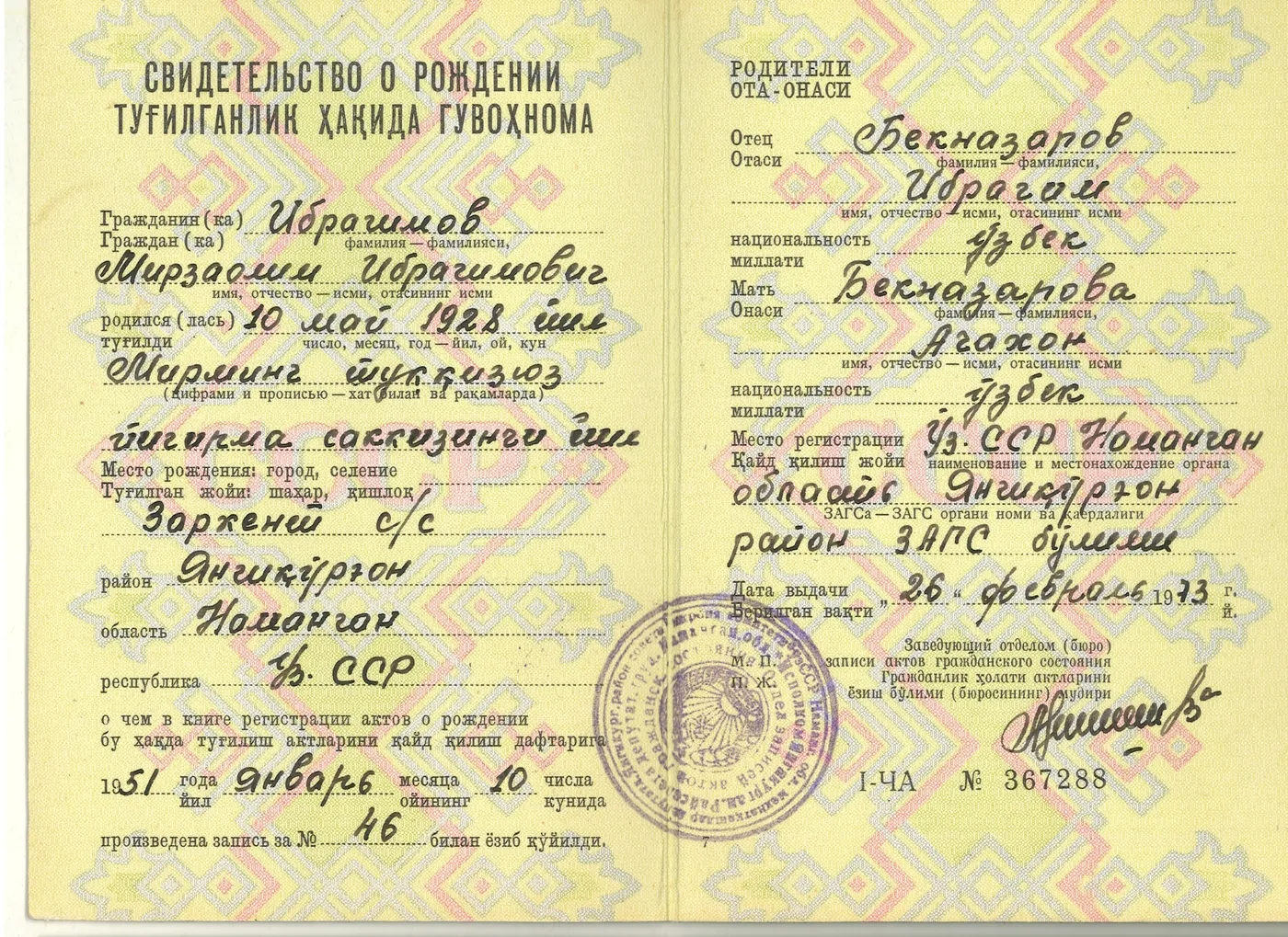
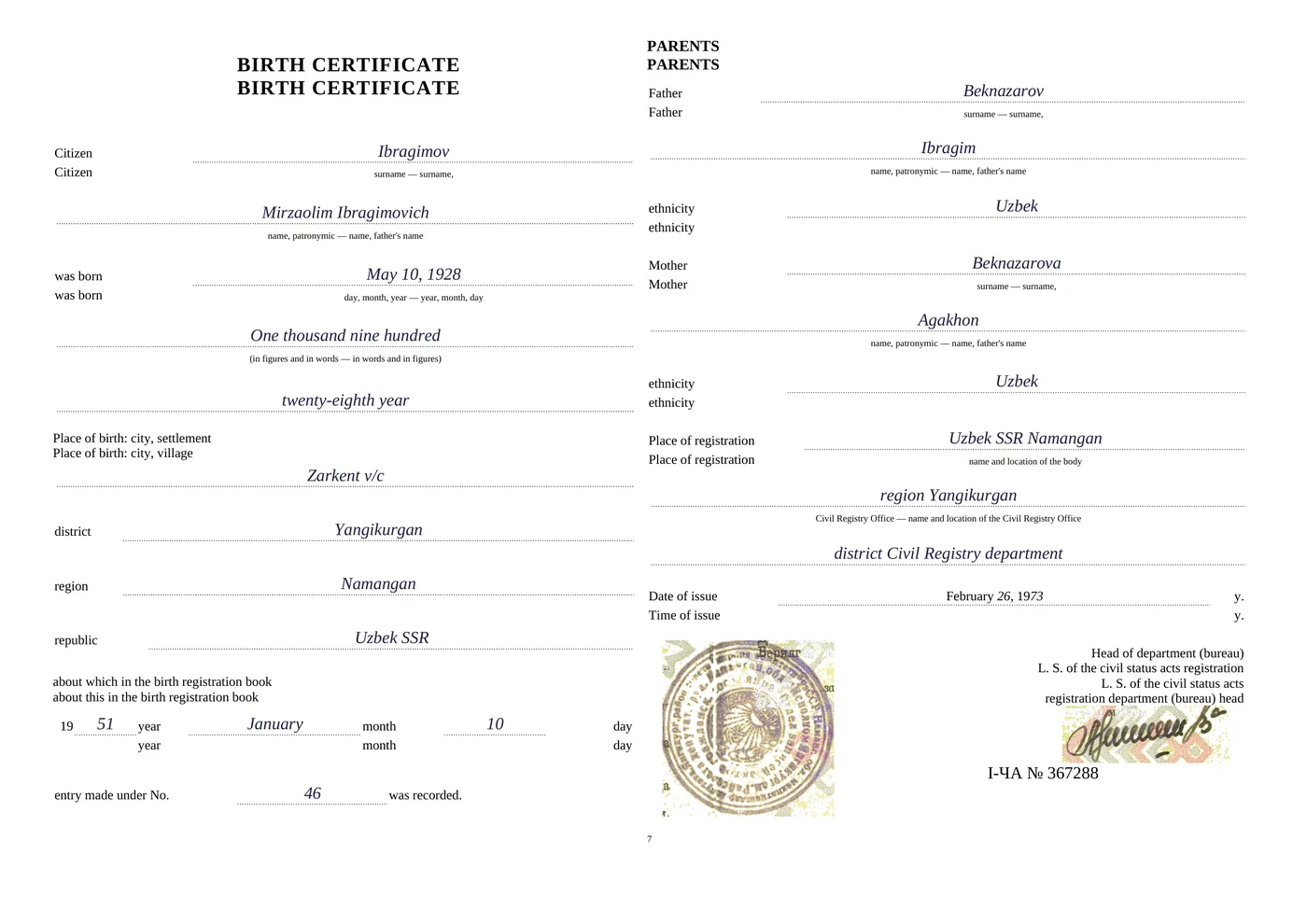
On 30 October 2026, I worked with a scanned document where the stamp stayed as a picture in its original position, with a short bracketed note directly underneath containing the words read from it, like “[Stamp: …]”. A translator needs the stamp’s wording as text because a certified translation has to translate the stamp too, and retyping a round stamp by hand is where words get lost.
That case shows why a scan needs more than a translation of the obvious body text. The original image can preserve where a stamp sits, but the words still need to be captured and checked. When you receive a translation, inspect seals and handwritten details rather than comparing only the printed paragraphs.
For a scan or photo that needs a formatted working translation, ChatsControl reads the page and builds a Word copy that follows its layout. It keeps a stamp or seal as an image and can include recognized wording as text, but poor-quality scans and handwriting can be read unreliably. A human must check the result, and any required legal certification remains a separate step.
A final trap is treating terms such as “certified translation,” “sworn translation,” and “notarized translation” as synonyms. Italy has more than one route for confirming that a translation corresponds to its source. The embassy identifies certification at the embassy in Kyiv and asseverazione before an Italian court as alternatives. The receiving institution decides which one it accepts, so ask for its wording in writing before booking an appointment or paying for certification.
If an institution refuses a translation or asks for a missing document, follow its stated requirement rather than ordering another generic package. Ask what specific element is missing, whether the original needs a different apostille, and which certification route it accepts. The embassy’s guidance allows it to request additional documents for a DDV, so an initial checklist can’t guarantee that no follow-up will be needed.
Regional and institutional differences
The rules in this article describe the Kyiv embassy’s published instructions for Ukrainian documents. Don’t assume that another Italian consulate, an Italian university, or a local authority follows every detail of the Kyiv DDV process. The embassy’s statement that no Italian translation is required applies to issuing a DDV in Kyiv; it doesn’t create a general exemption for every Italian procedure.
Universities assess foreign qualifications for admission under their own process. Universitaly’s guidance for international students says the university makes the admission assessment and that consular documents aren’t compulsory or binding for that decision under Article 2 of Law No. 148/2002. The procedure page is marked as valid for academic years 2026/27 and 2027/28, so applicants should check the current academic-year information and the specific university’s document list.
Professional recognition is another separate route. The DDV may describe the qualification, but the competent Italian administration decides recognition. For a regulated profession, ask the relevant authority which documents, translations, and authentication it requires. The route can differ from university admission and from a general request to present a Ukrainian civil document.
For documents used outside the DDV process, the Italian Ministry of Foreign Affairs and International Cooperation (MAECI) describes the general rule as legalization or apostille, followed by an Italian translation, except where an applicable international convention provides a multilingual form. The recipient’s specific rules still matter. Read the MAECI guidance on translation and legalization alongside the Kyiv embassy’s instructions.
No translation method can override the destination institution’s rules. A translator can prepare the wording, an apostille can authenticate the origin of a public document, and a certification procedure can attest to the relationship between the translation and the source. None of those steps is the same as a university’s admission decision or a public authority’s recognition decision.
FAQ
Does a Ukrainian diploma need an Italian translation for a Dichiarazione di Valore in Kyiv?
The Kyiv embassy says an Italian translation of the educational qualification isn’t required for issuing a DDV. The rule applies to the DDV procedure, not automatically to university admission or another procedure in Italy. Check the embassy’s current DDV instructions.
What documents do I need for a Dichiarazione di Valore for a Ukrainian diploma?
The embassy lists the original apostilled qualification, a copy of a valid passport or an ID for Italian citizens, a completed and signed form, evidence of the request’s purpose, and details of the Italian public institution where the document will be used. It can request additional documents, so check the current form and instructions before applying.
How long does a Dichiarazione di Valore take in Kyiv?
The embassy says the appointment wait can reach six months during periods of high demand. After it receives a complete application, the DDV is issued within 30 days, but that period stops if documents are missing or the embassy requests more information. Both timeframes are subject to change; check the embassy’s current page before planning.
Does a Dichiarazione di Valore recognize my Ukrainian diploma in Italy?
No. The DDV describes the meaning of a qualification in the education system where it was issued; it isn’t recognition, equivalence, or homologation. The competent Italian authority or institution makes the recognition or admission decision.
Do I need an apostille and certified translation for every Ukrainian document used in Italy?
Not necessarily. The right route depends on the document and the procedure. The general route described by the embassy uses an apostille on the original, a full Italian translation, and certification of the translation, but the receiving institution may have specific requirements or an applicable exception. Ask the institution before arranging the service.
Can I choose my own Italian translator for documents for Italy?
Yes. The Italian embassy in Kyiv says you can choose a translator yourself and that using someone from its list isn’t mandatory. The receiving institution still decides whether the translation and its certification meet its requirements.
How much does the embassy charge for a Dichiarazione di Valore?
The embassy’s published fee is €50 for a DDV, plus €10 per page for a certified copy of an educational document if one is requested; both sides count as pages. The embassy says a request with a confirmed study purpose may qualify for free service with appropriate evidence. Confirm current fees, exchange rates, and eligibility before paying.
Is the DDV appointment also an appointment to certify my translation?
No. The embassy treats DDV issuance and translation certification as separate services. A DDV appointment doesn’t certify a translation, and a translation-certification appointment doesn’t issue a DDV. Ask the receiving institution which service it requires and check the relevant appointment instructions.
Need these documents translated?
Leave your number and we will message you, tell you which certification your institution needs, and name the price. Translation, translator review and notary certification.