A sworn translation can be one of the documents an exchange office needs, but ordering one before checking the local rules can mean paying for work you don’t need. The key question isn’t simply whether your Ukrainian driving licence is in Ukrainian. It’s what the authority handling your exchange requires, and whether you need an exchange at all.
A licence translation doesn’t itself give you the right to drive, replace the original, or guarantee that a foreign authority will issue a local licence. The translation makes the information on the document readable in the language and format the authority accepts. The office still checks your eligibility and the licence itself.
The rules can look very different even between countries in the same region. Poland’s Kraków procedure names a sworn translator; Wolfsburg’s German guidance says a translation isn’t needed at the start of the application but may be requested later. EU temporary-protection rules also mean that some Ukrainians can drive without exchanging their licences or carrying a certified translation.
Start with the question: do you need an exchange?
A driving licence translation is a written rendering of the information on your licence into another language. A certified or sworn translation adds a form of professional certification required by a particular authority. Those terms aren’t interchangeable: the right format depends on the receiving office’s rules.
Before choosing a translator, separate three questions:
- Are you allowed to drive on your Ukrainian licence where you live?
- Do you need to exchange that licence for a local one?
- If you apply for an exchange, what translation format does the licensing office accept?
One answer doesn’t settle the others. Permission to drive doesn’t automatically mean you can skip a translation in an exchange application. A requirement to submit a translation doesn’t mean you must exchange your licence before driving.
For people covered by temporary protection in the EU, valid Ukrainian licences are recognised for driving for the duration of that protection. Article 3 of Regulation (EU) 2022/1280 sets out recognition of valid Ukrainian licences for people with temporary or appropriate national protection in the EU until that protection ends. The European Commission’s guidance, checked in November 2026, says a certified translation or international driving permit isn’t needed to drive under these rules.
The Commission states:
“it will no longer be necessary to hold an International driving permit or a certified translation for the duration of the temporary protection.”
In other words, eligible drivers don’t need either document just to drive while temporary protection applies.
That statement concerns driving, not every possible administrative task. A national or municipal office can have separate document requirements for an exchange application. Ask the licensing authority which rules apply to your status and the specific procedure you’re using.
Old Ukrainian licences written in Cyrillic are covered by the Commission’s clarification for drivers under temporary protection. The Commission also notes that police may ask for an additional identity document. That doesn’t turn a certified translation into a driving requirement; it means you should be ready to identify yourself if asked.
Germany has its own official information for people with temporary protection. The city of Wiesbaden says the special EU recognition means this group doesn’t need to exchange their Ukrainian licences immediately. Its page, checked in November 2026, states that temporary protection has been extended until 4 March 2028; check the Wiesbaden guidance for the current local explanation and how it applies to your situation.
A person who wants a local licence for reasons beyond immediate permission to drive still needs to look at the exchange rules. Long-term residence, a local job or an administrative requirement might make an exchange relevant, but the information in this guide doesn’t establish an individual obligation. Confirm the trigger and deadline with the authority in your country.
What to check before ordering a translation
The receiving office decides what counts as an acceptable translation. A general translation, a certified translation and a sworn translation can describe different kinds of work, and a machine translation won’t acquire official status just because it looks polished.
Start with the office’s own document checklist. Search for the exact procedure, such as exchange of a foreign driving licence, rather than relying on a general page about driving in the country. Then check the authority’s wording for the translation: does it ask for a sworn translator, a certified translation, a particular language, or a translation physically attached to a copy of the licence?
Kraków’s official procedure gives a clear example. For a licence issued outside the EU or EEA, the city requires a Polish translation prepared or certified by a sworn translator. The translation must be inseparably attached to a copy of the licence. The city’s instructions list an exception for licences from the EU, Switzerland and the EEA. The requirement comes from the Kraków City Information Bulletin procedure KM-19, checked in November 2026.
The required-documents list uses this wording:
“Tłumaczenie posiadanego prawa jazdy na język polski, sporządzone lub poświadczone przez tłumacza przysięgłego.”
The city is asking for a Polish translation prepared or certified by a sworn translator.
That detail matters. A translator might produce a correct Polish translation, but the authority’s requirement concerns who prepared or certified it and how it is attached. A translation printed on its own may not satisfy a procedure that requires a combined document.
Wolfsburg gives a different example. Its guidance, checked in November 2026, says a translation isn’t needed to submit an exchange application, although the authority may request one separately. The same page says the rules and the scope of any simplified exchange depend on the case. Read the Wolfsburg licensing office guidance, rather than assuming that a translation requirement from one German city applies across the country.
If the office’s instructions are unclear, send a short written enquiry before commissioning the work. Include the licence’s issuing country, the language required for the application, whether you want to exchange or simply drive, and the exact wording of the translation requirement. Ask whether the office needs an original, a copy, a sworn translator’s stamp, or a specific way of binding the translation to the copy.
Keep the reply. A verbal answer can be difficult to rely on if a different employee reviews your file later. A written response also gives your translator a concrete specification instead of a vague request for “an official translation.”
What documents and information should you prepare?
The translation is one part of an exchange application. The licensing authority may ask for identity and residence evidence, an application form, a photo, the original licence and other documents. Requirements differ by country and local office, so use the receiving authority’s current checklist as the final word.
Use this table to check what the dossier confirms for the three destinations covered here. It isn’t a universal checklist for every city or case.
| Destination and situation | Translation guidance | Other requirements named in the official source |
|---|---|---|
| Poland, Kraków | A licence issued outside the EU or EEA needs a Polish translation prepared or certified by a sworn translator, attached to a copy of the licence. | The national gov.pl checklist includes an application, photo, identity or residence document and a copy of the foreign licence. |
| Germany, Wolfsburg | A translation isn’t required to begin the application, but the authority may request one separately. | The page names the original licence, valid identity document and current biometric photo. Apply in person after making an appointment. |
| Great Britain, eligible Ukrainian holders under the Ukraine visa scheme | The GOV.UK exchange guidance sets the exchange conditions. Check the application instructions for the documents and any translation requirement that applies to your case. | The exchange window and licence category conditions matter; the source says an online application usually leads to delivery within three weeks, subject to checks. |
The Polish national portal says an applicant must have lived in Poland for at least 185 days. Its checklist includes an application, a photo, a document confirming identity or residence, and a copy of the foreign licence. Those are requirements stated on gov.pl, whose page was last updated on 10 August 2023 and checked in November 2026. Check the local office’s current checklist before submitting, because the national page and a municipal procedure serve different purposes.
Kraków says a foreign resident can prove their place of residence in Poland with documents including registration, a rental agreement, an employment contract, utility bills or a tax return. The city’s procedure was checked in November 2026. Don’t assume one item will always be enough: ask the office what it accepts for your circumstances.
Wolfsburg’s page names the original Ukrainian licence, a valid identity document and a current biometric photo. It also says applicants must appear in person after booking an appointment. For categories A1, A, B and BE, the page says additional eyesight or first-aid evidence isn’t required; requirements for other categories differ. Those details are local information from Wolfsburg, checked in November 2026, not a Germany-wide checklist.
For the translator, prepare a sharp image or scan of both sides of the licence if information appears on both. The translator needs to read names, dates, categories, restrictions, issuing authority and stamps. A cropped image can remove a field or show only part of a stamp, making it harder to produce a complete translation.
Don’t edit the image to “clean it up” by removing marks. An official translation may need to account for stamps or handwritten notes, and a change to the source image can make it unclear what appeared on the original. If a field is worn or hard to read, tell the translator rather than guessing at its contents.
Name spelling deserves attention. Use the spelling shown in your passport or other identity document as a reference, but don’t silently alter the licence. If the licence and passport spell a name differently, ask the receiving office how it wants the discrepancy handled. A translator can render what is on the source document; the authority decides whether the difference is acceptable.
A translation doesn’t replace the original licence unless the procedure explicitly says otherwise. Kraków’s process includes checks with the authority that issued the foreign licence. A translated copy makes the contents legible, but it doesn’t prove that the original is valid or authentic.
Choosing a translation route
Three common routes are a translation bureau, an individual sworn translator and an online document-translation tool. The right choice depends on whether the authority needs official certification, how clear your source image is and whether you want help checking the format.
A translation bureau
A bureau can be useful when you aren’t sure which kind of certification the authority wants or you need translation and certification arranged together. Ask who will translate the licence, whether that person is authorised for the receiving country’s requirement, and how the finished translation will be attached to the copy.
Don’t treat “official translation” as a precise specification. Ask the bureau to identify the exact service: for example, a Polish sworn translation prepared or certified by a sworn translator, as Kraków requires for a licence issued outside the EU or EEA. Ask whether the final file will contain the copy and the translation in the format the office requests.
A bureau can also help when the source is difficult to read or contains stamps and handwritten entries. Human review matters if a faded category or handwritten date can’t be reliably read from an image. Give the translator the best available scan and explain which details are unclear.
A bureau doesn’t control the licensing decision. Even a correctly certified translation can’t confirm a licence’s validity or guarantee that the authority will exchange it. Treat translation and eligibility as separate tasks.
An individual sworn translator
Going directly to a sworn translator can be a straightforward route when you know the exact language and certification the authority requires. In Kraków, the city accepts a Polish translation prepared or certified by a sworn translator and requires it to be attached to a copy of the licence. The city procedure is the source for that local requirement.
Before sending your document, confirm that the translator’s status meets the destination authority’s wording. “Sworn” can refer to a defined professional status in a particular country, so don’t assume that a translator authorised in one jurisdiction will automatically meet a different jurisdiction’s requirement.
Ask how the translator handles the stamp, seals and signatures. The words inside a stamp may be part of the document’s content, even if the stamp itself remains a visual element on the page. A translation should make clear what the translator could read and avoid filling in unclear text from guesswork.
For a stamped final version, check whether the translator wants the original document, a scan or a specific image quality. Don’t mail an original unless the translator or authority has asked for it and you’ve confirmed how it will be returned.
An online document-translation tool
An online tool can help when you need a readable draft or a translated document for review. It doesn’t replace a sworn translator where an authority requires legal certification. Keep that distinction clear before you upload a licence or submit a translation.
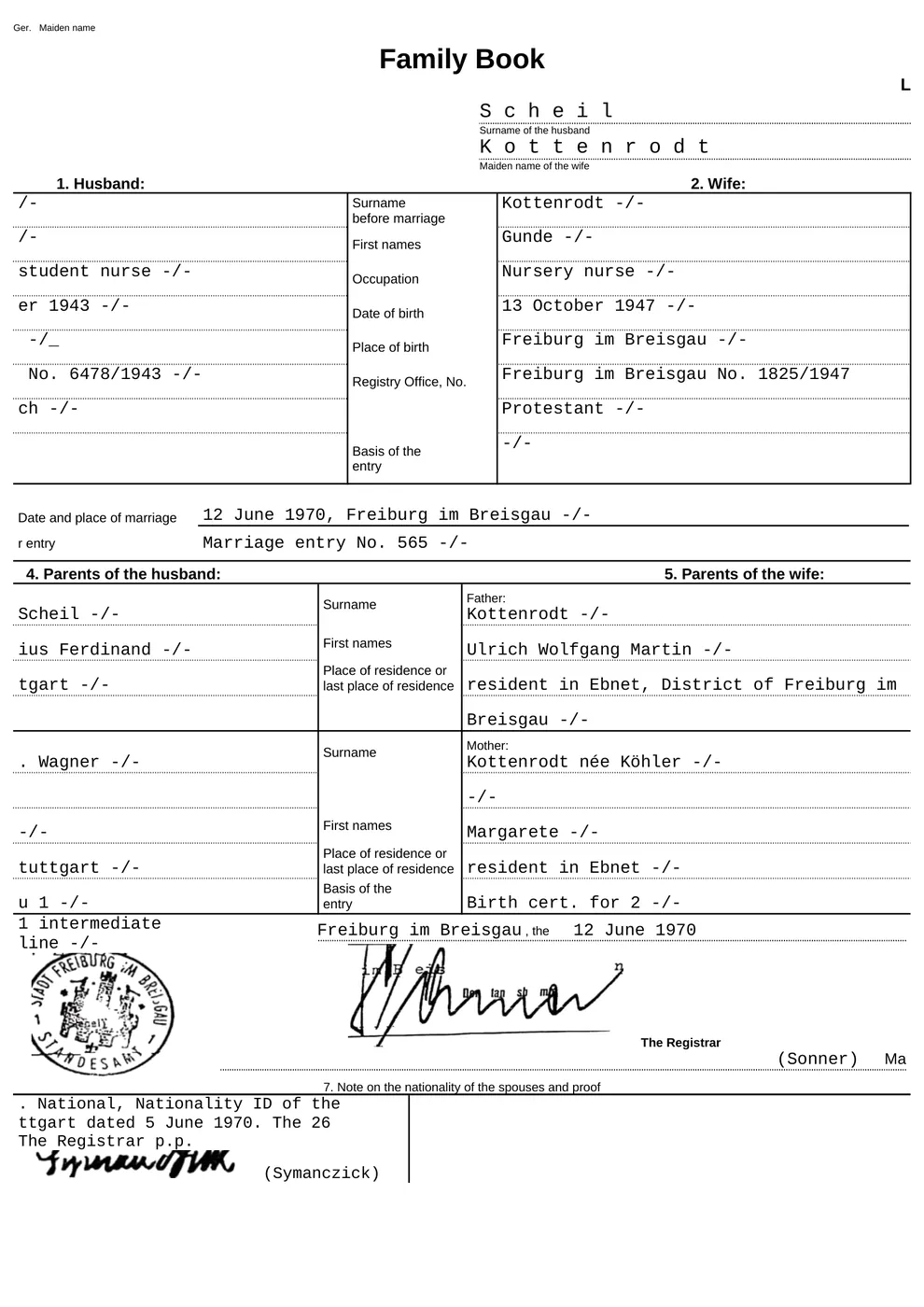
In ChatsControl, you upload a DOCX or PDF and receive a translated Word file with the document’s layout retained. For a scan or phone photo, the service reads the page first and builds a formatted Word copy. That can be useful when you want to compare the translation with the original rather than copy text into a plain text box.
A licence has small fields, stamps and other details where a misread can matter. ChatsControl’s scan workflow includes a quality grade, and handwriting or very degraded scans can be read unreliably. Review every name, category, date and stamp against the source. For a certified or sworn version, a human translator must review and certify the result; the service isn’t fully automated for that purpose.
A document tool can help you understand a licence or prepare text for review, but the licensing authority decides what it accepts. If the procedure requires a sworn translator, use a translator who meets that rule. You can read about the certified translation service if you need a human-certified document.
Comparing the options
A quick comparison helps you match the route to the authority’s requirement instead of choosing by convenience alone.
| Route | Best fit | What to verify | Main limitation |
|---|---|---|---|
| Translation bureau | You need help identifying and arranging the required translation format. | Who translates, what certification is supplied, and whether the final copy matches the authority’s instructions. | The bureau can’t decide whether you qualify for an exchange. |
| Individual sworn translator | You know the required language and need a translator with the specified status. | Whether the translator’s status is accepted by the receiving authority and how the translation will be attached to the licence copy. | You may need to confirm the administrative format yourself. |
| Online document-translation tool | You need a readable draft or a formatted translation for review. | Whether the authority accepts the output and whether human certification is still required. | An AI-produced document isn’t a sworn or certified translation by itself. |
The table describes work routes, not guaranteed outcomes. Kraków’s procedure names a sworn translator; Wolfsburg’s says its authority may request a translation separately. Ask the office handling your file before paying for a format it may not accept.
Translation cost and government fees are separate. For example, Kraków’s municipal procedure lists an administrative fee of 100 PLN for issuing a Polish licence. The same page lists postal delivery of the replacement document at 11.80 PLN, or 13.80 PLN by priority post. Those are figures on the Kraków procedure page checked in November 2026, and they are not translation prices. Check the current KM-19 page before paying.
Wolfsburg lists an administrative exchange fee of 45.10-45.90 EUR and says processing can take several weeks under high workload. Those are local figures on the city’s page checked in November 2026, not a Germany-wide tariff or a guaranteed processing time. Confirm the current fee and appointment availability with the Wolfsburg licensing office.
Step by step: prepare an exchange application
The safest sequence is to establish whether an exchange is needed, confirm the local checklist, then commission only the translation format the authority asks for.
-
Check your right to drive. If you have temporary protection in the EU, read the European Commission’s current explanation. The special recognition rules concern driving during temporary protection, not automatic approval of an exchange application.
-
Find the office responsible for your residence. Use the official national or local government page for the place where you live. In Poland, gov.pl describes the national exchange procedure, while the Kraków BIP gives the city’s own instructions. In Germany, the Wolfsburg page is local guidance.
-
Read the translation instruction carefully. Note the language, translator status, certification and attachment format. If the page doesn’t say whether you need a sworn translation, ask the office in writing before ordering one.
-
Collect the rest of the application documents. Compare your papers against the authority’s checklist. Poland’s national guidance includes an application, a photo, proof of identity or residence and a copy of the foreign licence. Kraków also lists evidence of residence, with examples such as a rental agreement or employment contract.
-
Prepare a clear copy of the licence. Include every side and every field. Make sure names, dates, categories, restrictions and stamps can be read. Tell the translator about faded text instead of trying to reconstruct it yourself.
-
Commission the correct translation. If the office requires a sworn translator, use one whose status meets the authority’s requirement. Ask whether the translator will attach the translation to a copy of the licence if the procedure requires that format.
-
Submit the file and keep proof. Follow the authority’s instructions for appointments, originals and fees. Keep a copy of what you submit and any written answer about translation requirements.
-
Track the verification separately from translation. A completed translation doesn’t mean the issuing authority has confirmed the licence. Answer requests for extra documents and check whether the original licence must be surrendered or returned.
If you’re exchanging in Poland, the national portal says an applicant must have lived in Poland for at least 185 days. That threshold is stated on the gov.pl page last updated on 10 August 2023 and checked in November 2026; check the official procedure for current instructions. The page says a complete application can produce a PKK profile immediately, while data checks can take up to two days, clarification of circumstances up to a month, and requests for additional explanations up to two months. Those are the periods reported by the portal, not promises for every case.
Once foreign licence data have been confirmed and the production fee has been paid, gov.pl says making a Polish document can take up to nine working days. Verification of foreign data before that point can take several weeks. The gov.pl exchange page, last updated on 10 August 2023 and checked in November 2026, also warns that failing to return or surrender the old foreign licence can prevent the Polish document from being issued.
For an eligible Great Britain exchange under the Ukraine visa scheme, GOV.UK says an online application usually results in receiving the GB licence within three weeks, though DVLA checks can extend the time. The guidance was checked in November 2026; consult the GOV.UK page for the specific application route and conditions.
Where applications go wrong
The most expensive mistake is often not a translation error. It’s ordering the wrong kind of translation, submitting a format the authority doesn’t accept, or assuming that a translation settles an eligibility question.
Confusing permission to drive with permission to exchange
EU temporary-protection recognition means an eligible person can drive on a valid Ukrainian licence for as long as that protection lasts. The Commission says a certified translation isn’t needed for that purpose. An exchange application is a different administrative process and can ask for its own documents.
A driver who needs only to drive should avoid treating an exchange checklist as proof that an exchange is immediately required. A person who wants a local licence should not use the driving rule to assume that no translation will be requested. Read the rules for the action you plan to take.
Ordering a general translation where a sworn translation is required
Kraków’s procedure calls for a Polish translation prepared or certified by a sworn translator for a licence issued outside the EU or EEA. The translation must be attached to a copy of the licence. A plain translation that doesn’t meet those conditions can leave the application incomplete, even if its wording is accurate.
Ask the authority to confirm the required format before ordering. If you already have a translation, compare it with the city’s instructions before submitting it. The cost of a rejected format can include ordering a new translation and arranging another submission; the procedure doesn’t give a general figure for those costs.
Treating a correct translation as proof of authenticity
The Kraków authority checks the foreign licence and seeks confirmation from the body that issued it. The city says a new Polish document is ordered after a positive document check and confirmation from the issuing authority. Translation alone can’t replace those checks. See the KM-19 procedure, checked in November 2026.
If a file is delayed, check whether the authority is waiting for the original licence, a response from the issuing body or a missing application document. Reordering the translation won’t resolve a verification delay unless the office has identified a problem with the translation itself.
Missing a condition that isn’t about translation
In Kraków, a foreign licence that doesn’t match the model in Annex 6 to the Vienna Convention may require the applicant to pass the theoretical part of the state driving exam as a condition of obtaining a Polish licence. That is separate from the translation requirement and is set out on the city procedure page, checked in November 2026.
In Great Britain, the licence’s issue date can affect the exchange result. GOV.UK says Ukrainian licences issued before 28 December 2021 lead to a GB licence covering automatic cars; a separate test is required for manual transmission. The guidance was checked in November 2026. Read the official UK exchange guidance before assuming your exchange gives you the vehicle category you expect.
Losing time because the file is incomplete
Poland’s gov.pl guidance distinguishes the initial candidate-driver profile from later checks. With a complete package, a PKK profile can be available immediately, but data verification can take up to two days, clarifying circumstances can take up to a month, and extra explanations can take up to two months. The page was last updated on 10 August 2023 and checked in November 2026. Those are separate stages, so don’t mistake an immediately created profile for confirmation that the exchange is complete.
A refusal doesn’t always end the process. The Polish gov.pl page says an applicant can appeal a refusal to the local government appeal board within 14 days of receiving the decision. That period is stated on the portal page last updated on 10 August 2023 and checked in November 2026. Read the decision itself and follow the appeal instructions; a translator can’t file an appeal simply by correcting a document.
Missing stamp text in a scan
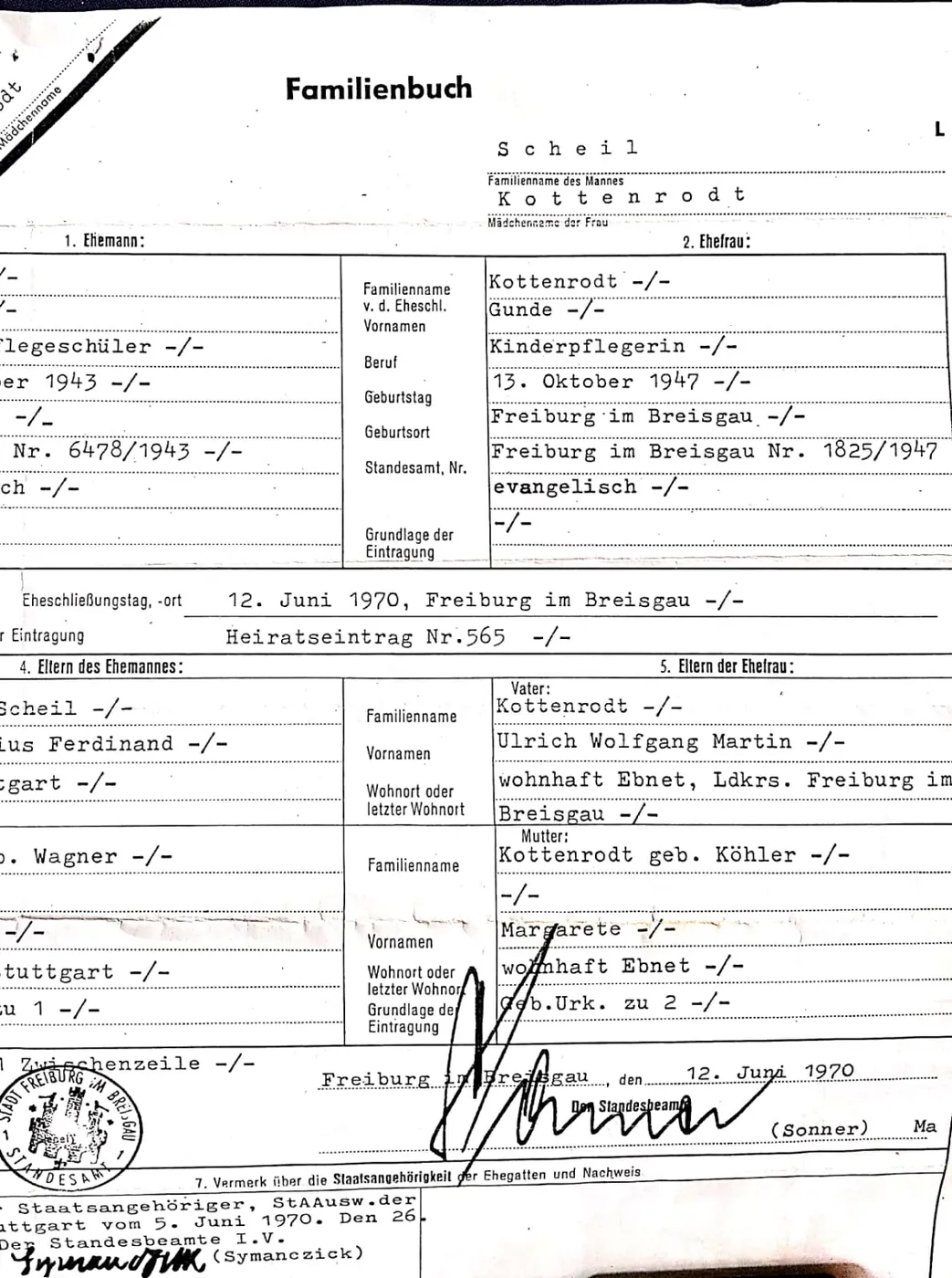
I keep the stamp in a scanned document as a picture in the place where it was printed, then put a small note in brackets underneath with the words read from it, like “[Stamp: …]”. A translator needs the stamp’s words as text because a certified translation has to translate the stamp too. Retyping a round stamp by hand is where words get lost.
A stamp can contain an authority name, a date or other text that matters to the translation. A circular mark may be difficult to transcribe accurately, especially when the source is a low-quality scan. Tell the translator if the stamp is unclear, and don’t present an uncertain reading as fact.
ChatsControl can read a scan and build a formatted Word copy, but handwriting and very degraded scans can be read unreliably. A machine-generated reading is a starting point for review, not a reason to omit a stamp or treat uncertain text as verified. For a legally certified version, a human translator has to review and certify the result.
Regional differences: Poland, Germany and Great Britain
Country-level summaries help you find the right office, but the authority handling your file still controls the procedure. Local instructions can differ, and some rules apply only to people with a particular residence status.
Poland
Poland’s national portal says you must live in the country for at least 185 days to exchange a foreign licence. The portal lists an application, photo, identity or residence document and a copy of the foreign licence. Its page was last updated on 10 August 2023 and checked in November 2026. Start with gov.pl’s exchange instructions, then check the local authority’s details.
Kraków’s procedure specifies a Polish sworn translation for licences issued outside the EU or EEA. It also requires the translation to be attached to a copy of the licence. That is a useful example of why “Poland requires a translation” isn’t detailed enough: the translation’s status and physical presentation both matter.
The city lists a 100 PLN licence-issue fee and postage of 11.80 PLN, or 13.80 PLN by priority post. Those are Kraków administrative charges on the procedure page checked in November 2026, not translation prices. Check the KM-19 page before budgeting or submitting.
Germany
Don’t assume that a rule about driving on a Ukrainian licence is the same as a rule about exchanging it. EU temporary-protection rules provide recognition for driving while the relevant protection applies. The Wiesbaden administration page, checked in November 2026, says this group doesn’t need an immediate exchange and gives 4 March 2028 as the protection extension date stated on the page.
For an exchange, Wolfsburg says Ukraine is included in Annex 11 to section 31 of the German driving licence regulation following a change dated 18 August 2026. Under the conditions set out in section 31, Ukrainian licences can generally be exchanged without theory or practical tests. The city also says that it doesn’t require a translation at the start of an application, but the authority may request one separately. This is Wolfsburg guidance, checked in November 2026, and it says the conditions depend on the individual case. Consult the city’s licensing office page.
Wolfsburg’s page names the original licence, valid identity document and current biometric photo. Applicants submit in person after booking an appointment. For categories A1, A, B and BE, the page says additional eyesight or first-aid evidence isn’t required; don’t extend that detail to other categories.
The page lists an exchange fee of 45.10-45.90 EUR and says processing can take several weeks under high workload. Those are local Wolfsburg figures checked in November 2026, not a nationwide price or guaranteed waiting time.
Great Britain
Eligible holders of Ukrainian licences under the Ukraine visa scheme can exchange for a GB licence within five years of becoming resident in Great Britain. GOV.UK says that the exchange window doesn’t extend when the permitted period for driving on a Ukrainian licence is extended. The guidance was checked in November 2026; read the GOV.UK exchange page for the route that matches your visa situation.
The issue date also matters. The same official guide says Ukrainian licences issued before 28 December 2021 give entitlement to drive automatic cars after exchange; a separate test is needed for a manual car. Don’t assume that the word “exchange” means the local licence will have exactly the same transmission entitlement as your Ukrainian document.
An online application usually leads to a GB licence arriving within three weeks, according to GOV.UK guidance checked in November 2026. DVLA checks can extend the wait. Treat the stated period as the usual result described by the page, not as a delivery guarantee.
For a country comparison beyond these three destinations, see international driving permit versus translation by country. Drivers applying specifically in Germany can also read Ukrainian driving licence in Germany: exchange, translation and costs, and those applying in Poland may find the Australia guide less relevant than their local authority’s procedure, so use destination-specific official guidance first.
FAQ
Do I need a certified translation of my Ukrainian driving licence to exchange it in Poland?
Kraków requires a Polish translation prepared or certified by a sworn translator for a licence issued outside the EU or EEA, attached to a copy of the licence. Check the procedure at your local authority because municipal instructions can differ. See Kraków’s KM-19 page.
Do Ukrainians under temporary protection need a driving licence translation in the EU?
A valid Ukrainian licence is recognised for driving for the duration of applicable temporary protection, and the European Commission says a certified translation or international driving permit isn’t needed to drive. An exchange application can have separate document requirements. Read the Commission’s guidance.
Can I exchange my Ukrainian driving licence in Germany without a translation?
Wolfsburg says a translation isn’t required at the start of its exchange application, but the authority may request one separately. Local and individual requirements can differ. Check the Wolfsburg licensing office guidance.
How long does a Polish driving licence exchange take?
The Polish gov.pl page says document production can take up to nine working days after the foreign licence data are confirmed and the fee is paid. Verification can take several weeks before that stage, and the portal gives other time ranges for checks and requests for explanations. The page was last updated on 10 August 2023 and checked in November 2026; consult gov.pl.
Can I use an online translation for an official exchange application?
An online translation can help you read or review the document, but it doesn’t replace a sworn translation where the authority requires one. Kraków’s procedure names a sworn translator for the relevant licences. Confirm the required format with the authority before submitting.
Does a translation guarantee that the authority will exchange my licence?
No. A translation makes the licence information readable, but the authority still checks whether you qualify and whether the licence is valid. Kraków’s procedure includes confirmation from the issuing authority before a replacement document is ordered.
Can I exchange a Ukrainian licence for a GB licence after five years?
GOV.UK says eligible holders under the Ukraine visa scheme must exchange within five years of becoming resident in Great Britain. The exchange window doesn’t extend with an extension of the period for driving on a Ukrainian licence. Check the current GOV.UK guidance for your visa and residence circumstances.
Need these documents translated?
Leave your number and we will message you, tell you which certification your institution needs, and name the price. Translation, translator review and notary certification.