A diploma can fit on one page; its supplement can run across several pages of courses, grades and credits. If the supplement costs more to translate, the reason is usually the amount and kind of information it contains, not a special fee for the word “supplement.”
That difference matters when you’re budgeting for study, work or recognition of your education abroad. The diploma identifies the qualification, while the supplement explains what you studied and what the qualification represents. The translator has to carry that detail into another language clearly enough for a reader to follow.
The total bill can also include work beyond translation. Page layout, hard-to-read scans, certification and an apostille may affect the quote, but those items aren’t automatically required for every application. The receiving institution’s instructions should determine what you order.
What a diploma supplement contains
A diploma supplement is a document that describes a completed higher-education qualification and the learning behind it. Europass Ukraine calls it “a European-format document provided to graduates together with their higher education diploma” (Europass Ukraine). In practical terms, it gives a reader more than the name of a degree: it helps explain the course of study and its results.
A supplement may list subjects, grades, credits and details about the qualification or the national higher-education system. Those fields matter when a university, employer or recognition authority needs to understand what the graduate studied. Translating only the degree title would leave out much of the information the supplement is meant to convey.
The European Commission describes the European Diploma Supplement as having eight sections:
“The Diploma Supplement contains eight sections providing information regarding:”
The sections cover the graduate, the qualification and institution, the qualification level, the study content and results, the qualification’s function, certification, the national higher-education system and other information (European Commission). That structure helps explain why the supplement can take more work than the diploma: its purpose is to describe a qualification, not just name it.
A Ukrainian Diploma Supplement form was approved by Ministry of Education and Science Order No. 102 dated January 25, 2021, according to the form available through Europass (Ukrainian Diploma Supplement form). The form includes separate fields for qualification identification, the programme, study components, credits and outcomes. Check the current requirements with your institution and the receiving authority if the application depends on a particular format.
The supplement and the diploma are related, but they do different jobs. The diploma confirms that the qualification was awarded; the supplement gives context about the course of study. The European Commission says the supplement supports comparisons of qualifications and programmes across countries by describing learning and competencies (European Commission).
For a translator, that context means the document can’t be reduced to a name, degree title and date. Course names, grades and credits each need to be carried across in the right place and in a consistent form. A short diploma can therefore be quick to translate while its supplement demands more reading, terminology work and checking.
Why the supplement can cost more
Translation cost follows the work involved. When a provider charges by page or by text volume, a longer document generally creates a larger bill than a shorter one at the same rate. A supplement can be several pages long, depending on the programme and document format, while the diploma itself may contain comparatively little text.
Text volume is only part of the explanation. A diploma often repeats familiar information in a compact layout: the graduate’s name, the qualification, the institution and the award date. A supplement can combine a table of subjects with grades, credits and explanatory text. The translator has to understand how those fields relate to each other, then preserve their meaning in the target language.
Course names can be especially demanding. A literal word-for-word version may not tell a reader what a subject covers, while a loose rewrite can change its meaning. Translators may need to make careful choices about terminology and keep the same terms consistent across the document. The challenge grows when a programme uses abbreviations, specialist vocabulary or names for courses that don’t map neatly onto another education system.
Tables add another kind of work. A translation must keep each subject paired with the correct grade and credit information. If the text shifts into the wrong row, or a column heading becomes unclear, the translated page may be readable as prose but unreliable as an academic record.
Readability also matters. A clean digital file is easier to work with than a blurred scan or a photo with a shadow across a table. A translator may need to inspect unclear text, check whether a mark belongs to a particular course or ask the client to confirm a detail. A quote can change if the source is difficult to read.
Page count and billed page count aren’t always the same thing. A provider may quote by page, by word count, by characters or by the document as a whole. Some providers also count a “standard page” according to their own rules. Ask what the quote covers rather than assuming that one page in your scan equals one billable page.
How the quote is usually built
| Cost factor | Why it can change the quote |
|---|---|
| Amount of text | More course names, grades and explanations mean more translation and checking. |
| Language pair | The quote depends on the languages involved and the provider’s rates for that work. |
| Layout | Tables, multi-column fields and closely spaced text can take extra care to reproduce clearly. |
| Source quality | Blurred scans, small print, stamps and shadows can make reading less reliable. |
| Billing method | Providers may count pages, words, characters or the complete document. |
| Additional formalities | Notarization or an apostille may be separate from translation and only needed when the recipient asks for them. |
A useful quote should tell you what has been included. Ask whether it covers the diploma, the supplement, stamps and seals, formatting, certification and delivery. If the provider has priced only one file, confirm whether every page and reverse side is included.
Don’t compare two quotes based on a single per-page number until you know what each provider calls a page. One quote might cover a printed page, while another counts text by a defined character limit. Ask each provider to price the same complete set of documents and state any certification separately.
What the translator has to do with courses, grades and credits
Academic translation isn’t just replacing words. The translator has to preserve the relationship between the information fields so that a reader can understand which course earned which result and how the programme is described.
A supplement’s layout communicates meaning. If a table has columns for course title, grade and credits, those labels tell the reader how to interpret every row. A translated table that drops a heading or moves a value can make accurate words confusing. The layout is part of the document’s information, not decoration.
Credits need careful treatment too. European Credit Transfer and Accumulation System credits, often written as ECTS credits, describe a course within an academic framework. A translator should preserve the source information and the document’s structure rather than silently replacing a figure with an assumed equivalent. Decisions about how a qualification compares with another country’s system belong to the relevant institution or recognition authority.
Grades also need context. A letter, number or verbal mark may follow a grading system that differs from the one used by the recipient. Translating the mark alone doesn’t establish that two grading scales are equivalent. The supplement’s grading information, where provided, can help the reader interpret results; the translation shouldn’t invent an equivalence that the source doesn’t state.
Consistency across course titles is another check. A term appearing in a course list, programme description and qualification information should not acquire unrelated translations in different places. A careful translator checks recurring terms and proper names across the document, not just sentence by sentence.
The European Commission says the Diploma Supplement helps compare qualifications and programmes between countries by describing learning and competencies (European Commission).
That purpose is why a supplement needs more than a quick translation of its headings. The recipient may use the course and outcome details to understand the qualification, so preserving relationships, terminology and context matters as much as translating each individual word.
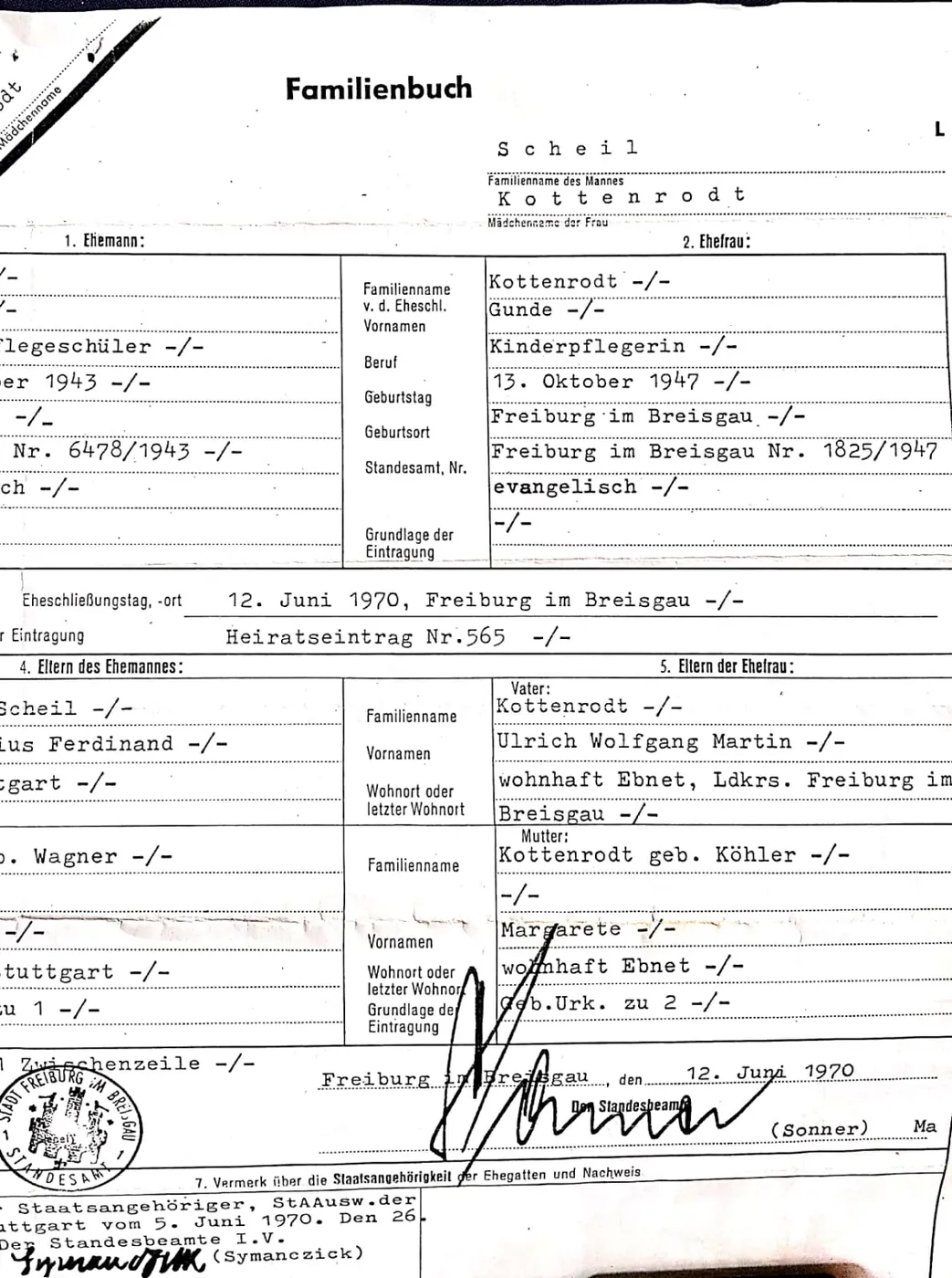
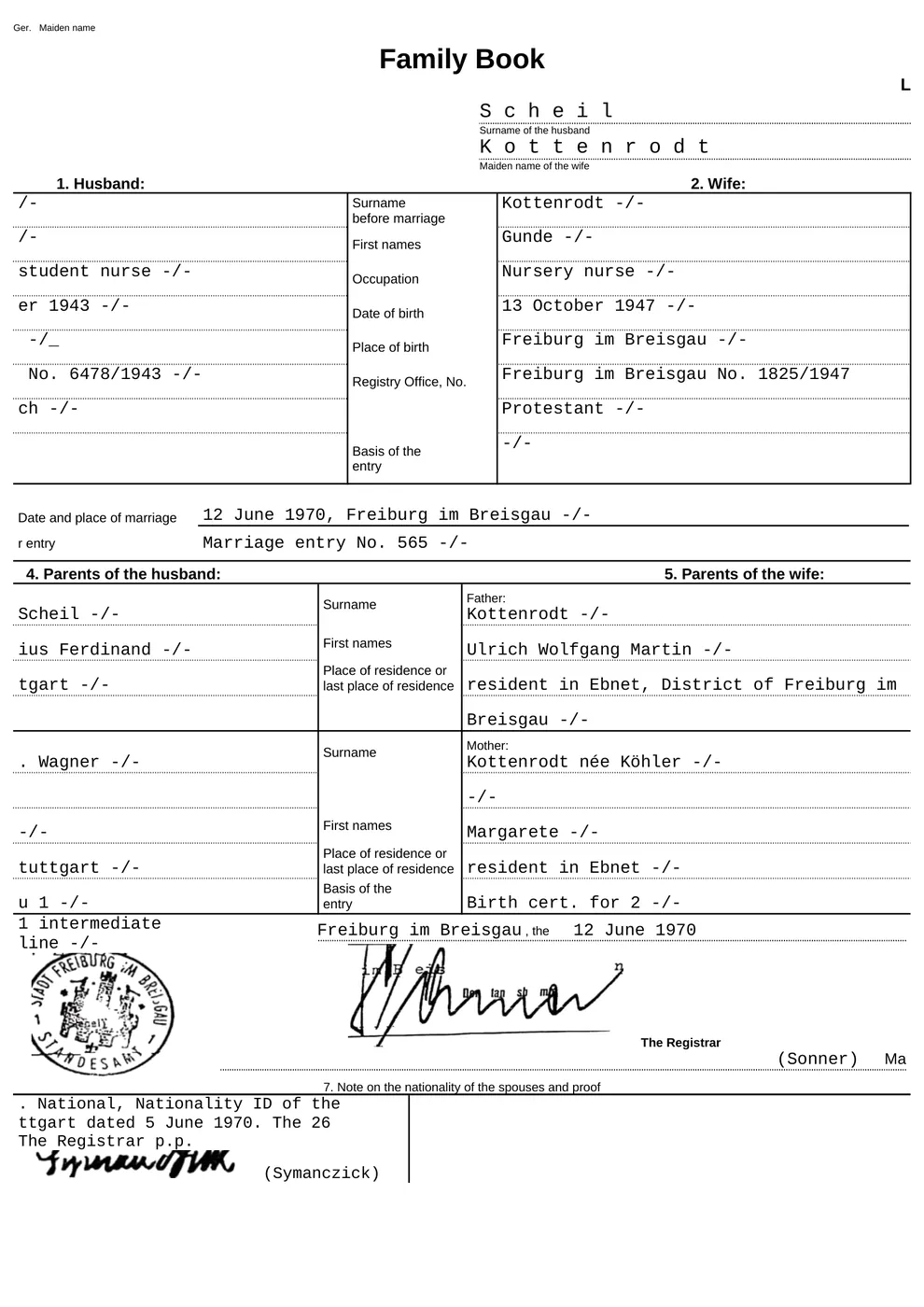
The same principle applies to stamps and seals. A stamp may contain the issuing institution’s name, a date or another detail that needs to be translated. If the stamp is reduced to an unexplained picture, the receiving authority may not be able to read what it says. A scan also makes the task harder because the translator is reading an image rather than selectable text.
On October 30, 2026, I documented how we handle a stamp on a scanned document: the stamp stays as a picture in its original position, with a short note underneath in brackets that records the words read from it, such as “[Stamp: …]”. A translator needs those words as text because a certified translation has to translate the stamp too, and retyping a round stamp by hand is where words get lost.
How it works in ChatsControl: a scanned page is read first, then rebuilt as a formatted Word file, with the stamp kept as an image and its readable words represented in the document. That can help preserve the stamp’s position and make its text available for translation. Handwriting and very degraded scans can still be read unreliably, so a clear source scan remains important.
When to translate the supplement, and when to ask first
Translate the supplement when the receiving institution asks for it, or when it needs the document to assess your subjects, grades or credits. A university reviewing an application may need more detail than the degree title. An employer or recognition authority may also request a transcript or supplement as part of its own process.
The document list belongs to the recipient, not the translator. The European Commission says graduates in Bologna Process countries have the right to receive a Diploma Supplement automatically and free of charge in one of the main European languages (European Commission). That statement concerns getting the supplement from the educational institution. It doesn’t mean that a translation into any language you need for an application is free.
Europass Ukraine says the supplement is issued automatically with the diploma; if you need a copy, contact the institution where you studied (Europass Ukraine). Getting a replacement or copy from the institution and paying for a translation are separate matters. Check with your institution about how to obtain a missing copy and with the recipient about the language and document format it accepts.
Before ordering translation, ask the receiving institution:
- Does it require the diploma, the supplement, or both?
- Does it accept a scan, or does it need a certified copy or original?
- Which language must the translation use?
- Does the translation need notarization or another form of certification?
- Does the institution require an apostille or another legalization step?
- Must the translation include stamps, seals, reverse sides and blank pages?
Those answers can prevent you from paying for a document or formality the recipient doesn’t need. They can also stop you from omitting a page or certification that it does require.
Don’t assume that the supplement can always replace the diploma, or that the diploma alone will be enough. The two documents have different information, and institutions set their own application requirements. If the instructions are unclear, ask the receiving office to confirm the exact document names and formalities in writing.
The same caution applies to notarization and apostilles. Notarization is a formal step connected to a translation; an apostille is a separate certificate used to authenticate the origin of certain public documents for use abroad. Neither should be added automatically just because the document is academic. Check the authority’s instructions for the country and application involved.
How to keep the cost under control without leaving out required work
The safest way to reduce unnecessary cost is to confirm the recipient’s requirements before commissioning translation. A short email asking for the document list can save you from translating a full set that isn’t needed. It can also clarify whether the institution wants a certified translation, an apostille or a particular format.
Send the complete, clearest copy you have. Include every page and any side with text, and make sure the scan shows the edges of the document. A dark phone photo, a cut-off stamp or a page photographed at an angle can leave the translator unsure about names and figures. A better scan doesn’t guarantee a lower price, but it gives the translator a clearer source to work from.
Ask for an itemized quote. A useful breakdown separates the diploma, supplement, certification and any requested legalization. It should also make clear how the provider counts the document: by page, word, character or a fixed document fee. If the provider can’t tell you what the price covers, ask before approving the work.
Check that the quote includes every page of the supplement. A multi-page appendix may be sent as several files or images. The provider should confirm that the price covers all of them, including stamps and seals that need translation. Don’t rely on a page count from a file preview if the back of a page or an attachment may contain additional information.
Keep the source and translation together when you review the draft. Compare names, dates, grades, course titles and credit figures. Check that every table row still connects the right course to the right result. If something is unclear in the original, flag it rather than asking the translator to guess.
Don’t remove a course list, grading note or stamp just to bring down the bill if the receiving institution expects the complete supplement. A cheaper incomplete translation can lead to a request for missing pages or another translation. The cost of correcting an incomplete order depends on the work and the recipient’s process, so checking the requirements first is more useful than assuming a missing section won’t matter.
Likewise, don’t pay for certification or an apostille simply because a provider offers them. Ask the receiving office whether each step is required. Translation, notarization and an apostille are different services; a quote should show them separately so you can decide based on the actual instructions.
Common mistakes that lead to a bad quote or an unusable translation
Assuming the diploma and supplement are priced as a single package. Some providers price each document separately, while others quote for the complete set. Ask for the total price for both documents and a separate breakdown. A low rate for the diploma alone doesn’t tell you what the supplement will cost.
Sending only the diploma when the recipient needs course details. A diploma may confirm the award without listing the full programme. If the university or recognition authority asks for the supplement, the diploma alone may not answer its questions. Confirm the requested documents before placing an order.
Treating a page as a universal billing unit. A page in your scan may not match a provider’s standard page. Get the billing method in writing, then compare quotes on the same scope. A price per page is meaningful only when you know how a page is counted.
Forgetting the stamps and seals. Stamps can contain information that the translator needs to render in the target language. Check whether the quote includes them and whether the source scan is legible. A cropped or blurred seal can require clarification before the translation is complete.
Choosing a target language based on convenience. An institution may require a specific language or type of translation. Ask the recipient before ordering. A translation that is accurate but in the wrong language may not satisfy the application’s requirements.
Adding notarization or an apostille without checking. These are not automatic parts of every translation order. Requirements vary by recipient and purpose, so confirm them directly with the institution or authority. Don’t treat a provider’s available service as proof that your application needs it.
Assuming an automatic Diploma Supplement is already in the language you need. The European Commission’s statement about automatic, free issuance in one of the main European languages concerns the original supplement issued to eligible graduates, not every later translation request (European Commission). Ask your university what language your document is in and ask the recipient which language it accepts.
Approving a translation without checking the numbers. A course title can be revised, but a shifted grade or credit value can change what the record says. Compare the translated table against the source row by row. Pay attention to decimal marks, date formats and abbreviations, and ask about anything the scan doesn’t show clearly.
FAQ
Why does translating a diploma supplement cost more than translating the diploma?
A supplement often contains course names, grades, credits and explanations across several pages. Translating and checking that larger, more structured document can take more work than translating a short diploma.
How much does it cost to translate a diploma supplement per page?
There isn’t one universal per-page price. The quote depends on the language pair, document length, billing method, readability and whether you need certification; ask the provider to price the complete document and explain how it counts pages.
Do I need to translate the supplement together with my diploma?
Translate both if the receiving institution asks for both or needs the supplement to assess the programme and results. Check the institution’s document list before ordering rather than assuming that every application follows the same rule.
Does a diploma supplement need notarization or an apostille?
Not automatically. Notarization and an apostille are separate formalities, and the receiving institution or authority decides whether it needs either one. Confirm the requirement before including the cost in your order.
Can I reduce the cost of translating my diploma and supplement?
Ask the recipient exactly which documents and formalities it requires, send clear complete scans, and request an itemized quote. Don’t leave out pages, grades or stamps that the recipient expects to see.
Need these documents translated?
Leave your number and we will message you, tell you which certification your institution needs, and name the price. Translation, translator review and notary certification.