An academic certificate can show your studies, but not award you a degree
You have grades, completed courses, and ECTS credits on paper, but no diploma to send to the university abroad. The key question isn’t only whether you can translate the document. First find out whether the university will accept an academic certificate for the purpose you have in mind.
A Ukrainian academic certificate documents study results. It doesn’t, by itself, prove that you completed a degree programme or earned a qualification. That distinction affects whether the document can support a transfer application, credit assessment, or admission to a programme that requires a completed degree.
Before paying for translation, certification, or an apostille, ask the receiving institution what document it will accept and what form the translation must take.
The translation process can make a document understandable to the recipient. It cannot change what the document establishes. If a programme requires proof of a completed qualification, a translated academic certificate won’t become a diploma simply because a translator or notary has certified the translation.
This guide separates the questions that often get bundled together: what the certificate proves, whether the university accepts it, what translation and certification may be required, and when you should ask about legalization. The answer depends on the recipient’s rules, so use the institution’s written instructions as your checklist.
What an academic certificate records
An academic certificate is an official record of a person’s study results before they complete a higher education programme. Under part one of Article 46 of Ukraine’s Law on Higher Education, a person expelled before completing a programme receives a certificate with study results, course names, grades, and ECTS credits, as described in the Education Rights reference.
“A person expelled from a higher education institution before completing study under an educational programme receives an academic certificate containing information about learning outcomes, course names, grades received, and the number of ECTS credits earned.”
The list matters because an admissions office may use the certificate to understand which subjects you studied, what results you received, and how many credits you earned. A receiving institution can then decide whether those courses count toward a programme or satisfy a particular requirement.
A diploma serves a different purpose. Ukrainian higher education legislation connects the issuance of a higher education document to successful completion of the programme and passing the required assessment. The Education Ombudsman Service explains this distinction in its discussion of diplomas and qualifications. A certificate can show that you studied; it doesn’t establish that you completed the programme and earned the corresponding degree.
Ukraine’s Ministry of Education and Science approved a sample academic certificate in Order No. 102, which the Verkhovna Rada legislation register marks as in force. The register’s listed version reflects a change dated 22 May 2026. Before ordering a translation, check that you have an official document issued by your institution, rather than an informal list of grades or a table you assembled yourself.
The distinction also matters if your situation is different from someone who left a programme before completion. A current student who expects to graduate may need a certificate confirming enrolment, expected graduation date, and the title of the future diploma. VUB describes that as a separate type of evidence for an applicant in the final year, not as an academic certificate listing completed courses. See VUB’s required-document guidance for its current instructions.
If you aren’t sure which document your Ukrainian institution has issued, check its title, issuer, and contents. Then ask the receiving university whether it needs a record of past study, proof of current enrolment, or proof of a completed qualification. Those documents answer different questions.
When a foreign university may accept the certificate
An academic certificate may help with a transfer, reinstatement, or review of completed coursework. Whether it is accepted depends on the institution and the application route. The certificate documents study results; the receiving institution decides what those results mean for its programme.
For example, the international admissions page of Kharkiv National Pedagogical University lists an academic certificate among documents for transfer or reinstatement from the second year. That example shows one use for the document; it doesn’t establish a rule for all universities or all kinds of admission. Check the institution’s international student admissions page and confirm the requirements for the relevant admission year.
VUB provides a useful example of why the purpose matters. Its requirements list a higher education diploma and a transcript as separate items for master’s applications. A transcript or academic certificate therefore isn’t an automatic substitute for a diploma when the programme requires evidence of a completed qualification. VUB’s requirements are an example from one university, not a universal rule for other institutions.
“Transcript of records - Official document with signature and stamp from the school or with digital verification.”
The wording points to two practical checks. First, the academic results must be supported by an official document. Second, the document needs the signature and stamp of the school or a form of digital verification, under the cited VUB requirements. A plain spreadsheet or an unsigned copy may not meet that specific instruction.
Ask the university a direct question about the purpose of your application. “Can I submit my academic certificate?” leaves room for a vague answer. Ask whether the university will consider it for transfer, recognition of completed courses, admission without a completed degree, or another named route. If the programme requires a qualification, ask what alternative evidence it accepts when you don’t have a diploma.
If you are applying as a current student, don’t assume that a certificate of enrolment and an academic certificate are interchangeable. The first can confirm that you are still enrolled and may include an expected graduation date. The second records results from courses already taken. VUB describes the final-year document separately in its application guidance.
A university’s decision about academic content is separate from its document-format rules. The admissions office may accept your certificate for credit review but still require an official original, a particular translation format, or additional documents. Get both decisions in writing before paying for steps that may not be needed.
Related reading: Which documents do you need for a degree application abroad? and what Ukrainian graduates need to know about a diploma supplement.
Build a document checklist before ordering translation
A good translation starts with the recipient’s requirements, not with a guess about what “official” means. “Certified translation,” “notarized translation,” and “apostille” describe different things. An institution may require one, more than one, or none of them.
| Check | What to confirm with the recipient | Why it matters |
|---|---|---|
| Document type | Does the university accept an academic certificate for your purpose? | Translation won’t make the certificate equivalent to a diploma. |
| Original form | Does it need an original, a certified copy, or a digitally verifiable document? | The institution may need to verify the issuer and document itself. |
| Language | Which language or languages does the institution accept? | Translating into a language the recipient doesn’t accept won’t solve the problem. |
| Translation status | Is a certified translation enough, or must a particular translator or authority certify it? | “Certified” doesn’t mean the same process in every jurisdiction. |
| Notarization | Does the recipient specifically require notarization? | Notarization is not a universal requirement for every translation. |
| Legalization | Does the original need an apostille or another form of legalization? | Apostille requirements apply to the document, not simply to the translated text. |
| Supporting records | Does the application also need a diploma, enrolment letter, or other record? | A certificate may not cover every part of the application. |
| Submission method | Can you upload a scan, or must you later present the original? | A readable upload may be enough for initial review but not for every stage. |
VUB illustrates how language and certification rules can work at a specific institution. Under its reviewed requirements, applicants must provide an original and a certified translation when a document isn’t in English, Dutch, French, or German. Those are VUB’s listed languages and rules, not a general rule for every university.
“Make sure all required documents are sent in before the application deadline or your application won’t be processed.”
A missing required document can delay the review, and VUB says an application won’t be processed if required documents aren’t sent before its deadline. The cited guidance doesn’t state a monetary penalty or a reapplication fee. The practical risk is that your application may not move forward on time, so check the current admission cycle and send the complete package by its stated deadline.
Ask the admissions office for its answer in writing. Save the message alongside the document checklist. If the institution says “certified translation,” ask what it means by certified and whether it accepts a Ukrainian translation certification, requires notarization, or expects a translator recognized in the destination country.
Compare translation options by the requirement they meet
The right option depends on what the recipient has asked for and what condition your document is in. A translation service can’t decide admission eligibility on the university’s behalf. Your choice is about producing the required translation and, if needed, arranging a separate certification step.
Option 1: A translation bureau
A bureau can be useful when the receiving institution asks for a specific certified or notarized format, or when you need help coordinating the translation with a notary. Ask who translates the document, who checks the names and course titles, and what the final certification will attest to.
Send a clear scan of every page, including the reverse if it has stamps, notes, or other text. Ask whether the bureau needs to see the original, whether it can work from a scan, and whether you will receive a digital file, a paper copy, or both. Those details matter when the application portal accepts uploads but a later stage requires the original document or a paper translation.
A bureau isn’t a substitute for a written answer from the university. The bureau can prepare a translation in a stated format, but it can’t promise that the institution will accept the underlying certificate for admission or transfer. Confirm the document requirement yourself.
Option 2: A freelance translator
A freelancer may be a fit when you already know the required language and certification format. Ask for a sample of how stamps, signatures, handwritten notes, and unclear text will be represented. Course names and institutional titles deserve special attention because a literal translation may not match a recipient’s preferred terminology.
Agree in advance on how the translator will handle a term that has no direct equivalent. A course title may have an official English version, a transliterated version, or a descriptive translation. If the university has a glossary or document-specific instructions, provide them before work begins. You can check a spelling in our free Ukrainian transliterator.
Check the certification requirement before hiring. A translator may be qualified to translate accurately but not be accepted as the certifier in the destination jurisdiction. If the receiving institution requires a translator with a particular status, ask how it verifies that status.
Option 3: An online document-translation workflow
An online document tool can help when the immediate problem is turning a PDF or scan into a readable translation while keeping its tables and layout. In ChatsControl, you upload a PDF or an image; the tool reads the page and creates a formatted Word translation. A scan starts as a picture rather than editable text, so the text has to be recognized before it can be translated. The layout can help you compare courses, grades, and credits in their original positions.
The tool is for translation, not an admissions decision. Handwriting and badly degraded scans can be read unreliably, and machine-produced text shouldn’t be treated as a legally certified translation. If the receiving institution requires certification, a human translator must review and certify the result through the relevant service. Ask the university what it accepts before treating an online translation as the final submission.
Option 4: A certified translation service
If the recipient requires a legally certified translation, the translation and certification need to match that instruction. ChatsControl’s certified translation service uses a human translator for the certification step; it isn’t fully automated. Confirm whether the service’s format meets the rules of the institution or authority receiving the document.
Notarization and apostille should be treated as separate questions. A notary’s role in a translation process isn’t the same as an apostille on the original document. The recipient may request one, both, or neither. Don’t pay for an extra step just because another country or institution required it for a different document.
| Route | Fits best when | Check before you proceed |
|---|---|---|
| Bureau | The format or certification route is complicated, or you need help coordinating a paper document. | Ask whether it meets the recipient’s stated translator and certification requirements. |
| Freelancer | The translation format is clear and you can verify the translator’s qualifications. | Confirm who certifies the translation and how stamps and uncertain text will be handled. |
| Online document tool | You need a readable first translation of an editable file, PDF, or scan. | Check whether the output itself is accepted and whether human certification is still required. |
| Certified translation service | The recipient explicitly asks for a legally certified translation. | Confirm that the service’s certification is valid for the receiving institution or jurisdiction. |
Related reading: when a notary refuses to certify a translation explains why the requested certification route needs to be checked before an appointment.
A practical step-by-step process
Use the sequence below to avoid paying for the wrong document or the wrong form of translation. Each step answers a different question: what the university accepts, what you have, what needs translating, and how the final package should be submitted.
-
Write down the application purpose. Name the programme and say whether you’re applying for admission, transfer, credit recognition, or reinstatement. The same certificate may be relevant to one purpose but not sufficient for another.
-
Ask whether the certificate is acceptable. Send the admissions office the document title and a short description of what it contains. Ask whether it can be used for your purpose and whether the institution needs a diploma or a separate proof of current enrolment.
-
Get the formatting rules in writing. Confirm the accepted language, whether the institution needs the original or a copy, and whether it requires a certified translation, a notarized translation, or a translator recognized in its jurisdiction. Ask separately whether the original needs an apostille or other legalization.
-
Check the document before translation. Confirm that the certificate was issued by your institution and that each page is present and readable. Look for course names, grades, credit totals, signatures, stamps, and notes. Ask the issuing institution for a clearer copy if an essential field is blurred or missing.
-
Choose a translation route that matches the answer. Use a standard document translation only when the recipient accepts that format. Choose a human-certified route if the institution requires it. Don’t assume that a notary or apostille is needed unless the receiving institution says so.
-
Review the translation against the source. Compare names, course titles, grades, dates, and credit values one by one. Check that stamps and signatures are described or translated as required. Ask the translator to flag anything that can’t be read rather than silently guessing.
-
Submit the complete package before the deadline. Include every required document and follow the institution’s instructions for uploads, originals, and certified copies. Keep the university’s written answer and the final translation together in case the admissions office asks you to clarify the format.
The cost of skipping these checks isn’t a fee you can predict from the available instructions. The documented risk at VUB is that missing required documents can delay review, and an application without all required documents before the deadline won’t be processed under its stated rules. Paying for the wrong certification can also leave you with a translation that doesn’t match the requirement. A written confirmation first can prevent a new round of translation or certification.
For a scan-heavy document, the problem is often the page structure as much as the words. A PDF can contain text positioned by coordinates rather than real paragraphs and tables. A phone photo is an image, so the text has to be read from the picture before it can be translated. In ChatsControl, the scanned document is read and rebuilt as a formatted Word file; the result still needs human review if a stamp or handwritten detail is unclear.
Stamps, scans, and translation pitfalls
A certificate can be short but still contain details that affect how the receiving institution reads it. A course title, credit value, stamp, or signature can be easy to overlook when it sits in a crowded table or appears only on a scan.
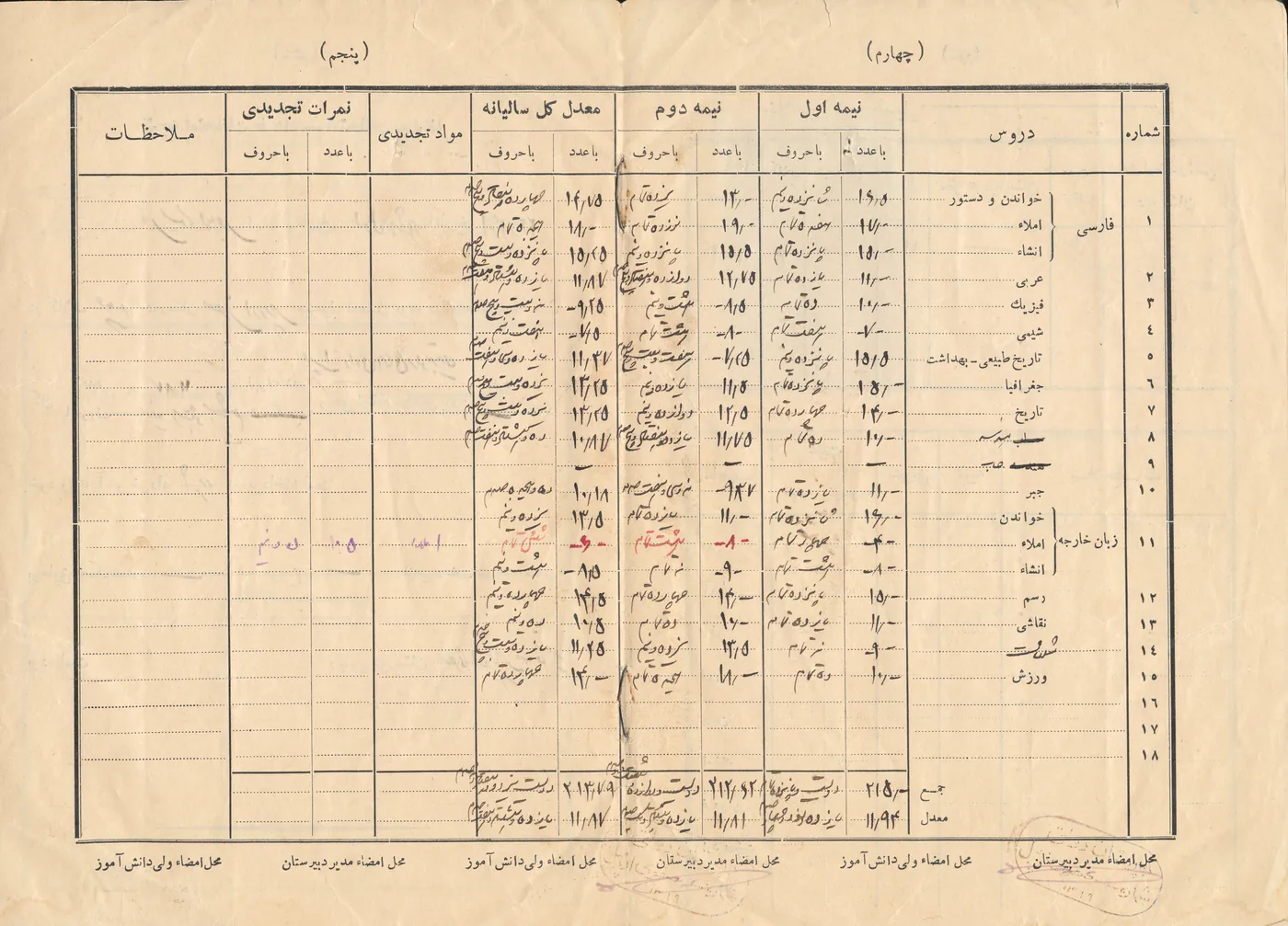
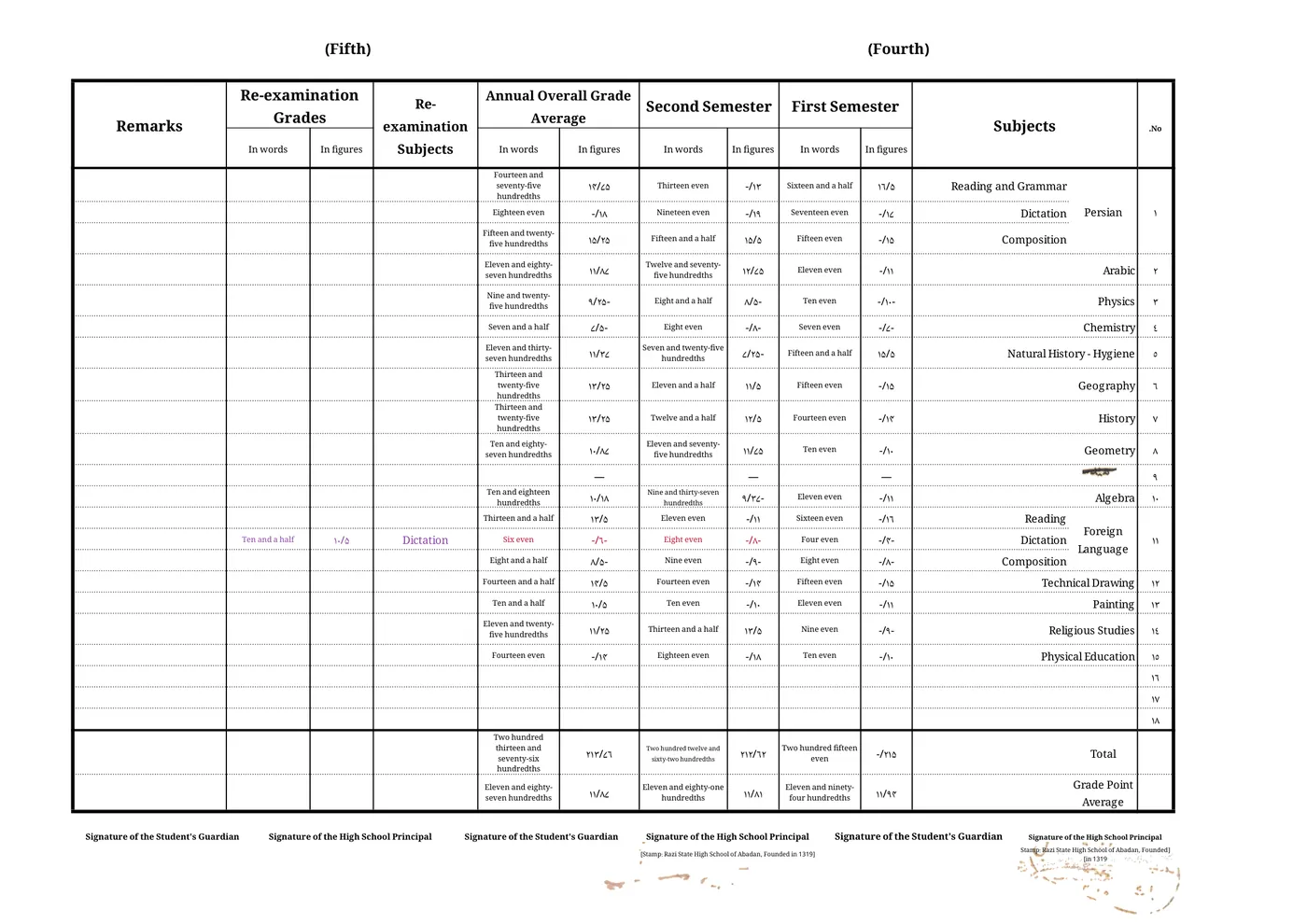
I keep the stamp in the position where it appears on the scanned document and add a short note in brackets beneath it with the words read from the stamp, such as “[Stamp: …]”. A translator needs the stamp’s words as text because a certified translation has to translate the stamp too. Retyping a round stamp by hand is where words can get lost.
The method matters because a stamp is both part of the page image and a source of text. If the words are too small or blurred, don’t guess at the institution name or official wording. Ask for a clearer scan or have the translator check the original.
At four in the morning on 13 November 2026, a man in Germany uploaded three photos of Kurdish school documents because he needed them in German for the ZAB, the office that rates foreign education. Sorani Kurdish is written in Arabic script, and his documents were phone photos of paper forms with stamps.
A phone photo can be enough to start a translation workflow, but it doesn’t make difficult text easy to read. Make sure the page is in focus, the whole document is visible, and stamps aren’t cut off. If the document has a reverse side or an extra page, include it rather than assuming the admissions office only needs the front.
Course names can also be difficult to translate consistently. A university may use a specific term for a subject, programme, or qualification. Share any official English titles or the recipient’s terminology with the translator. Don’t replace the original course name with a guessed equivalent if the receiving institution needs an accurate record of what the source says.
Names, dates, and grades deserve a separate check. The spelling of a person’s name should match the passport or other identity document used in the application. Grades and credits should be copied from the source, not converted into another country’s grading scale unless the institution specifically asks for a conversion.
A translation should represent what can be seen on the document. If a stamp is illegible, a note that it is unclear is safer than invented wording. If a signature is present, the translation should identify it as a signature when required; it shouldn’t invent the signer’s name.
VUB’s published requirements call for an official transcript with a school signature and stamp or digital verification. That makes the source document’s authenticity and completeness relevant as well as the translated words. Follow the recipient’s current instructions, because another university may ask for a different form of verification.
Apostille questions should come before arranging the translation if the original may need legalization. An apostille is a certificate used to authenticate certain public documents for use abroad; it doesn’t certify the accuracy of the translation or make an academic certificate equivalent to a diploma. The recipient decides whether it requires one for the document in your case. For document order, see whether to apostille or translate a diploma first.
Requirements vary by recipient and application route
No single rule in the cited sources says that every Ukrainian academic certificate must be notarized or apostilled for every foreign university. The receiving institution’s instructions take priority. Requirements can differ by document type, language, application purpose, and the authority reviewing the file.
VUB offers a concrete example of an institution-specific policy. Its reviewed requirements ask for an original and a certified translation when documents aren’t in English, Dutch, French, or German. The same guidance lists a diploma and transcript separately for master’s applications, and describes an official transcript as carrying a school signature and stamp or digital verification. Those details show why “translate my certificate” is not a complete specification.
A different route may apply if you can’t access your education documents. VUB says refugee applicants without access to documents should submit the fullest package they can and notes that the university may help find an alternative when documents are missing. That is a specific procedure described by VUB, not a promise that every institution will waive a document requirement.
The application cycle also matters. Deadlines change, and a university’s current page may set different dates or document rules for a later intake. Check the instructions for the year and programme you are applying to, not an old checklist copied from another applicant.
If the admissions office gives you an unclear answer, send a focused follow-up. Ask whether it accepts the academic certificate for your named purpose, what translation status it requires, whether the original needs an apostille, and whether you must later show a paper original. Keep the replies together. A translator can then work from a clear specification instead of making assumptions.
For broader context on translating education records, you can also read how course titles in a diploma supplement are translated. The terminology may differ between institutions, but the same principle applies: preserve what the source says and follow the recipient’s instructions.
FAQ
Can I use an academic certificate instead of a diploma for a foreign university?
Only if the university accepts it for your specific purpose. An academic certificate records courses, grades, and credits, while a diploma proves that you completed a programme and earned a qualification. VUB lists a diploma and transcript separately for master’s applications in its required-document guidance.
Does an academic certificate need a notarized translation?
Not automatically. Ask the receiving institution whether it accepts a certified translation, requires notarization, or expects a translator recognized in its jurisdiction. VUB’s reviewed requirements call for certified translations for certain documents but don’t establish notarization as a universal requirement.
Do I need an apostille on a Ukrainian academic certificate?
The requirement depends on the receiving institution and its rules for the original document. Ask whether the original needs an apostille before paying for legalization. An apostille doesn’t turn an academic certificate into a diploma.
What should an academic certificate translation include?
The translation should reflect the complete official document, including course names, grades, credits, stamps, signatures, and notes that form part of the source. Follow the recipient’s instructions for language and certification, and ask the translator to flag text that can’t be read clearly.
What if the university asks for a diploma but I only have an academic certificate?
Ask the admissions office in writing whether it will consider the certificate as evidence of completed coursework or accept another document for your application. The certificate records study results, but it doesn’t establish that you completed the programme or earned a degree.
Will a certified translation guarantee that my application is accepted?
No. Certification concerns the translation and its required form; the institution still decides whether the document itself meets its admissions or transfer rules. VUB warns that required documents must be submitted before its application deadline for the application to be processed, according to its published requirements.
Can I translate the certificate myself?
You can prepare a working translation, but the receiving institution may require a certified translation or a translator accepted in its jurisdiction. Check the exact requirement before submitting your own translation.
Can I translate a scan or phone photo of the academic certificate?
Yes, but unclear text, handwriting, and stamps can be difficult to read from an image. Send a complete, readable scan or photo, and have uncertain details checked against the original rather than guessed.
Need these documents translated?
Leave your number and we will message you, tell you which certification your institution needs, and name the price. Translation, translator review and notary certification.