A diploma deadline can turn a small sequencing question into a repeat trip to a translator: should you translate the document now, or wait until the apostille is attached? For many submissions, the practical answer is to check the recipient’s rules, apostille the original if required, then translate the diploma and every attached mark together.
That sequence is not a universal rule imposed by the Hague Apostille Convention. The Convention explains what an apostille authenticates and where it can be placed. The receiving institution decides what it wants to see and what translation it accepts.
For a Ukrainian education document, the Ministry of Education and Science is the competent authority identified for apostilles on official documents issued by education institutions and organizations in education and science. The language you need for the translation doesn’t decide which authority handles the apostille.
The details matter because an apostille may be placed on the document itself or on a separate sheet attached to it. A translation prepared before that extra sheet exists may leave the apostille untranslated. The right order depends on the destination, the procedure and the recipient’s instructions.
What an apostille does, and what it doesn’t
An apostille is a certificate used to authenticate certain public documents for use in another country that is party to the Convention. The Convention’s scope covers public documents issued in one contracting state for presentation in another; administrative documents are among the categories it treats as public documents. See Article 1 of the Convention.
In practical terms, the apostille confirms the authenticity of the signature on the document, the official capacity in which the signer acted and, where relevant, the identity of the seal or stamp. Article 5 sets out that limited purpose:
“When properly filled in, it will certify the authenticity of the signature, the capacity in which the person signing the document has acted and, where appropriate, the identity of the seal or stamp which the document bears.”
The apostille doesn’t assess whether your degree is academically equivalent to a qualification in the destination country. It doesn’t confirm that the grades or claims printed on the diploma are true. It authenticates specified formal details, not the educational substance.
That distinction helps separate three tasks that are often bundled together in conversation:
- Authentication: the apostille confirms the signature, capacity and relevant seal or stamp.
- Translation: a translator renders the document’s content into another language.
- Recognition or evaluation: the receiving authority decides what the qualification means for its own process.
An apostille may replace diplomatic or consular legalisation for documents covered by the Convention. Article 2 abolishes that legalisation requirement, while Article 3 describes the apostille as the formality that may generally be required for the covered authentication. Neither provision makes a translation unnecessary if the receiving institution asks for one. Read Articles 2 and 3 of the Convention.
So an apostille is not a translation stamp, and a translation is not an apostille. One addresses the authenticity of a signature and official status; the other makes the document’s contents readable to the recipient.
Why the apostille usually comes before the translation
The practical reason for apostilling first is straightforward: the final document set may contain material that isn’t there yet when you first request a translation. Article 4 of the Convention says the apostille certificate goes on the document itself or on an attached sheet called an allonge.
“The certificate referred to in the first paragraph of Article 3 shall be placed on the document itself or on an ‘allonge’; it shall be in the form of the model annexed to the present Convention.”
If the apostille is added after translation, the translated version may cover the diploma but not the new certificate or attached sheet. When the receiving institution expects a translation of all the document’s marks, you may need to return to the translator and have the apostille translated too.
The clean sequence, when an apostille is required and the recipient wants the authentication translated, is:
- Ask the recipient which diploma documents it expects and whether it requires an apostille.
- Confirm whether the apostille must be translated and what type of translation the recipient accepts.
- Obtain the apostille from the competent authority for the document.
- Send the complete document set, including any attached apostille sheet, for translation.
- Check that the translation covers the diploma, stamps, signatures and apostille details the recipient requires.
The sequence changes if the recipient says it doesn’t need an apostille, or gives a different instruction. Don’t pay for an apostille simply because a document is going abroad. The Convention allows the relevant formality to be simplified or waived through applicable rules or agreements, and the destination’s procedure may set its own requirements.
A translation made first isn’t automatically unusable. The issue is completeness: if the apostille is attached later and the recipient needs it translated, the original translation won’t contain the new material. Ask whether the translator can add a translation of the apostille or whether the recipient expects a single translation covering the complete set.
What to check before arranging either step
Start with the person or office that will receive the diploma, not with a general search for “apostille for diploma.” A university admissions office, a credential evaluation body and a visa authority may handle different procedures. Their instructions can differ even when the document is the same.
Write down the answer to each of these questions:
- Is an apostille required for this diploma and this procedure? A destination country’s general document rules may include exceptions or a procedure-specific waiver.
- Does the recipient want the diploma, the diploma supplement, or both? Confirm the documents individually instead of assuming one instruction covers the complete education record.
- Does it require the apostille to be translated? Some procedures say so explicitly; others may specify the translated document format without explaining every mark.
- What kind of translation is accepted? The recipient may set requirements for the translator or for certification. Don’t assume that a translation accepted by one institution will meet another institution’s rules.
- Does the recipient need an original, a certified copy, or a scan for an initial check? Follow its exact submission instructions before sending or altering an original.
- Does it want the translation attached to the original or supplied as a separate file? The format can affect how the translator prepares the document set.
Ask for written clarification when a page gives mixed signals. A short email that identifies the procedure and lists the document can prevent you from treating a general country page as a rule for every institution.
For example, Germany’s Foreign Office has a specific instruction for applications for a national visa: documents must be translated into German by an authorised translator, and an apostille, if present, must also be translated. The instruction is tied to that visa process; it isn’t a blanket rule for every German university or every diploma submission. See the Foreign Office guidance.
On November 13, 2026, a man in Germany uploaded three photos of Kurdish school documents at four in the morning. He needed them in German for the ZAB, the office that rates foreign education. Sorani Kurdish is written in Arabic script, and the documents were phone photos of paper forms with stamps.
The detail that matters here is the recipient and purpose: the documents were intended for a specific education-rating office, and the source material included stamps in a script the reader might not know. A translation decision has to account for the entire page, not just the main lines of printed text.
Who handles an apostille for a Ukrainian diploma?
The competent authority depends on the kind and source of the document. For official documents issued by education institutions and organizations in education and science, the HCCH record identifies Ukraine’s Ministry of Education and Science as the competent authority. That makes the Ministry of Education and Science the relevant authority for a Ukrainian diploma, rather than the embassy of the destination country. Check the HCCH record for Ukraine’s competent authorities.
Ukraine assigns apostille work to more than one authority, with responsibilities divided by document type. The HCCH record lists the Ministry of Education and Science for education-related documents; it also identifies other authorities for other document categories. The Ministry of Justice covers documents from courts, notaries and specified justice bodies, while the Ministry of Foreign Affairs covers other official documents. A diploma isn’t routed to an authority simply because you need it in German, English or another language.
The German Embassy in Ukraine also identifies diplomas and other education documents among the documents apostilled by Ukraine’s Ministry of Education and Science. The embassy doesn’t issue or arrange apostilles on Ukrainian documents. Its explanation describes the apostille as confirmation of a signature and, where present, a seal, and says Ukrainian authorities issue apostilles on Ukrainian documents. See the embassy’s apostille information.
That division of responsibility is useful when a person is already outside Ukraine. The destination country’s embassy may explain what it will accept, but that doesn’t make it the authority that authenticates a Ukrainian diploma. First identify the issuing country and document category; then check the competent authority for that category.
Don’t confuse the Ministry of Education and Science’s competence with a general promise that every education document can be apostilled in the same way. Confirm the current process and document requirements with the authority responsible for that type of document. If your file includes several different records, their apostille authorities may not be the same.
An apostille register can also have limits. Ukraine’s electronic register says it checks apostilles placed by the Ministry of Justice after November 9, 2015, and warns that apostilles from other competent authorities aren’t checked in that register. That register therefore isn’t a verification route for an apostille issued by the Ministry of Education and Science. See the Ministry of Justice register.
When the apostille itself needs translation
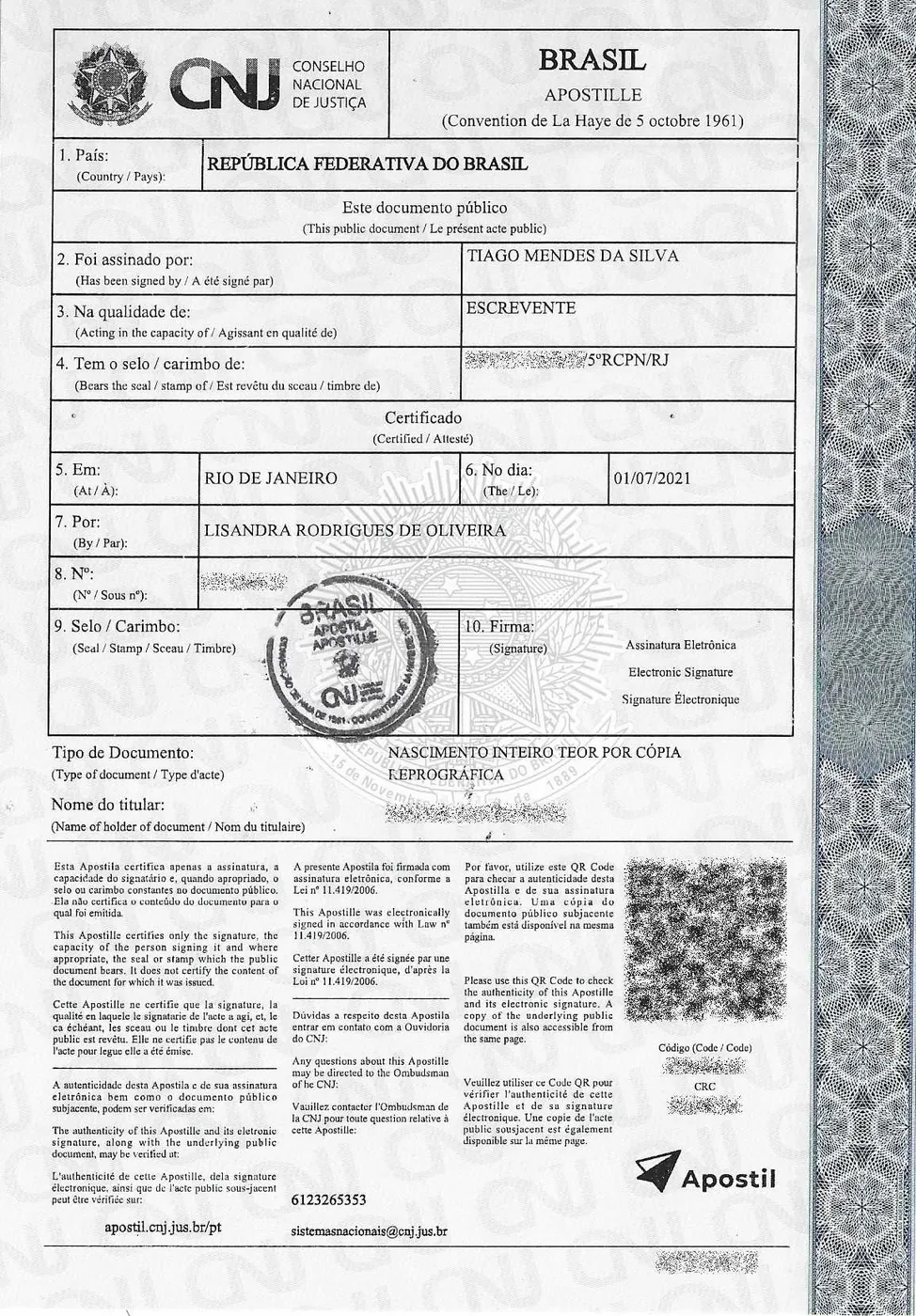
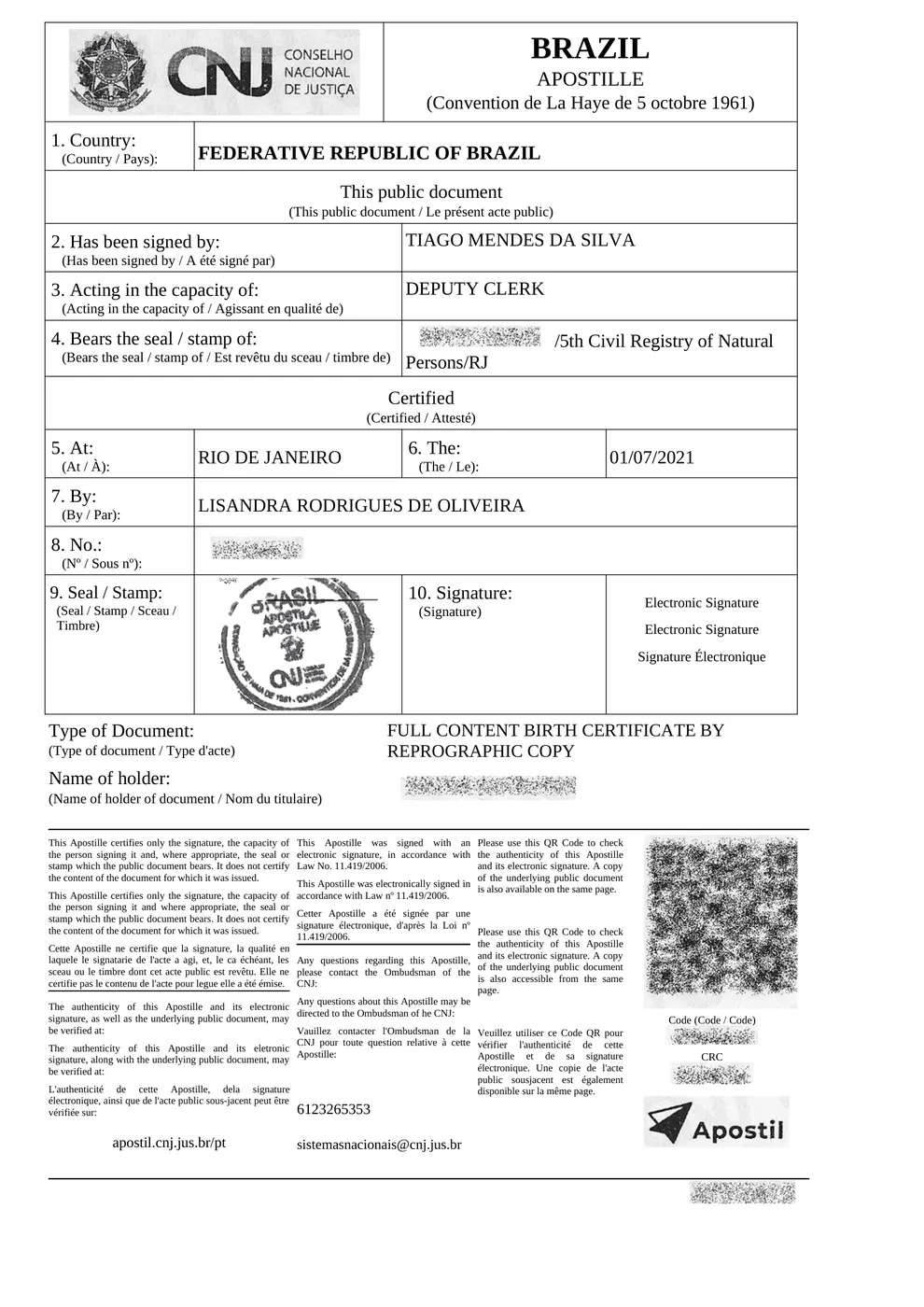
Translate the apostille when the recipient asks for a translation of the complete authenticated document, or when its procedure explicitly requires the apostille in the target language. The apostille is a separate certificate with information of its own, so translating only the diploma text can leave part of the submitted document unexplained.
Germany’s Foreign Office makes the requirement explicit for national visa applications:
“Ist eine Apostille vorhanden, so muss auch diese übersetzt werden.”
The sentence means, “If an apostille is present, it must also be translated.” The Foreign Office guidance applies to the visa procedure described on that page. It isn’t proof that every German institution follows the same requirement for every kind of diploma submission. Read the German-language guidance for the procedure you’re using.
Apostille translation can include more than the word “apostille.” The certificate may carry official details, a signature or a seal. The translator needs to account for the readable content that the recipient expects in the translated set. An attached apostille sheet should travel with the diploma when you submit the complete file for translation.
The diploma supplement can create a similar completeness question. The dossier’s rules don’t establish a universal requirement that every diploma supplement must receive an apostille. Ask the recipient whether it requires the supplement, whether the supplement needs separate authentication, and whether it wants the supplement translated with the diploma.
A practical way to avoid a gap is to give the translator the complete set only after the apostille step, if the recipient requires that apostille. Include every page and attached sheet. If you already translated the diploma, tell the translator that the apostille was added afterward and ask what is needed to produce a complete translation.
On October 30, 2026, I described how we handle a stamp in a scanned document: the stamp stays a picture where it was printed, and a small note in brackets goes right under it with the words read off it, like “[Stamp: …]”. A translator needs the stamp’s words as text because a certified translation has to translate the stamp too, and retyping a round stamp by hand is where words get lost.
A stamp can be easy to overlook when the main text is clear. The same care applies to an apostille: check that every readable mark the recipient expects is represented in the translation, not only the diploma’s central text.
When an apostille may not be required
An apostille isn’t automatically required for every diploma submitted abroad. The applicable rules can depend on the destination, the institution and the purpose of the submission. Article 3 of the Convention allows a formality to be abolished, simplified or waived under applicable rules or agreements. Check the recipient’s instruction before you arrange authentication.
Germany provides a clear example of why a blanket rule doesn’t work. The German Foreign Office’s guidance for the specified visa context names diplomas and school certificates among documents for which an apostille isn’t needed in that context. The same guidance says that if an apostille is present, it must also be translated for the national visa procedure it describes. Those statements are procedure-specific, not a rule for every education submission in Germany. See the Foreign Office’s guidance.
Two separate questions can otherwise get mixed up:
- Does this procedure require an apostille? The receiving institution or the applicable rules answer this.
- If an apostille is present, must it be translated? The recipient’s translation instructions answer this.
A “no” to the first question doesn’t automatically answer the second. If an apostille is not required and you don’t have one, there may be no apostille to translate. If you already have an apostille, the recipient may still ask you to translate it even where the procedure didn’t require you to obtain it.
The Convention covers documents issued in one contracting state for presentation in another, but the Convention’s existence alone doesn’t tell you whether your specific recipient requires an apostille. Article 3 allows for simplified or waived formalities. The safest substitute for guessing is the exact instruction for your destination and purpose.
Common mistakes that leave a diploma file incomplete
The most avoidable mistake is translating the diploma before checking whether an apostille will be attached and whether it must be translated. Article 4 permits the apostille to be placed on the diploma or on a separate attached sheet. If the sheet is added after the translation, the translated file may not include it.
A second mistake is treating an apostille as proof that a degree is recognised. The Convention describes authentication of a signature, official capacity and relevant seal or stamp; it doesn’t certify academic equivalence. If the institution requires an evaluation of your qualification, an apostille doesn’t replace that evaluation.
A third mistake is choosing the apostille authority based on the destination country or translation language. The authority is determined by the document’s origin and category. For a Ukrainian education document, the HCCH identifies the Ministry of Education and Science as the competent authority. A German embassy may provide guidance about apostilles, but it doesn’t issue the apostille for a Ukrainian diploma.
A fourth mistake is relying on an online register without checking which authority issued the apostille. Ukraine’s Ministry of Justice register says it checks Ministry of Justice apostilles placed after November 9, 2015, and doesn’t check apostilles from other competent authorities. That limitation matters if you’re trying to verify a Ministry of Education and Science apostille through the Ministry of Justice register. See the register’s information.
A fifth mistake is assuming that every page or mark on a diploma set is self-explanatory to a foreign recipient. Stamps, signatures, certificates and attached sheets may carry information the recipient expects to see translated. When translation is required, send the complete set and ask whether all marks must be rendered.
If you need a working translation to understand the document before arranging formal submission, ChatsControl can translate a PDF or scan into a formatted Word file, including text recognised from scans. A scan is an image rather than editable text, so the content has to be read before it can be translated; handwritten or heavily degraded scans can be read unreliably. A machine-generated document translation doesn’t replace an authorised or certified translation where the recipient requires one, and it doesn’t decide whether an apostille is necessary.
Before you send anything, keep a short record of the recipient’s answer: whether it wants an apostille, whether it wants the apostille translated, which education documents it expects and what form of translation it accepts. That record helps you keep the authentication and translation steps in the right order without treating a rule from another procedure as your own.
FAQ
Should I apostille or translate my diploma first?
Check the receiving institution’s requirements first. If an apostille is required and the recipient wants the apostille translated, apostille the diploma before translating the complete set so the translation can include the attached certificate.
Do I need to translate the apostille with my diploma?
Translate the apostille when the recipient requires the full authenticated document in the target language. Germany’s Foreign Office says an apostille must also be translated for the national visa procedure covered by its guidance, but that instruction isn’t universal for every German institution.
Who apostilles a Ukrainian diploma?
Ukraine’s Ministry of Education and Science is the competent authority for official documents issued by education institutions and organizations in education and science. The HCCH’s Ukraine competent-authority record identifies that responsibility.
Is an apostille enough to submit a diploma abroad?
Not necessarily. An apostille confirms the signature, the signer’s official capacity and, where relevant, a seal or stamp; it doesn’t establish academic equivalence or replace a translation required by the receiving institution.
Does every country or institution require the same diploma process?
No. Requirements can differ by destination, institution and procedure. Ask the recipient whether it needs an apostille, which education documents it wants and what translation format it accepts.
Can I translate the diploma before applying for an apostille?
You can, but the translation may not cover an apostille sheet added later. If the recipient requires the apostille translated, arrange the apostille first and then submit the complete set for translation.
Need these documents translated?
Leave your number and we will message you, tell you which certification your institution needs, and name the price. Translation, translator review and notary certification.