The consent may be valid in Ukraine and still not meet a foreign authority’s requirements
A family can have a properly prepared Ukrainian travel consent and still face a problem abroad if the receiving authority expects a translation, a particular certification, or an apostille. The difficult part isn’t just translating the words. You need to identify who will read the document, what that reader accepts, and whether the original consent contains the details that reader needs.
A child travel consent is a statement in which a parent or another person with parental authority gives permission for a child’s trip under specified conditions. Under the general Ukrainian rules described by the free legal aid system, travel abroad by a child under 16 involves parental consent and an accompanying parent or authorized adult, subject to legal exceptions and current rules.
A translation doesn’t replace the consent itself. Nor does an apostille replace a translation. Each step serves a different purpose, and the receiving authority may ask for one, more than one, or none of them.
The free legal aid system says: “Consent is оформлюється заявою, the authenticity of the signature on which is certified by a notary.” In English: “Consent is made as a statement, and the authenticity of the signature on it is certified by a notary.” (Source)
The distinction matters because a translated statement and a notarized signature aren’t interchangeable. A notary’s certification of a parent’s signature confirms that signature under the applicable notarial procedure; it doesn’t, by itself, tell a foreign institution that the text has been translated into its accepted language.
Start by asking the authority that will receive the document. The recipient might be a border authority, a school, a consulate, a carrier or another institution. The same paper can be used for different purposes, and the language and form accepted by one recipient may not be enough for another.
A useful comparison is the process for other official documents: a translation requirement may be separate from a requirement to certify who signed the original. The same distinction comes up with bank documents and with notarial attestation of a translator’s signature. Remove the extra space in the first link when copying; the correct link is bank document translation and notarization.
First decide what you need: consent, translation, certification or apostille
The word “notarized” can refer to different acts, so don’t rely on a vague request to “notarize the translation.” Ask the recipient which action it means and whether it applies to the original consent, the translator’s signature or both.
| Document step | What it does | What it doesn’t do |
|---|---|---|
| Parent’s consent | Records permission for the child’s trip under the conditions set out in the statement | Doesn’t translate the statement into another language |
| Notarization of the parent’s signature | Certifies the authenticity of the parent’s signature under the relevant procedure | Doesn’t establish that a foreign institution accepts the document |
| Translation | Makes the contents readable in another language | Doesn’t authenticate the original signature or seal |
| Notarial certification of a translator’s signature | Certifies the translator’s signature according to the notary’s procedure | Isn’t the same as a notary translating the document |
| Apostille | Authenticates an official signature and seal for use under the applicable recognition process | Doesn’t translate the text or automatically apply to every trip |
The Ministry of Justice’s description of apostilles explains that an apostille authenticates the signature and seal or stamp on an official document. The same explanation lists notarial documents, including statements and notarized translations, among possible documents for apostille treatment. The apostille still doesn’t translate the text.
The receiving authority determines which chain it accepts. It might ask for a translated consent, a notarized translation, an apostille on the original, an apostille on a notarized translation, or another form. Don’t assume that a requirement for an apostille on one document automatically applies to every document in a travel packet.
Ask the recipient a specific question rather than asking only, “Do you need notarization?” For example: “Do you accept a Ukrainian-language consent with a certified English translation, or do you require an apostille on the original or translation as well?” A clear answer helps you avoid paying for a procedure that doesn’t solve the actual problem.
The Ministry of Justice describes an apostille as authenticating the signature and seal or stamp on an official document, rather than translating its contents. (Source)
That definition also explains why translation and apostille requirements can coexist. The translation tells the reader what the document says; the apostille helps authenticate the official signature or seal. Neither procedure does the other’s job.
The phrase “certified translation” can also mean different things in different countries. Some recipients use it for a translation with a translator’s statement; others may require a notary’s involvement or a sworn translator. Ask the recipient to name the exact format it accepts, and check the destination country’s current requirements before you order.
For a broader explanation of the difference between certification methods, see notarial attestation of a translator’s signature. For related official paperwork, the guide to criminal record certificate translations explains why the recipient’s wording matters when choosing a certification route.
What to collect before you arrange the consent and translation
A complete document set starts with the recipient’s requirements, not with a generic template. The table below is a practical checklist to use while you confirm what the receiving authority needs.
| Item to check | What to confirm | Why it matters |
|---|---|---|
| Purpose | Is the document for Ukrainian border control, a foreign institution, a carrier or a consulate? | Different readers may ask for different language and certification steps. |
| Child’s identity | Which identity document and spelling of the child’s name should the consent follow? | Transliteration differences can make the translated document harder to match to the original passport or other record. |
| Parent or guardian | Who must give consent, and who will accompany the child? | The applicable Ukrainian procedure depends on the child’s escort and any legal exception. |
| Destination | Which country or countries should appear in the consent? | The general Ukrainian guidance says to name the destination country. |
| Dates or period | What period of travel must the statement cover? | The general guidance says the stay period should be included. |
| Supporting documents | Does an exception apply, and what evidence does it require? | A claimed exception may depend on proof such as a court document or other official record. |
| Language | Which language does the receiving authority accept? | A correct translation into the wrong language can still be rejected. |
| Certification | Does the recipient require a translator’s signature to be notarized, a sworn translator, or another format? | The word “certified” can refer to different procedures. |
| Apostille | Does the recipient require an apostille, and if so, on which document? | Apostille placement depends on the document chain the recipient accepts. |
Under the general Ukrainian rule described by the free legal aid system, the consent should state the destination country and the period of stay. Treat those details as a starting point, not as a complete template for every family or destination.
The same legal aid guidance says the parent whose signature is being certified must appear in person before the notary. It also says parents can approach any notary, regardless of their place of registration or residence. Confirm the current procedure with the notary before booking, because the guidance reflects the rules checked on February 8, 2025.
The consent is made as a statement on a special notarial document form, according to that guidance. A text printed and signed at home doesn’t replace the notarially certified statement when notarized consent is required. Ask the notary what identity and supporting documents to bring, and have the notary confirm the statement’s details before signing.
The free legal aid system says parents can ask any notary to certify the signature, regardless of the parents’ place of registration or residence. (Source)
The quoted point can make arranging the appointment simpler, but it doesn’t mean every notary will handle every unusual case in the same way. Confirm the documents the notary needs, particularly if the family relies on an exception or uses a foreign-issued supporting document.
If someone is preparing consent through a Ukrainian consulate abroad, check the consulate’s own instructions and appointment procedure. The Ukrainian consular page in Brno warns that an improperly prepared application package can lead to refusal of the service and the need to book again. That page’s instructions should be checked directly before relying on them; the source was not available to fetch during research. No calendar wait time is stated there.
Three routes for getting the translation and certification
The right route depends on the recipient’s wording, the document’s condition and whether the translation must be completed with a notary. The options below aren’t interchangeable, so compare them against the requirement you’ve confirmed.
Route 1: A translation bureau
A bureau can coordinate translation and, where offered, the notarial step. That can be useful when the recipient asks for a specific certification format or when you want one provider to help check that the translation includes the entire document.
Before handing over the original, ask whether the bureau needs to inspect it in person or can work from a scan. A scan may be enough for translation preparation, but a notary may need the original or may require the signer to appear in person for a separate notarization. The recipient’s rules and the notary’s procedure decide what is acceptable.
Ask for the deliverables in writing: whether the quoted service includes the translation, the translator’s signature, notarial certification, an apostille, copies or courier delivery. A quote that says only “translation and notarization” may not make clear which signature is being notarized.
Route 2: A freelance translator and a separate notary
A freelance translator can prepare the text, while a notary handles the particular certification the recipient requires. This route can work if the translator has the right language skills and the notary accepts the translator’s procedure and documents.
The main coordination risk is assuming that the notary will certify any translation. A notary may certify the translator’s signature, or a notary may translate a standard document and certify that translation under a different service. A price list from one provider dated January 9, 2025, distinguishes these services: UAH 300 for certification of a translator’s signature and UAH 500 for the notary’s translation of a standard document. Those figures are one provider’s dated example, not a universal fee; see the price list.
Ask the notary whether the translator needs to appear, what proof of qualifications is required and whether the notary needs the original consent. Don’t pay for a translation first if the recipient’s requirements would make that version unusable.
Route 3: Online preparation and a human certification step
Online document translation can help when you have a clean scan or digital file and want to prepare the translation without visiting a bureau for the first step. The tool and the certification are separate: an automated translation doesn’t become legally certified just because the source file is an official document.
In ChatsControl, you upload a DOCX or PDF and receive a translated Word file that keeps the document’s layout, such as headings and tables. The bilingual review view puts the source and translation side by side, which helps you compare names, dates and places before asking a human translator or notary to handle any required certification. ChatsControl’s certified-translation service uses a human translator and a notary for documents that need that step; the process isn’t fully automated.
The certified-translation service lists translation at UAH 300 to 750 per 1,800 characters, depending on language, notarial certification at UAH 400 per document, and an apostille at UAH 2,100 per document. Those are the service’s listed prices in the product reference, not a guarantee that every recipient needs all three services; check the certified translation service and confirm the required scope before ordering.
Online preparation has limits. Handwriting and very poor scans can be read unreliably, and a generated translation doesn’t replace a human review or a legally required certification. If a stamp, handwritten date or signature note is hard to read, provide a clearer scan or arrange for someone to inspect the original.
Compare the routes by what the recipient actually needs
The cheapest-looking route isn’t always the least expensive one if it produces a document that the recipient won’t accept. Compare the required result, not just the word “translation” in a quote.
| Route | Useful when | Questions to ask | Main limitation |
|---|---|---|---|
| Translation bureau | You want translation and coordination of certification from one provider | Does the quote include translator certification, notarial certification, apostille or delivery? | The label “notarized translation” may not explain which act is included. |
| Freelance translator plus notary | You can coordinate separate providers and already know the recipient’s exact format | Will the notary accept this translator’s work and what must the translator provide? | Responsibility for matching the steps sits with you. |
| Online preparation plus human review | You have a digital file and want to review names and layout before certification | Is a human review and notarial step available if the recipient requires it? | Automated translation alone may not meet a legal certification requirement. |
A dated price example can help you understand how providers separate services, but it shouldn’t be mistaken for a current market average. A Kyiv notary’s price list dated January 9, 2025, gave UAH 1,000 for a one-parent consent for a single trip and UAH 1,200 for consent from both parents. The same list gave UAH 300 for certifying a translator’s signature, UAH 500 for a notary’s translation of a standard document and UAH 800 for an apostille. Check the dated price list and confirm current fees with the provider; the figures aren’t a government-wide tariff.
A separate provider’s search result gave a consent price “from UAH 800,” but its price date couldn’t be established and the page wasn’t available to verify. That figure isn’t a reliable current comparison, so ask for a written quote instead.
The practical comparison isn’t “online versus offline” in the abstract. It’s whether the chosen route produces exactly the language, signature certification and apostille arrangement the recipient accepts. A lower fee for translation alone doesn’t solve a requirement for a notarized signature or a particular apostille chain.
A step-by-step process to prepare the document
A clear sequence prevents you from ordering translation before you’ve confirmed the underlying consent or recipient requirements. Keep the recipient’s response and the final document together so you can check the finished packet against the same instructions.
- Identify the recipient. Decide whether the document is for Ukrainian border control, a foreign authority, a school, a carrier or a consulate. Ask the actual recipient what it needs, rather than assuming one country’s rule applies everywhere.
- Confirm the applicable consent rule. Check the child’s age, who will accompany the child and whether an exception applies. The rules on crossing the Ukrainian border and the free legal aid guidance describe the general framework, but confirm the current rules for the family’s situation.
- Ask about language, certification and apostille separately. Get the receiving authority to specify the accepted language and whether it wants the original consent translated, the translator’s signature certified or an apostille. Ask which document must carry the apostille.
- Prepare the original consent. If notarized consent is required, arrange the statement and signature with a notary. The general guidance calls for the destination country and period of stay, and says the signing parent must appear in person.
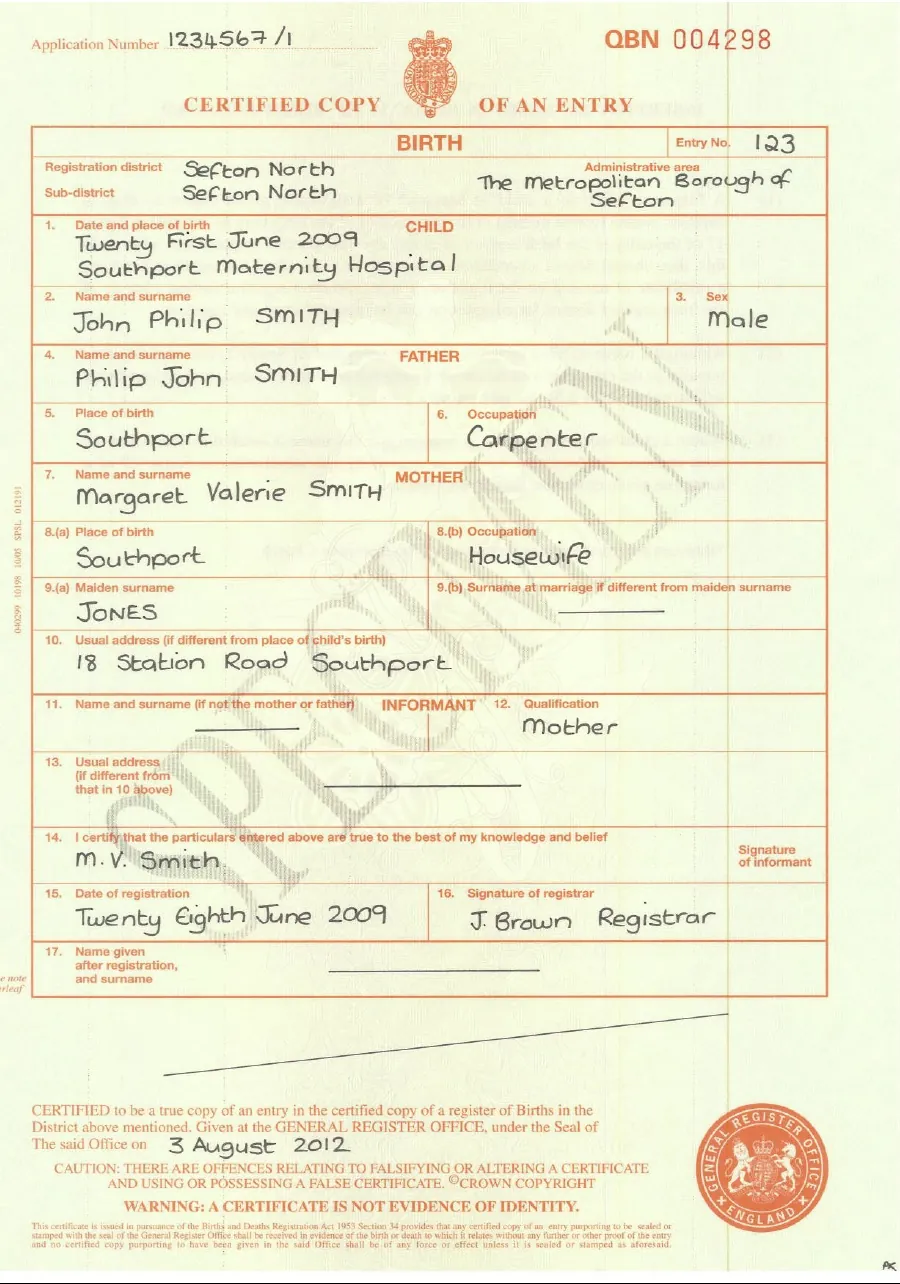
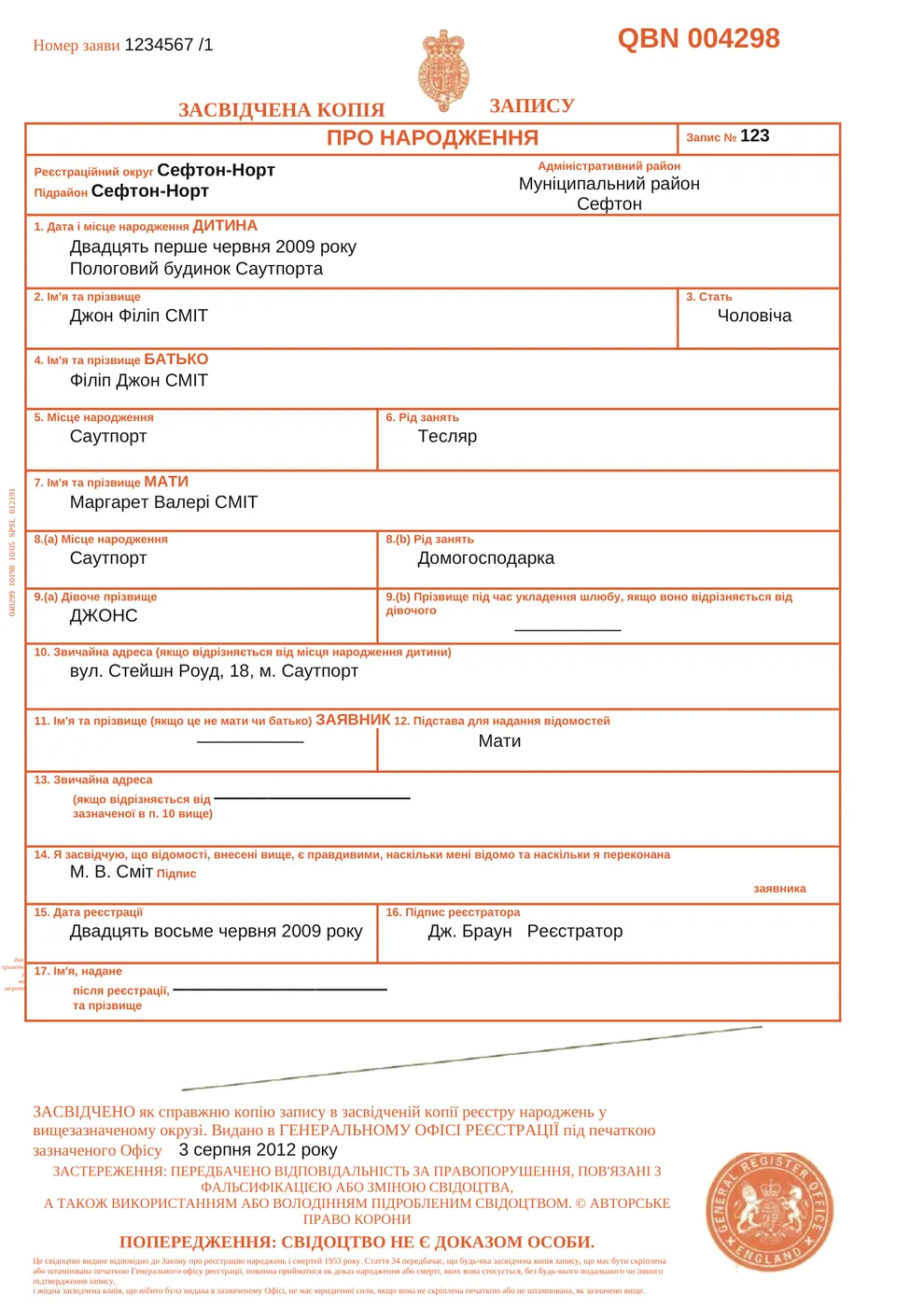
- Translate the complete document. Include the notarial certificate, seal or stamp text, handwritten additions and any attached material that the recipient needs to understand. Don’t send only the main paragraph if the certification text is part of the document.
- Complete only the required certification steps. Use the recipient’s exact instructions to decide whether the translator’s signature needs notarization or an apostille is needed. Don’t treat an apostille as a translation.
- Check names, dates and numbers against the original. Compare the child’s and parent’s names with their identity documents, then check the destination and travel period against the consent. Make sure the translation doesn’t change a passport number or date.
- Keep the original and translation together. Confirm whether the recipient wants the original, a certified copy or a particular order of pages. Carry any supporting evidence if the family relies on an exception.
The first two steps are especially important during martial or emergency conditions. The State Border Guard Service guidance describes simplified procedures for some children under 16 travelling with particular relatives or authorized adults during those periods. The applicable category and current wording should be checked before travel; a rule that affects Ukrainian border control doesn’t automatically settle what a foreign institution will demand.
The border-crossing rules for Ukrainian citizens who haven’t reached 16 are regulated by the Rules approved on January 27, 1995, Resolution No. 57, according to the Koblivska community guidance.
The date in that quote identifies the resolution, not a guarantee that every detail of today’s procedure is unchanged. Read the current version of the rules and check for special exceptions before acting on an older explanation.
Pitfalls that can make a correct translation unusable
A translation can be accurate and still fail the recipient’s requirements. Most preventable problems arise because the family checks only the translated words and overlooks the original consent, the notarial text or the receiving authority’s instructions.
Translating only the main statement
A consent may include a notarial certificate, seal, stamp, handwritten notes or other text beyond the parent’s main statement. A foreign reader may need those elements too, especially when the translation is being reviewed as a complete official document.
On a scanned document, the stamp stays as a picture where it was printed, and right under it goes a small note in brackets with the words read off it, like “[Stamp: …]”. A translator needs the stamp’s words as text, because a certified translation has to translate the stamp too, and retyping a round stamp by hand is where words get lost.
A stamp’s shape and placement may remain visible in the translated file, but the words still need to appear as readable text in the translation. When you send a scan, ask the translator how unclear stamp wording will be handled and whether the original needs to be checked.
Guessing about an apostille
An apostille authenticates a signature and seal; it doesn’t prove that the translated wording is correct or that the recipient accepts the document. The Ministry of Justice explanation describes the purpose of an apostille and identifies notarial documents among the documents that may receive one.
Ask the recipient whether an apostille is required and, if so, whether it must go on the original consent, a notarially certified translation or another document in the chain. A request that simply says “apostilled” may need clarification before you pay for the wrong service.
Confusing two kinds of notarial service
A notary’s certification of a translator’s signature and a notary’s own translation of a standard document are separate services. The January 9, 2025, Kyiv price list separates them at UAH 300 and UAH 500 respectively, but the amount is only an example from that provider and may have changed. Confirm the current service and fee with the notary before submitting the document (dated price list).
A request for “notarization” is not precise enough. Ask whether the recipient means certification of the parent’s signature on the consent, certification of the translator’s signature on the translation, or a translation completed by a notary.
Assuming martial-law rules answer every question
Ukrainian rules may simplify some journeys for a child under 16 during martial or emergency conditions. The specific escort and documentation matter, and the State Border Guard Service page should be checked for the current applicable category.
A foreign authority, school, carrier or consulate can have its own document requirements. A consent that isn’t needed for a particular Ukrainian border-control situation may still be requested by an organization abroad. Ask the foreign recipient directly rather than treating a border rule as a universal international rule.
Relying on an exception without its evidence
The free legal aid guidance lists situations in which a second parent’s consent may not be required if the relevant evidence is available. Examples include death, termination of parental rights, a court decision, a declaration of absence or incapacity, and certain other circumstances. The correct supporting document depends on the particular basis, so check the legal aid guidance and verify the current rules before travelling.
Don’t translate an explanation of an exception in place of the evidence itself. If the authority needs a court decision or another official record, ask whether that record also needs translation, certification or an apostille.
Sending a scan that’s hard to read
A blurry stamp, shadow across a signature or cropped notarial text can make the translator guess or mark text as unreadable. A clean scan or photograph should show all pages, edges, seals and attachments. Handwritten text and degraded scans are especially difficult to read reliably, so arrange a human check against the original if any part is unclear.
ChatsControl can read scanned PDFs and images and return a formatted Word translation, but handwriting and very poor scans remain limitations. Treat the output as a draft to review, not as a certified translation; the recipient’s certification rules still apply.
Finding an error after the consent is notarized
Names, passport numbers, destination countries and dates deserve a final comparison before the parent signs. An error in the underlying consent can mean arranging a corrected statement, while an error in the translation may require a corrected translation and another certification step.
A Kyiv notary’s January 9, 2025, price list gave UAH 1,000 for a one-parent consent for a single trip. That figure is a dated example, not a guaranteed repeat cost; ask the notary what a correction would require and what it would cost (price list). Checking the names and travel period before signing is simpler than fixing a mismatch after the document has been translated.
FAQ
Does a child travel consent need to be translated for another country?
There’s no universal rule for every destination. Ask the authority, school, carrier or consulate receiving the document which language and certification it accepts, and confirm whether it wants an apostille as well.
Who certifies a child travel consent translation, a translator or a notary?
The receiving authority decides what it accepts. A notary may certify the translator’s signature, while a notary who translates a document may certify the translation under a different procedure; ask which one the recipient means.
Does a child travel consent need an apostille?
Not automatically. An apostille authenticates an official signature and seal, not the translated content, so confirm with the receiving authority whether it needs one and which document must carry it.
How much does a child travel consent and its translation cost in Ukraine?
Costs depend on the provider, language and certification steps. A Kyiv notary’s price list dated January 9, 2025, gave UAH 1,000 for one parent’s consent for a single trip and UAH 1,200 for consent from both parents; those are examples, not universal rates.
What details should a child travel consent include?
The general Ukrainian guidance says the consent should name the destination country and the period of stay. Confirm the wording with the notary and the recipient, especially if the trip or accompanying adult falls under a special procedure.
Is the other parent’s notarized consent required during martial law?
The applicable Ukrainian procedure depends on the child’s circumstances and escort, and current border rules should be checked before travel. A simplified Ukrainian border procedure doesn’t necessarily remove a foreign institution’s separate request for consent or translation.
What should I do if a foreign authority rejects the consent?
Ask for the precise reason and the accepted language, certification and apostille requirements. Then correct the consent or obtain the required translation and certification before resubmitting.
Need these documents translated?
Leave your number and we will message you, tell you which certification your institution needs, and name the price. Translation, translator review and notary certification.