A consent form can be grammatically perfect and still fail the person who needs to use it: a participant may not understand what happens during the study, while the review team may find that the translation doesn’t match the approved source. Clinical trial translation is a controlled document workflow, not just a language conversion.
For sponsors, CROs, sites and language teams, the practical challenge is keeping meaning consistent across protocols, participant information, consent forms, questionnaires and revisions. Each document has a different reader and purpose. The right process starts by identifying those differences, then matching the translator, review and approval steps to the risk and destination.
What accurate clinical trial translation involves
Clinical trial translation is the adaptation of study documents into another language while preserving their intended meaning, function, controlled content and usability for the people who rely on them. A word-for-word rendering isn’t enough if it changes a risk description, makes a participant instruction unclear or breaks the relationship between a question and its response options.
The first decision is the document’s audience. A protocol is written for the study team and reviewers. An informed consent form (ICF) and patient information sheet are written for potential participants or their legally designated representatives. A questionnaire is designed to collect answers in a specific way. Translators need to know which role each text serves before choosing terminology or register.
The second decision is where the document will be used. Under Article 26 of Regulation (EU) No 536/2014, Member States determine language requirements for all or parts of a clinical-trial application dossier. The regulation says authorities should consider accepting a commonly understood medical language for documents not addressed to participants. A team shouldn’t assume that one language rule covers every document or every EU country.
Participant-facing information has a separate test. Article 29 of the same regulation says prospective participants, or their legally designated representatives, must receive information in a language they can easily understand before consent. The consent process also includes an opportunity to ask questions and adequate time to decide. Translation therefore affects more than the wording on a page: it can affect whether the participant can understand the information and take part in the process.
In the United States, the FDA’s February 2025 IRB FAQ explains that consent must be in language understandable to the subject under 21 CFR 50.20. Whether an English or translated document is appropriate depends on the subject population and the language used in the consent interview. The operational question isn’t simply “Do we have a translation?” It is “Does this material make sense to the people who will receive it in this study setting?”
Document control belongs in the definition too. The translation should be tied to an identifiable source and version, with decisions and review recorded. If a source changes, the team needs to know which target-language files are affected. Otherwise, an old consent form can remain in circulation after the source has changed.
A useful way to frame the goal is: translate the meaning, preserve the function, and keep the approval trail. That applies whether a team is preparing a single patient information sheet or coordinating a set of documents across countries.
Which documents need translation and review?
Not every file has the same audience, risk or review path. A document inventory gives the project team a practical starting point: list each item, who reads it, where it will be used and what must happen before it is released.
| Document type | Main reader or user | Translation focus | Review focus |
|---|---|---|---|
| Clinical protocol | Investigators, sponsor, reviewers | Study design, procedures, eligibility, safety and defined terms | Meaning, terminology, numbers, cross-references and version |
| Patient information sheet | Prospective participant or representative | Plain language, what participation involves, risks, benefits and rights | Comprehension, local usage, required content and layout |
| Informed consent form | Participant, representative and site staff | Consent wording, choices, signatures and instructions | Match to approved source, participant understanding and required process |
| Participant diary | Participant | Short, usable instructions and response options | Clear prompts, usable fields and correspondence with the study |
| Participation card | Participant and relevant care providers | Key study identifiers and instructions | Accuracy of identifiers and consistency with approved material |
| Questionnaire or clinical outcome assessment | Participant or interviewer | Meaning of items, response options and recall periods | Conceptual equivalence, response usability and any required linguistic validation |
| Investigator or site materials | Study staff | Operational instructions and study-specific terminology | Consistency with protocol and related documents |
| Electronic participant materials | Participant using a screen | Text, labels, prompts and display order | Screen presentation, navigation and approved version |
The table is a planning aid, not a claim that every authority requires every listed item in a particular language. Local rules and the study’s intended use determine what gets translated and submitted. For a country-specific example, SÚKL’s Czech CTIS guidance, Version 3 of 28 January 2026, requires a Czech patient information and informed consent form for Part II and says the original English version isn’t submitted for review (SÚKL guidance). The same guidance doesn’t allow a bilingual version for the standard submission.
That national example also shows why a document list should include format and use, not just file names. SÚKL requires patient-facing materials such as diaries, participation cards and questionnaires to be submitted in Czech. The guidance allows English questionnaires when the investigator completes them together with the participant, but says they won’t be listed among approved documentation in the decision (SÚKL guidance, Version 3 of 28 January 2026).
Electronic questionnaires bring another review surface: the screen the participant sees. SÚKL calls for patient-facing electronic questionnaires to be submitted with screenshots. A translated Word file alone may not show whether a question, response scale or instruction appears correctly in the actual electronic presentation (SÚKL guidance, Version 3 of 28 January 2026).
Use the table as a lead checklist, then add study-specific fields:
- Document name and purpose.
- Intended reader and language community.
- Source file, version and owner.
- Destination country and submission route.
- Required target-language versions.
- Translation, review and approval steps.
- Final file format and distribution location.
- Change history and superseded versions.
A common planning mistake is to put every file into one “medical translation” bucket. A protocol’s technical terminology and an ICF’s participant-friendly language don’t call for the same register or review questions. Assigning one undifferentiated style instruction to both can produce a protocol that feels vague and a consent form that reads like a technical manual.
How to translate participant-facing consent materials
Consent translation deserves a dedicated workflow because the reader must understand what participation means before deciding. Article 29 of Regulation (EU) No 536/2014 sets the expectation that the information be provided in a language the prospective participant or representative can easily understand (Regulation (EU) No 536/2014).
The ICH E6(R3) guideline makes the writing goal plain. Section 2.8 says consent information should be clear and concise, use simple language, and avoid unnecessary volume and complexity, so participants can understand objectives, alternatives, benefits and risks, burdens, rights and expectations. The ICH E6(R3) guideline states:
“The information should be as clear and concise as possible, use simple language and avoid unnecessary volume and complexity.”
That instruction changes how the translator works. A sentence may be technically faithful but too dense for a participant. The answer isn’t to remove information or soften a risk. The answer is to express the same information in clear target-language wording and keep the responsible study team involved when a source sentence itself is unclear.
A practical consent workflow looks like this:
- Confirm the approved source. Record the source language, title, version and date. Don’t translate from an attachment when the controlled source is available.
- Identify the reader and setting. Clarify whether the material is for a participant, representative, investigator-assisted interview or another use.
- Agree on terminology and style. Decide how the team will handle study terms, medical terms, risk language, names and repeated phrases.
- Translate for comprehension. Preserve the meaning and required information while using language suitable for the intended participant population.
- Review the translation against the source. Check risks, alternatives, procedures, benefits, participant rights, instructions and any sections that could affect a decision.
- Check layout and identifiers. Verify headings, tables, fields, study title, study identifiers and the relationship between instructions and signature areas.
- Follow the ethics and regulatory process. Submit the appropriate version for review and wait for the required approval before using it.
- Control distribution. Make sure the site uses the approved version and that any copy provided to a participant matches the consent record.
The process isn’t complete when a translator delivers a file. ICH E6(R3) section 2.8.1 says the IRB/IEC should have documented approval or a favourable opinion of the informed consent materials and process before participants are consented and enrolled (ICH E6(R3), section 2.8.1). A translation team’s internal sign-off doesn’t replace that review.
Consent records also have operational requirements. Article 29 of the EU regulation says documented consent must be written, dated and signed, subject to the regulation’s alternative process when a participant can’t write, and the participant or representative is to receive a copy (Regulation (EU) No 536/2014). In the United States, 21 CFR 50.27(a) requires IRB-approved written consent signed and dated by the subject or legally authorized representative, with a copy provided to the signer, except where the regulation provides otherwise (21 CFR 50.27).
Those requirements make version control part of participant protection, not office housekeeping. If a translated version differs from the approved one, the site needs a clear way to identify which copy is current and which version the participant received.
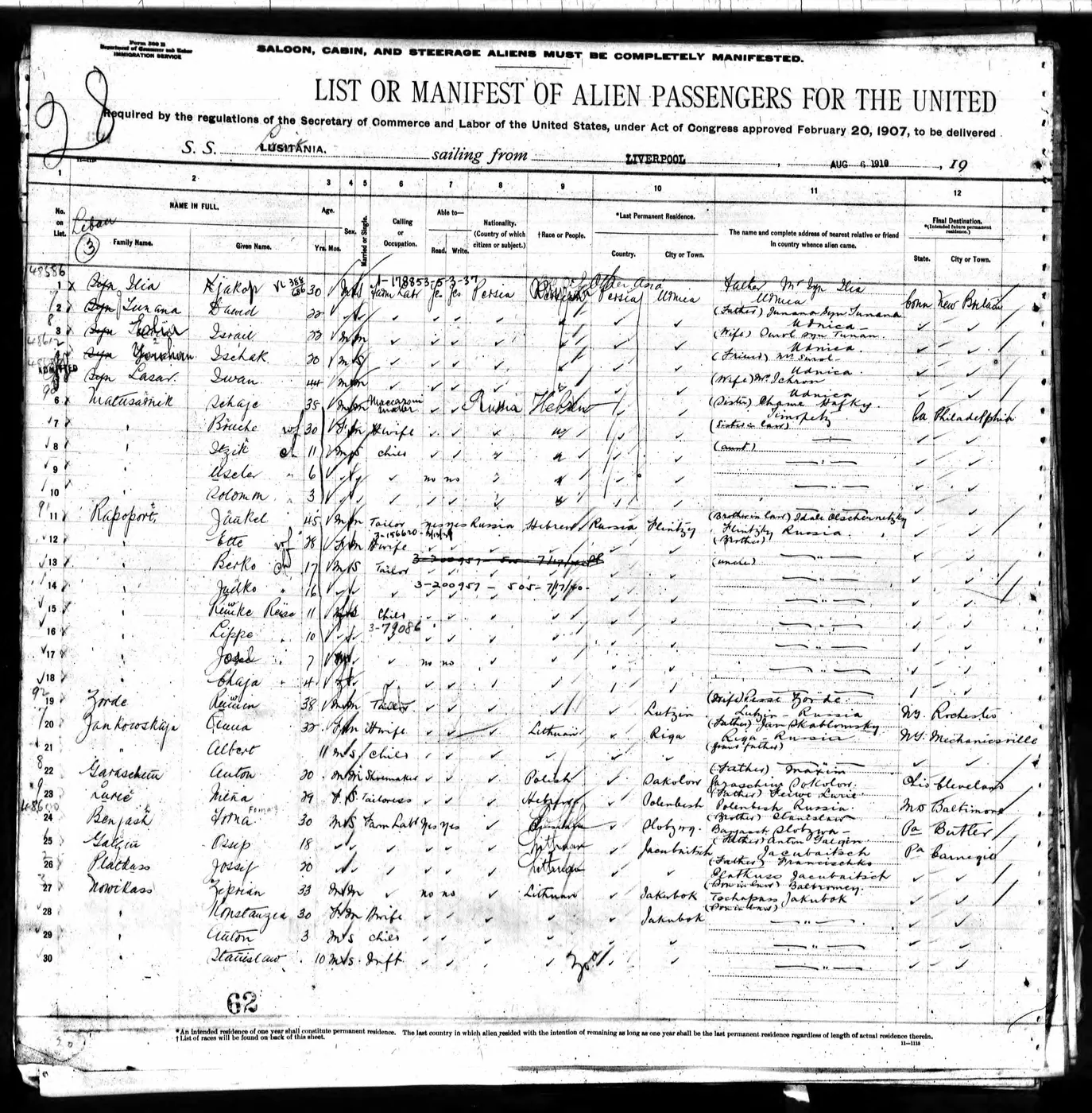
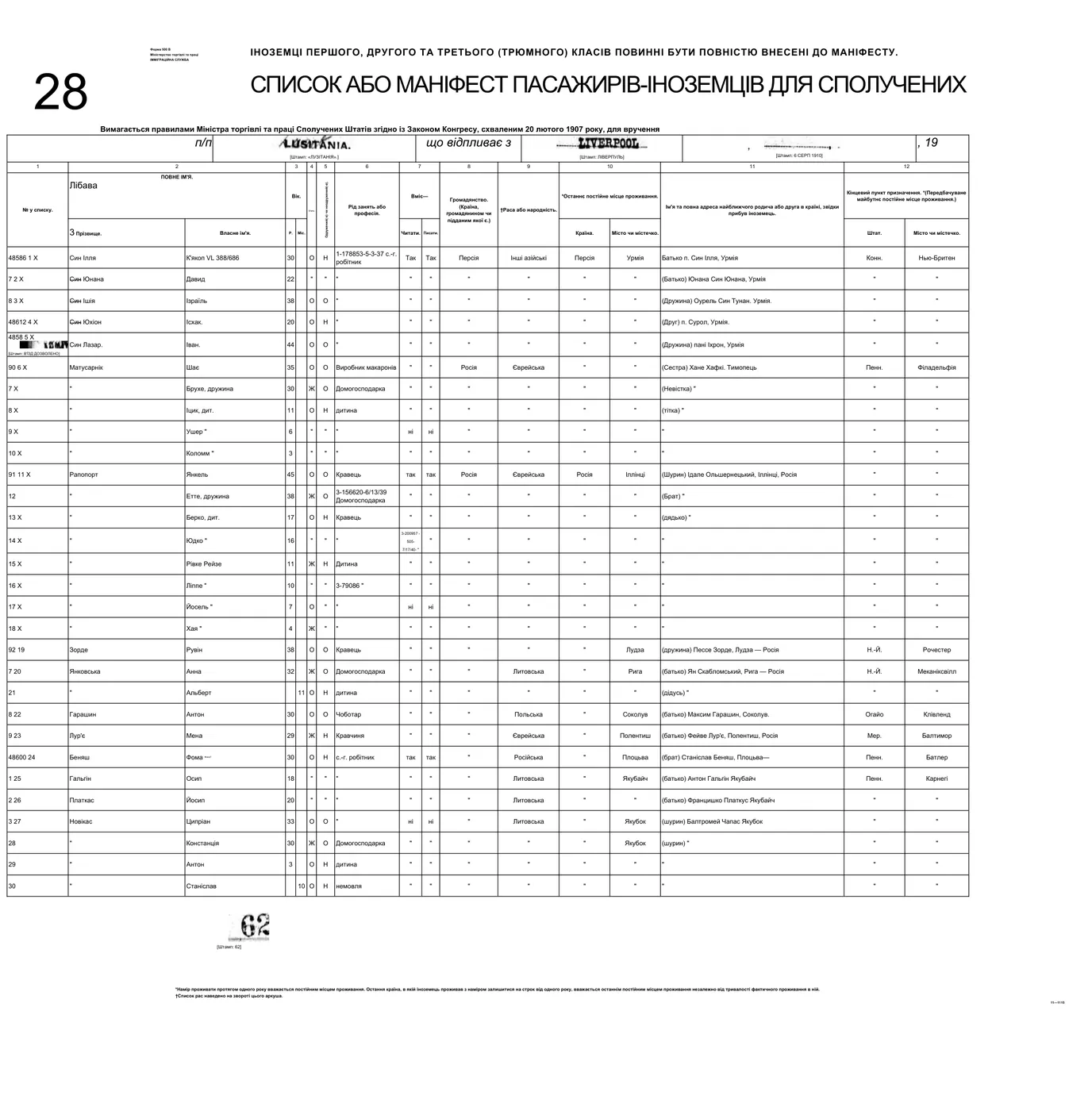
On 30 October 2026, I worked on a scanned document where the stamp stayed as a picture in its original place, with a small bracketed note underneath containing the words read from it, like “[Stamp: …]”. A translator needs the stamp’s wording as text because a certified translation has to translate the stamp too, and retyping a round stamp by hand is where words get lost.
The same principle matters in clinical trial files: stamps, signatures, seals and handwritten additions can carry meaning, but a visual element and its transcription aren’t interchangeable. A reviewer needs to know what was present on the page and what words were read from it. Any uncertain reading should be visible for resolution, not silently guessed.
Choosing a translation and review model
A clinical research team can use an agency, an individual translator or an online document-translation workflow. The right choice depends on the document, destination, confidentiality needs, file condition and review capacity. No single option removes the sponsor’s responsibility for controlled content and approval.
| Option | Where it can fit | What to plan for |
|---|---|---|
| Translation agency | Coordinated projects, multiple languages, managed review steps | Define the scope, reviewer roles, terminology process, version control and deliverables |
| Specialist freelancer | A focused language pair or document set with a clear owner | Confirm relevant experience, availability, review arrangements and traceability |
| Online document workflow | Drafting or handling files where layout and review access matter | Treat output as a draft unless the study’s quality process permits otherwise; assess data handling and limits |
An agency can coordinate several people and deliverables, but a project manager still needs to define who approves terminology, who resolves meaning questions and how revisions are handled. A freelancer can offer a direct working relationship, but one person may not cover translation, independent review and local participant-language expertise. An online workflow can help with editable files and structured review, but it doesn’t make the result regulator-approved or remove the need for human judgement.
How it works in ChatsControl: upload a DOCX or PDF, receive a translated Word file with layout elements such as headings, lists and tables kept in place, then review source and translation side by side. The translation brief lets the user provide audience, domain, tone and preferred terminology. That can help with first drafts and post-editing where a reviewer needs to inspect the source alongside the target text. ChatsControl is a document-translation tool, not a full CAT tool or TMS, and its output doesn’t replace qualified review, ethics approval or study-specific procedures. The app is available at ChatsControl.
For scanned files, the workflow is different from editing a Word document. A scan is an image, so the text must first be read from the page; tables, labels and visual elements then need to be represented in an editable form. Handwriting and very degraded scans can be read unreliably, so a human should compare questionable content with the original. An online process isn’t the right fit when the file is too poor to read or the study requires an offline or on-premise environment.
The translation tool also needs to fit the data policy. ChatsControl is a cloud service, not an offline or on-premise system. Uploaded documents are auto-deleted after 30 days by default, and optional retention settings are available. Teams should compare that setup with their own confidentiality and data-residency requirements before uploading study material.
A specialist translation workflow should leave a traceable record. Global Health Trials recommends retaining translators’ names and contact details and keeping a CV, so the team can answer committee queries and track who performed the language work (Global Health Trials). That documentation is useful whether a team works with an agency or an independent linguist.
Back translation, review and quality checks
Back translation is a separate translator’s rendering of the target-language text back into the source language without seeing the original. The purpose is to help reviewers compare meaning, not to produce a second polished source document.
“A back translation involves taking an existing translation, and then having a separate translator translate it back into the language of origin, but with no knowledge of the original text.”
Global Health Trials explains the method in its article on back translation for clinical trial documentation. The blind back translation can reveal where a phrase may have shifted, but a difference isn’t automatically proof that the forward translation is wrong. Reviewers need to examine the target text, source context and intended meaning, then record the decision.
Does every clinical trial document need back translation? No. Global Health Trials says some ethics committees recommend it and teams can consider it for especially risky or complex studies, but it isn’t universally necessary. The same source notes that some committees may ask for two independent back translations, so confirm the review body’s expectations before setting the workflow or budget (Global Health Trials, 2026-11).
A documented process can follow these steps:
- A qualified translator completes the forward translation.
- A separate translator who hasn’t seen the source creates the blind back translation.
- A reviewer compares the source and back translation sentence by sentence.
- The team discusses discrepancies and records revisions and decisions.
- A final proofreader checks typographical issues without making unapproved changes to meaning.
Back translation is a quality-assurance aid, not proof that the target text is suitable for participants. Global Health Trials recommends documenting discrepancies, revisions and discussion so the team has an audit trail, and it describes proofreading as a check for typographical issues rather than another round of meaning changes (Global Health Trials, 2026-11).
Forward translation and independent review still need to focus on the target reader. Global Health Trials recommends translators who are native speakers of the target language and familiar with the country or region where the text will be used, because local terminology varies. A word that feels familiar in one Spanish-speaking region may not be the usual choice in another; the same issue can affect how people describe a doctor or medication (Global Health Trials).
A useful quality checklist covers more than spelling:
- Meaning: Does the target preserve the source’s instructions, risks, alternatives and conditions?
- Terminology: Are repeated medical and study terms handled consistently?
- Numbers and units: Do values, dates, ranges and schedules match the source?
- Names and identifiers: Are the trial title, EU CT number and other fixed identifiers correct?
- Omissions: Does every source section have a corresponding target section?
- Participant usability: Can the intended reader understand the wording and response options?
- Layout: Do headings, tables, signatures and fields still work?
- Review trail: Are changes, questions, reviewers and decisions recorded?
- Approval status: Is the file the version approved for the intended use?
For teams checking a translation in a document environment, ChatsControl’s bilingual side-by-side view shows the source alongside the translated text and highlights the target; a separate QA validator checks issues such as numbers, names, terminology and omissions. Those functions can support post-editing and document review, but a reviewer still needs to judge whether a finding matters and whether the material meets the study’s requirements. They don’t substitute for ethics committee review or an independent linguistic validation process where one is required.
Clinical outcome assessments need special care. A clinical outcome assessment (COA) is a measure used to capture an outcome, including a participant’s report. Translating the words is only one part of making the measure usable: the target version also needs to communicate the intended concepts and preserve how questions and response choices work together. Linguistic validation examines that fit in the target-language context. The project team should confirm the measure owner’s and review body’s requirements before treating a direct translation as ready for use.
Regional requirements and common failure points
Regional variation is not a minor detail added at the end of a translation project. It affects which documents are submitted, which languages are acceptable, what format is permitted and how participant material is approved.
Article 26 of Regulation (EU) No 536/2014 is the reason an EU-wide assumption can fail: Member States set language requirements for all or parts of an application dossier, while the regulation says authorities should consider accepting a commonly understood medical language for documents not addressed to participants (Regulation (EU) No 536/2014). The practical move is to check the destination country’s current guidance for each document category rather than applying a single language decision to the whole dossier.
SÚKL’s Czech guidance illustrates the difference between standard submission and foreign-national participant materials. For Part II, the Czech patient information and informed consent form is submitted, while the original English version isn’t submitted for review; the standard submission doesn’t permit bilingual versions. When foreign nationals are enrolled, participant information and consent must be provided in a language the person demonstrably understands, preferably their native language. The guidance requires a certified translation of the approved Czech version, submitted through CTIS as a non-substantial amendment, and permits a bilingual format in that case (SÚKL guidance, Version 3 of 28 January 2026).
That sequence matters. A team shouldn’t translate an unapproved draft into a participant’s language and treat that as equivalent to a translation of the approved version. First identify the source version that the local guidance requires, then follow the submission route for the translated material.
SÚKL also requires all patient information and consent versions to include the full trial title and EU CT number, among other listed content. A controlled source and a final metadata check help prevent fixed identifiers from disappearing or drifting during translation. The guidance further says one signed consent copy must go to the participant and one must be retained at the trial site, which makes it important to check that the approved version and distribution copy match (SÚKL guidance, Version 3 of 28 January 2026).
The United States has a different regulatory framework. The FDA’s February 2025 IRB FAQ explains that the consent document must be in a language understandable to the subject under 21 CFR 50.20, and that the appropriate language depends on the subject population and consent interview language (FDA IRB FAQ, February 2025). The written consent requirements in 21 CFR 50.27(a) include IRB-approved consent signed and dated by the subject or legally authorized representative, with a copy provided to the signer, except where the regulation provides otherwise (21 CFR 50.27).
The short-form option in 21 CFR 50.27(b)(2) is a regulated procedure, not a shortcut where a site hands out an unapproved translated form. The regulation describes oral presentation, a witness, an IRB-approved written summary, specified signatures and delivery of copies (21 CFR 50.27(b)(2)). A site should follow the IRB-approved process rather than inventing a local workaround.
Common failure points usually begin with a reasonable-sounding shortcut:
- One language rule for every country. Member States determine dossier language requirements, so a translation decision needs a destination-specific check.
- One style for every document. Protocol language and participant information serve different readers; an instruction that works for an investigator can overwhelm a participant.
- Back translation treated as automatic proof. A back translation can expose a difference, but reviewers still need to resolve meaning and document the decision.
- Text checked without the page. A form can contain correct words but broken fields, a misplaced instruction or a missing label.
- A translated draft used before approval. Ethics and regulatory processes apply to the materials and consent process, not only to the translator’s file.
- Electronic content reviewed as a Word document only. The live screen can display text and response choices differently from the source file.
- Old versions left in circulation. A site needs a reliable way to distinguish the currently approved document from superseded copies.
A final pitfall is assuming that “certified” means “approved for every purpose.” SÚKL’s Czech guidance specifies a certified translation for particular foreign-national participant materials and a particular CTIS submission route; that requirement shouldn’t be generalized to other countries or document types without checking their rules. Certification, ethics approval and linguistic quality are separate questions.
A practical workflow for sponsors and language teams
A documented workflow makes review more predictable because each person knows which version they’re handling, what they need to check and who decides unresolved questions. The process below works as a planning framework; adapt it to the study, destination and review body’s requirements.
- Build a document inventory. List protocols, participant information, consent forms, questionnaires, diaries, cards and electronic materials. Record purpose, reader, destination and owner.
- Confirm local requirements. Check the relevant national authority, ethics committee and submission route. Separate dossier language decisions from participant-facing language decisions.
- Freeze the source version. Record the source file name, title, version and date. Identify text that must remain fixed, such as trial identifiers and approved boilerplate.
- Set translation instructions. Give the translator the target audience, country or region, study context, preferred terminology and any decisions already made by the sponsor.
- Choose the review model. Decide whether the project needs an independent linguistic reviewer, a back translation, a participant comprehension review or another documented check. Confirm committee expectations before work begins.
- Translate and record questions. Preserve meaning and document queries rather than guessing at unclear source wording. Route decisions to the person authorized to resolve them.
- Review against the source and the intended use. Check terminology, numbers, omissions, layout, participant-facing clarity and electronic presentation where relevant.
- Submit and control the approved version. Follow the applicable ethics and regulatory pathway. Keep the final approval record and ensure sites distribute the correct copy.
- Manage changes. When the source changes, identify affected translations, record revisions and prevent superseded versions from being used.
A translation brief is most useful when it answers concrete questions. Who will read the file? Which country or region will they be in? Is the target text for independent reading or an investigator-assisted process? Which terms are fixed? What is the source version? Who can resolve a question about clinical meaning? What review evidence does the project need to retain?
For a document with repeated terminology, supply a controlled glossary or approved term list. For a participant questionnaire, include the response options and instructions, not just isolated questions. For an electronic form, provide the screen context so the reviewer can assess what the participant actually sees. For a scan, supply the clearest available source and flag handwritten or unclear areas for human review.
Don’t treat a clean-looking file as evidence that every check passed. A translated table can look orderly while a value has shifted into the wrong row. A heading can survive while a related footnote is missing. A signature block can remain in place but no longer make sense after a sentence is revised. Review the content and its function together.
After approval, distribution is part of document quality. A site should be able to identify the approved version, remove old copies from use and provide the participant with the correct consent record. Under Article 29 of Regulation (EU) No 536/2014, the participant or representative is to receive a copy of the consent record; SÚKL’s Czech guidance also says one signed copy goes to the participant and one remains at the site (Regulation (EU) No 536/2014; SÚKL guidance, Version 3 of 28 January 2026).
A practical handoff checklist can live beside the translation rather than in someone’s memory:
| Handoff item | What the project team records |
|---|---|
| Source control | Title, version, date and file supplied |
| Target control | Language, regional variant and intended audience |
| Translation record | Translator identity and contact details |
| Review record | Reviewer, checks performed and unresolved findings |
| Decision log | Meaning questions, sponsor decisions and changes |
| Approval record | Relevant committee or authority decision |
| Distribution record | Final approved file and site copy status |
The Global Health Trials guidance supports keeping translator names and contact details, plus a CV, to maintain traceability and respond to committee queries. Keep those details with the project record so a future question can be answered without reconstructing who did what from email threads.
FAQ
How do you translate clinical trial documents accurately?
Start with the document’s purpose and destination, then confirm language requirements and the intended reader. Use a qualified target-language translator, control the source version and terminology, and review meaning, numbers, layout and participant comprehension before the appropriate approval process.
Does every clinical trial document need back translation?
No. Some ethics committees request back translation, and Global Health Trials describes it as an option for especially risky or complex studies rather than a universal requirement (Global Health Trials, 2026-11). Check the local committee’s expectations and record how discrepancies were resolved.
Which clinical trial documents must be translated for EU CTIS submissions?
The language requirement depends on the Member State and the document. Article 26 of Regulation (EU) No 536/2014 leaves language requirements for all or parts of the application dossier to Member States, so check the destination authority’s guidance (Regulation (EU) No 536/2014).
How should informed consent forms be translated for non-English-speaking participants?
Translate the controlled, approved source into language the intended participants can easily understand, and review it for meaning, local terminology and required content. Article 29 of Regulation (EU) No 536/2014 requires understandable participant information before consent; the applicable ethics and regulatory process still determines when the translated material can be used (Regulation (EU) No 536/2014).
What is the difference between translation and linguistic validation of a clinical outcome assessment?
Translation converts text into another language. Linguistic validation also examines whether the target-language measure communicates the intended concepts and works for its intended users; confirm the measure owner’s and review body’s requirements before choosing the workflow.
Can an AI translation be used for clinical trial documents?
AI can assist with a draft or document handling, but it doesn’t replace qualified human review, study controls or required ethics approval. Any AI-assisted workflow needs to let the responsible team check the source, target, terminology and unresolved issues.
How do I know whether a clinical trial translation is ready for submission?
Check the destination’s requirements, document title and version, fixed identifiers, terminology, numbers, omissions, layout, participant-facing clarity and review records. Confirm the required approval or certification and make sure the file is the version intended for that submission.