Yes, you can get a diploma and transcript translated as a package, but the total depends on how much text the transcript contains and what the receiving organization requires. A physical page count alone won’t tell you the price.
A useful quote separates translation from certification, apostille, and delivery. Treat the diploma and transcript as separate documents when asking about certification or apostille, then confirm whether the recipient requires those steps at all.
How the page count becomes a price
Translation providers may charge by a standard translation page, by character count, or by document. A standard translation page is a billing unit based on text volume; it doesn’t necessarily match one sheet of paper.
A diploma can contain little text, while its transcript may list courses, grades, credits, and institutional details across several sheets. If a provider prices by text volume, the transcript may account for more translation work than the diploma even when the documents look like a single set.
Ask the provider to explain the unit before comparing quotes. “Per page” could mean a physical page, a standard character-count page, or a page of finished translation. Those are different measures.
| Quote item | What to ask |
|---|---|
| Translation | Is the rate per physical page, standard translation page, character, or document? |
| Transcript | Is the full course and grade list included in the estimated volume? |
| Certification | Is the fee per document, signature, or set? |
| Apostille | Does the quote include the official process, a service fee, or both? |
| Delivery | Is collection or shipping included, and where will the finished documents go? |
A provider’s estimate may change after reviewing the actual files. A transcript can include dense tables, multiple languages, stamps, or handwritten notes that aren’t obvious from its cover page.
Before you send anything, ask for a quote covering the diploma and every page of its supplement. Ask the provider to state the billing unit, estimated volume, and which extras are excluded. That gives you a like-for-like basis for comparing offers.
The distinction between a physical sheet and a translation page matters most when the transcript is long. For example, a two-sided sheet may contain more text than a mostly blank page, and the provider’s billing unit may reflect that difference. Don’t treat a count of sheets as a final price calculation.

What makes the total cost change
A complete order can include several separate services. The translation fee covers the work of translating the text; certification, apostille, and delivery may be priced separately.
Language and text volume affect the translation portion. A transcript with many course titles and grades takes more text handling than a short diploma, and a scan can need extra checking if its print is faint or the page is tilted.
Certification depends on the receiving organization’s rules. A notarized translation, a translation certified by a bureau, and a sworn translation are not interchangeable labels. Ask the recipient which form it accepts, then ask the provider to quote that specific form.
An apostille is a certificate that authenticates a public document’s signature, seal, and the authority of the person who signed it. It doesn’t verify that the academic record is accurate or confirm that a foreign qualification is equivalent to a local one. The German Federal Foreign Office explains what an apostille authenticates.
“An apostille confirms the authenticity of the signature and, where applicable, the seal of the person who signed the document and is authorized to issue it.”
- Federal Foreign Office of Germany
That distinction can prevent you from paying for an apostille when the recipient only asked for a translation, or from assuming an apostille is an academic recognition decision. The receiving institution decides what it needs for its process.
For documents issued in Ukraine, the German Federal Foreign Office says Ukrainian documents must be apostilled by the competent Ukrainian authorities, not by the German Embassy in Ukraine. The page assigns education documents to Ukraine’s Ministry of Education and Science. Check the current instructions with the relevant authority and recipient before submitting documents.
ChatsControl’s certified translation service lists translation at 300 to 750 UAH per 1,800 characters depending on language, notarial certification at 400 UAH per document, and apostille at 2,100 UAH per document; check the current service details at certified translation. Those are separate listed items, so confirm which ones your recipient requires and whether your quote covers both the diploma and transcript.
For a non-certified draft, ChatsControl accepts document files and returns a translated Word document with formatting such as tables and headings preserved. That can help you review a transcript’s structure, but an AI translation isn’t a substitute for a legally certified or sworn translation when the recipient requires one.
How to get a quote that covers both documents
A quote is useful only when it describes the same documents and services you need. Send clear images or scans of the diploma and every transcript page, then ask for an itemized estimate.
Use this checklist when you contact a translator or bureau:
- Name the destination and purpose. Say whether the documents are for university admission, qualification recognition, employment, or another process.
- Ask the recipient about its requirements. Confirm the target language, accepted translator status, certification format, apostille, and whether it needs the original, a copy, or a digital file.
- Send all pages. Include the diploma, transcript, reverse sides with text, and visible stamps or seals. Tell the provider if any text is handwritten or hard to read.
- Request the page-count method. Ask whether the estimate uses characters with spaces, a standard translation page, physical pages, or a fixed document fee.
- Ask for each add-on separately. Get separate lines for translation, notarization or other certification, apostille, and delivery.
- Confirm how many documents are being certified. The diploma and transcript are separate documents, and certification charges may apply to each one.
- Get the total and timing in writing. Ask what could change the estimate after the provider checks the files and whether the quoted timeline includes certification, apostille, and shipping.
- Keep the quote and approval. If another organization may fund the work, follow its process before authorizing translation.

What should you send if you only have phone photos?
Send a clear, complete image of every page, including margins where seals or signatures may appear. Keep the camera directly above the document, avoid glare, and don’t crop out page edges or stamps. Tell the provider if a line is partly obscured or handwritten so the reader knows what needs attention.
A scan is an image, not editable text. To translate it, someone or some software first has to read the words from the page. Tables, stamps, and small print can be harder to interpret than clear typed text, so compare the translated version with the original before submitting it.
On November 13, 2026, a man in Germany uploaded three photos of Kurdish school documents at four in the morning because he needed them in German for the ZAB, the office that rates foreign education. Sorani Kurdish is written in Arabic script, and the documents were phone photos of paper forms with stamps.
That case shows why the number of images doesn’t tell you how much review a document needs. A quote should account for the language, image quality, and visible details, not just the number of files.
On a scanned document, the stamp stays a picture where it was printed, and a small note in brackets goes right below it with the words read from the stamp, like “[Stamp: …]”. A translator needs the stamp’s words as text because a certified translation has to translate the stamp too; retyping a round stamp by hand is where words get lost.
Before you approve the translation, compare stamps and seals as carefully as the main text. A missing stamp description can leave part of the document untranslated even when the diploma title and grades look correct.
When do you need certification or an apostille?
The receiving organization sets the document requirements. A university may ask for a certified translation, while another authority may specify a sworn translator or a particular form of notarization. Don’t assume one country’s process applies everywhere.
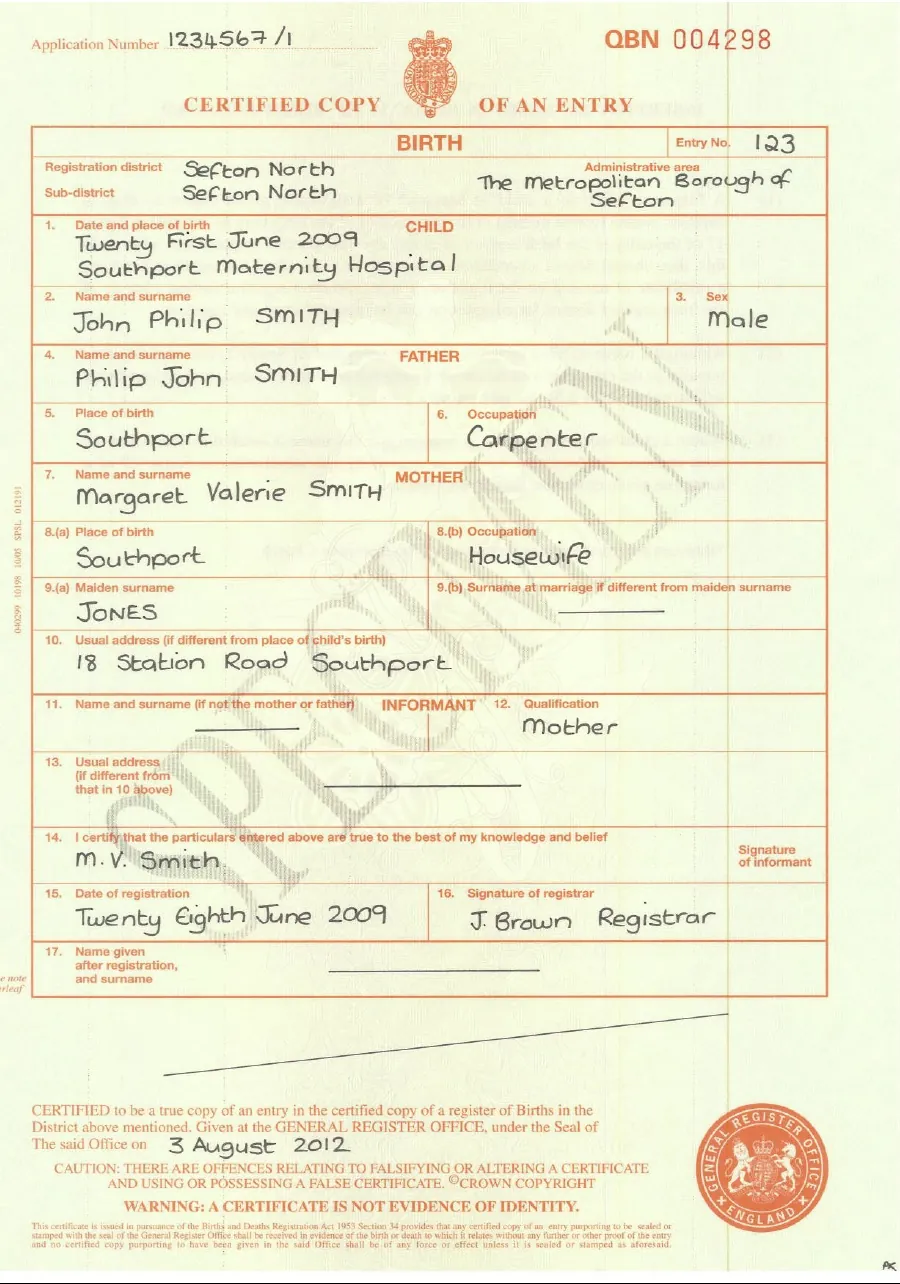
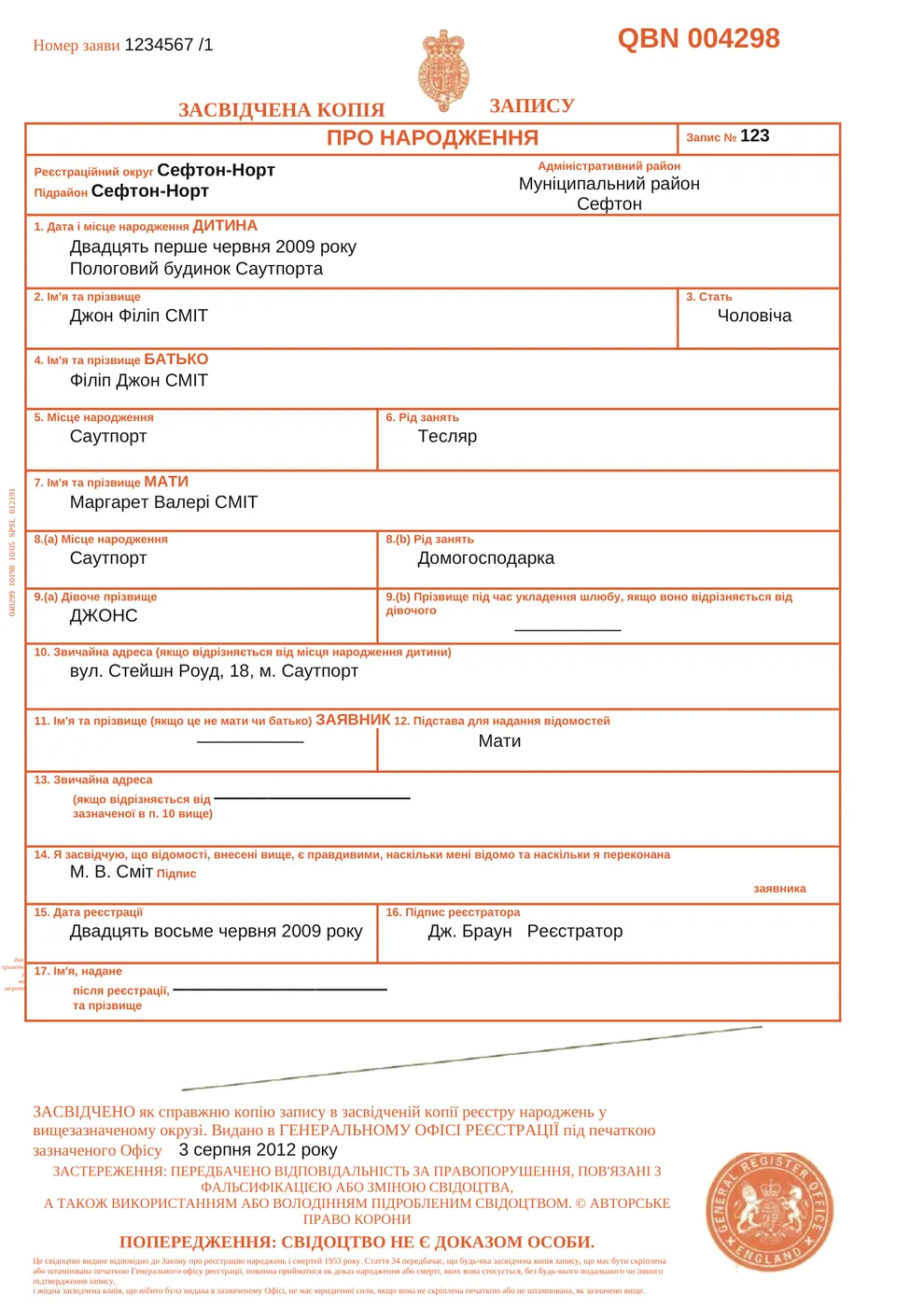
A notarized translation commonly involves a notary certifying a translator’s signature, but the exact form can vary. The recipient may require a translation without a notarized copy of the original, or it may ask for the original document to be handled in a particular way. Ask for the exact requirement in writing before you order.
An apostille is a separate step from translation and notarization. The apostille authenticates a signature and seal; it doesn’t translate the document, verify grades, or decide whether the qualification meets an academic requirement. For a German submission, the German Federal Foreign Office’s guidance says the apostille process for Ukrainian education documents falls to the competent Ukrainian authority.
The Information and Image Centre’s page says that a diploma and its supplement count as separate documents for apostille purposes. The page was published in 2012, so don’t rely on its old tariff or timing figures as current. Use it only to understand the distinction between the two documents, then check current fees and submission instructions with the competent authority.
“Each document on which an apostille stamp must be placed is considered a separate document, for example, a diploma and its supplement.”
- Information and Image Centre
The separate-document rule is why a quote should say whether it covers one apostille or two. Ask for a written total for both documents rather than relying on a package label such as “diploma apostille.”
What if a German Jobcenter may pay for the translation?
Check before ordering. The Coordination Centre Help for Ukraine in Saxony-Anhalt says that translation costs for qualification recognition may be covered or paid directly after consultation with the responsible Arbeitsagentur or Jobcenter.
The same page describes a specific process in Saxony-Anhalt: the Jobcenter asks for three price offers, selects the most cost-effective offer, and the translation bureau should begin work only after the agency has made its decision. The page also says the process may take from several weeks to several months and that the translation for the described submission must be done by a translator appointed and sworn in Germany.
Those rules apply to the process described by AGSA, not automatically to every German region, funding route, or application. Ask the responsible agency what it needs and wait for its approval before placing an order if reimbursement matters to you.
“The Jobcenter requires three price offers from translators, and always selects the most cost-effective offer.”
- Coordination Centre Help for Ukraine, Saxony-Anhalt
The practical point is simple: an otherwise valid translation may not qualify for payment if you skip the agency’s approval steps. Get the required offers, confirm which translator qualifications are accepted, and wait for a decision before work starts.
How long does the process take?
Translation time and the time for certification, apostille, approval, and delivery are different parts of the schedule. Ask for a timeline that names each stage instead of treating “translation time” as the full turnaround.
A bureau may be able to estimate translation after reviewing the files, but the apostille process belongs to the competent authority and may add a separate wait. An organization funding the translation can add its own approval stage. For the Saxony-Anhalt procedure described by AGSA, the page says completion can take from several weeks to several months; that estimate belongs to that process, not to every diploma translation.
Send the documents early enough to allow for corrections. Names, dates, course titles, and stamps need to match the originals. If the translator asks a question about an unclear line, reply before the next stage begins.
Ask the provider to confirm whether the deadline covers: - translation only; - translation plus certification; - translation, certification, and apostille; - delivery to you or directly to the receiving organization.
A short translation estimate doesn’t automatically include time spent waiting for an authority or a funding decision. Keep the recipient’s submission deadline separate from the provider’s production estimate.
How to place the order without paying for the wrong service
The safest order is recipient’s requirements, document review, complete quote, then approval. That order prevents you from paying for an apostille or certification type that the receiving organization doesn’t need.
For a basic translation draft, upload readable files to ChatsControl and review the translated Word document beside the source. The side-by-side view can help you compare course names, dates, and grades, while the preserved table layout makes it easier to track entries. Scans and photos can be read first, but handwriting and very poor-quality images can be unreliable. Use a human translator or bureau when the document needs a legally certified result or the scan is hard to read.
For a legally certified translation, confirm the recipient’s requirements and request a quote that explicitly covers the diploma and transcript. ChatsControl’s certified translation service is a human service through a partner translator; the certification and apostille steps aren’t instant. Check the current service details at certified translation and confirm the total before you submit.
Before sending the final set, check the spelling of names against the passport or other identity document required by the recipient. Compare the degree title, institution name, dates, grades, stamps, and seals with the originals. Ask for a correction before certification if a detail is wrong, since changing an already certified document may mean repeating part of the process.
FAQ
How much does it cost to translate a diploma and transcript?
The total depends on text volume, language, certification type, apostille requirements, and delivery. Ask for a written quote that covers both documents and lists each service separately.
How many pages does a diploma supplement count as?
Physical sheets don’t automatically equal billing pages. Ask whether the provider counts characters with spaces, a standard translation page, physical pages, or a fixed fee for the document.
Does a diploma translation need to be notarized?
The receiving university, employer, or authority decides what it accepts. Confirm whether it needs a notarized signature, a sworn translator, another type of certification, or only a translation.
Do I need an apostille on my diploma and transcript?
Not always. Ask the receiving organization and the competent authority; an apostille authenticates a signature and seal, not the academic content of the documents.
Can I upload a diploma scan for translation?
Yes, a readable scan or photo can be used to prepare a translation. Check stamps, small print, handwriting, and every personal detail against the original before submitting the result.
Can I get a translation refund from a German Jobcenter?
The AGSA guidance for Saxony-Anhalt says to consult the responsible Jobcenter or Arbeitsagentur first. In the process it describes, the Jobcenter requests three offers and the bureau should wait for the agency’s decision before starting.
Does the apostille price include translation?
Not necessarily. Translation and apostille are separate services, so ask for separate prices and confirm whether the quote covers both the diploma and transcript.
What should I do if the university rejects my translation?
Ask the university to identify the missing requirement in writing, then compare that instruction with the translation and certification you ordered. A correction may be enough, but a different certification or apostille process may require a new service.
Need these documents translated?
Leave your number and we will message you, tell you which certification your institution needs, and name the price. Translation, translator review and notary certification.