At four in the morning, a man in Germany uploaded three phone photos of Kurdish school documents because he needed them in German for the ZAB, the office that rates foreign education. The script, the stamps, and the admission office’s rules all mattered. A translation that handled only the printed body text would have missed part of the job.
The same is true for a Ukrainian school certificate and its supplement. Universities may ask for a translation of the certificate, the full list of subjects and grades, an entrance exam result, an apostille, or a particular kind of certification. Those requirements are not universal: they depend on the institution and the application route.
A good plan starts with the university’s document list, not with a general assumption that every school certificate needs the same translation or notarization. The guide below explains what to check, how Germany and Poland differ in the cited requirements, and what to compare when choosing a translator.
What you need to do before ordering a translation
A school certificate translation is a version of the education document in a language accepted by the receiving institution. A supplement is the accompanying record of subjects, grades, and, where shown, teaching hours. The translation makes those details readable; it does not decide whether the school qualification meets an admissions standard.
Start with the application instructions for the exact university, program, and intake. Look for four separate questions: which documents are required, which languages are accepted, what form of translation is accepted, and whether the university asks for an apostille or legalization.
The distinction matters because universities can set different rules even within the same country. TU Darmstadt asks for the school document and a list of subjects and grades in the original language alongside certified translations. Its published guidance says documents in languages other than German or English need a translation prepared by one of the methods it accepts. The page was checked on 2026-01-06, and applicants should confirm the requirements for their own program and semester on the TU Darmstadt admissions page.
For applications routed through uni-assist, the education document should be submitted in full, including the overview of subjects and grades. The guidance also says that bachelor’s applicants should provide the document that gives them the right to enter university in their country of origin, together with the transcript or grade list. If an entrance examination document exists, it may also be required. uni-assist’s guidance was checked on 2026-01-06, so check the current instructions when preparing your application.
As uni-assist explains: “Upload all certificates in their entirety in My assist: include the diploma certificate as well as the overview of subjects and grades. Do not omit any parts of the certificate (such as a Diploma Supplement) or any single pages.”
In plain English: don’t upload only the certificate cover or the page with the final grade. The admissions reviewer needs the complete record, and a missing supplement can leave the application incomplete even if the main certificate is translated correctly.
A practical first check
- Open the official admissions page for your program and intake.
- Copy the exact names of the requested school documents into a checklist.
- Check whether the university wants originals, scans, or both at the application stage.
- Note the permitted translation language and who is allowed to certify it.
- Check the apostille or legalization instructions separately from translation instructions.
- Save the page or record the date you checked it, then check again before submission.
An online application can have a paper-document stage too. TU Darmstadt warns that in some procedures, uploading files does not complete the application: where the portal requires a mailed set, the application becomes binding only when the paper documents arrive before the deadline. That warning was checked on 2026-01-06; follow the instructions shown for your own application rather than assuming that a successful upload is the final step.
For related guidance on a specific German route, see recognition of a Ukrainian school certificate for German universities. Applicants comparing a certificate translation with a wider package of education documents can also read which diploma documents are needed abroad.
Which school documents may need translation
The word “certificate” can sound like a single sheet, but an admission file may contain several separate records. A complete document set makes it easier to compare a graduate’s schooling with the university’s entry requirements.
| Document | What it records | What to check in the university’s instructions |
|---|---|---|
| School-leaving certificate | Completion of secondary education and the qualification awarded | Whether the university requests the original document, a copy, or a scan at each application stage |
| Certificate supplement or transcript | Subjects, grades, and sometimes the number of teaching hours | Whether every page and every table must be submitted and translated |
| Grading-scale explanation | What the marks mean in the issuing system | Whether the scale appears on the certificate or must be supplied separately |
| Entrance exam result | A result used by the receiving university as part of admission | Whether the university asks for it, what language it must be in, and whether it needs certification |
| Previous education document | Earlier schooling or a qualification required by a recognition procedure | Whether it is required for the application or a separate recognition process |
| Passport | Identity details used to match the applicant to the records | Whether the application asks for a copy and whether it needs translation |
For the German uni-assist route, the general translation standard is a German or English translation alongside education documents in their original language. The standard applies to the list of subjects and grades as well. If a country issues a document in German or English, a translation may not be needed, subject to exceptions for individual countries. The guidance was checked on 2026-01-06; read the country-specific notes on the uni-assist translation page.
A Polish university may ask for a different language and a different form of translation. For the Wroclaw University of Economics and Business bachelor’s intake for 2026/2027, Ukrainian applicants need a Polish sworn translation of the school certificate and supplement after apostille or legalization. The institution says the translation must be made from originals, not scans or photocopies. Those rules apply to that stated intake; check the university’s current admissions instructions before preparing documents.
Why the supplement matters
The supplement shows more than the fact that the student graduated. It can give the university the subject-level information it needs to assess the applicant’s education. For the Wroclaw University of Economics and Business 2026/2027 intake, the transcript must show subjects, grades, and the number of teaching hours. The same instructions say to provide a translation of the grading scale if the scale is not included in the school certificate.
An applicant who translates only the main certificate might therefore submit a polished translation and still leave out the information the university requested. Check the document as a whole: front and back, every supplement page, explanatory notes, and any grading information that appears on a separate sheet.
What about NMT results?
NMT is a Ukrainian entrance examination. For Ukrainian applicants to bachelor’s programs at Wroclaw University of Economics and Business, the 2026/2027 admissions page asks for an NMT result from 2023 or later, in addition to the school certificate. It requires a sworn translator’s translation of the result and says no apostille is required on the NMT document. The university’s page was checked on 2026-01-06; confirm the requirement for the intake you’re applying to.
The NMT result is not automatically part of every university’s document list. Treat it as a separate item to verify, not as a universal requirement for study abroad. The same rule applies to school report cards, earlier certificates, and language-test results: translate what the institution requests, in the form it accepts.
Three ways to arrange the translation
The right option depends on the document’s condition, the university’s certification rules, and whether you need someone to prepare a translation or to check one you already have. A general language translation and a legally certified or sworn translation are not interchangeable labels. Follow the receiving institution’s wording.
1. A translation bureau
A bureau can be a practical fit when the university requires a specific certification, when the document includes a difficult stamp or handwriting, or when you need advice on a physical original. Ask the bureau to confirm, in writing, which source document it will translate from and whether it can provide the exact certification the university asks for.
For a Polish sworn translation, check that the translator meets the receiving institution’s requirement for a sworn translator. For a German application, don’t assume that a notary is necessary just because the document is official. TU Darmstadt says notarization of documents submitted for its international applications is not required. Its page was checked on 2026-01-06, and it lists translation certification by a German embassy or consulate, or a translation by a sworn translator in Germany, among the accepted options.
A bureau should also explain what happens to layout. School supplements often use tables, and an ordinary text-only translation can make it harder to match a grade to its subject. Ask whether the translated version preserves the table structure and whether stamps, signatures, and handwritten entries are included.
2. A freelance translator
A freelance translator may work well when the university allows that person’s credentials or certification and the document is legible. Before sending the file, ask which form of certification the translator can provide. “Certified translation” can mean different things in different places, so the important question is whether the university accepts that translator and that specific certification.
For uni-assist, translations may be supplied by authorized sworn or court-authorized translators or institutions. The guidance also allows a translation from an authorized unit of the school or university that issued the document. Specific country notes can add requirements. uni-assist’s guidance was checked on 2026-01-06; use the current rules for your country and application route.
A translator also needs to understand the full document set. A supplement may have abbreviated subject names, grade descriptors, dates, stamps, or a grading scale. Send every page and explain the target institution and language. Keep the original scan available so you can compare the translated version against it before submission.
3. An online document translation tool
Online translation can help when you need a readable draft or need to preserve the layout of a multi-page school document. In ChatsControl, you can upload a DOCX or PDF and receive a translated Word file with tables and headings kept in place. For a scan or a phone photo, the service first reads the page and rebuilds it as a formatted Word document.
That format-aware process matters because a PDF does not contain Word-style paragraphs and tables. It places text at coordinates on a page. A text-only extraction can lose the relationship between a subject label and the grade beside it; rebuilding the structure gives the translator a more useful document to review.
The tool is an option for preparing or reviewing a translation, not a substitute for the university’s certification rules. ChatsControl also offers a human certified or sworn translation service through a partner translator for documents that need legal certification; that human review and stamping step is not fully automated. Handwriting and very degraded scans can be read unreliably, so unclear originals still need a human to check them.
Choosing between the options
| Your situation | Option to consider | What to confirm first |
|---|---|---|
| The university specifically requires a sworn translator or named certification | Bureau or qualified freelance translator | That the translator and certification match the university’s wording |
| The original has hard-to-read handwriting, stamps, or poor image quality | Translator who can inspect the original | Whether unclear parts will be checked against the physical document |
| You have a clear PDF or DOCX and need a formatted working translation | Online document tool | Whether the resulting translation still needs human certification |
| You have a scan and need the table structure preserved for review | Online tool with scan recognition, followed by review | Whether every subject, grade, stamp, and page is present |
| The university asks for translation by the issuing school or university | The issuing institution’s authorized translation unit | Whether that unit is authorized under the receiving institution’s rules |
Checking stamps and seals
A stamp is part of the document, even when it sits at the bottom of a page or overlaps a printed line. For a certified translation, the words on the stamp may need to be translated too. A good workflow keeps the stamp visible where it appears and records its wording as text, rather than silently dropping it from the translation.
On a scanned document, I keep the stamp as a picture where it was printed and put a small note in brackets right under it with the words read from it, like “[Stamp: …]”. A translator needs the stamp’s words as text because a certified translation has to translate the stamp too, and retyping a round stamp by hand is where words get lost.
A scan and an original are not the same thing. For the Wroclaw University of Economics and Business 2026/2027 intake, the school certificate and supplement translation must be made from originals, not scans or photocopies. An online draft can help with review, but it cannot change the source-document rule: check what the university requires before you decide how to order the final translation.
For a wider explanation of how certified copies and translations fit together, see birth certificates for use abroad: translation, notary, or apostille?.
Apostille, translation, and recognition are different steps
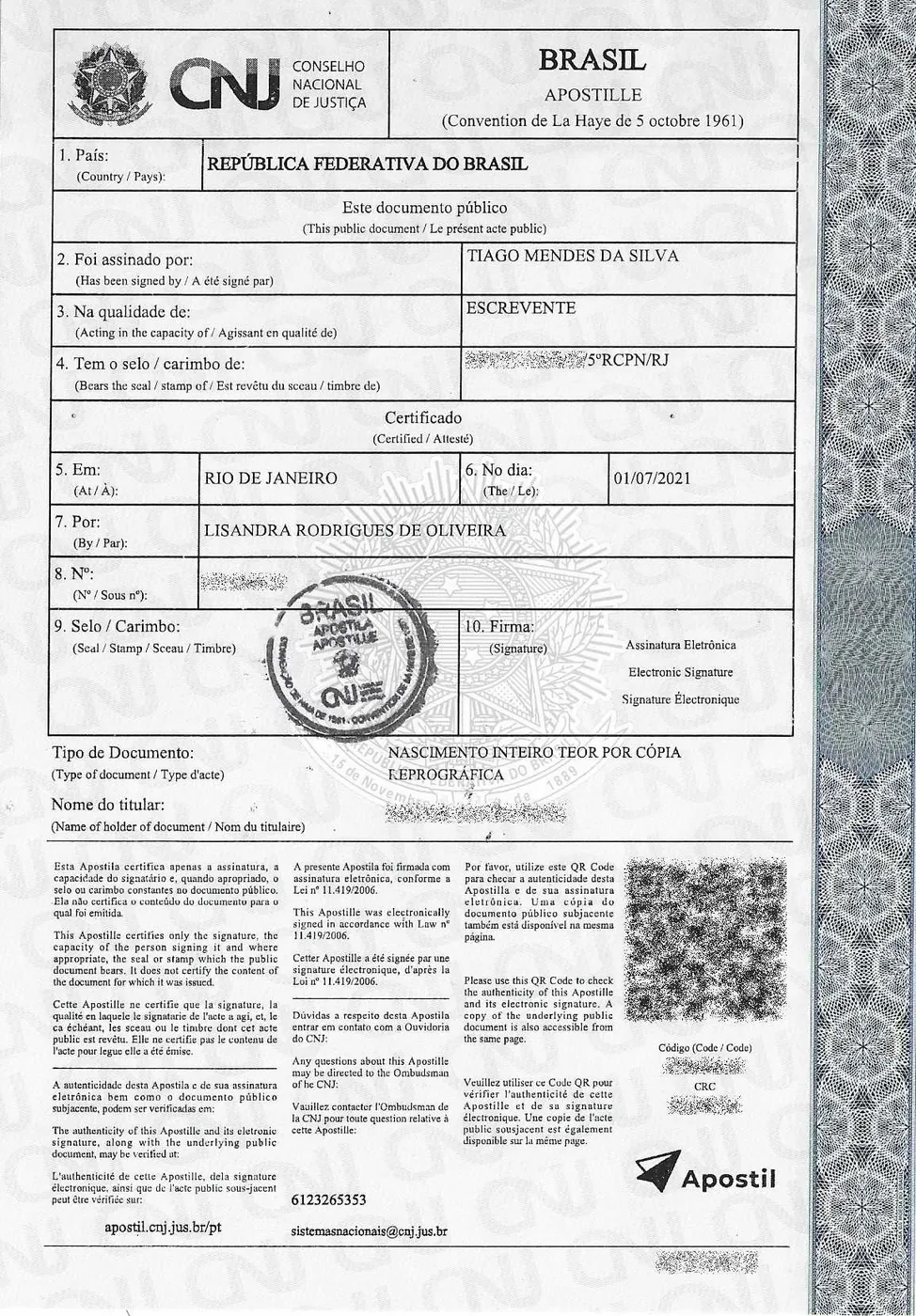
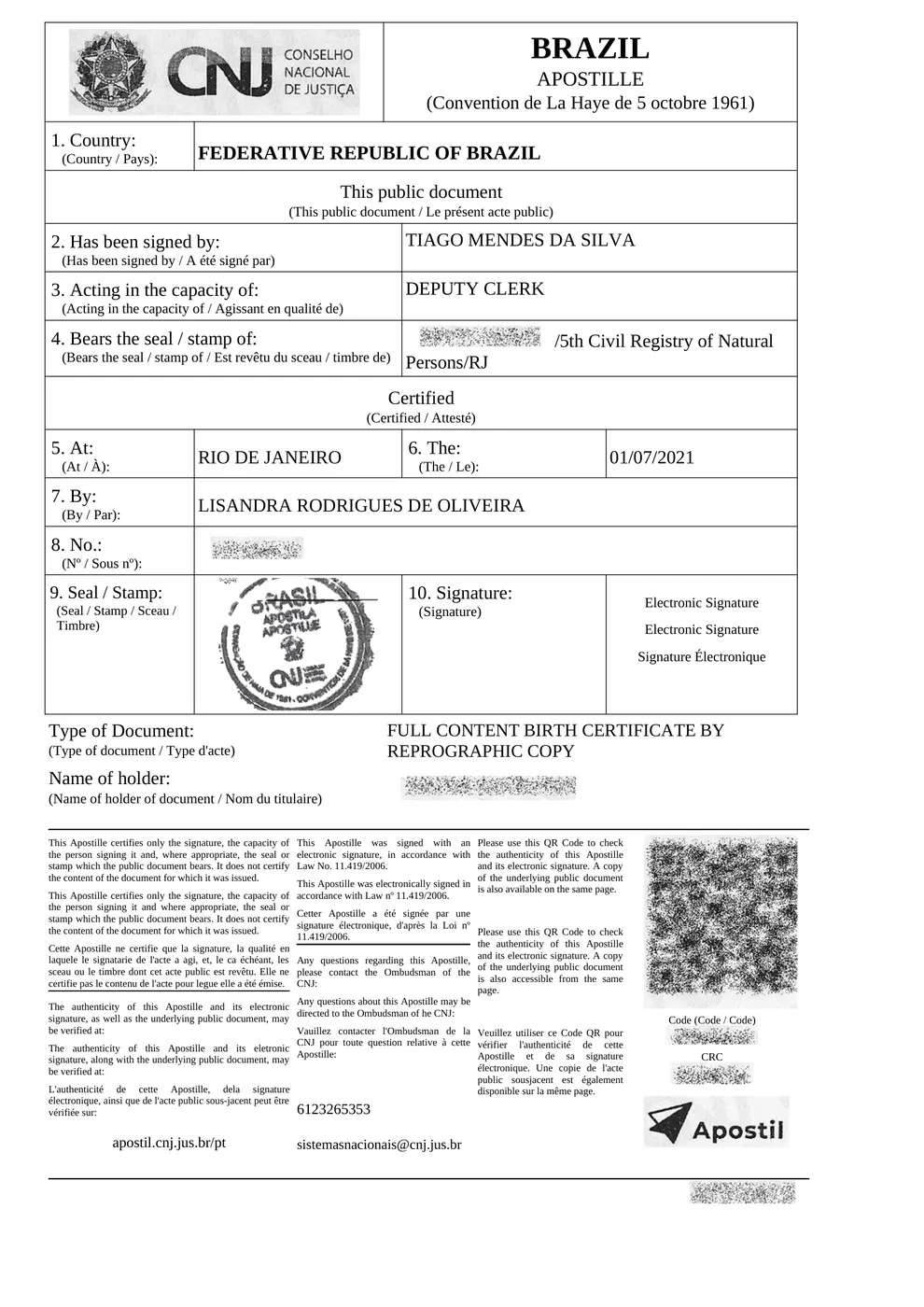
An apostille is a certificate attached to a public document to confirm the authenticity of the signature, the capacity in which the signer acted, and, where relevant, the seal or stamp. It does not confirm that the grades are correct or that a foreign qualification is academically equivalent to a local one. Ukraine’s education apostille procedure describes that purpose in Ministry of Education Order No. 220, which was checked on 2026-01-06.
In Ukraine, the responsible authority depends on the document type. Cabinet of Ministers Resolution No. 61 assigns the Ministry of Education and Science responsibility for official education and science documents, the Ministry of Justice responsibility for documents from justice bodies, courts and notaries, and the Ministry of Foreign Affairs responsibility for other documents. The resolution’s current version is dated 2023-06-27 and was checked on 2026-01-06; see the resolution text.
Which comes first: apostille or translation?
Follow the sequence specified by the receiving institution. For the Wroclaw University of Economics and Business 2026/2027 intake, the school certificate and supplement are apostilled or legalized first, then translated into Polish by a sworn translator. The university says the translation must be based on the originals. Check its current intake instructions before sending documents for translation.
Germany’s requirements can differ. TU Darmstadt says it does not require notarization of submitted documents and accepts translations certified by a German embassy or consulate, or translations by a sworn translator in Germany. The institution’s guidance was checked on 2026-01-06. Those statements describe TU Darmstadt’s instructions, not a single rule for every German university, so compare them with the exact program requirements.
TU Darmstadt states: “Notarisation of the documents to be submitted is not required!” See the university’s international admissions guidance, checked on 2026-01-06.
The practical takeaway is simple: don’t pay for notarization or an apostille just because someone says that every foreign university requires it. First identify the authority and document type, then check the receiving institution’s procedure. The wrong order can mean arranging a second translation or obtaining a new document set.
Does recognition replace translation?
Recognition and translation answer different questions. Translation makes a document understandable to the admissions office. Recognition determines how the education record relates to the receiving country’s rules for further study.
Poland’s National Agency for Academic Exchange, NAWA, accepts scans of the school certificate, the supplement or list of subjects and grades, a previous education document, translations where required, and a passport through its SYRENA system for an individual recognition procedure. The requirements were checked on 2026-01-06; consult the NAWA secondary-school certificate page for the current application instructions.
NAWA says a certified translation is not needed for its procedure for documents in Ukrainian, Russian, Belarusian, or English. That rule applies to the NAWA procedure and does not automatically override a university’s separate translation requirements. The same page says an individual recognition statement confirms only the right to continue studies in Poland; it is not a general recognition of the qualification for every purpose.
NAWA also lists categories for which an individual statement from its director is not required for first- or long-cycle applications. The listed categories include documents from EU, OECD, or EFTA member states covered by international agreements, Ukraine under a recognition agreement, and IB or EB certificates. The list on the page is dated 2025-06-24 and was checked on 2026-01-06. Confirm how the current rules apply to your document and university rather than treating the list as a translation waiver.
Step-by-step: prepare the documents without missing a page
A checklist helps separate the document work into stages. Use the same list for the translator, the apostille office, and the final application review.
- Identify the program and intake. Open the university’s official admissions page for the exact program and application period. Save the relevant requirements and note the date you checked them.
- List every requested document. Include the school certificate, supplement, subject and grade list, grading scale, entrance exam result, prior education document, and passport only where the university asks for them.
- Confirm the original-document rule. Find out whether the application stage requires a scan, a certified copy, an original, or a translation made from an original. Don’t assume that an uploaded scan will be sufficient for later enrollment.
- Check apostille or legalization. Identify whether the document needs one, which authority handles it, and whether it must be completed before translation. For Ukrainian education documents, check the Ministry of Education route under the apostille procedure.
- Choose the target language and translator type. Match the requested language and certification method exactly. A Polish sworn translation, a translation accepted by uni-assist, and a general translation are not automatically interchangeable.
- Send the complete source file. Include every page, both sides where relevant, and visible stamps and signatures. uni-assist says to upload the full school document, including the subject and grade overview, without omitting pages; its guidance was checked on 2026-01-06.
- Review the translated version against the source. Match each subject to its grade, check names and dates, and confirm that the stamp wording and grading scale have not disappeared.
- Submit every required format by the stated deadline. Follow the portal instructions and any paper-submission requirement. TU Darmstadt warns that some applications are not complete until requested paper documents arrive by the deadline; check the rule for your own application on its admissions page.
A translation workflow can help with the layout stage. When a PDF or scan contains a subject-and-grade table, ChatsControl can produce a formatted Word file for review rather than a plain block of extracted text. The file still needs a person to check the content, and a university-required sworn or certified translation still needs the appropriate human certification.
What to check in the final translation
Compare the translation line by line with the source, not just the certificate title. A useful review checks the spelling of the student’s name against the passport, dates, document numbers, each subject name, each grade, teaching hours if listed, and the wording of the grading scale.
Check that the number of pages matches the source document and that no page has vanished during scanning or upload. A table can look complete while one row or footnote is missing. Stamps and seals also deserve a separate check: the picture may remain in place while the translated wording is absent.
For an application routed through uni-assist, the source-language documents and translation should be submitted together when the translation is required. The guidance was checked on 2026-01-06. A translated file alone does not replace the source certificate.
Where applications go wrong
Most preventable problems come from treating “school certificate translation” as a single document and a single rule. The admissions pages in the dossier show why that approach fails: one university may want a specific sworn translation after an apostille, while another may accept different certification and may not require notarization.
Translating only the main certificate
The supplement often carries the subject and grade information that supports the application. uni-assist explicitly says to submit the school certificate in its entirety, including the overview of subjects and grades, and not to omit any pages. That requirement was checked on 2026-01-06.
For a Wroclaw University of Economics and Business bachelor’s application in 2026/2027, the requested supplement includes subjects, grades, and teaching hours; the grading scale also needs translation if it is not printed on the certificate. Leaving the supplement out can mean that the application lacks a requested part of the school record.
Ordering translation before checking apostille rules
Apostille and translation certify different things. For the Wroclaw University of Economics and Business 2026/2027 intake, the instructions specify apostille or legalization before the Polish sworn translation, and the translator must work from originals. Translate first without checking the sequence and you may need to arrange a new translation after the apostille stage.
Germany can be different. TU Darmstadt says notarization is not required for submitted documents and lists its accepted translation methods on its international admissions page, checked on 2026-01-06. Copying a Polish university’s sequence into a German application can mean paying for a step the target institution does not request.
Assuming every university wants the same translator
“Certified,” “notarized,” and “sworn” describe different procedures. The words on the university page matter more than a generic label on a translation quote.
uni-assist accepts translations by authorized sworn or court-authorized translators or institutions, and in certain cases by an authorized translation unit at the issuing school or university. Wroclaw University of Economics and Business requires a Polish sworn translation for the school certificate and supplement in its 2026/2027 intake. Those rules come from the respective institutions’ published instructions, checked on 2026-01-06; see uni-assist and the Wroclaw admissions page.
Uploading a scan when the university asks for an original
A scan may be acceptable for an online recognition process but not for a particular translator or admissions stage. NAWA’s SYRENA procedure accepts scans of the listed documents, according to its guidance checked on 2026-01-06. Wroclaw University of Economics and Business, by contrast, says its Polish sworn translation for the 2026/2027 intake must be made from originals, not scans or photocopies.
Check both stages: what the university wants for initial online review and what it requires for translation or enrollment. A scan accepted by one process does not automatically satisfy another institution’s rule.
Forgetting the entrance exam result
A school-leaving certificate does not always complete the application. The Wroclaw University of Economics and Business 2026/2027 page asks Ukrainian bachelor’s applicants for an NMT result from 2023 or later, in addition to the school certificate, and says the NMT result needs a sworn translation but not an apostille. The requirement applies to the specified intake; confirm the current page before applying.
Other programs may ask for a different exam document or none at all. Include the result only when the university requests it, but don’t overlook it when it appears in the official checklist.
Missing a paper-submission step
An upload receipt can feel like the finish line, but some applications require a paper package too. TU Darmstadt warns that for procedures where the portal requests a mailed set, an application becomes binding only after the paper documents arrive within the deadline. The page was checked on 2026-01-06; confirm whether the rule applies to your program and application route.
Wroclaw University of Economics and Business states for its 2026/2027 intake that failing to provide all documents results in a negative enrollment decision. The university page was checked on 2026-01-06. That makes the final checklist more than admin: every required item needs to be present in the format and stage the institution asks for.
A real document with a script and stamps
On 2026-11-13, a man in Germany uploaded three photos of Kurdish school documents at four in the morning. He needed them in German for the ZAB, the office that rates foreign education; Sorani Kurdish is written in Arabic script, and the documents were phone photos of paper forms with stamps.
That document set illustrates why “translate the text” is not enough as a specification. The source format, script, and stamped parts all affect what the translator needs to read and what the final translation must account for. A phone photo can be useful for an initial review, but a university or authority may still require a particular original or certification method.
Germany and Poland: compare the actual instructions
Country labels are a starting point, not a substitute for a university’s own requirements. The examples below show how the details can differ.
| Requirement | Germany examples in the dossier | Poland examples in the dossier |
|---|---|---|
| School record | uni-assist asks for the full school document with subjects and grades | Wroclaw University of Economics and Business asks Ukrainian applicants for the certificate and supplement |
| Translation language | uni-assist’s general standard is German or English when a translation is needed | Polish for the stated Wroclaw intake |
| Who can translate | uni-assist accepts authorized sworn or court-authorized translators and certain issuing-school or university units | Wroclaw requires a Polish sworn translator for its 2026/2027 intake |
| Apostille sequence | Requirements depend on the university; TU Darmstadt says notarization is not required | Wroclaw says apostille or legalization comes before its required translation |
| Entrance exam result | Check the specific program’s list | Wroclaw asks Ukrainian bachelor’s applicants for an NMT result from 2023 or later for 2026/2027 |
| Recognition | Check the university’s admission route | NAWA has a separate process for individual recognition, with its own document rules |
For the German examples, TU Darmstadt requires the school document and list of subjects and grades in the original language together with certified translations. Documents not in German or English need translation using an accepted method. The requirements were checked on 2026-01-06; details can differ by program and semester. Applicants to Bonn from outside the EU/EEA are asked for the school certificate with grades or transcript and a German or English translation; documents not in German, English, or French must come with a sworn translator’s translation. The Bonn page was also checked on 2026-01-06. Review the Bonn admissions instructions before preparing that application.
Bonn’s published general deadlines are July 15 for the winter semester and January 15 for the summer semester. The page was checked on 2026-01-06 and says to check the program and admissions calendar separately, since dates can change. Don’t rely on those general dates without confirming the schedule for your chosen program.
For the Poland examples, Wroclaw University of Economics and Business’s 2026/2027 instructions give a particularly specific set of requirements for Ukrainian bachelor’s applicants: school certificate and supplement, Polish sworn translation after apostille or legalization, translation made from originals, and an NMT result from 2023 or later. The page also says no apostille is required for the NMT result. Check the university’s current recruitment page for your intake.
NAWA’s recognition process is separate from those university instructions. For its individual recognition procedure, the agency accepts scans of the certificate, supplement or subject-and-grade list, prior education document, translations where required, and passport through SYRENA. Its page says certified translation is not needed for its procedure for documents in Ukrainian, Russian, Belarusian, or English. That does not mean a university must accept the same language or waive its own translation requirement. See the NAWA procedure page, checked on 2026-01-06.
FAQ
Do I need an apostille on my school certificate and supplement for university admission abroad?
Not automatically. The requirement depends on the university, country, and application route. Wroclaw University of Economics and Business requires apostille or legalization before the Polish sworn translation for its 2026/2027 intake, while German institutions set their own rules.
Should I apostille my school certificate before translating it?
Follow the university’s stated sequence. Wroclaw University of Economics and Business says to apostille or legalize the school certificate and supplement before arranging the Polish sworn translation for its 2026/2027 intake. Other institutions may specify a different process.
Do I need to translate the school supplement and NMT result?
Translate the supplement when the university requests the full education record. uni-assist asks for the complete school document, including subjects and grades. Wroclaw University of Economics and Business also asks Ukrainian bachelor’s applicants for an NMT result from 2023 or later for its 2026/2027 intake.
Who can certify a school certificate translation for Poland or Germany?
The receiving institution’s rules determine who can translate and certify it. Wroclaw University of Economics and Business requires a Polish sworn translator for the school certificate and supplement in its 2026/2027 intake. uni-assist accepts authorized sworn or court-authorized translators and certain authorized translation units at the issuing school or university.
Does translating a school certificate replace recognition of my education?
No. Translation makes the document readable in the requested language; recognition considers whether the qualification meets the relevant rules for further study. NAWA says its individual statement confirms the right to continue studies in Poland and is not a general recognition for other purposes.
Does a German university always require a notarized translation?
No. TU Darmstadt says notarization of submitted documents is not required for its international applications and lists other accepted translation methods. The guidance was checked on 2026-01-06; check the requirements for your own university, program, and semester.
Will an online translation be accepted by a university?
An online draft is not automatically the certified translation a university may require. Use the institution’s rules to decide whether the translation needs a sworn translator, an authorized school translation unit, or another form of certification. A document tool can help prepare or review a formatted translation, but it does not replace a required human certification step.
If NAWA does not need a certified translation, can I submit Ukrainian documents to a Polish university without translating them?
Not necessarily. NAWA’s language rule applies to its individual recognition procedure. A university can set separate requirements for admission, so check the university’s current instructions as well as the NAWA rules.
Need these documents translated?
Leave your number and we will message you, tell you which certification your institution needs, and name the price. Translation, translator review and notary certification.