A foreign bank asks for your Ukrainian business charter, but you’re registered as a sole proprietor and don’t have one. The paperwork problem starts with the wrong document name: a Ukrainian FOP is an individual entrepreneur, not a company with a separate charter.
The practical question is what the recipient actually needs to verify. It may ask for an extract from the Unified State Register, tax or financial records, or other documents that show your business activity. The right list depends on the bank, counterparty, or public authority receiving the paperwork.
A translation can be accurate and still fail to meet the request if it covers the wrong document, lacks a required form of certification, or doesn’t include an apostille the recipient expects. Start by confirming the document list and format, then prepare the translation around those instructions.
What you need to do before translating FOP documents
A FOP document package is a set of records that support the individual entrepreneur’s identity, registration, or business activity. It isn’t automatically a company charter translated into another language.
Ukraine’s Diia service describes online FOP registration as an application process: the applicant fills out and signs an application, which is sent to the Unified State Register. The service doesn’t identify a charter as a standard step in that registration process. See Diia’s FOP registration service for the process it describes.
The distinction matters when someone abroad uses a checklist designed for companies. A limited liability company may have a charter, but a FOP’s records are tied to an individual entrepreneur’s registration and information in the register. If a foreign form says “charter,” don’t assume that a FOP has an equivalent document with that name.
Ask the recipient what it needs to establish. Does it want proof that you are registered? Current business details? Evidence of income or tax status? A document confirming authority to sign a contract? Each answer points to a different record, and a translation can’t turn one document into another.
The recipient’s wording may be broad or based on a template. Send a short clarification before you order: explain that you’re registered in Ukraine as an individual entrepreneur and ask which specific documents and certification format it will accept instead of a charter.
Diia writes: “Тут може отримати фізична особа-підприємець витяг з Єдиного державного реєстру юридичних осіб, фізичних осіб-підприємців та громадських формувань (ЄДР).” In English: “An individual entrepreneur can obtain an extract from the Unified State Register of Legal Entities, Individual Entrepreneurs and Public Organizations here.” Diia’s extract service
That extract is a useful starting point when the recipient wants registration information, but it isn’t a universal answer to every foreign bank’s or counterparty’s request. Ask what information the recipient needs to check and whether it requires any other records.
What if the recipient asks for a “charter”?
Don’t translate an unrelated document under the title “charter” just to satisfy a form. Tell the recipient that a Ukrainian FOP is an individual entrepreneur and ask whether it will accept an extract from the register or another specified record.
A recipient may use “charter” loosely when it means proof of registration or business details. A quick clarification can prevent you from translating a tax return when the recipient wanted registration data, or ordering a translation when the recipient expects an official extract.
Ukraine’s Law on State Registration sets requirements for documents submitted for state registration in Ukraine, including language and readability requirements in its Article 15. Those domestic registration rules don’t automatically decide what a foreign bank or other overseas recipient will accept. Check the recipient’s requirements rather than treating the Ukrainian registration law as a universal foreign-document checklist: Article 15 of the Law on State Registration.
Which FOP documents might need translation?
The recipient decides which records to request. The table below helps you map a request to the kind of document that may answer it; it isn’t a mandatory package for every FOP.
| Recipient’s question | Document to ask about | What to confirm before translating |
|---|---|---|
| Is this person registered as a FOP? | Extract from the Unified State Register | Whether the recipient accepts an extract and how recent it must be |
| What business information is recorded? | Extract from the Unified State Register | Which fields the recipient needs and whether the document must be apostilled |
| What income or tax information is required? | The specific tax or financial record requested | Exact document name, reporting period, and whether the recipient requires the complete record |
| What work does the entrepreneur perform? | A supporting business document, if the recipient requests one | Whether a contract, invoice, or other record is actually required |
| Is the entrepreneur authorized to sign for a company? | Ask whether the request is for a company representative rather than a FOP | A FOP and a company are different legal and registration contexts |
| Is there a company charter? | A FOP doesn’t normally have a separate company charter | Ask which document the recipient accepts in place of a charter |
An extract from the Unified State Register is particularly relevant when the request is about registration details. Diia says the extract contains information held in the register and is available to individual entrepreneurs through its service: Diia’s extract service.
Diia also warns that the extract is formed from the information currently recorded in the register. If you’ve just submitted an application to register, change, or terminate a FOP, wait until the application has been successfully processed before requesting an extract. Otherwise, the document may not show the updated information. The service’s current instructions are on the Diia extract page.
Diia says: “Зверніть увагу! Витяг формується відповідно до відомостей про вас Єдиним державним реєстром.” In English: “Please note: the extract is formed in accordance with the information about you held by the Unified State Register.” Diia’s extract service
The practical consequence is simple: check your register information before you pay to translate it. A translation reproduces the document you provide; it can’t update the register or correct a change that hasn’t been processed yet.
A practical document checklist
Use this checklist before sending a file for translation:
- Get the recipient’s exact list. Ask for the names of the records it requires, rather than relying on “business documents” or “company papers.”
- Clarify the purpose of each record. Find out whether the recipient needs proof of registration, business details, tax information, income, or another fact.
- Check the source document. Make sure the record is readable and contains the information the recipient asked for.
- Confirm the document version. Ask whether a downloadable extract or another form is acceptable and how recent it needs to be.
- Ask about certification. Confirm whether the recipient requires a notarized translation, a certified copy, an apostille, or a combination.
- Check the number of sets. If several recipients need documents, ask how many separately certified sets each one needs.
- Keep names and dates consistent. Compare personal names, business details, and dates with the spellings used in the recipient’s other records.
The checklist is a way to catch mismatches early, not a declaration that every FOP needs every item. A bank’s requirements can differ from a private counterparty’s, and the rules for a document submitted to a foreign public authority can differ from the rules for a commercial application.
Extract from the register: getting the right version
An extract is a record of information in the Unified State Register, so its value depends on the register having the details the recipient needs. Diia provides an online service for requesting one: Get an extract from the Unified State Register through Diia.
Diia’s service page says an extract is ready within minutes after payment. The same page lists a price of 125 UAH at the time described by the service; check the current Diia page before relying on that price or processing time, since service details can change.
Diia says: “Витяг буде готовий протягом декількох хвилин після оплати послуги.” In English: “The extract will be ready within a few minutes after payment for the service.” Diia’s extract service
If you recently changed your registration details, check whether the change has been processed before placing the order. Diia advises waiting for successful processing of an online registration, change, or termination application before requesting an extract, so the document reflects current register information. Its page also explains that the extract is available in the user’s account.
Download the document and inspect its contents before asking for a translation. Verify that the record relates to you, that the information is legible, and that it contains the details your recipient asked for. If a recipient asks for an extract “in English,” clarify whether it wants an English-language record issued by an authority or a translation of the Ukrainian extract. Those are different requests.
A translation follows the source document. If the source is out of date or lacks a field the recipient needs, translating it won’t fix either problem. Resolve an incorrect or missing register entry before commissioning the translation.
Should you translate a complete extract or selected pages?
Ask the recipient before removing pages or fields. A bank may want the complete extract to review the full record, while another recipient may only need particular registration details. A shortened translation can save work, but it can also leave out information the recipient expects to see.
If the recipient accepts selected pages, confirm whether it wants the translation to state that the translated portion is an extract from a larger document. Don’t edit the source file in a way that makes it look like an original official record. Give the translator the complete document and the recipient’s instructions so the translation can be prepared in the accepted form.
Notarized translation, certified copy, and apostille
Notarization and an apostille do different jobs. A notarized translation addresses how the translation or translator’s signature is certified; an apostille is a separate authentication formalization that may be required for an official document used abroad.
Under Article 79 of Ukraine’s Law on Notaries, a notary who knows the relevant languages can certify that a translation is faithful to the original. If the notary doesn’t know those languages, a translator prepares the translation and the notary certifies the authenticity of the translator’s signature. The rule appears in Article 79 of the Law on Notaries.
The Ministry of Justice explains that a translator whose signature is to be certified must provide identification and proof of qualification. Check the practical requirements with the notary in advance, especially if you’re supplying your own translation: the Ministry of Justice’s explanation of translation certification.
A notary’s certification doesn’t mean every detail has been independently checked against a foreign bank’s requirements. The recipient can still reject a submission that uses the wrong document, has inconsistent names, or lacks an apostille required by that recipient.
A certified copy is not the same as a notarized translation. A certified copy addresses whether a copy matches the document presented to the certifying person; a translation renders the source text in another language. A recipient may ask for the translation to be attached to an original or a certified copy, so confirm the requested attachment before you arrange the notarial act. For a closer look at the difference, see notarial copy vs. notarial translation.
An apostille confirms the origin of a public document for use in a country where the relevant process applies. Ukraine’s Ministry of Foreign Affairs says official documents for states participating in the Hague Convention may require an apostille, which is issued by the competent authority in the country where the document was made. International agreements can remove or simplify the formality, so check the destination country and document type rather than treating an apostille as automatic: the Ministry of Foreign Affairs’ apostille guidance.
The Ministry of Justice notes that the Hague Convention provides for an apostille on the original document. Whether an apostille is also required on a translation can depend on the rules of the country where the document will be presented. Read the Ministry of Justice’s apostille guidance and ask the receiving institution which document it expects to be apostilled.
What should you ask the recipient?
Send the recipient a concise question before arranging certification:
- Does it accept a Ukrainian extract from the Unified State Register as proof of FOP registration?
- Does it require a translation, a certified copy, or both?
- Must a notary certify the translation, or does the recipient accept another form of translator certification?
- Does the original document need an apostille?
- Does the recipient require an apostille on the translation as well?
- Should the translation be attached to the source document or to a certified copy?
- How many certified sets should you provide?
Save the recipient’s written answer. A clerk’s informal reply may not be enough if a different department later reviews the file, so ask the person responsible for document acceptance where possible.
Three ways to arrange a FOP document translation
The right route depends on the document’s condition, your recipient’s rules, and how much review the translation needs. The three practical options are a translation bureau, a freelance translator, or an online document-translation tool paired with a human certification step when the recipient requires it.
Option 1: A translation bureau
A bureau can coordinate the translation, checking, and notarial step. That can help when the file includes several documents, unclear scans, or detailed instructions from a bank or public authority.
Before you agree, ask what the quoted work includes. Confirm the language pair, whether the price covers translation and notarization, whether the document will be checked against your source, and whether the bureau will arrange an apostille if the recipient requires one. Ask who will contact the notary and what you need to provide.
A bureau doesn’t decide whether the recipient will accept the finished package. You still need to provide the recipient’s requirements and verify the document list. If the recipient wants a particular order of pages or a translation attached to a certified copy, state that before the work starts.
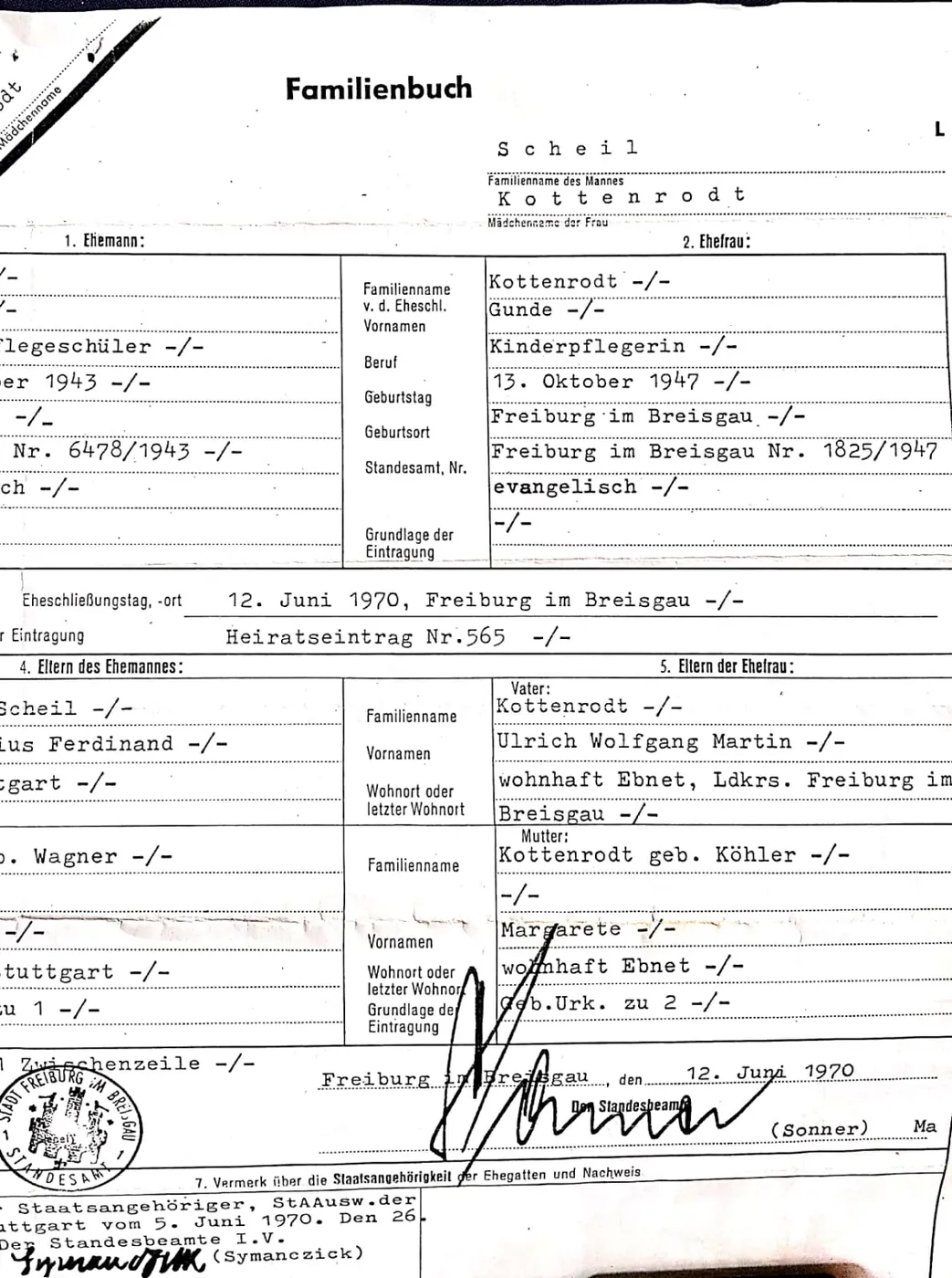
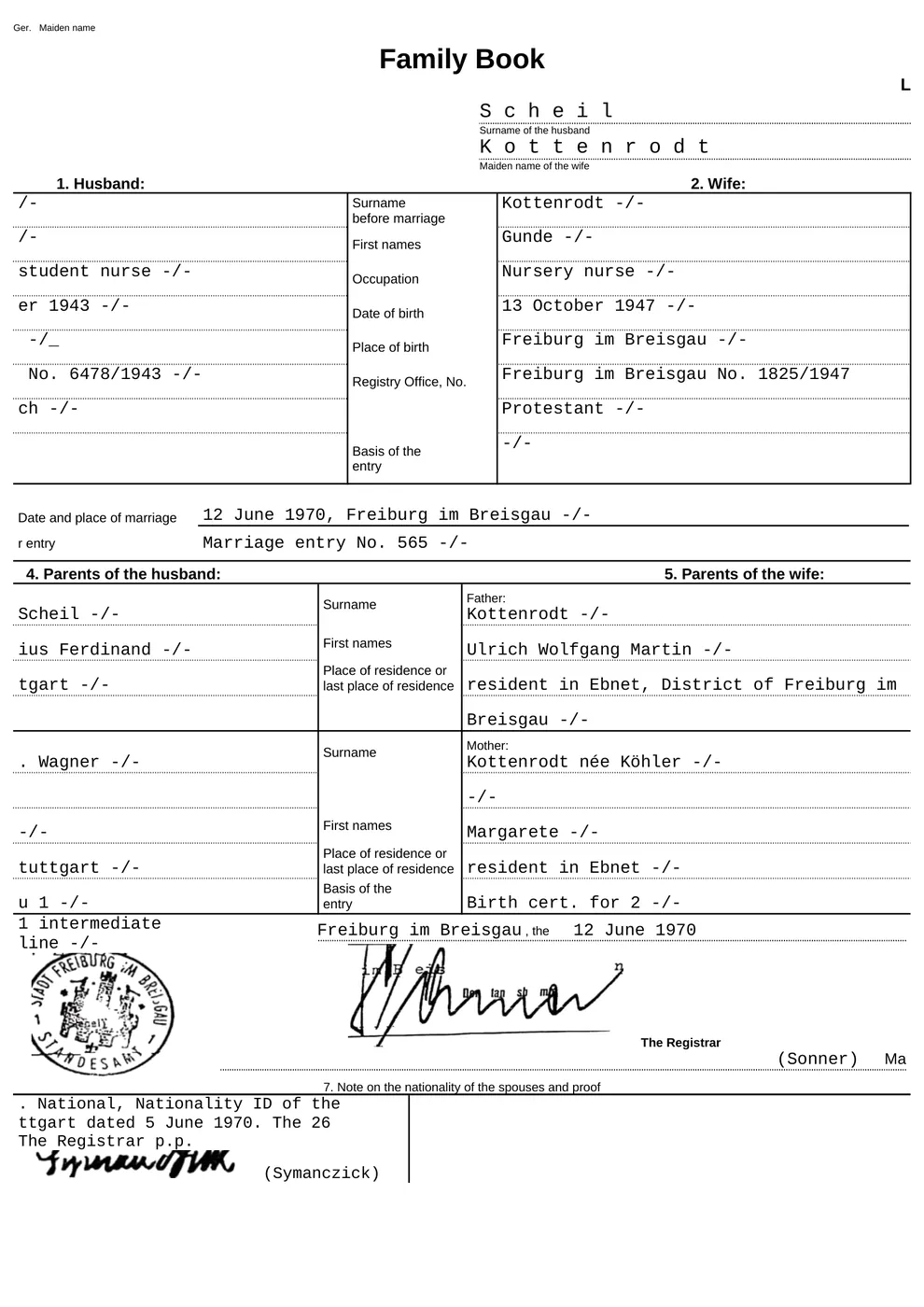
For an extract or business record with names, dates, and registration details, review those details in the final translation. A professional process can reduce the risk of a clerical mismatch, but you know which spelling the recipient uses for your name and which details have recently changed.
Option 2: A freelance translator
A freelance translator may be a suitable choice when you already know which document is required and can coordinate the notary directly. Ask whether the translator has the qualification documents the notary needs to see if the notary will certify the translator’s signature.
The Ministry of Justice says the translator must provide identification and a document confirming qualifications when a notary certifies the translator’s signature. The notary’s procedure is described in the Ministry’s translation-certification guidance.
Agree in advance on how the translator will handle seals, stamps, handwritten notes, and unclear text. Official documents can contain details that don’t appear in the main body, and those details may matter to the recipient. Don’t ask a translator to guess at an unreadable name or stamp; ask for a note or a better source image.
A freelance arrangement can mean you manage separate steps yourself. You may need to collect the source document, confirm the notary’s requirements, arrange an appointment, and check what form the receiving institution expects. A lower translation quote doesn’t necessarily include those tasks.
Option 3: Online translation with a human certification step
An online document tool can help when you have a readable DOCX or PDF and need the layout kept intact for review. In ChatsControl, you upload a DOCX or PDF and receive a translated Word file with tables, headings, lists, and layout preserved. A PDF’s text and tables are first reconstructed into an editable Word document because a PDF stores text at page coordinates rather than as ordinary paragraphs and tables.
The translated file is still not a notarized translation by itself. If your recipient needs legal certification, the certified-translation service uses a human translator who reviews and stamps the result, with a notarial step where required. That service is a human process, not an instant automated certification.
ChatsControl lists certified translation from 300 to 750 UAH per 1,800 characters depending on the language, notarial certification at 400 UAH per document, and apostille at 2,100 UAH per document. Those are the product’s listed prices; check the certified translation service for the applicable service details before ordering.
This route is less suited to a handwritten or very poor-quality scan. The tool’s scan workflow reads the page and rebuilds a formatted Word copy, but handwriting and heavily degraded scans can be read unreliably. Use a clearer source or have a human review the original when a stamp or handwritten detail is hard to read.
How the options differ
| Option | What you coordinate | A good fit when | Main point to check |
|---|---|---|---|
| Translation bureau | Usually one provider coordinates translation and related steps | You want help managing a multi-document package or unclear source material | Confirm exactly which steps and charges are included |
| Freelance translator | You may arrange translation and notary appointments separately | You know the recipient’s requirements and can manage the process | Confirm translator qualifications and the notary’s requirements |
| Online document tool with human certification when needed | You upload the file, review the translation, and arrange certification if required | The source is a readable digital document and layout matters | Automated translation alone doesn’t provide notarization |
No option removes the need to check what the recipient accepts. The most important comparison is not simply “online versus in person”; it’s whether the process covers the exact document, translation, certification, and authentication the receiving institution asked for.
How to prepare and submit your documents
A few clear checks can prevent a translation from being prepared from the wrong file or in the wrong format. Use these steps whether you work with a bureau, a freelancer, or an online service.
- Get written requirements from the recipient. Ask for the exact document names, language, certification type, apostille rules, and number of sets.
- Choose the correct source document. For proof of registration, check whether the recipient accepts an extract from the Unified State Register.
- Wait for recent changes to appear. If you’ve submitted a registration change, wait until the application has been processed before requesting an extract. Diia explains this on its extract service page.
- Check the source for readability. Make sure every page, stamp, date, and handwritten note can be read. Replace a damaged or incomplete document before arranging notarization.
- Send the translator context. Provide the recipient’s instructions and the spellings of names used in related documents. Explain any terms that have a specific business meaning.
- Review the translation. Compare the name, registration details, dates, figures, and stamps with the source. Ask the translator to resolve unclear items rather than silently guessing.
- Arrange the required certification. Confirm the notary’s process and the translator’s qualification documents before the notarial appointment, as described by the Ministry of Justice.
- Arrange an apostille only if required. Check the recipient’s instructions and the destination country’s rules with the Ministry of Foreign Affairs.
- Check the assembled set. Confirm that the translation is attached to the source or certified copy in the form the recipient requested, and that you have enough sets.
The Ministry of Justice says documents presented for a notarial act must not contain unapproved corrections, erasures, damage that makes the text unreadable, or writing in pencil. An unreadable or improperly altered document can prevent the notarial act, so replace or correct the source before arranging certification: Ministry of Justice guidance on notarial certification.
That problem can be easy to miss when the main text is clean but a stamp or handwritten note is faint. Ask the translator to identify any unreadable areas before the translation is finalized. A missing stamp detail can matter because the stamp is part of the document, not decoration.
I keep the stamp in a scanned document as a picture where it was printed, with a small bracketed note directly underneath containing the words read from it, such as “[Stamp: …]”. A certified translation has to translate the stamp too, and retyping a round stamp by hand is where words get lost.
ChatsControl’s scan workflow also treats stamps and seals as page elements: the page is read and rebuilt as a formatted Word copy, with stamps, seals, signatures, and photos placed where they appear. The tool can be unreliable with handwriting or very poor-quality scans, so a human should review a difficult stamp against the original.
Pitfalls that can delay acceptance
A translation package can fail for reasons that have nothing to do with the quality of the translated sentences. The most common risk is a mismatch between what the recipient asked for and what you prepared.
Translating a document the recipient didn’t ask for
A company checklist may request a charter, while a FOP has no standard company charter to supply. Sending a different document without checking can leave the recipient’s actual question unanswered. Ask which record it will accept as proof of your registration or business details.
Ordering an extract before a change is processed
An extract reflects information in the Unified State Register. Diia advises waiting for successful processing of an online application to register, change, or terminate a FOP before ordering an extract. The service’s instructions are on the Diia extract page.
The fix is to check the application status and the register information before requesting the document. If the extract still shows the old details, translating it won’t make the new details appear.
Assuming notarization means the recipient must accept the package
A notary’s act follows the applicable procedure for certifying a translation or translator’s signature. It doesn’t override the recipient’s own document rules. A bank may require an apostille, a specific source record, or a particular attachment format in addition to the notarized translation.
Ask the receiving institution for its requirements in writing. If the institution rejects a document, identify whether the issue was the source, translation, notarization, apostille, or number of copies before paying to repeat any step.
Treating an apostille as an automatic add-on
The Ministry of Foreign Affairs explains that official documents used in countries covered by the Hague Convention may require an apostille, while international agreements can remove or simplify the formality. The destination country and the type of document matter: Ministry of Foreign Affairs apostille guidance.
Don’t order an apostille just because a document is going abroad. Ask whether it applies to the original record, the translation, or both. The Ministry of Justice says the apostille under the Hague Convention is placed on the original, while the receiving country’s rules determine whether the translation needs one too: Ministry of Justice guidance.
Assuming a notary checks every translation detail
Article 79 distinguishes between a notary certifying a translation when the notary knows the languages and certifying the translator’s signature when the translation is prepared by a translator. Read the law’s Article 79 and ask the notary which procedure applies.
Check names, numbers, and dates before the notarial act. The Ministry of Justice also says the translator may need to show identification and qualification documents when the notary certifies the translator’s signature: Ministry of Justice guidance.
Bringing a damaged or unreadable source document
The Ministry of Justice says a notarial act may be blocked if a document has unapproved corrections, erasures, unreadable damage, or text written in pencil. Use a clean, readable source and check every page before arranging certification: Ministry of Justice guidance on notarial certification.
If a notary refuses to perform an act, the reason may be that required documents are missing, the act would conflict with the law, or the prescribed fee hasn’t been paid. Article 49 of the Law on Notaries sets out grounds for refusal; the applicant must resolve the issue before applying again. The grounds are summarized in this explanation published by the court portal.
A self-prepared translation may seem like a way to avoid translation costs, but it doesn’t remove the notary’s requirements. If the notary needs to certify a translator’s signature, the translator must provide identity and qualification documents, according to the Ministry of Justice. A refusal can mean obtaining a suitable translation and repeating the appointment; the available fee depends on the notary and the action. If you need a certified version, ChatsControl’s certified-translation service uses a human translator and can include notarial certification where required.
Requesting one set when several recipients need documents
Ask how many separately certified sets you need and whether the translation must be attached to the original or to a notarized copy. If a second institution needs its own set, the extra translation or notarial act may add cost. Confirm the format with each recipient before you arrange the first set.
FAQ
Does a Ukrainian FOP have a charter?
A Ukrainian FOP is an individual entrepreneur, not a separate legal entity with a charter as a standard incorporation document. Ask the recipient which records it wants instead, such as an extract from the Unified State Register.
Which FOP documents should I translate for a foreign bank?
Ask the bank for its document list. It may request proof of registration and business details, but there isn’t one list that applies to every bank or country.
How do I get an extract from the Ukrainian Unified State Register?
Diia provides an online service for requesting an extract from the Unified State Register. The extract reflects the data held in the register, so wait for any recent registration change to be processed before ordering it.
Does an extract from the Unified State Register need an apostille?
Not automatically. The destination country, the type of document, international agreements, and the receiving institution’s rules determine whether an apostille is required.
What does a Ukrainian notary certify on a translated FOP document?
Under Article 79 of Ukraine’s Law on Notaries, a notary certifies the translation if the notary knows the relevant languages. Otherwise, a translator prepares it and the notary certifies the authenticity of the translator’s signature.
Can I translate my FOP documents myself and have a notary certify them?
A notary may certify a translator’s signature rather than independently verify a translation, and the translator must provide identity and qualification documents. Check the procedure with the notary before preparing the file.
Will a foreign bank accept a Ukrainian notarized translation?
Acceptance depends on the bank and the destination country’s rules. Ask whether the bank needs a notarized translation, an apostille, a particular document version, or a certified copy before ordering.
Need these documents translated?
Leave your number and we will message you, tell you which certification your institution needs, and name the price. Translation, translator review and notary certification.