A document can look finished on the front and still carry a date, stamp, handwritten note, or registration mark on the back. Miss that detail, and the translation may no longer show the receiving office what was on the original.
The practical rule is simple: translate content that is present and relevant, describe visual elements that carry information, and don’t invent content for empty spaces. A completely blank reverse has no text to translate, but the authority receiving the document may still ask you to provide both sides or show that the reverse was checked.
Blank boxes need the same care. A dash, zero, or “N/A” can change the apparent meaning of a form, so a translator shouldn’t use one just to make an empty field look tidy. The best notation depends on the recipient’s instructions and the translation standard being followed.
What counts as content on the back of a document?
A document’s reverse side contains material that may not be obvious at first glance: a stamp, a registration number, an endorsement, a handwritten note, a continuation of a table, or a reference to an official action. If the reverse has any such content, it belongs in the translator’s review.
The content might be small or faint. A clerk’s handwritten date beside a stamp can be as significant as the printed text on the front. A blank-looking side might also have a faint impression, a mark near the edge, or a line of fine print. Before deciding that there is nothing to translate, inspect the whole side, including margins and corners.
IBCOT, a professional organization that publishes standards for official-document translation, describes the scope this way. As IBCOT’s translation standard puts it:
“The translation renders everything on the page: headings, entries, empty fields, margin notes, stamps, seals, signatures, footers and fine print, and the back of every page that carries anything.”
The key phrase is “that carries anything.” The guidance calls for translating the back of a page when it has content; it doesn’t require a translator to invent text for an empty surface. The same standard also includes empty fields within the material to be represented, because their empty state can matter.
A translation isn’t a photocopy of the document. It communicates the original’s content and structure in another language, while clearly showing which parts are translation and which parts are translator’s descriptions. A stamp might need a bracketed description, for example, instead of an attempt to reproduce its design.
Keep the difference between a blank reverse and a content-bearing reverse clear:
- An entirely blank reverse has no text to translate.
- A reverse with a stamp, seal, handwriting, number, or printed note has content to translate or describe.
- A reverse with an endorsement or continuation may need to be translated as part of the document, not treated as an unrelated extra.
- A reverse that appears blank but has a faint mark should be checked before it is left out.
A practical example: a certificate has printed information on the front and a registration stamp on the back. The stamp’s readable words and numbers are part of the document. The translator can describe the stamp in brackets and translate its readable text, rather than leaving it out because the front already contains the certificate details.
The recipient’s instructions matter too. A translation standard is guidance on how to prepare a translation, not a promise that every office will accept it. IBCOT says its members follow an office’s written instructions when those instructions differ from the standard. If an organization asks for both sides, provide both sides even when the reverse appears blank, and confirm whether it wants the blank side noted in the translation.
For a closer look at how stamps can affect a document’s presentation and translation, see whether stamps and seals affect translation.
Should you translate a completely blank reverse side?
A completely blank reverse has no words or marks to translate. That answer concerns translation content only. It doesn’t settle what pages or images you need to submit, because the receiving office may have instructions about the copy of the original as well as the translation.
Separate the question into two checks:
- Does the reverse contain content? Inspect it for print, stamps, seals, handwriting, numbers, marks, or other details.
- Does the recipient require both sides? Check its written instructions or ask the office directly, even if the reverse appears blank.
The first check is about the translator’s task. The second is about how you must present the document to its recipient. Mixing them up leads to avoidable uncertainty: “There’s nothing to translate” doesn’t automatically mean “I can leave the reverse out of the submitted copy.”
A useful request to send the receiving organization is: “The reverse side of my document appears blank. Do you require a scan of that side, and should the translation identify it as blank?” That gives the office a specific question to answer. Keep its written reply with your paperwork so the translator can follow it.
The document’s physical format can create a further complication. A form may have a printed template on the reverse with all fields empty. That side isn’t fully blank: the printed labels and structure still exist, even though no answers have been entered. Ask whether the translator should render the printed headings and show the unfilled fields, or whether the recipient permits a shorter version.
Another example: a certificate’s front is filled in, while the back contains only a blank template for later amendments. The template itself may be relevant because it shows the document’s structure or the possible use of the reverse. Don’t assume that “no handwritten entries” means “no content.” The translator can inspect and represent the printed material without filling in any of its empty spaces.
A document with no marks on the back can still arrive as a two-sided scan. In that case, the translator should know whether the second image is intentionally included as proof of a blank side, or whether it is a scan of an unrelated page. Labeling scans clearly helps avoid confusion when multiple documents or pages are submitted together.
If a receiving organization doesn’t provide specific instructions, a translator can explain how the reverse was handled and ask you to confirm the intended scope. That question is more useful before the translation is finalized than after you discover that the recipient expected a two-sided copy.
For documents that contain seals or legalization marks, distinguish the mark from the translation requirement. An apostille, for instance, is a separate element attached to or printed on a document. The recipient may have rules about the apostille and its translation; the guide to translating an apostille explains why the mark should be considered alongside the document it authenticates.
How should a translator represent blank fields?
A blank field is an empty space in the original, not an invitation to guess. A translator should preserve that fact without making the field appear completed or assigning it a value that the source doesn’t contain.
Professional guidance doesn’t use a single universal notation. IBCOT recommends writing [blank] for an empty field. Under its standard, a translator shouldn’t substitute a dash, zero, or N/A unless that notation is present in the original. NZSTI’s guidelines take a different approach for empty columns in forms: they may be omitted or marked [No entry] or [No entries]. These are examples from specific guidelines, not a shared rule imposed on every authority.
The difference matters. An empty field and a field marked “not applicable” don’t necessarily mean the same thing. A zero is a recorded value; a dash can be a deliberate mark; “N/A” says something that a blank box does not. Adding any of these without support changes what the translated document appears to say.
A sound choice follows this order:
- Check the recipient’s written instructions. Use a required label or format if the organization has specified one.
- Check the translation standard in use. Follow its treatment of empty cells and fields where the recipient gives no separate instruction.
- Apply the chosen notation consistently. Don’t label similar blank fields differently without a reason.
- Keep the notation distinguishable from original text. Square brackets can make a translator’s description clear, when the relevant instructions allow them.
- Don’t convert an empty field into a value. Leave out neither the blank state nor its meaning if the recipient needs the form’s structure.
A simple form shows the issue. Imagine a table with columns for a person’s name, date, and official reference. The first two cells contain information and the third is empty. Writing “0” in the third cell would suggest that someone entered a number. Writing “N/A” would suggest that someone decided the reference didn’t apply. A neutral blank marker, or another method required by the recipient, avoids either implication.
Form layout can matter as much as the words. NZSTI advises translators to approximate the original’s format and placement, and to add suitable notes if that layout can’t be reproduced. IBCOT recommends preserving structure, keeping tables as tables and translating cell by cell in reading order. A reader can then see which label belongs to which entry and which cells were empty.
For example, a translated form that turns a three-column table into a paragraph can make a blank cell hard to identify. A table that keeps the original row and column relationships makes the empty state easier to interpret. When exact layout isn’t practical, a concise note can explain the difference without filling the field or hiding its position.
The same principle applies to numbered entries. If a source document uses numbered rows, keep the numbering. A missing number in the translation can look like an omission, while renumbering can make the translated version harder to compare with the original. Consistent structure gives the reader a way to check the translation against the source.
How it works in ChatsControl: a DOCX’s text is read paragraph by paragraph and cell by cell, then written back into the same paragraphs and runs, helping tables and numbering remain in place. That can help when an empty field sits inside a structured form and its position matters. A scan or photo is handled through text recognition first; handwriting and very degraded scans can still be read unreliably, so they need careful human checking.
How do you translate stamps, signatures, and unreadable text?
Stamps, seals, signatures, and handwritten notes don’t all work the same way. Readable words in a stamp or seal can be translated; a signature is usually described rather than graphically recreated; and unreadable text should be marked only where it can’t be read.
IBCOT recommends describing stamps, seals, signatures, and handwritten entries in square brackets, in reading order, and translating readable text within them. That creates a clear distinction between the original’s visible marks and the translator’s explanation. A description such as [round seal: name of issuing office; readable text: ...] can identify the type of mark and communicate its legible content without pretending the translation reproduces the seal.
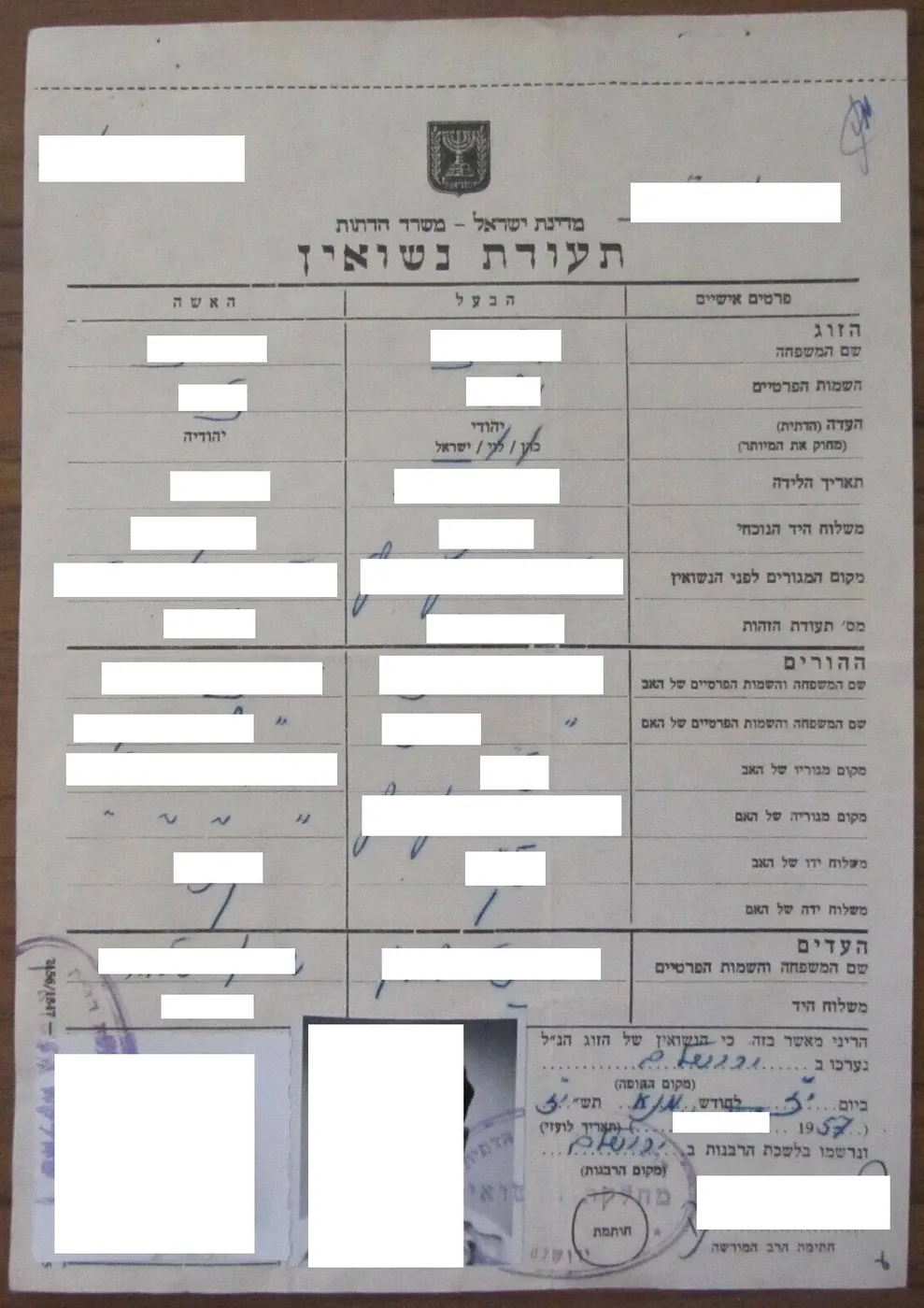
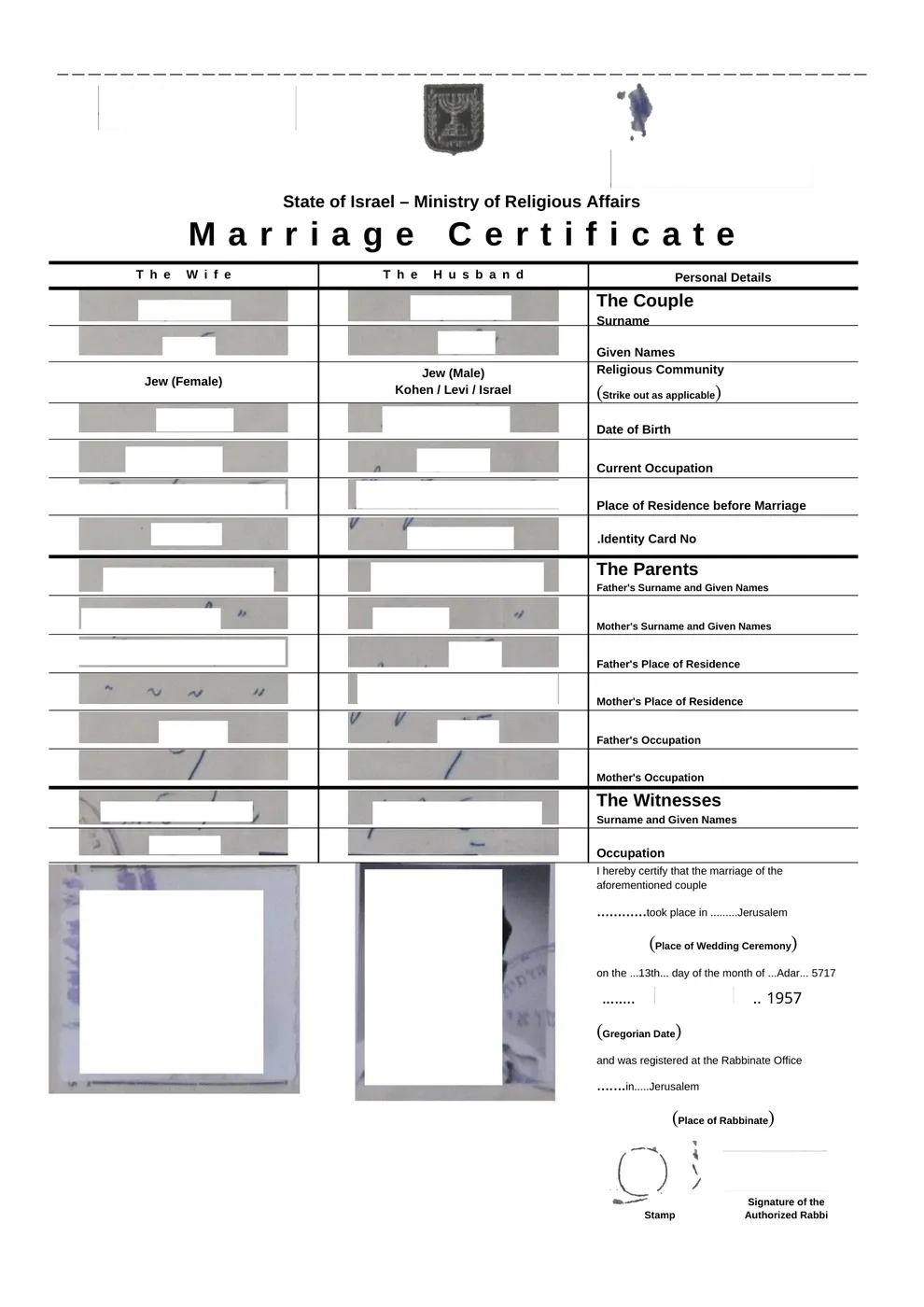
A signature presents a different problem. A translator shouldn’t try to imitate someone’s handwriting or redraw the signature. A neutral description such as [signature] tells the reader that a signature appears in the original. If a printed name is visible beside it, translate or transliterate that name according to the required approach, but don’t claim to know who signed when the document doesn’t say.
Handwriting needs close attention because a handwritten date or note may change the meaning of the document. The translator should distinguish readable words from unclear marks and avoid guessing based on context. If part of a handwritten entry is clear and another part isn’t, the translation should communicate the legible portion and mark only the part that can’t be read.
IBCOT’s wording on illegible text is precise: use [illegible] only for the portion that can’t be read. A whole line shouldn’t be labeled unreadable if most of it is clear. Nor should a translator fill the gap with a likely word simply because the surrounding sentence seems to point toward one.
A concrete example: a stamp contains a clear office name and a faint date. The office name can be translated, while the date can be marked as unreadable if inspection confirms that it can’t be read. Guessing the date from another page or from a likely sequence would add information that isn’t legible in the source.
The same caution applies when a scan is poor. A blurry image may make a printed number look like more than one possible character. A translator should ask for a clearer scan or the original where possible, rather than choose the most plausible reading and present it as certain. The guide to blurry document scans explains why scan quality affects the work needed to read a document.
A translation can also describe where an element appears. Position matters when a stamp is beside an entry, a signature is below a declaration, or a handwritten note sits in a margin. Describing marks in reading order helps the reader connect each one to the relevant part of the document. The description should remain short and factual, not speculate about the stamp’s legal effect or a signer’s role.
The translator should also preserve errors in the source rather than silently correct them. If the original contains an apparent spelling mistake or inconsistency, IBCOT says the translation should reproduce what is written and use a neutral note to describe the issue where needed. A translator’s note should be clearly identified, brief, and factual. Quietly correcting a name or date can make the translation disagree with the document the recipient is checking.
When can part of a document be left out?
A partial translation is not the same as silently skipping empty fields or a reverse side. If you need only selected content translated, tell the translator and make sure the finished translation clearly identifies itself as partial and says what was omitted.
IBCOT’s guidance says partial or shortened translations should be made only at the client’s written request, identified as partial, and accompanied by an indication of what has been left out. That approach helps the recipient distinguish a deliberate scope limit from an accidental omission.
A partial translation may make sense when an organization has asked for a specific section only. But the person preparing the paperwork should confirm that scope with the recipient before asking a translator to omit other content. A shorter translation won’t help if the receiving office expects the entire document, including its reverse, stamps, or attachments.
Consider a two-page record where only one section is relevant to an application. If the receiving organization confirms that it needs that section alone, the translation can state that it is partial and identify the excluded material. If no such instruction exists, omitting the rest can create doubt about whether the translator saw the entire record.
A partial translation also needs a clear boundary. “Selected entries translated” is more useful than a vague label that doesn’t identify the selection. A reader should be able to tell which pages, sections, or entries appear in the translation and which don’t. Clear labels help the translator avoid accidental gaps and help the recipient compare the translation against the source.
The same idea applies when a reverse side has an unrelated mark or a blank template. Don’t decide alone that the content is irrelevant. Ask the recipient whether it needs the whole document, then tell the translator the scope. If an office’s instructions differ from a professional guideline, the office’s written requirements matter for that submission.
If you aren’t sure whether an element is part of the requested translation, share a clear image of the full page and describe the intended use. A translator can then ask a focused question: should the reverse be translated, described, or included as a blank side? That conversation is safer than sending a cropped image and expecting the translator to infer what is missing.
For paperwork that will be notarized or otherwise formally certified, check the recipient’s rules before settling on a partial version. Certification requirements vary by country and by the organization receiving the document, according to AUSIT’s guidance on official and legal documents. The existence of a professional translation standard doesn’t make one certification format universal.
How do requirements differ between guidelines and receiving offices?
Translation guidelines describe a professional approach; receiving offices decide what they will accept for their own process. A translator can prepare a careful, complete translation and still need to adjust its format to meet an organization’s written requirements.
The sources in this guide illustrate the difference. IBCOT recommends representing all content on a page, including empty fields and marks, and gives [blank] as a marker for an unfilled field. NZSTI allows empty form columns to be omitted or marked [No entry] or [No entries]. Neither example should be presented as a rule for every country or authority.
AUSIT’s best-practice document concerns official and legal translations for use in Australia. It says that government bodies, courts, and international organizations may have additional or different requirements. AUSIT also notes that translator qualifications and certification procedures can vary by country and recipient. A document intended for one process shouldn’t be assumed to meet the rules of another.
The United Kingdom offers a specific example of recipient-facing requirements. GOV.UK’s guidance on certifying a document says that, for a translation needed for a UK procedure, the translator should provide written confirmation that the translation is accurate, along with the translation date, full name, and contact details. That is guidance for the British process, not a template to apply automatically to every submission.
A practical way to handle the differences is to ask the organization for written instructions before translation. Ask whether it needs the front and back, whether blank fields should be represented, how it wants stamps described, and what certification information it requires. Send the answer to the translator with the complete document.
As IBCOT’s standards state:
“Where a receiving office gives written instructions that differ, the member follows them.”
That instruction makes the order of decisions clear: the recipient’s written requirements govern the submission. A translator’s preferred notation remains useful when the office hasn’t specified one, but it shouldn’t override an explicit instruction.
GOV.UK also tells applicants to check the requirements of the organization asking for a certified document, because the organization may have its own rules. The page concerns document certification, so use it as a prompt to verify the receiving organization’s translation requirements rather than as evidence of a universal translation rule.
A short checklist can help you get an answer:
- What pages or sides of the original do you need?
- Should the translation show a completely blank reverse side?
- How should empty fields or columns be marked?
- Should readable text in stamps and seals be translated, and how should the marks be described?
- What certification statement and translator details do you require?
- Do you accept a partial translation, and how should its scope be labelled?
Save the response and pass it to the translator. A clear instruction can prevent a mismatch between a technically accurate translation and the format an office expects. If the organization gives no answer, ask the translator to make the treatment of blank sides and fields explicit, and avoid presenting one professional guideline as a guarantee of acceptance.
FAQ
Do I need to translate the back of a document if it is blank?
There is no reverse-side text to translate if the side is entirely blank. Check whether the receiving office still wants copies of both sides, and ask whether it expects the blank side to be represented in the translation.
What should I do with blank fields in a certified translation?
Follow the receiving office’s instructions. IBCOT recommends [blank], while NZSTI allows empty form columns to be omitted or marked [No entry] or [No entries].
How do you mark an empty field in a document translation?
Use a clear, neutral marker agreed with the recipient, and don’t replace an empty field with a dash, zero, or N/A unless that appears in the original.
Do stamps and notes on the back of a document need translating?
Translate readable text in stamps and seals, and describe their type and position where needed. Translate meaningful handwritten notes too, and mark only unreadable text as [illegible].
Can I leave an unfilled part of a document out of the translation?
Don’t omit it silently. If you need a partial translation, ask for one explicitly and have it identified as partial, with the omitted content described.
Does every authority accept the same blank-field notation?
No. Professional guidelines give different examples, and receiving offices can set their own requirements. Ask the organization handling your document which format it accepts.
Need these documents translated?
Leave your number and we will message you, tell you which certification your institution needs, and name the price. Translation, translator review and notary certification.