A Ukrainian police clearance extract with an apostille and translation has no single all-in price: Diia lists the standard extract as free, while the paper extract with an apostille is a separate paid option, and translation or notarization can add charges. The exact total depends on the paper-order option, delivery, language, and the format the receiving authority accepts.
The first distinction that affects your budget is the document itself. A free electronic extract is not the same product as a paper extract bearing an apostille, and neither automatically includes a translation.
How the extract, apostille, and translation fit together
A police clearance extract is an official record issued through the Ministry of Internal Affairs (MIA) system. An apostille is an authentication stamp that confirms the origin of an official document for use in another country; it does not translate the document or confirm the meaning of its contents.
The complete process can involve three separate items:
- The extract: short or full, electronic or paper.
- The apostille: required only if the receiving authority asks for it and the document is eligible.
- The translation: in the language and certification format the receiving authority accepts.
Diia describes a short extract as information about whether a person has a criminal record. A full extract also includes information about criminal prosecution and restrictions. Choose the type based on the organization’s instructions, not just on the phrase “police clearance” in a form. Diia’s service page lets applicants select the extract type and asks for the purpose of the request, place of birth, and details of any previous personal-data changes.
The order of the steps matters. If the receiving authority requires an apostille on the original, arrange the apostille before translating the document. A translation made from an electronic extract may not meet a requirement for an apostilled paper original.
Since 11 September 2025, Diia has offered online ordering of a paper extract with an apostille. The service lets the applicant select the type of extract, paper or electronic form, and how to receive it, according to Diia’s announcement of 11 September 2025. For that paper order, payment must be completed within 24 hours, and Diia says delivery is available only within Ukraine.

The apostille authority depends on which body issued the document. Since 1 January 2023, the MIA has placed apostilles on official MIA documents, under the rules described on its apostille procedure page. A Justice Ministry apostille tariff is not a substitute for the MIA tariff: the authorities handle different categories of documents.
The MIA’s published rule makes the paper original central to a self-filed apostille request:
According to the Ministry of Internal Affairs apostille procedure:
“Only original paper documents bearing the seal of the issuing authority and the signature of its authorized official are eligible for an apostille.”
That requirement explains why an electronic extract and an apostilled paper extract should not be treated as interchangeable. Ask the receiving organization which one it expects before ordering or translating.
For a general explanation of how apostilles fit into Ukrainian document preparation, see Apostille in Ukraine: What It Is, Where to Get It, Costs in 2026. Requirements for translation and certification are a separate question; Police Clearance Certificate Translation: Language and Certification explains why the destination’s instructions matter.
How much does a police clearance certificate with an apostille and translation cost?
The total is the sum of the services you actually need. The standard extract may be free, but that fact alone does not tell you the cost of ordering a paper original with an apostille, having it delivered, and translating it.
| Part of the process | What the published information says | What to check before paying |
|---|---|---|
| Standard extract through Diia | Diia lists the standard extract as free on its service page, checked for this article. | Whether the receiving authority accepts an electronic extract or wants paper. |
| Paper extract with apostille through Diia | Diia announced this as a separate paid option on 11 September 2025; the announcement does not state a fixed total price. | The amount displayed in the ordering flow, payment deadline, and delivery method. |
| Apostille on an MIA document | The MIA page checked for this article lists 51 UAH; confirm the amount and payment details when applying. | That the document belongs to the MIA category and that the fee shown is current. |
| Translation | Price depends on language and service provider. ChatsControl’s certified-translation service lists translation from 300 to 750 UAH per 1,800 characters, depending on language. | Whether the destination requires certification, and whether the quote includes the document’s stamps and apostille. |
| Notarial certification and apostille through the certified-translation service | ChatsControl lists notarial certification at 400 UAH per document and an apostille at 2,100 UAH per document. | Whether the service’s apostille applies to the document and issuing authority you have, and whether it duplicates an apostille already obtained. |
Diia’s standard-extract page gives the price as free, but the online paper extract with apostille is a separate paid option. The Diia service page and its announcement published on 11 September 2025 describe those as distinct options. Don’t calculate the paper-and-apostille total by treating the free electronic extract as the whole process.
The MIA lists a fee of 51 UAH for an apostille on an MIA document on its procedure page checked during this research. The same page provides payment details, but applicants should check the amount and payment instructions when they apply. The MIA says the payment is made before the apostille is placed, and its procedure describes the application, original paper document, and payment confirmation required for a self-filed request.
Translation is a separate line of the budget. The ChatsControl certified translation service lists translation from 300 to 750 UAH per 1,800 characters, depending on language, 400 UAH for notarial certification per document, and 2,100 UAH for an apostille per document. Those are service prices, not a government tariff. Confirm whether you need the service’s apostille at all if the extract already has an MIA apostille.
A short extract may have less text than a full one, but the translation quote can also depend on stamps, seals, and the required output format. Ask for a quote based on the actual final document rather than assuming that every one-page certificate has the same translation cost.
The comparison below is a budgeting checklist, not a promise of one fixed total:
| Order route | Cost components to confirm | Main trade-off |
|---|---|---|
| Self-order through Diia | Paper-order price displayed in the service, MIA apostille fee if applicable, delivery, and any translation or certification. | You complete the order and check each requirement yourself. |
| Self-file the apostille with the MIA | Extract, applicable MIA fee, travel or delivery, and translation or certification. | You need the correct paper original and payment proof for the submission. |
| Use a translation service for the translation stage | Translation, any required notarization, and any applicable apostille service. | The service can handle the translation step, but you still need to confirm the receiving authority’s exact document requirements. |
A different government apostille tariff can cause a misleading estimate. The Ministry of Justice says its tariff for documents within its competence is 670 UAH for an individual from 1 January 2026, as set out in its announcement on fees from 1 January 2026. That figure is not the tariff for an MIA police clearance extract. Check the issuing authority before using any apostille fee in your calculation.
How long does the process take?
Plan around the slowest stage, not only the time needed to fill in the online form. Diia says the application takes up to 5 minutes to submit, while processing can take up to 30 calendar days; its service page also says a standard electronic extract is usually prepared within 10 working days, with up to 30 calendar days when additional checks are needed. Those details appear on Diia’s service page checked for this article.
For an extract with an apostille, the MIA says production can take up to 30 days and the apostille can add up to 5 days. The announcement containing those timeframes was published on 11 September 2025 by the Ministry of Internal Affairs. The published processing window is not a delivery estimate to another country.
The Ministry of Internal Affairs announcement of 11 September 2025 says: “The extract takes up to 30 days to produce. If an apostille is needed, allow up to 5 additional days.”
In other words, submitting the request quickly does not mean the apostilled paper will be ready quickly. Leave room for the production window, any postal delivery within Ukraine, translation, and delivery to the final destination.
The time estimate and the total cost answer different questions. A service may save you from handling a stage yourself, but it cannot remove the official processing time stated by the MIA. Check the status online where the service allows it, and don’t book a non-movable appointment based only on the time required to submit the application.
If you’re applying from outside Ukraine, consider how the paper document will reach you. Diia’s announcement dated 11 September 2025 says delivery for the paper extract is available only within Ukraine. You may need a trusted recipient in Ukraine or another delivery arrangement after the document is issued; check the available options before paying.
Which documents and formats can be apostilled?
The MIA apostille procedure applies to a paper original with the issuing authority’s seal and an authorized official’s signature. The MIA’s procedure page lists an application, the original, and proof of payment as requirements for submitting a paper document.
A digital file may be useful for an online request, but a file that you download or print yourself is not automatically the same as the paper original required for a self-filed apostille. Ask the authority issuing the extract or use the official paper-order route if the receiving organization asks for an apostilled paper document.
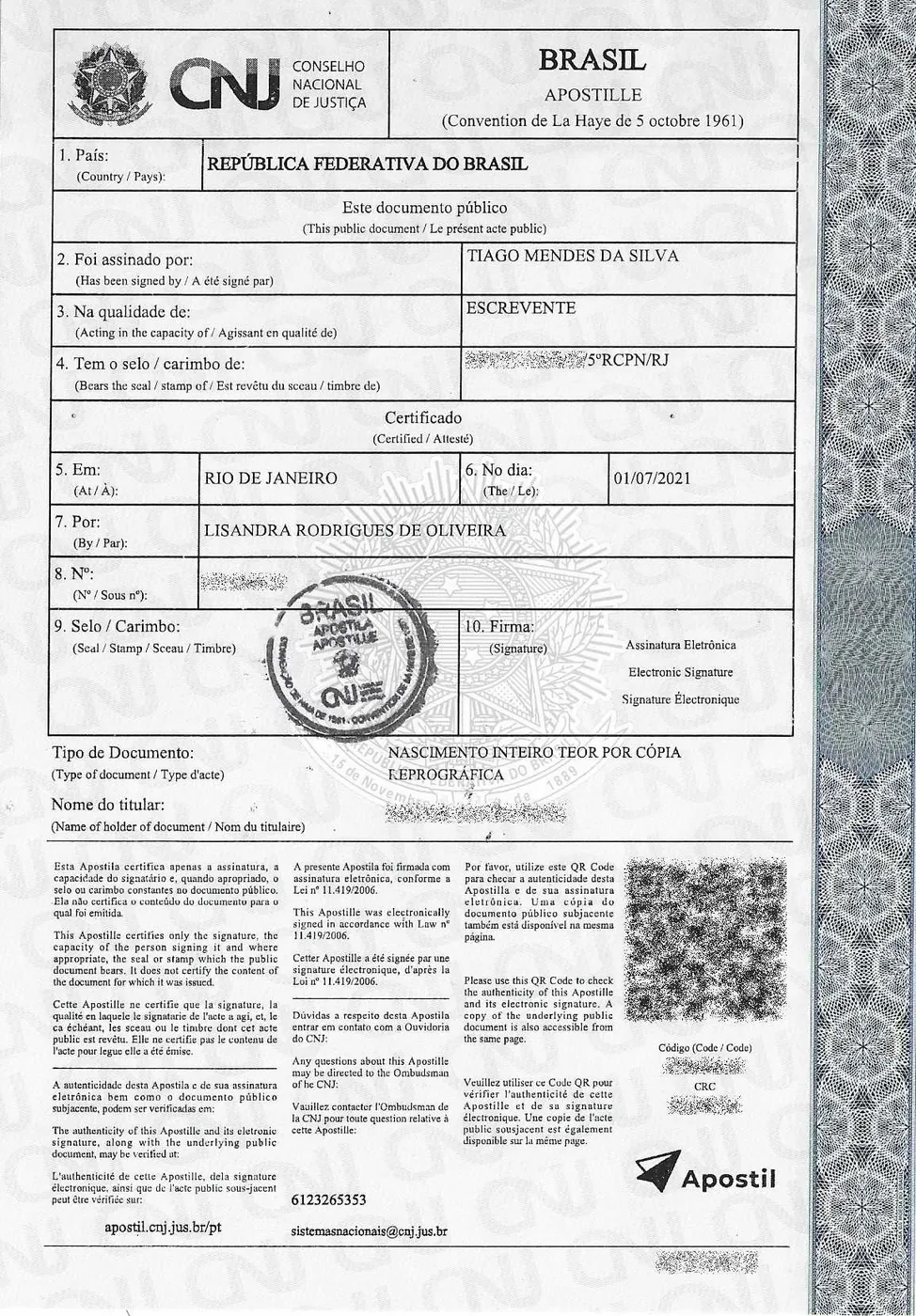
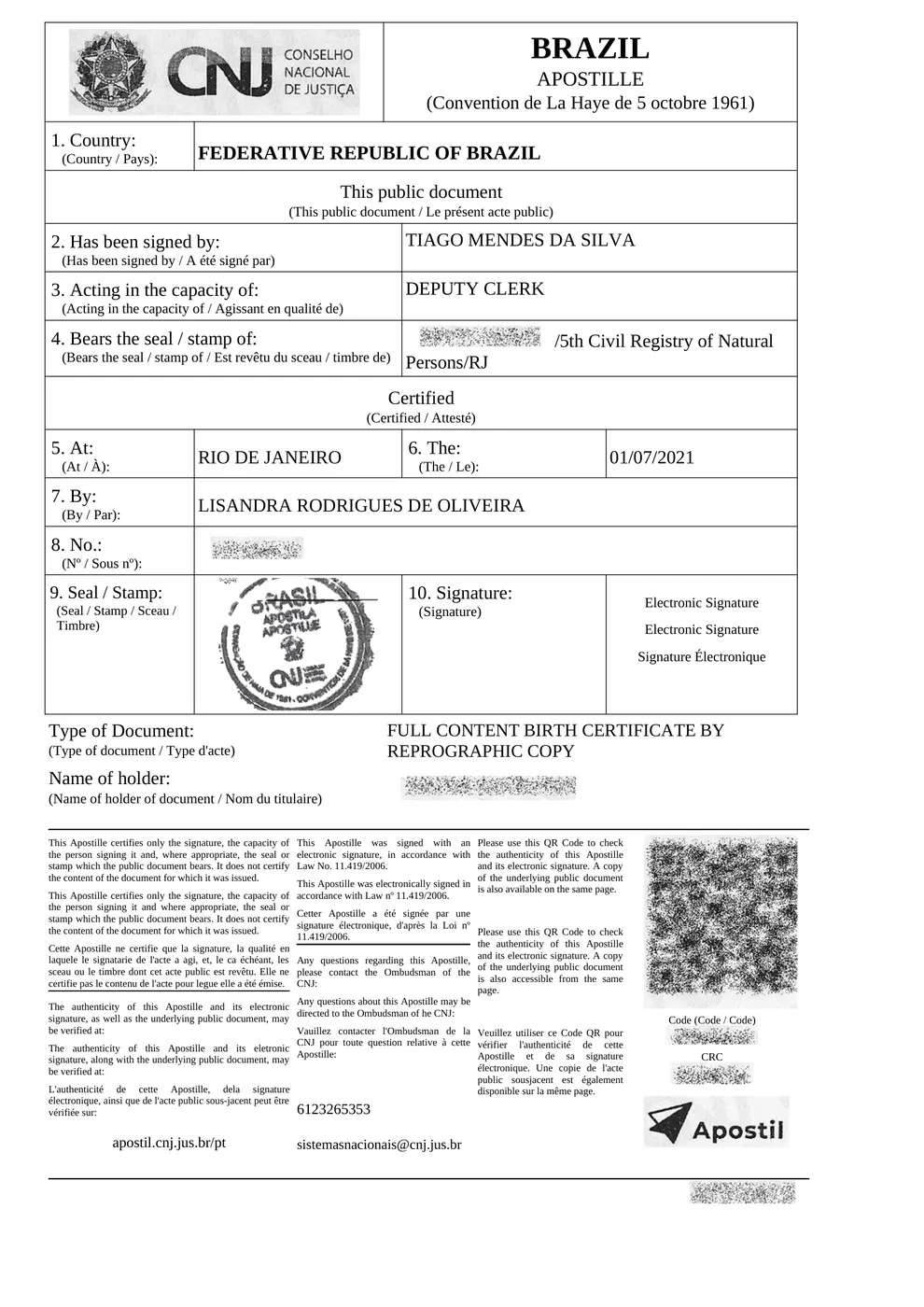
The online Diia service for ordering a paper extract with an apostille is available to applicants aged 14 and older who have authenticated using a confirmed tax number and a passport or residence permit in the app, according to Diia’s announcement of 11 September 2025. Check that you can access the required identity documents and account before beginning the request.
Diia asks you to choose the extract type and purpose, provide place-of-birth details, and report any previous changes to personal data. The information can be reviewed before submission, according to the service page checked for this article. A past name change matters because the record request depends on identifying the applicant correctly.
The receiving authority may also care about whether the extract is short or full. A short extract gives information about the presence or absence of a criminal record; a full extract adds information about criminal prosecution and restrictions, according to Diia’s service description. Don’t choose the full version just because it sounds more official. Match the document to the stated requirement.

A practical pre-order checklist:
- Ask the receiving authority whether it requires the short or full extract.
- Confirm whether it wants a paper original, an apostille, or both.
- Confirm the translation language and whether notarization or another form of certification is required.
- Check the details needed for the request, including previous personal-data changes and place of birth.
- Check the paper-order payment instructions and delivery options before submitting.
- Keep the original and payment confirmation together if you are filing the apostille yourself.
The MIA says service centers do not issue paper police clearance certificates; requests go through the MIA or Diia online services, and a paper version is ordered through the online service. The MIA explains this on its police clearance information page. Visiting a service center expecting to collect a paper certificate can send you to the wrong place.
Will an embassy, university, or government office accept the document?
The receiving organization sets the requirements for the document it will accept. An apostille authenticates the origin of the official paper document; it does not guarantee that every embassy, university, employer, or government office accepts every extract type, format, translation, or certification.
Ask the organization for its document instructions before placing an order. Get clear answers to these questions:
- Does it require an apostille on the Ukrainian original?
- Does it accept an electronic extract, or does it require a paper original?
- Does it want a short or full extract?
- Which language should the translation use?
- Must the translation be certified, notarized, or completed by a translator with a specific status?
- Should the apostille itself also be translated?
The translation requirements can vary by destination and organization. A notarial certification commonly relates to the translator’s signature, but the fact that a translation is notarized does not replace an apostille on the original document. Conversely, an apostille does not certify the translation.
The main risk of ordering first and asking later is choosing a format that doesn’t match the receiving authority’s instructions. The MIA’s apostille process requires a paper original and payment confirmation for self-filing, while Diia offers a separate online order for a paper extract with an apostille. If you submit the wrong format or omit a requested certification, the receiving authority may ask for a replacement document or another translation.
A clear instruction from the destination can prevent avoidable work. If the organization only needs a translated electronic extract, paying for a paper apostille may be unnecessary. If it asks for an apostilled paper original, translating an electronic file first may leave you with a translation that does not match the required document.
For translation, ChatsControl’s certified-translation service lists translation from 300 to 750 UAH per 1,800 characters depending on language, notarial certification at 400 UAH per document, and an apostille at 2,100 UAH per document. Treat those as service prices and confirm what applies to your particular extract; a service apostille and an MIA apostille are not automatically the same step.
How to order the extract and translation
Use this sequence to keep the issuing, apostille, and translation stages in the right order. Each step depends on the receiving authority’s requirements, so check those before submitting a request.
-
Confirm what the receiving authority requires. Ask for the extract type, paper or electronic format, apostille requirement, translation language, and certification format. Save the instructions so you can compare them with the finished documents.
-
Choose the extract and ordering route. Diia offers the standard extract service and an online option for ordering a paper extract with an apostille. The MIA says service centers do not issue paper certificates, so use the official online route rather than going to a service center expecting a paper document.
-
Enter and check your details. Select the short or full extract and provide the purpose, place of birth, and any previous personal-data changes. Diia says applicants can review the entered information before sending the request on its service page.
-
Pay for the paper order within the stated window. Diia says payment for a paper extract must be completed within 24 hours after ordering, according to its announcement of 11 September 2025. Follow the payment instructions displayed in the service and retain the confirmation.
-
Track the request and receive the paper document. Allow for the official processing window. The MIA announced on 11 September 2025 that an extract can take up to 30 days, with up to 5 additional days for the apostille; Diia says delivery is available only within Ukraine.
-
Translate the final document in the required format. Once you have the document the receiving authority asked for, arrange translation and any required certification. If the authority wants a translation of the apostille as well, make that clear when requesting a quote.
Self-filing the apostille is possible if you can provide the paper original, application, and payment confirmation described by the MIA procedure. The practical risk is submitting without a required item or using a document that does not meet the paper-original requirement; the official page does not provide a guaranteed re-submission time or a cost for a failed submission.
For translation, a service route can separate language work from the government document request. In ChatsControl, the certified-translation service is a human process: a translator reviews and certifies the translation, with notarial certification available when required. The listed price is from 300 to 750 UAH per 1,800 characters depending on language, plus 400 UAH for notarial certification per document and 2,100 UAH for an apostille per document. Confirm the exact services and sequence before submitting the original.
A machine translation can help you understand a document, but it does not replace a certified translation when an institution requires one. ChatsControl translates documents while preserving their layout and offers a side-by-side review view; the certified-translation step is a separate human service. Use the tool for document translation only when that output matches the receiving authority’s rules, and don’t treat an AI translation as notarized or legally certified.
The final check is simple: compare the document in hand with the destination’s written instructions. Confirm that the extract type, paper or electronic form, apostille, translation, and certification all match before sending the package.
FAQ
How much does a Ukrainian police clearance certificate with an apostille and translation cost?
There is no single total price. Diia lists the standard extract as free, while the paper extract with apostille is a separate paid option; the MIA page checked for this article lists a 51 UAH apostille fee. Translation, notarization, paper-order charges, and delivery may add costs, so confirm the current amounts and which services you need.
Can I order a paper police clearance extract with an apostille through Diia?
Yes. Diia announced online ordering of a paper extract with an apostille on 11 September 2025. The service lets you select the extract type, paper or electronic form, and collection method; delivery is available within Ukraine.
How long does it take to get a police clearance extract with an apostille?
The MIA said on 11 September 2025 that an extract can take up to 30 days to produce, with up to 5 additional days for an apostille. Diia’s standard electronic-extract service says processing can take up to 30 calendar days when additional checks are needed.
Does a translation of a police clearance certificate need notarization?
Not every receiving authority requires notarization. Ask whether it needs a certified translation, notarization of the translator’s signature, or another format before ordering.
Can an electronic police clearance extract be apostilled?
The MIA says its apostille procedure applies to paper originals bearing the issuing authority’s seal and an authorized signature. Diia’s online apostille option is for ordering a paper extract with an apostille.
Can I apply for the apostille myself?
Yes. The MIA procedure lists an application, the paper original, and proof of payment for a self-filed request. Diia also offers an online route for ordering a paper extract with an apostille.
Does a Justice Ministry apostille fee apply to a police clearance extract?
No. The Ministry of Justice’s 670 UAH fee for individuals from 1 January 2026 applies to documents within its competence, not to an MIA police clearance extract. The issuing authority determines which apostille procedure and fee apply.
Need these documents translated?
Leave your number and we will message you, tell you which certification your institution needs, and name the price. Translation, translator review and notary certification.